REVIEW · SA PA
Trekking Sapa 1 Day With Local Guide, Terraced Rice Fields
Book on GetYourGuide →Operated by Anh Tourist Hanoi Travel · Bookable on GetYourGuide
Rural Sapa changes fast once you walk. I love the rice terraces you actually hike through, and the chance to hear real stories about daily life in Hmong and Giay communities. The day also tops out around 1,800 m, which makes the views pop. The main drawback: if it rains, the trail can get muddy, and your attention shifts from scenery to not slipping.
This is a solid, small-group trek (max 10) with an English-speaking local guide. In my experience of how these walks feel, the guide matters a lot, and a guide named Su is often the reason the whole day runs smoothly. You’ll start in Sapa around 8:00–8:30, be back around 14:30, and you’ll still have time to plan the rest of your Hanoi-to-Sapa trip.
In This Review
- Key things I’d zero in on before you book
- Why this 1-day Sapa trek feels worth it
- Starting in Sapa at 8:00–8:30: quick orientation, then straight onto the trail
- Cat Cat road to the Muong Hoa hanging bridge: the valley view moment
- The uphill section toward Hoàng Liên Son: where the terraces steal the show
- Y Linh Hồ: lunch with a Hmong family and the stories that make it click
- Lao Chải and Ta Van: from Hmong areas to Giay village life
- The 13 km day: what to expect for your legs, timing, and comfort
- Price and value: is $24 fair for what you get?
- Who should book this trek (and who should skip it)
- Should you book this Sapa 1-day terraced rice fields trek?
- FAQ
- How long is the trekking tour?
- What time does the tour start?
- Which villages do you visit?
- Is lunch included?
- Do I get back to Sapa town after trekking?
- How big is the group?
- Is this tour suitable for altitude sickness or high blood pressure?
Key things I’d zero in on before you book
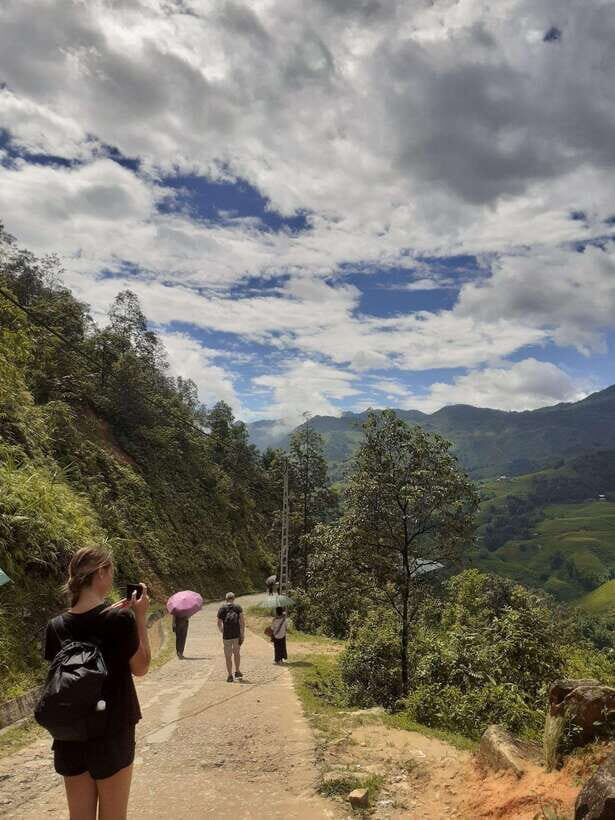
- Three-people storytelling format: You get guided context while walking between Hmong and Giay areas, with cultural details baked into the stops
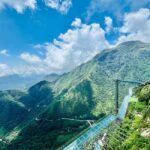
- Muong Hoa Valley highlights: a hanging bridge crossing plus long valley views that are better on foot than from a bus window
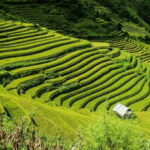
- Rice terraces that match the effort: you’ll see some of the most famous terraces in Vietnam as you climb and descend
- Food stop with locals: lunch is at a small traditional restaurant run by a Hmong family
- Watch for the selling approach: when you arrive in villages, people may come forward with handmade items you can buy
- Rain-ready reality: expect slippery spots if weather turns, and bring shoes you trust
Why this 1-day Sapa trek feels worth it
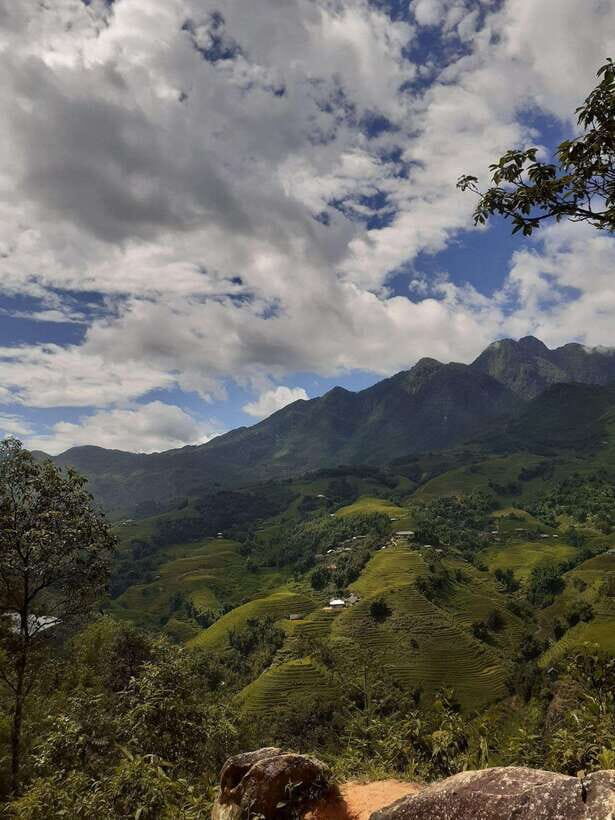
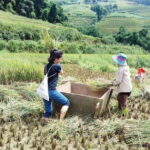
Sapa’s rice terraces are famous for a reason, but watching them from a viewpoint is only half the story. On this trek, you’re moving through the same kind of terrain where farmers work, where water collects, and where paths turn into muddy shortcuts. That’s when the terraces feel real—like a working system, not a postcard.
What makes the day particularly satisfying is the mix of elements: terraces, river/valley viewpoints, and people. You’re not just going from one “photo stop” to another. Instead, you walk between ethnic minority villages while a guide explains customs, work routines, and traditions—things like rice field work and house building techniques. And yes, you may also spot representative animals such as water buffalo, especially around grazing areas and the edges of fields.
The “offside the touristic paths” part is key. It typically means fewer crowds right where your feet are hitting the ground. You’ll still see village life up close, but it won’t feel like a theme park.
You can also read our reviews of more guided tours in Sa Pa
Starting in Sapa at 8:00–8:30: quick orientation, then straight onto the trail
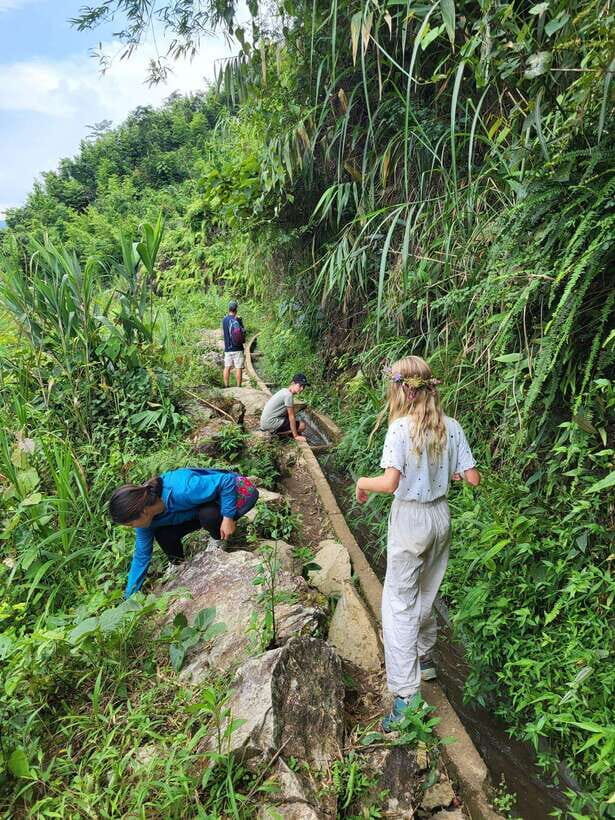
The tour begins around 8:00–8:30. Your pickup is in Sapa Town (the meeting point is either your hotel in the center or in front of the main church). That matters because you avoid a long, extra transfer before the hike even starts.
After a short introduction, you head about 2 km down toward Cat Cat’s road, a well-known Hmong area. This first stretch is a good warm-up—not a heavy climb yet, just enough walking to get your legs awake and let you start spotting the terraced fields and valley angles.
Practical note: early mornings in Sapa can be cool, even if later in the day warms up. Bring a light layer you can peel off without turning your hands into wringing rags when you stop for photos.
Cat Cat road to the Muong Hoa hanging bridge: the valley view moment
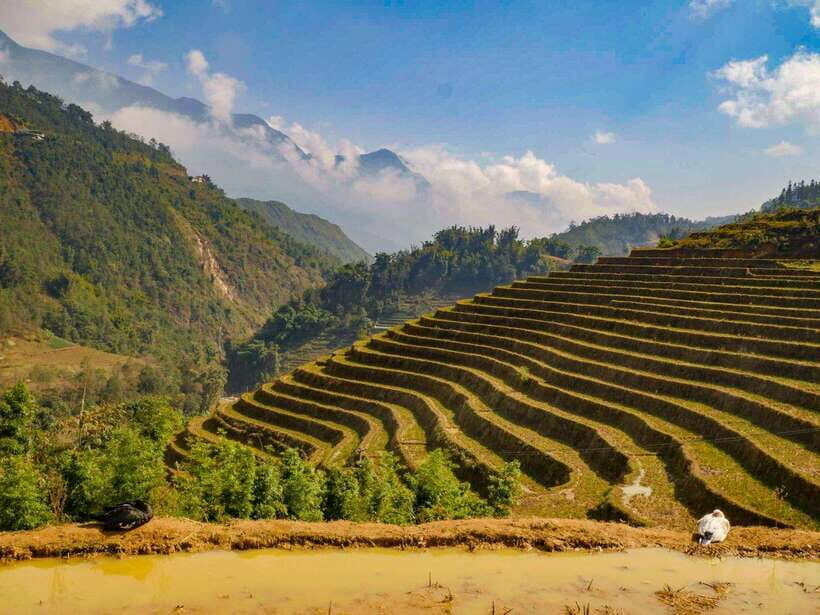
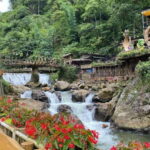
From there, the walk leads you to a hanging bridge over the Muong Hoa River. If you’ve only seen rivers from the road, you’ll feel the difference here. The bridge is narrow, the valley drops away quickly, and the views widen in a way that makes it easier to understand the whole geography of the area.
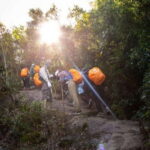
After the crossing, you continue uphill into the mountains through a bamboo forest. This isn’t just scenery—it’s also a natural “gear change.” Trees can soften the heat and glare, and the shade makes the first serious climb feel more manageable. You’ll also start getting glimpses of rice terraces above you, which is great for motivation because you know what the effort is buying.
And this is where offside paths start to matter. The route doesn’t feel like it’s designed for maximum speed. It feels like it’s designed for an actual day of walking through working terrain.
The uphill section toward Hoàng Liên Son: where the terraces steal the show
This trek is built around an ascent that can reach about 1,800 m above sea level. Even if you don’t feel dramatic altitude effects, higher altitude hiking typically means slower breathing and a more careful pace. You’ll notice it most in the uphill segments.
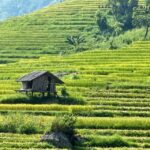
As you climb, you get the chance to admire some of the biggest and most beautiful rice terrace views in Vietnam. The guide will likely point out how the valley layout shapes the fields and how water and slope work together. That context makes the terraces more than just a view. You start understanding why farmers build the way they do.
You’ll also get mountain views on top of Hoàng Liên Sơn. Again, the best part is that these views come while you’re moving through the area—not after you’ve already ended the hike.
One thing I’d watch for: when you’re working hard, it’s tempting to stop and stare constantly. But if conditions are wet or muddy, you’ll want to keep your eyes on your footing. In at least one rainy scenario, the ground was slippery enough that people focused more on staying balanced than lying down for photos.
Y Linh Hồ: lunch with a Hmong family and the stories that make it click
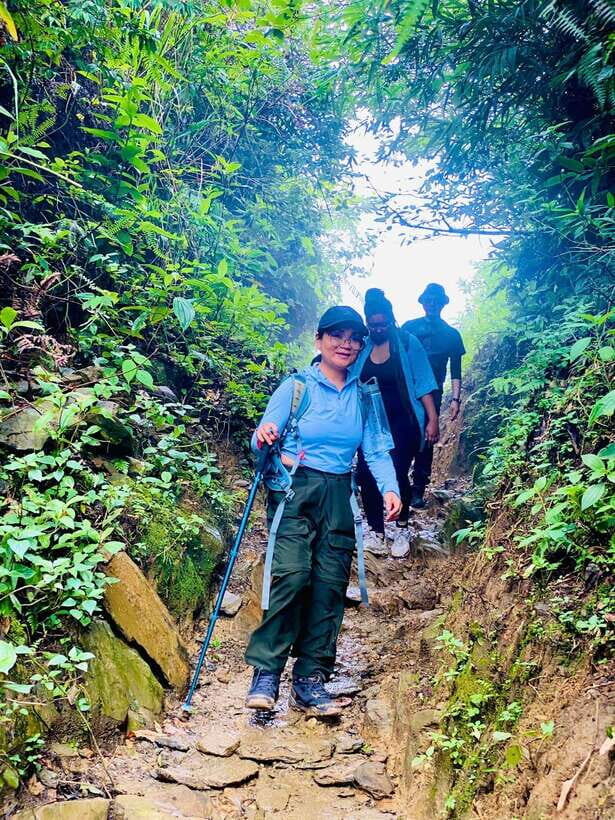
After the climb and the ridge views, the route heads down toward Y Linh Hồ. This is where the day becomes more than trekking—it becomes a cultural walk.
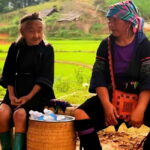
Lunch is served at a small traditional restaurant run by a local Hmong family. That detail matters because it’s not just a pit stop. It’s part of the exchange that makes village tours meaningful: you’re sitting down where locals operate their daily life, not just passing through.
During the walk and stop time, the guide is set up to explain Hmong culture and daily routines. Topics can include:
- unique marriage traditions
- how people work in rice fields
- house building techniques and living patterns
Even if you don’t catch every detail (a hike is noisy in the best way), the overall effect is that you leave with a clearer sense of how the community organizes life around the landscape.
Food-wise, the tour includes one meal, but drinks in the meal aren’t included. If you’re the type who gets thirsty mid-trek, pack water before you go, or plan to buy what you need during the day.
You can also read our reviews of more hiking tours in Sa Pa

Lao Chải and Ta Van: from Hmong areas to Giay village life
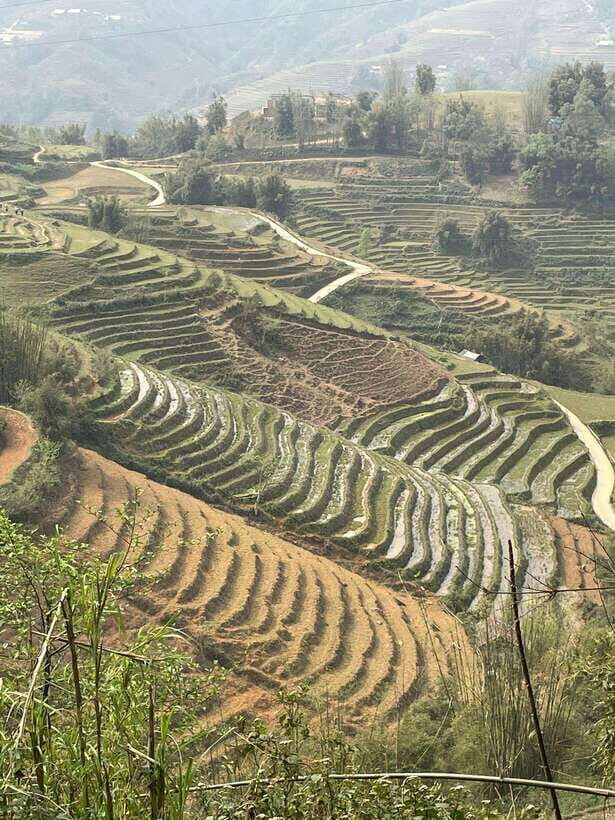
After lunch, the trek continues toward Lao Chải, another village area associated with the Black Hmong community. This segment keeps the “working terrain” feeling going: you’re still moving through field edges and paths that don’t exist to entertain you. They exist to connect homes to fields to roads.
The final stage takes you to Ta Van, where you’ll meet the Giay community. The guide helps you understand differences between the ethnic minority groups you’ve been walking with. It’s not just “these people are from somewhere else.” It becomes concrete through what you see and what you’re told—customs, how work is done, and what daily life looks like across communities.
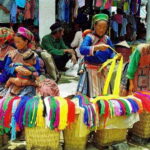
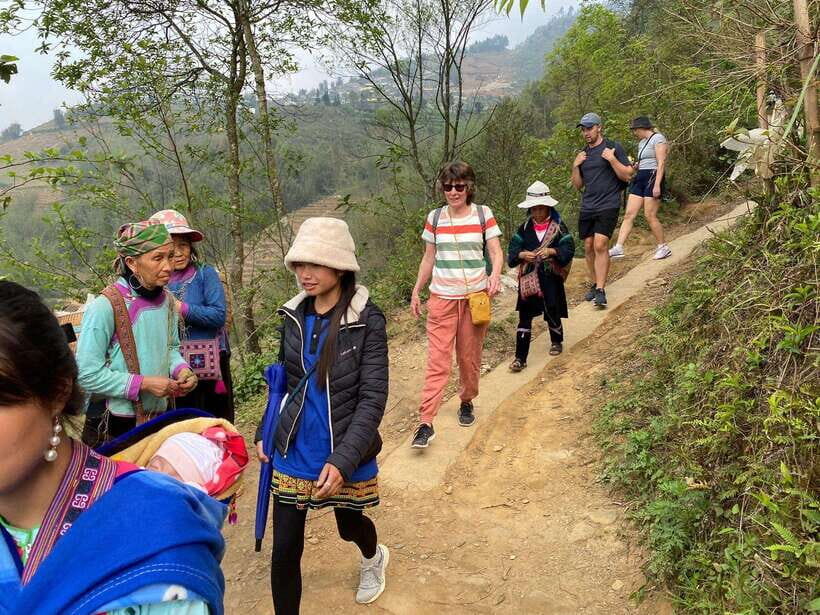
As you arrive in each village area, there’s a good chance people approach you with handmade items they’ve made to sell. This can be part of the economic reality of visiting. I like to treat it as a simple moment to decide what I want: if I’m interested, I look; if I’m not, I keep walking and smile politely. Your guide should help you handle the moment.
The 13 km day: what to expect for your legs, timing, and comfort
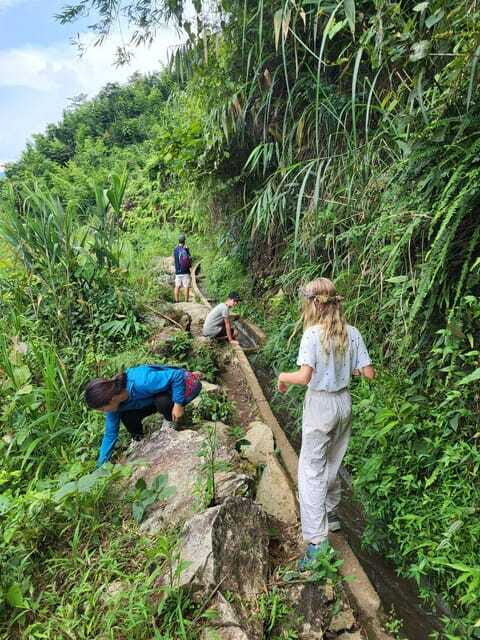
You’re looking at about 13 km total trekking and roughly 5 hours of walking, inside a total day around 7 hours including transfers and breaks. That’s a manageable target for most fit travelers, but it’s not a flat stroll.
Here’s what typically makes it feel harder than distance alone:
- Hills and repeated climbs/descents
- Mud and wet spots if the weather turns
- Altitude effects up around 1,800 m, even if mild
- Stop-and-go walking while you enter village areas and listen
If rain is in the forecast, plan like you’re going to get it. One traveler described torrents of rain that made it hard to focus on anything except moving safely through the mud. That lines up with how these trails behave. Bring:
- shoes with solid grip
- a rain jacket (or poncho) that doesn’t flap
- a small towel or spare socks if you tend to get uncomfortable fast
- a light layer for early morning chill
Also, set your expectations: you won’t feel like you’re in a “fast Instagram loop.” This is a day of walking, talking, and taking photos when it’s safe.
Price and value: is $24 fair for what you get?
At $24 per person for a 1-day guide-led trek, the value comes from what’s included. You’re not just paying for a map and a “good luck.” You’re paying for:
- an English-speaking guide
- all entrance fees
- one meal
- a bus ride from Ta Van back to Sapa town
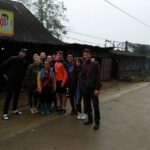
If you tried to DIY this day, you’d likely spend money on a guide or local transport anyway—plus you’d still need a plan for getting back to Sapa at the right time. Here, the structure helps. The group is limited to 10 participants, which usually means your guide can keep track of everyone without turning into a herd.
One more value point: the guide isn’t only pointing at scenery. Guides are there to explain customs and daily work, including Hmong traditions and rice farming techniques. That turns the terrace views into something you understand, not just something you pass by.
The only cost you should mentally budget for is what’s not included: tax, drinks, tips, and possible holiday surcharges. If you’re traveling off-peak, that’s often the biggest “extra” variable.
Who should book this trek (and who should skip it)
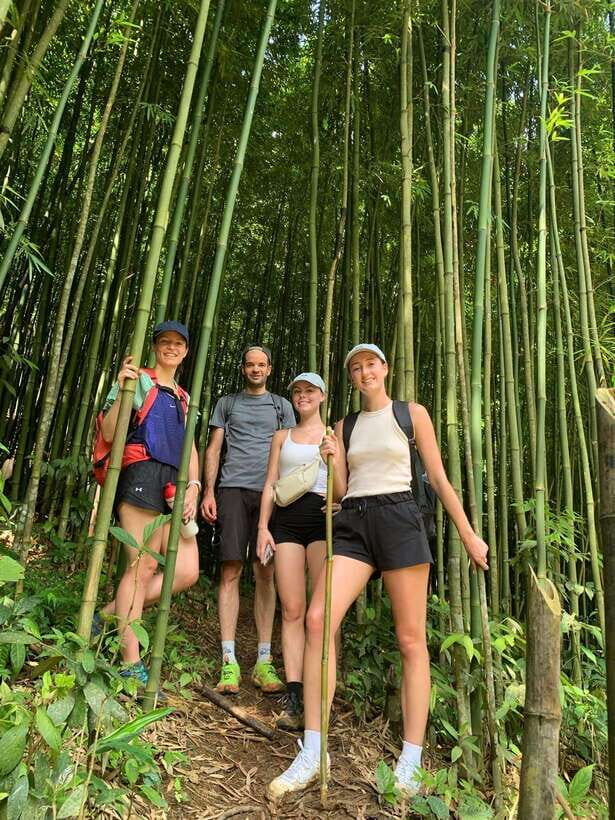
This tour fits best if you:
- want a short, full-day trek rather than multi-day hiking
- enjoy learning through guided village walks, not just “look at the view” tourism
- like being in small groups (max 10) where the guide can actually talk
- want the Muong Hoa Valley and rice terrace experience without a big logistical headache
Skip it if you fall into the tour’s not-suitable groups:
- altitude sickness risk
- high blood pressure
- babies under 1 year
- people over 95
If you’re near the edge health-wise, it’s worth thinking hard about how hard uphill segments feel around 1,800 m.
Should you book this Sapa 1-day terraced rice fields trek?
If you’re choosing between this and a simpler viewpoint tour, I’d lean toward booking. You’ll trade a bit of comfort for a lot more meaning: you walk through the terrace system, cross the Muong Hoa hanging bridge, meet village life, and learn how the communities around Sapa live and work. The day is structured, but not stiff.
That said, book with your eyes open. If you hate mud, you’ll struggle on rainy days. And if you dislike being approached in villages to buy handmade items, you’ll need a polite game plan. On the bright side, having an experienced guide like Su can make a huge difference when conditions aren’t perfect. A good guide is the difference between a tense slog and a day that still feels worth it.
FAQ
How long is the trekking tour?
The tour duration is 7 hours.
What time does the tour start?
It starts between 8:00 and 8:30 am.
Which villages do you visit?
You visit three main village areas: Y Linh Ho, Lao Chai, and Ta Van.
Is lunch included?
Yes. The tour includes 1 meal.
Do I get back to Sapa town after trekking?
Yes. A bus from Ta Van back to Sapa town is included.
How big is the group?
The group is small, limited to 10 participants.
Is this tour suitable for altitude sickness or high blood pressure?
No. It is not suitable for people with altitude sickness or high blood pressure.
If you want, tell me your travel dates and your fitness level, and I’ll help you decide whether the 13 km format will feel fun—or like hard work you might regret.