REVIEW · SAPA
Sapa Easy Trekking Tour 1 Day – Rice Paddies and Cultures
Book on Viator →Operated by Trekking Tour Sapa · Bookable on Viator
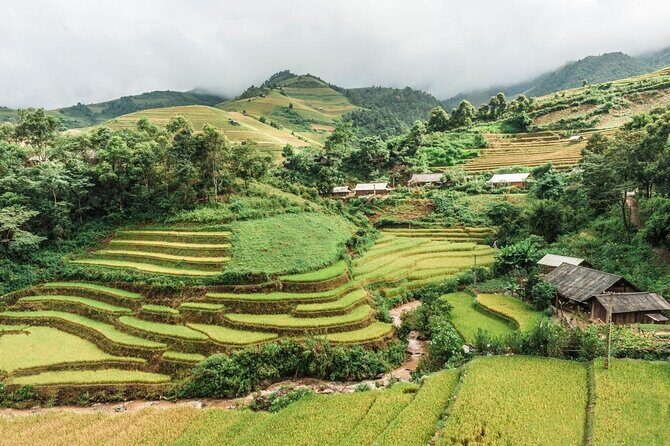
Follow the rice steps into Hmong villages. This one-day trek takes you up to about 1,900m and across friendly villages where you’ll spot Black Hmong and Red Dao life, plus time at Ta Phin’s cave and big views over rice terraces and mountains.
I like the mix of easy-going village time with proper trekking. I also really enjoy the small details that make Sapa feel lived-in, from cardamom trees in the valley to meeting animals used in everyday farming like water buffalo.
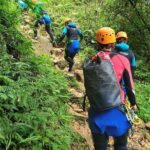
One thing to note: the name says easy, but it’s still a 5.5-hour day outside, with downhills and the occasional slippery section when conditions aren’t perfect.
In This Review
- Key things that make this Sapa trek worth your time
- Why this 1-day Sapa trek feels more human than tour-bus tourism
- Starting at Sapa Church: how the day begins in the valley
- Suoi Ho and Black Hmong village life: houses, routines, and farm animals
- Ta Phin Village and the cave: a classic Sapa highlight in walking distance
- Where Red Dao fits in: two cultures, one rice-powered region
- Price and value: what $40 actually covers in Sapa
- Trek reality check: altitude, timing, and slipping risk
- What lunch and the homestay context really mean
- Best fit: who this Sapa trek suits (and who might rethink it)
- Weather and timing: the one factor that can change everything
- Should you book this Sapa Easy Trekking Tour?
- FAQ
- How long is the Sapa Easy Trekking Tour?
- Where is the meeting point, and what time do we start?
- Is pickup included?
- What’s included in the $40 price?
- Do I need moderate fitness?
- What happens if the weather is poor?
Key things that make this Sapa trek worth your time
- Small group size (max 2 travelers) for a more personal feel and easier pacing
- Village visits with Black Hmong and Red Dao communities, not just viewpoints
- Ta Phin’s cave as a clear, memorable stop during the walk
- Barnyard animal encounters like water buffalo and other farm animals
- Lunch included (vegetarian), plus village entry fees and transport back to Sapa
Why this 1-day Sapa trek feels more human than tour-bus tourism
Sapa can be a lot of viewpoints and group photos. This experience is different because it mixes walking with time in village spaces—where you’re not just passing by, you’re actually seeing how people live around the fields.
You’ll start in Sapa town at 9:00am near Sapa Church, and you’ll be with a local guide. That matters, because the day isn’t only about the scenery—it’s about small explanations along the way, including how local families fit farming, herding, and seasonal work into their routines.
Also, the pacing is shaped for a true day hike, not a shuffle. Even though it’s called easy trekking, it’s designed for people with moderate physical fitness, and you’ll feel the altitude shift as you climb toward about 1,900m.
You can also read our reviews of more hiking tours in Sapa

Starting at Sapa Church: how the day begins in the valley
Your meeting point is Sapa Church in Sapa, starting at 9:00am. The tour route sets you up for a gradual rhythm: you’ll walk out from town, then shift into valley paths where farm life is right there in front of you.
A neat early moment is the stop for cardamom trees in a small valley. That quick “pay attention” detail gives you a sense of what Sapa is actually known for, beyond just “views.” From there, you’ll move into the area around Suoi Thau and onward toward the village sections of the day.
This part is also where you’ll set your expectations for the rest of the trek. If you’re someone who likes to photograph a lot and stop often, you’ll want to tell your guide early so the day still feels comfortable.
Suoi Ho and Black Hmong village life: houses, routines, and farm animals
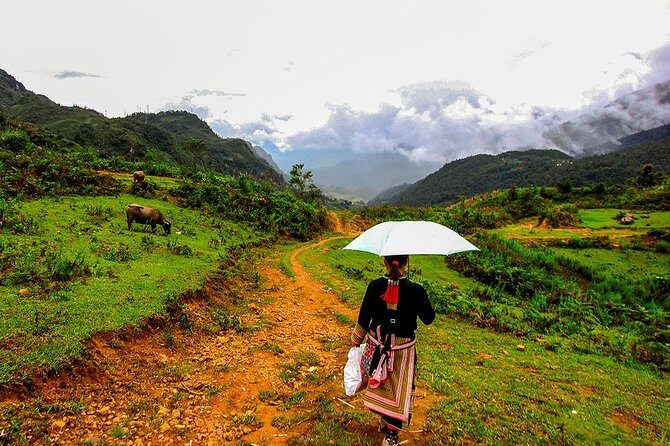
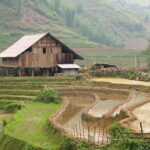
One of the best parts is entering the world of the Black Hmong community at Suoi Ho. The village setting is described as having old and small houses, so you get a clearer sense of scale and daily life instead of an overly curated “tour” feel.
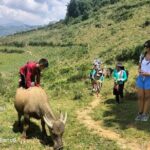
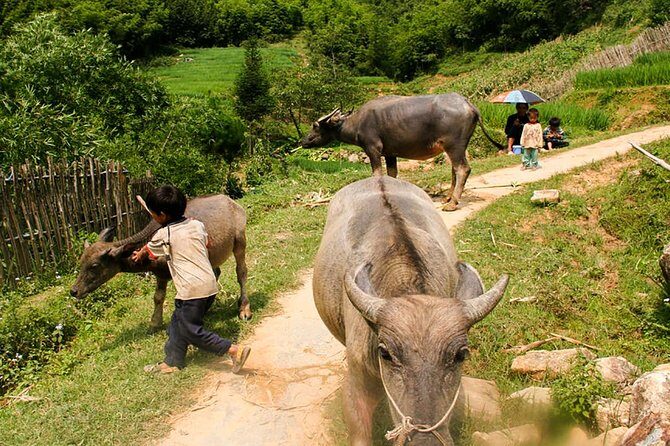
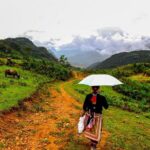
You’ll also meet farm animals that local families rely on. Expect to see animals like water buffalo, along with chickens, dogs, and pigs. It’s not a zoo moment. It feels like stepping into a working farm yard where you can understand why the fields and animals matter as much as the scenery.
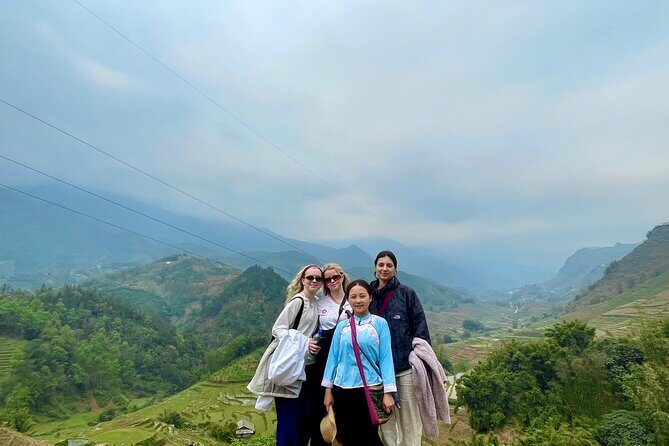
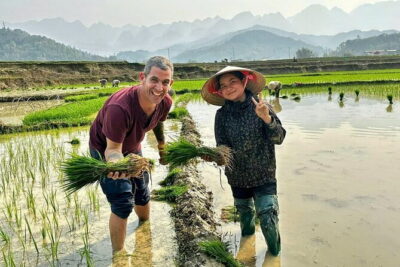
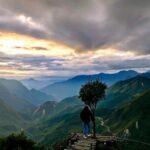
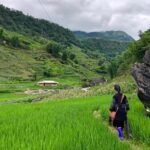
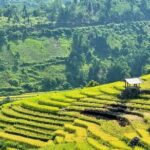
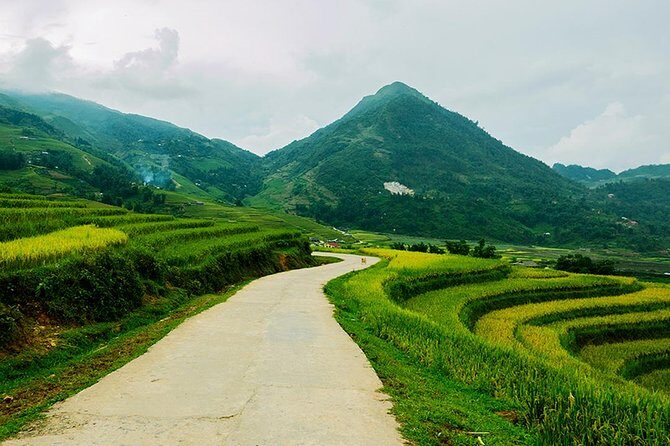
As you walk, you’ll see rice terraces and mountains opening up around you. The views here aren’t just dramatic—they help you connect the village life to the landform. Rice terraces require constant attention, and that connection is what makes the walk feel real.
Ta Phin Village and the cave: a classic Sapa highlight in walking distance
The day’s most well-known anchor is Ta Phin’s cave. This is one of those Sapa stops that’s easy to remember later because it’s specific—you’re not just “somewhere in the mountains,” you’re at a named place people have come to visit for generations.
In Ta Phin, the experience is built around walking through the village area and then taking in the cave stop. Just keep in mind that caves and village paths can mean uneven footing. If you’re wearing slick shoes, you’ll feel it.
This is also a good time to use the local guide’s storytelling. In guides like Pang and Zhu (both mentioned as standout guides), the value isn’t only what they point at. It’s the way they share how life looks from inside the community—what they do, how they think about daily work, and what the landscape means to them.
Where Red Dao fits in: two cultures, one rice-powered region
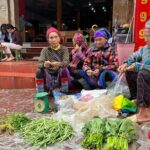
The tour is designed to include two different villages, covering Black Hmong and Red Dao communities. You’ll spend time in those village settings as part of the trek experience, so you’re not treating culture as a quick checkbox.
The route also moves through places like Ma Tra and loops back toward Sapa. That matters because it keeps the day from feeling like “one village then done.” Instead, you get a sense of how these communities are spread across the hillsides around the rice areas.
If you’re the type who loves seeing how different groups adapt to similar terrain, this is one of the strengths of the day. The region is clearly shaped by farming, but the way families live—and the details you’ll notice while moving between villages—are what make the day rewarding.
You can also read our reviews of more tours and experiences in Sapa

Price and value: what $40 actually covers in Sapa
At $40 per person, this is positioned as good-value because it includes the essentials you’d otherwise have to piece together.
Included items are:
- Lunch (vegetarian options provided)
- Transport back to Sapa
- Village entry fees
- 1 small bottle of water
- Local guide
What’s not included:
- Extra drinks (so plan on paying for anything beyond the included small bottle)
- Tips
- Personal travel insurance
So you’re paying for a guided day with meals and entry fees wrapped in. For many people, the value comes down to time saved. In Sapa, it’s not always easy to find a smooth, guided route that handles village fees and gets you back to town without stress. Here, that’s built in.
One more practical perk: the booking includes mobile ticket delivery, and the tour offers pickup. That makes it simpler if you don’t want to line up at the wrong spot with a map that’s already tired of you.
Trek reality check: altitude, timing, and slipping risk
The trek runs about 5 hours 30 minutes total. That’s a short “day hike,” but not a casual stroll. A guide can keep it comfortable, yet you’ll still be moving over paths that can include uneven ground.
You should aim for moderate physical fitness. The route climbs to around 1,900m, and even when you’re not gasping, altitude can make you slower and more thoughtful with each step.
Also, the terrain can be slippery at times, especially if weather has left paths slick. I’d treat this as a day for grippy shoes and careful footwork. If you like a slower pace, say so early. This is especially important because the tour can run with a very small group (up to 2 travelers), so the pace choices carry more weight than in a large crowd.
What lunch and the homestay context really mean
Lunch is included and vegetarian foods are provided. The meal is a practical break—exactly what you want on a half-to-full-day hike—so you don’t spend your energy hunting for food with hungry legs.
One small detail: the information you have doesn’t include drinks at the restaurant/homestay. In other words, you might feel thirsty at the wrong moment if you assume drinks are part of the package. The tour does include a small bottle of water, but for longer days or warm weather, plan to buy more water as needed.
The homestay element isn’t described in deep detail here, but you should expect that village-based meals come with modest practical rules. Keep it flexible and friendly, and the day will feel easier.
Best fit: who this Sapa trek suits (and who might rethink it)
This is a good match if you:
- Want culture plus trekking, not just one or the other
- Prefer a small group experience
- Like meeting locals and seeing day-to-day farming life, including animals
- Are curious about both Black Hmong and Red Dao villages
You might consider another option if you:
- Expect a true walk with almost no effort (this is more hike than amble)
- Have knee or balance issues that make slippery slopes a challenge
- Hate being outside for nearly half a day on uneven paths
It’s also a smart choice for couples and solo hikers, since the tour allows up to 2 travelers, which can mean a more tailored experience when your guide knows what you need.
Weather and timing: the one factor that can change everything
This experience requires good weather. If conditions aren’t suitable, it can be rescheduled or you can get a full refund, depending on how the organizer handles it. That matters in Sapa because rain can turn paths slick fast.
If you’re planning multiple activities in Sapa, I’d avoid stacking them tightly on the same day when weather looks uncertain. Leave breathing room, so a trek doesn’t force a domino effect of missed plans.
Should you book this Sapa Easy Trekking Tour?
If you want a day in Sapa that connects rice terraces, village life, and a memorable landmark (Ta Phin’s cave), this is an easy yes. The small-group setup and the guide-led storytelling—named examples include Pang and Zhu—are a big part of why the experience earns strong ratings like 4.8 out of 5 and 98% recommended.
I’d book it if you’re comfortable with a real hike, can handle moderate walking for about 5.5 hours, and you’re excited about meeting people in Black Hmong and Red Dao villages.
Pass or switch plans if your idea of easy is truly flat, truly slow, and truly slip-free. Even with the best guide, the mountains decide how easy the path feels that day.
FAQ
How long is the Sapa Easy Trekking Tour?
It runs for about 5 hours 30 minutes (approx.).
Where is the meeting point, and what time do we start?
You meet at Sapa Church at 9:00am in Sapa, and the tour ends back at the meeting point.
Is pickup included?
Yes, the tour includes pickup.
What’s included in the $40 price?
The tour includes lunch (vegetarian), transport back to Sapa, village entry fees, 1 small bottle of water, and a local guide.
Do I need moderate fitness?
Yes. The tour notes that moderate physical fitness is recommended.
What happens if the weather is poor?
The experience requires good weather. If it’s canceled due to poor weather, you’ll be offered a different date or a full refund.