REVIEW · SAPA
Craft Tofu in Sa Pa: A Journey into Vietnamese Cuisine
Book on Viator →Operated by SAIGONESE TREKKING HOUSE · Bookable on Viator
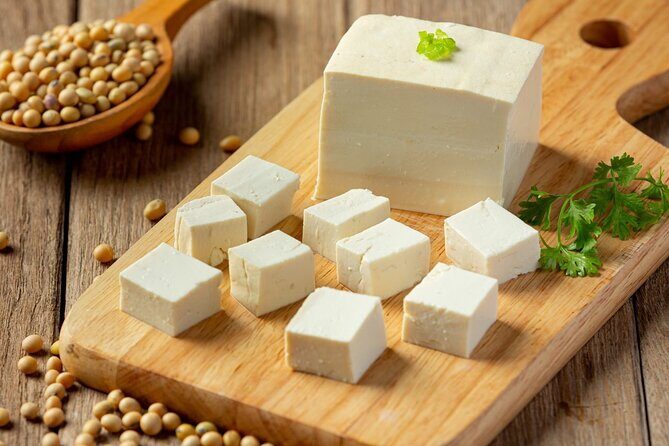
Tofu gets serious in Sapa. This hands-on class at Saigonese Trekking House walks you from soybean selection to curdling with a coagulant, then turns it into dinner you helped create. You also get a quick context lesson on why tofu matters in Vietnamese daily cooking, so it is not just a task—you learn the why behind it.
I really like the practical side: you are guided to notice textures and consistencies so your tofu comes out fresh and properly set. Another strong point is the small group size (up to 10), and the teaching style can feel personal, with past sessions led by guides such as Hoang, Sisi, and Duyen.
Just plan for the timing: the whole process takes time, so if you hate slow steps or you are trying to cram this between very tight plans, you might feel it.
In This Review
- Key highlights at a glance
- Sa Pa’s tofu workshop starts at Saigonese Trekking House
- Why this matters for your day
- The hands-on flow: soybeans to curdling with a coagulant
- The skill you are really buying
- Choosing soybeans: the step that quietly decides everything
- Coagulant and timing: learning texture without fancy tools
- A small heads-up
- Dinner with your own tofu: fried tofu, tomato sauce, and soy milk
- What makes the meal feel special
- Who this class is best for (and who should skip it)
- Price and value: is $19 fair in Sapa?
- Why it feels like good value
- Timing in Sapa: why this can be your best “weather plan”
- Should you book Craft Tofu in Sa Pa?
- FAQ
- What is the duration of the tofu-making class in Sa Pa?
- How much does Craft Tofu in Sa Pa cost?
- Where does the class meet?
- When does the activity end?
- How many people are in the group?
- What’s included in the price?
- What is not included?
- What will I eat during the class?
- Is this good for vegetarians?
- Is there free cancellation?
Key highlights at a glance
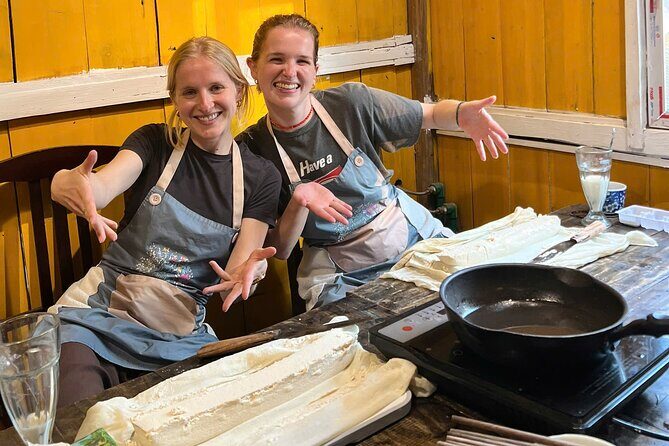
- Up to 10 people means more attention as you work with the soybeans.
- From scratch, start to finish: soaking, grinding, cooking, and curdling are taught end-to-end.
- Texture-focused learning helps you understand when the mixture is ready.
- Dinner is included, using your handmade tofu, plus dessert soy milk.
- Sometimes spare tofu can go home, so you might extend the meal later.
- Tea or coffee welcome is part of the start of the workshop.
Sa Pa’s tofu workshop starts at Saigonese Trekking House
Your class starts at Saigonese Trekking House, 02 Nguyễn Chí Thanh, TT. Sa Pa, Sa Pa, Lào Cai. The spot is near public transportation, which matters in Sapa where getting around can eat time fast. The activity ends back at the same meeting point, so you are not hunting for a ride after dinner.
The venue itself tends to feel relaxed before you cook. One thing I look for in food classes is whether they start you off with comfort, not chaos. Here, you are welcomed with something like tea or coffee, and the space has a terrace feel, which helps you settle in before the technical part begins.
You can also read our reviews of more tours and experiences in Sapa.

Why this matters for your day
A tofu class can be surprisingly hands-on and slow-moving. A calm meeting point helps you actually enjoy the steps—especially the parts where timing is key. If your day in Sapa has been weather-driven or schedule-fragile, this kind of setup is a win.
The hands-on flow: soybeans to curdling with a coagulant
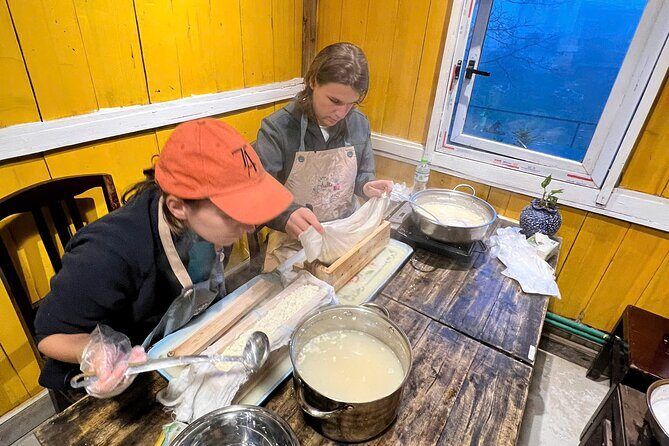
This workshop is built around doing, not watching from the sidelines. You start with an introduction to tofu in Vietnam—its place in local diets and why it is a go-to protein ingredient. Then the chef demonstrates the whole tofu-making process from start to finish, and you move into hands-on work.
Here is the process structure you should expect:
- selecting high-quality soybeans
- soaking the soybeans
- grinding the soybeans
- cooking the mixture
- curdling the mixture with a coagulant
- learning what textures and consistencies mean in real time
The class is designed so you are not just repeating steps. You learn what each stage is trying to accomplish, then you learn how to tell when the mixture is ready. That means you walk away with practical knowledge you can use later when you cook tofu again at home.
The skill you are really buying
The wow moment is the finished tofu. But the real value is that you understand the signals:
- when the mixture is behaving correctly
- what a good texture feels like
- why curdling is not a guess—it is a controlled stage
Even if you are a first-timer, you should feel like you can follow the process and improve as you go.
Choosing soybeans: the step that quietly decides everything
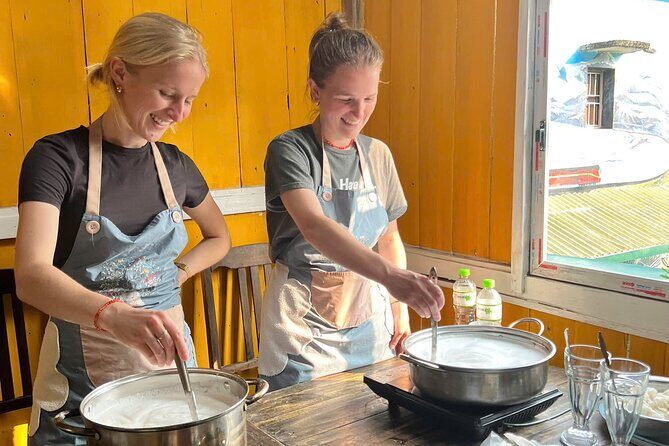
One part of the experience I think you will appreciate is that it starts with ingredient quality, specifically soybeans. Many cooking classes skip the hard truth: the end result depends on what you start with. Here, the chef explains how selecting quality soybeans impacts the final product.
It is a simple lesson, but it changes how you cook. Once you see how much the input matters, you start thinking differently about sourcing at home:
- Are you using soybeans that process consistently?
- Do you have an ingredient that actually produces a good curd?
- Are you paying attention to what matters, not just what is available?
Even if you never make tofu again, this mindset helps you read Vietnamese food more clearly. Tofu is not an afterthought. It is built.
Coagulant and timing: learning texture without fancy tools
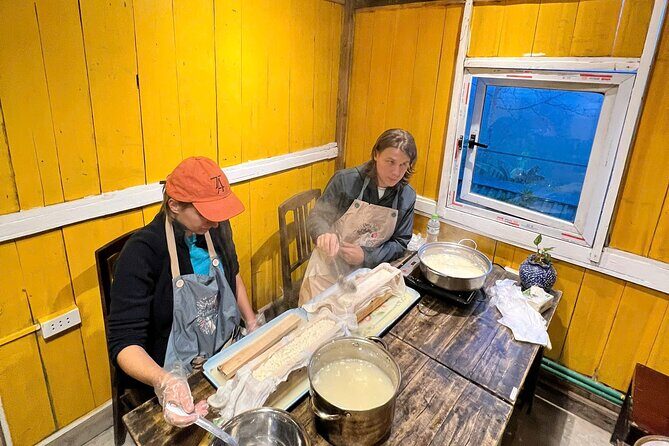
The curdling step is where tofu-making stops being casual and starts being technical. The class includes the use of a coagulant, and you are guided to recognize textures and consistencies that lead to the best result.
This is the part that tends to surprise people. You might expect it to be purely chemical. In practice, it is also sensory:
- look for changes in how the mixture behaves
- notice when the texture is moving toward the right stage
- learn the cues that tell you you are on track
That is why this workshop gets such high marks for being fascinating and genuinely fun. You are not only learning chemistry—you are learning observation.
A small heads-up
Because you are learning in real time, you cannot rush. If you are the type who hates waiting, or if your schedule is packed hour-to-hour, give this class more breathing room than you think you need.
Dinner with your own tofu: fried tofu, tomato sauce, and soy milk
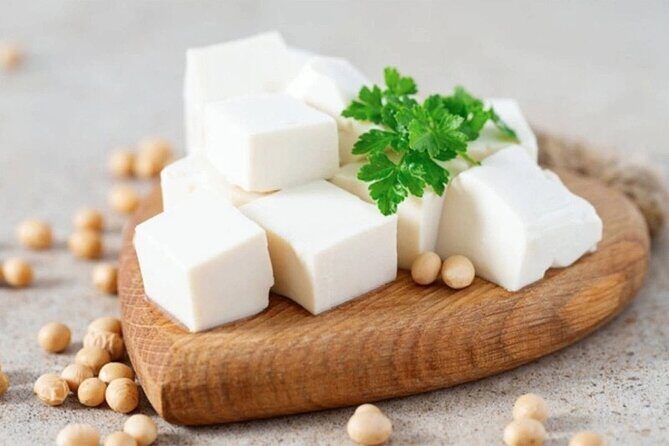
The included meal is one of the easiest ways to judge value. You do not just make tofu and hope it tastes good later. You create it, then you cook with it for dinner.
The class includes dinner and uses the tofu you made. Dishes can include fried tofu with tomato sauce and dessert made from soy milk. The exact combo can vary, but the idea stays the same: you eat what you produced.
Some sessions also allow you to use your homemade tofu in two different dishes at the end. That is a great payoff for your time, because it lets you taste how tofu behaves with different flavors and cooking styles.
What makes the meal feel special
In many cooking classes, the food is decent and that is the end of it. Here, the meal has a built-in story: you watched the ingredients become tofu. Then you break it down again in cooking. That makes dinner feel like the final chapter of the lesson, not an unrelated extra.
And yes, there are reports that spare tofu can sometimes be taken away. That is not listed as a guaranteed item, but it is a nice possibility if you want a snack later or a way to show off your new skill.
Who this class is best for (and who should skip it)
This is a good match if you:
- want a hands-on cooking lesson that ends with an actual meal
- like learning by doing, not just tasting
- are interested in Vietnamese staples beyond pho and spring rolls
- want a small-group experience in Sapa (max 10 people)
It is also a solid option for vegetarians or anyone who genuinely likes tofu. Even if you eat meat, tofu is a major part of how Vietnamese households build meals, so learning it gives you a useful lens.
You might want to skip or reconsider if:
- you are extremely time-restricted, because the process takes time
- you do not enjoy technical, step-by-step cooking tasks
Price and value: is $19 fair in Sapa?
At $19 per person, this is priced like a budget activity—but it feels more like a real class because of what is included. You get:
- dinner
- use of all cooking equipment
- soybeans used during the class
Tips are not included, so if you usually tip, you should factor that into your total. Also, there can be group discounts, so if you have a friend or two traveling with you, checking pricing for multiple spots could help.
Why it feels like good value
The best value here is the combination:
- a short but real skill lesson (not a vague demo)
- a full start-to-finish workflow
- a meal using your own results
- small group teaching attention
If you were to buy tofu and a similar dinner elsewhere in Sapa, you might spend close to this once you add up costs. What you pay for here is time, instruction, and the satisfaction of doing the process yourself.
Timing in Sapa: why this can be your best “weather plan”
Sapa weather can change your plans fast. A cooking class is one of the most reliable ways to protect your day.
Also, this course is not outdoors-heavy. It does not depend on views, hikes, or timing the light. That makes it a smart choice when you want something warm, indoors, and productive.
If you are visiting with someone and want a shared activity that builds a story for the trip, tofu-making is easy to bond over. The steps give you something to talk about during the class, and then the shared dinner seals it.
Should you book Craft Tofu in Sa Pa?
Book it if you want a small, hands-on food skill in Sapa that ends with dinner you made yourself. The strongest reasons are the step-by-step teaching, the focus on texture and consistency, and the fact that you are not leaving hungry or empty-handed.
Skip it if you hate slow processes or you have a schedule you cannot stretch. Tofu-making takes time, and the class respects that reality.
If you like learning how food is made—especially Vietnamese staples—this workshop is a genuinely practical way to spend a couple of hours while the rest of Sapa does its own thing around you.
FAQ
What is the duration of the tofu-making class in Sa Pa?
The class runs about 2 hours 30 minutes.
How much does Craft Tofu in Sa Pa cost?
The price is $19.00 per person.
Where does the class meet?
You’ll meet at Saigonese Trekking House, 02 Nguyễn Chí Thanh, TT. Sa Pa, Sa Pa, Lào Cai, Vietnam.
When does the activity end?
It ends back at the same meeting point.
How many people are in the group?
The class has a maximum of 10 travelers.
What’s included in the price?
It includes dinner and the use of all cooking equipment and soybeans during the class.
What is not included?
Tips are not included.
What will I eat during the class?
Dinner can include fried tofu with tomato sauce, and dessert includes soy milk (using the handmade tofu you made).
Is this good for vegetarians?
The class focuses on tofu and soy-based dishes, and it has been recommended as a good option for vegetarians or people who like tofu based on past feedback.
Is there free cancellation?
Yes, there is free cancellation. You can cancel up to 24 hours in advance for a full refund.