REVIEW · SA PA
From Sapa:Cable Car Ticket To Fansipan Legend & Car Transfer
Book on GetYourGuide →Operated by Izitour · Bookable on GetYourGuide
Fansipan is a big goal. This day trip combines a private hotel transfer and a round-trip cable car so you can focus on the sights: massive bronze statues, Zen monasteries, pagodas, and scenic mountain views that feel built for stopping and looking. I like that the package includes a lot of named spiritual and architectural stops, not just the ride up. I also like the convenience factor in Sapa, where getting around on your own can turn into extra hassle. The main drawback to plan for is timing and direction: if the pickup or check-in isn’t smooth, you can lose time and end up skipping parts of the route.
What makes this experience interesting is how it turns Fansipan into a walkable cultural circuit once you reach the peak area. You’re not doing a full-on trekking day; you’re moving through iconic points that range from the 12m bronze Guanyin statue to the Great Buddha on a huge lotus pedestal, plus waterfalls and shrines along the way. And yes, the cable car views over rice terraces, forest, and waterfalls are a big part of the payoff.
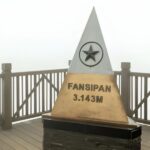
One more practical note: the weather at the top can change your day fast. It is normally cold and foggy in several winter months, so if you’re chasing crisp photos, you’ll want warm layers and realistic expectations. Even when visibility is limited, the statues and temple architecture still give you plenty to see.
In This Review
- Key things I’d focus on before you go
- Private transfer in Sapa: why hotel pickup matters
- Cable car up to Fansipan: the view is the warm-up
- The peak route: how the itinerary actually feels
- Guanyin Statue and Bao An Zen Monastery: the first big impression
- Bich Van Zen Monastery and the Enlight Path of Thanh Van
- Grand Belfry and the Great Buddha: scale you can feel
- 9 Storey Waterfall, Stupa, and Alahat Path: scenic variety
- Mountain God Shrine and Kim Son Bao Thang Pagoda: the calm finish
- How long the day really takes: 9 hours vs real pacing
- Price and value: what $96 per person buys you
- Weather at Fansipan: fog, cold, and how to plan your expectations
- Small practical notes that can save your day
- Who this Fansipan day trip is best for (and who should skip it)
- Should you book this private Fansipan cable car day with Izitour?
- FAQ
- How much does this Fansipan experience cost?
- What’s included in the ticket and activity?
- Is a tour guide included?
- Do I need tickets for Muong Hoa Train?
- What should I bring for Fansipan?
- Are there height requirements for the ticket?
- What’s the weather like at the top?
Key things I’d focus on before you go
- Cable car convenience: One long cable car ride up and back means less physical strain and more time for the peak stops.
- A lot of named monuments: Guanyin, multiple Zen monasteries, Grand Belfry, Great Buddha, stupa, shrines, and the Kim Son Bao Thang Pagoda.
- Altitude reality check: Cold temps and fog can cut down visibility, especially in winter months.
- Self-navigation is part of it: A tour guide is not included, so you’ll want clear directions to avoid missing stops.
- Value depends on your style: If you want pickup + organized admission, this can be worth it; if you like DIY, you may find cheaper options.
Private transfer in Sapa: why hotel pickup matters
This is a hotel-to-station-to-hotel setup, built for convenience in Sapa center. Your private car pickup takes you to Fansipan’s station, then you’re dropped back at your hotel after the day trip. That sounds simple, but in Sapa, it saves you from the “how do we get there today” problem—especially if the weather turns or you’d rather not spend your limited time negotiating rides.
I also like the rhythm this creates: you’re not juggling multiple tickets, transport steps, and last-minute decisions. You show up, check in, and then your job is basically to follow the peak route and stay warm.
One thing to watch: timing errors can happen when pickup coordination goes sideways. If your car arrives late or goes to the wrong spot, you can end up behind schedule and lose time inside the peak area. My advice is to confirm your hotel address clearly with the operator team after you book, and be ready at the pickup time so you don’t lose minutes waiting.
You can also read our reviews of more tours and experiences in Sa Pa
Cable car up to Fansipan: the view is the warm-up
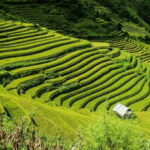
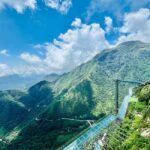
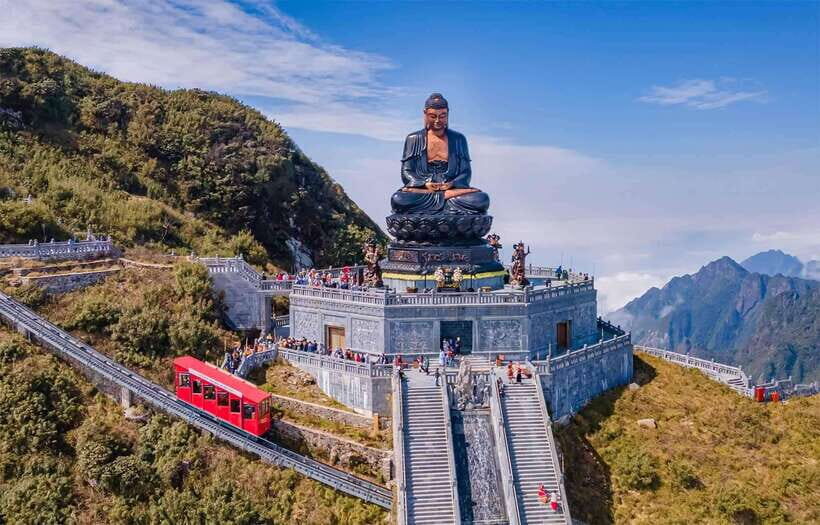
The cable car ride is a centerpiece here. Fansipan’s cable car is known for being one of the longest routes in Vietnam, and you ride it while the landscape unfolds below you: mountain slopes, dense forests, rice terrace views, and cascading waterfalls. It’s not just a transportation step; it sets the mood. Even if you’ve seen mountains elsewhere in Vietnam, the scale and the layered scenery at Fansipan feel different.
What to plan around:
- Queues can affect your day length. The tour duration is listed as 9 hours, but real time can stretch or shrink depending on waiting times and how fast you move between stops.
- Temperature changes with altitude. Even if Sapa town feels manageable, the peak area can be cold. Wear warm layers and keep your hat and warm shoes ready.
If fog rolls in, you might lose the panoramic sweep, but you’ll still get the architectural payoff once you reach the top stations and transfer points. On a low-visibility day, I focus on shapes, materials, and details instead of skyline photos.
The peak route: how the itinerary actually feels
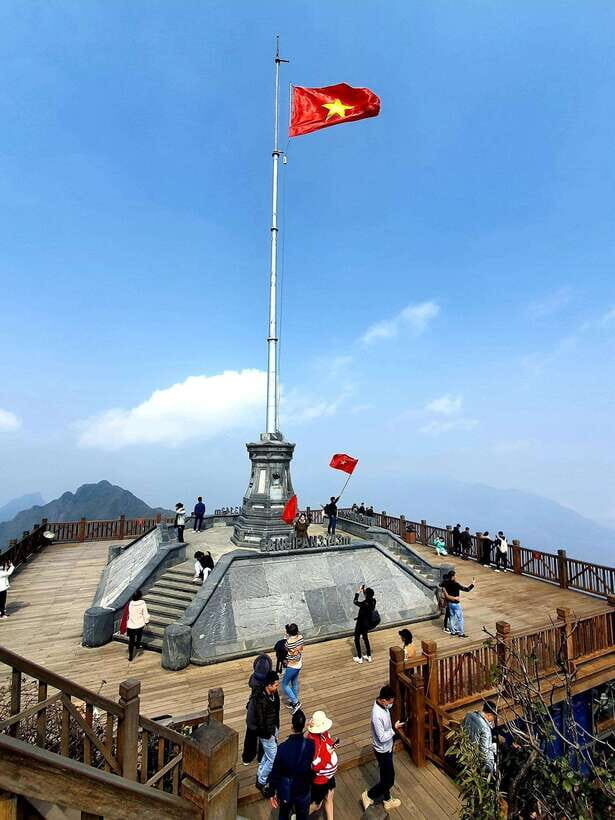
Once you’re at Fansipan Peak’s check-in area, you’re essentially following a spiritual and architectural circuit. The experience includes entrance access that lets you visit a long list of named attractions, including major statues, Zen monasteries, towers, and shrine areas.
Because a tour guide is not included by default, this matters: you’ll be doing more self-paced navigation than you might expect. If signage and walking directions are confusing at any point, you can lose time and end up skipping a couple stops. My practical take is to build in a little extra buffer in your head. Don’t schedule other activities immediately afterward.
Below is what each stop adds to the overall day, and what to keep in mind.
Guanyin Statue and Bao An Zen Monastery: the first big impression
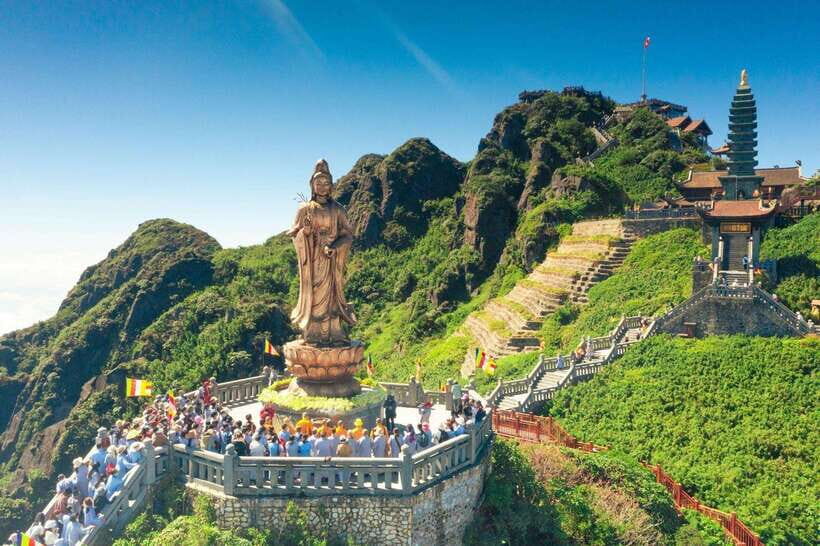
Your route starts with the Guanyin Statue, a bronze figure that rises 12m and weighs 18 tons. It’s also very specific in symbolism: her eyes are directed east, her right hand holds a willow branch, and her left hand holds a sacred vase. These details are worth pausing for, because they’re part of why the statue works as a landmark, not just a background photo.
Right after, you’ll visit Bao An Zen Monastery, also called the Trinh Pagoda. This is the first Zen stop for visitors in the Fansipan complex, located at about 1,604m in the Sapa Terminal complex. The height isn’t just a geography detail; it signals a shift from transit to pilgrimage space. You’ll feel like you’re moving deeper into the spiritual zone rather than just sightseeing.
If the weather is foggy, these early monuments can still feel powerful because you’re standing close to the details. If you’re trying for photographs, you’ll likely get better results focusing on the statue and temple elements rather than wide landscape shots.
Bich Van Zen Monastery and the Enlight Path of Thanh Van
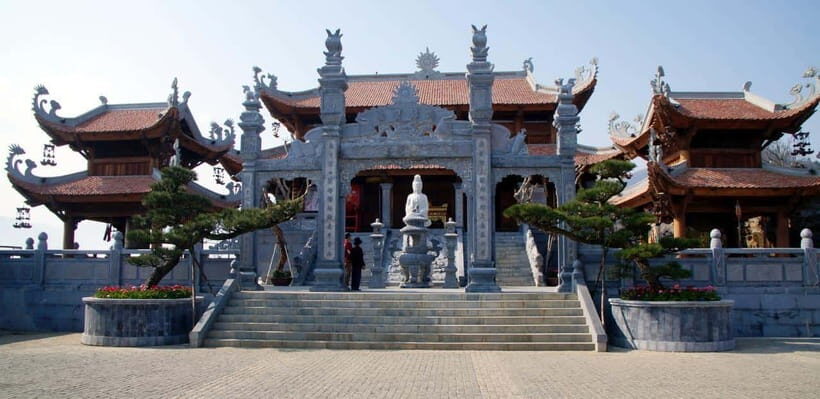
Next comes Bich Van Zen Monastery, described as being at around 3,037m, framed against misty grey skies. It also has an architectural balance: it is symmetrically flanked by the Saint Tran Hung Dao Temple and the Three Holy Mothers Temple, with roof and decorative patterns influenced by the Tran Dynasty style.
This stop is a good reminder that the Fansipan complex isn’t random. It’s arranged so you see repeating design cues, and that makes the walking route more satisfying. You’re not just hopping from point to point; you’re seeing a consistent design language.
Between the major monuments, you’ll also cover the Enlight Path of Thanh Van. Even if you treat it as a walking connector, it helps you slow down. Paths like this are where you get the “I’m actually here” pacing, especially when the air is chilly.
You can also read our reviews of more tours and experiences in Sa Pa

Grand Belfry and the Great Buddha: scale you can feel
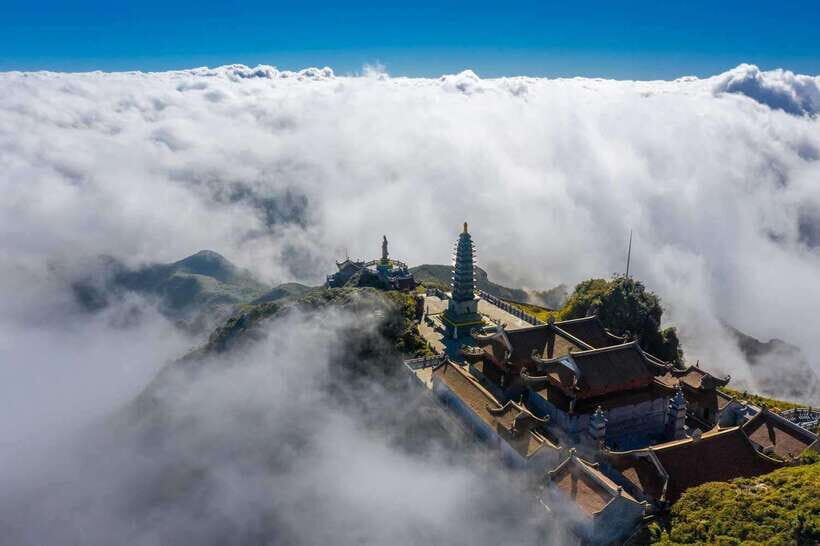
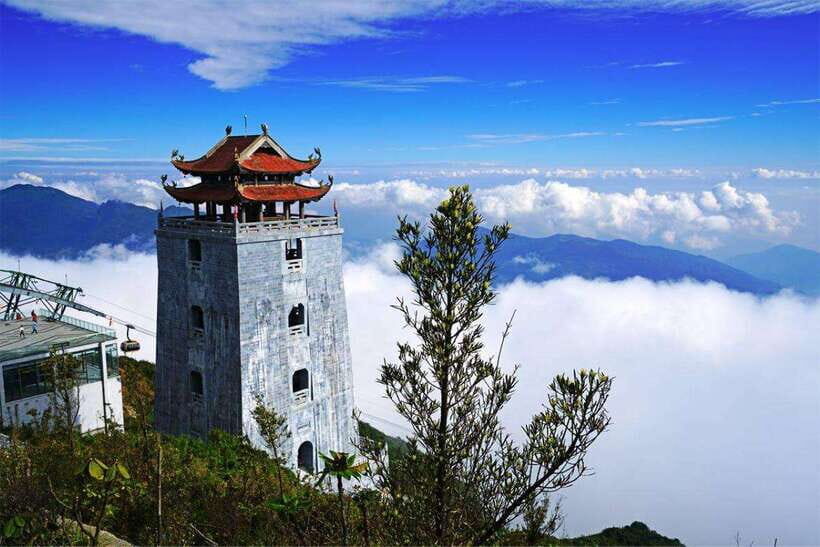
The Grand Belfry is a standout for pure structure. It has five stories and stands about 32.8m tall. Four stories are built of rock, and the upper one is modeled after a traditional pavilion style with two compartments and eight roofs. Each storey holds a bronze bell cast after the original in the Tran Dynasty, dating back to the 13th and 14th centuries.
Even if bells aren’t part of your plan that day, the belfry design makes you look upward automatically. In fog, it can feel like the architecture is hovering.
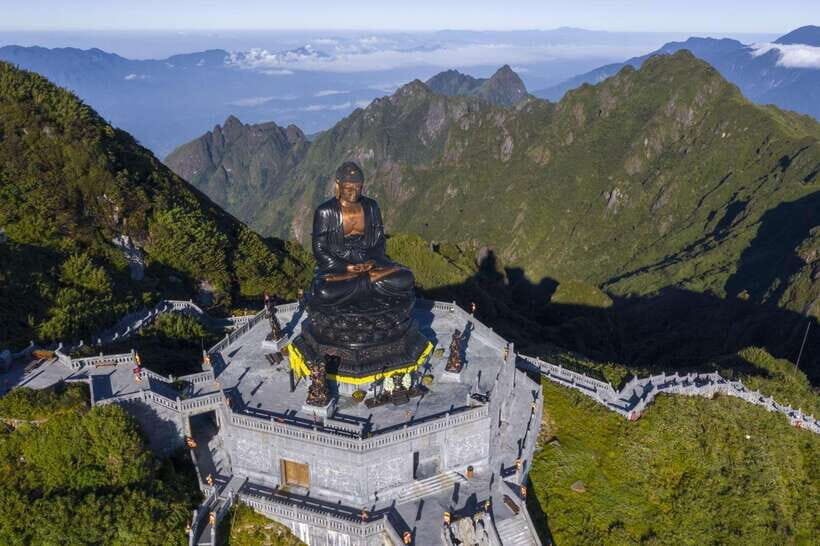
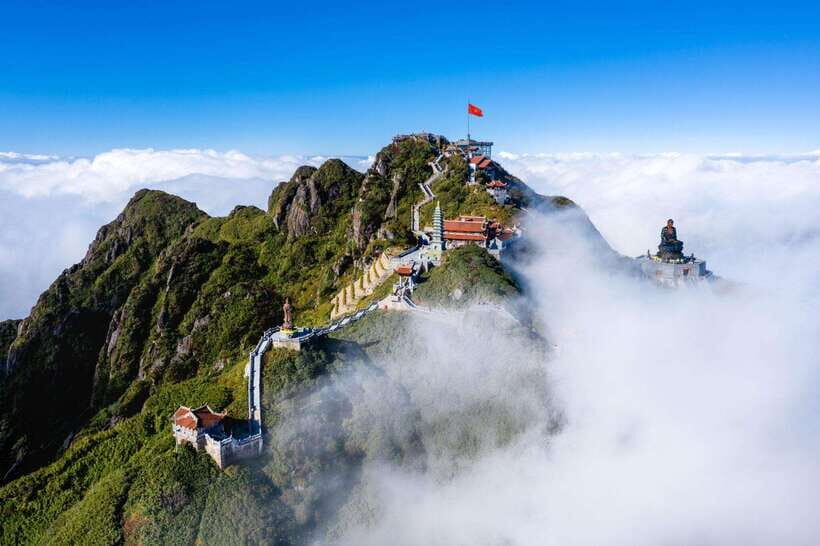
Then you’ll reach the Great Buddha Statue, described as the highest seated bronze Buddha statue in Vietnam. It rises 21.5m, is cast of over 50 tons of copper, and includes three stories: the Great Buddha on an 8m lotus pedestal. This is the kind of statue that changes your sense of scale. You stop seeing it as an object and start seeing it as a landmark meant to anchor the entire summit zone.
On cold days, I recommend taking photos early around these major monuments. Once you’ve walked longer, your hands get stiff and it’s harder to frame shots. Warm up in short pauses.
9 Storey Waterfall, Stupa, and Alahat Path: scenic variety
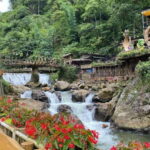
Not every stop is a statue. The 9 Storey Waterfall adds a softer, more dynamic element. The name suggests vertical drama, and waterfalls are always a good change of pace when your eyes have been fixed on stone and bronze.
After that you’ll visit The Stupa, described as 11 stories with a stone-clad surface and a lotus-shaped finial cast of copper. The design is reminiscent of iconic Northern delta structures. That matters if you like cultural continuity—this is where Fansipan connects back to broader Vietnamese temple aesthetics rather than feeling purely imported or themed.
Then comes Alahat Path, a walking route that keeps you moving through the complex without making the day feel like endless stairs. It’s also a useful buffer between the heaviest “wow” monuments.
Mountain God Shrine and Kim Son Bao Thang Pagoda: the calm finish
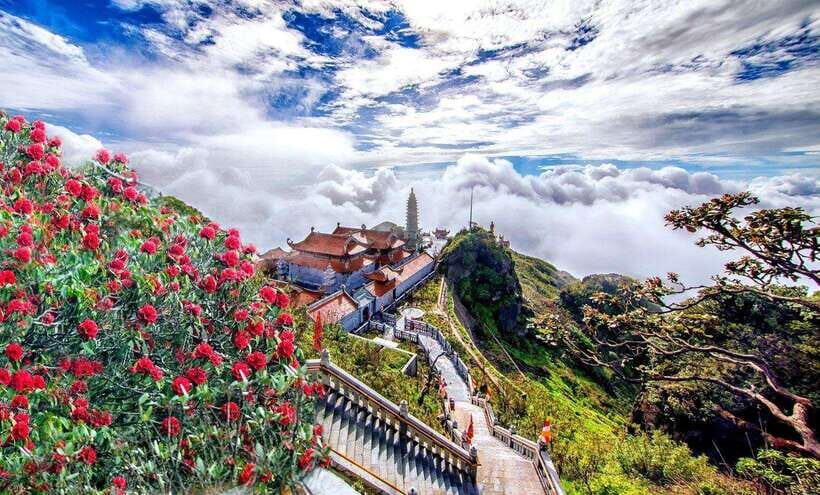
Near the end of the route you’ll reach the Mountain God Shrine. Shrines like this give the experience a local, place-based feeling—Fansipan isn’t just a temple stage; it’s tied to the mountain itself.
Finally, you’ll visit Kim Son Bao Thang Pagoda, modeled after the Tran Dynasty architecture and located at about 3,091m. It includes the Three Treasures Hall, the Ancestral Hall, and two corridor wings. With Fansipan as the backdrop, this stop feels like the day’s emotional landing spot. Even if you’re not religious, you’ll likely appreciate the symmetry and the sense of order at the top.
If fog is present, the pagoda can still work as a photo subject because you’ll get texture and shape even when distance is erased. I treat fog days like a chance to photograph details rather than horizons.
How long the day really takes: 9 hours vs real pacing
The experience is listed as 9 hours. That’s a useful planning number, but your actual time can vary based on cable car wait times, how quickly you move between stops, and how long you linger for photos.
Here’s what I think helps most:
- Start early in your mindset. Even if your pickup is late, you’ll still want energy for the summit walk.
- Move in a loop. Don’t backtrack unless you’re sure you’re missing something.
- Don’t rush the big monuments. Guanyin, the Great Buddha, and the Grand Belfry are the hardest to replace if you run out of time.
Also remember: the itinerary includes a lot of named points, so if you get confused once inside the complex, time disappears fast. A guide isn’t included by default, so you’re your own safety net.
Price and value: what $96 per person buys you
At $96 per person, this is not the cheapest way to do Fansipan. The value question is simple: you’re paying for convenience plus a bundled admission experience.
What you get for the money:
- Fansipan ticket (height-based verification applies)
- Private car round trip from a hotel in Sapa center to the Fansipan station
- Round-trip cable car
- Access to many named sites: Guanyin, multiple Zen monasteries, belfry, Great Buddha, 9 Storey Waterfall, stupa, Alahat Path, Mountain God Shrine, and Kim Son Bao Thang Pagoda
What you don’t get:
- A tour guide (optional with a surcharge)
- Lunch (buffer lunch costs extra)
- Tickets for Muong Hoa Train (not included)
So who does this package tend to make sense for? If you want the least friction, this is a strong fit. If you’re the type who enjoys figuring out routes and stacking tickets on your own, you might prefer DIY because the price can feel steep compared with just paying for admission and transport separately.
My balanced recommendation: book this if you value hotel pickup and a planned route. If you’re traveling light, comfortable navigating, and happy to do a self-guided day, you can probably create a cheaper plan. The deciding factor is how much you want to babysit logistics while you’re already dealing with cold weather and altitude.
Weather at Fansipan: fog, cold, and how to plan your expectations
Altitude at Sapa means the area can be foggy during December through February, and it can be cold in September through March. The weather is also described as unpredictable.
That affects what you should pack and how you’ll enjoy the day:
- Bring warm clothing and warm shoes
- Pack sunglasses and sun hat (yes, even when it’s cold; bright light can cut through fog)
- Use sunscreen because altitude sun can be deceptive
- Expect limited visibility on foggy days, especially in winter
On low-visibility days, treat the statues and temple design as your main photos. If you chase distant panoramas, you might feel disappointed. Fansipan still delivers once you shift your focus to close-up details and the monumental shapes.
Small practical notes that can save your day
These are the details that keep the day from turning annoying:
- Cash helps. The banking system in Sapa sometimes doesn’t function well. Take cash in Vietnam Dong; US Dollar, Euro, and Australian Dollar are accepted in Sapa.
- Ticket verification is height-based. For accurate pricing and verification, confirm details with the operator team.
- Children pricing matters. Children 140cm and above pay adult rates. 100–140cm are child rates. Under 99cm enter free.
- Confirmation comes online. You’ll get a confirmation number or QR code online by email/mobile/WhatsApp/KakaoTalk/WeChat. Share your hotel address with the operator team after booking for pickup and drop-off.
One more note: because there’s no guide included, I’d strongly consider asking the operator how they want you to confirm the exact route once you reach the peak area. Clear instructions reduce the odds of missing a couple stops.
Who this Fansipan day trip is best for (and who should skip it)
This works best for:
- People who want a lot of major monuments without trekking
- Travelers who appreciate private pickup and a structured “ride plus route” plan
- Anyone who’s visiting Sapa for a short time and doesn’t want to waste hours figuring out logistics
It might not be ideal for:
- People who want a long, natural hiking experience on trails without major complex infrastructure
- Travelers who enjoy DIY so much that any premium for convenience feels unnecessary
- Anyone who hates self-navigation—because a guide is not included unless you pay extra
If you’re traveling with limited mobility, this is still not the same as a fully accessible experience everywhere inside the complex, but the cable car and the vehicle transfer reduce the hardest part of the trip.
Should you book this private Fansipan cable car day with Izitour?
If your priority is convenience—hotel pickup, cable car, and access to a full slate of major peak sights—this is a solid choice. The included stops are genuinely varied, from the monumental Guanyin Statue to the Great Buddha Statue, plus the Grand Belfry, 9 Storey Waterfall, stupa, shrines, and the Kim Son Bao Thang Pagoda. You’re paying for reduced friction and a guided-by-map kind of route.
I’d only hesitate if you’re the type who dislikes paying for bundled convenience, or if you know you’ll struggle with navigating without a guide. In those cases, you might do better booking tickets and transport yourself, especially if you’re comfortable handling timing and directions.
If you do book, your best move is simple: confirm pickup location and hotel address, dress for cold and fog, and plan to move steadily between the named stops so you don’t lose time.
FAQ
How much does this Fansipan experience cost?
It’s priced at $96 per person.
What’s included in the ticket and activity?
You get a Fansipan ticket, private car transfer from a hotel in Sapa center to Fansipan’s station, round-trip cable car ride, and access to multiple attractions including Guanyin Statue, Bao An Zen Monastery, Enlight Path of Thanh Van, Bich Van Zen Monastery, the Grand Belfry, the Great Buddha Statue, 9 Storey Waterfall, the Stupa, Alahat Path, Mountain God Shrine, and Kim Son Bao Thang Pagoda.
Is a tour guide included?
No. A tour guide is not included. You can contact the operator team to request one, and it will be a surcharge.
Do I need tickets for Muong Hoa Train?
No. Muong Hoa Train tickets are not included.
What should I bring for Fansipan?
Bring warm clothing, sunglasses, sun hat, sunscreen, and warm shoes.
Are there height requirements for the ticket?
Yes. Tickets are based on height, and you should contact the operator team for details about verification.
What’s the weather like at the top?
It’s normally cold in September through March, and it can be foggy in December through February. Weather is described as unpredictable.