REVIEW · HANOI
Authentic Sapa Trekking Adventure Tour With Ethnic Minority Guide
Book on Viator →Operated by Vietnam - Hanoi Package Tours · Bookable on Viator
A Sapa trek that stays human. This tour mixes ethnic minority village visits with a short walk through bamboo and rice views, then finishes in the Muong Hoa Valley area where you meet the Dzay community. You’ll get a welcome drink, time to take photos with locals, and a relaxed chat over tea comparing daily life and customs between the Black Hmong and Red Dao.
Two things I really like: the tour keeps it time-friendly (about 4 hours on foot) and still gives you real cultural moments, and the guide support is practical, with an English-speaking guide and pickup from your Sapa accommodation. One possible drawback: if you feel tired, the option to switch to a motorbike or car return is mentioned, but it’s excluded, so plan for that extra cost if you need to cut the walk short.
Because it’s a private setup for just your group, you can move at a comfortable pace and ask questions without feeling rushed. You’ll also have a simple end-of-day rhythm: trek, meet people, then take the quiet return route back to Sapa.
In This Review
- Key highlights you’ll actually care about
- A short trek that hits Black Hmong, Red Dao, and Dzay
- Stop 1: Sapa—traditional homes, welcome drink, and photos
- North Sapa: Black Hmong and Red Dao—differences you can hear
- Bamboo forest and rice paddies: the walking that makes it feel real
- Southeast Sapa to Muong Hoa Valley: Dzay community time
- Tea, conversation, and respectful photo moments
- Getting back to Sapa if your energy runs out
- Price and value: what $33.61 buys you
- Who this tour suits best
- Quick tips to make the most of your 4 hours
- Should you book this Sapa to Muong Hoa ethnic trekking tour?
- FAQ
- How long is the Sapa trekking experience?
- Where does the tour start?
- Is an English-speaking guide included?
- Is admission required for the trekking part?
- Is the tour private?
- Can I arrange to return to my hotel early if I get tired?
- Is drop-off back to my hotel included?
- Are there extra charges if I’m outside Hanoi’s Old Quarter?
- What is the cancellation policy?
Key highlights you’ll actually care about

- A short 4-hour trek that still reaches bamboo forest, rice fields, and village paths
- Ethnic group visits in two directions: north for Black Hmong and Red Dao, southeast for Dzay in Muong Hoa Valley
- Tea-time conversation that helps you understand differences between Black Hmong and Red Dao beyond sightseeing
- Photo and welcome-drink moments that feel like respectful stops, not a quick photo line
- English-speaking guide support (including Dely, noted as a standout guide name in feedback)
- Pickup in Sapa is included, so you’re not burning time getting to the trailhead
A short trek that hits Black Hmong, Red Dao, and Dzay
This is the kind of Sapa experience that works if you don’t want a full-day grind. The walk is about 4 hours (approx.), and the route is designed to cover more than one ethnic area. You’ll start with village-style introductions in the north part of Sapa, then continue southeast toward Muong Hoa Valley, where the Dzay community is the focus.
Why that matters: Sapa can be busy and touristy fast. A shorter trek with guided context helps you slow down enough to notice daily life—how people live, how they explain their routines, and how customs differ from group to group—without you feeling like you’re racing the clock.
Also, the tour is built around conversation. It’s not only “see this, take a picture, move on.” You’ll have a chance to chat (including tea time) and ask questions while you’re walking or during stops. That’s where you’ll get the most value from a 4-hour format.
You can also read our reviews of more guided tours in Hanoi


Stop 1: Sapa—traditional homes, welcome drink, and photos
The day begins back in Sapa, with a local-focused sequence that sets the tone for the trek. Expect traditional home visits and a welcome drink. There’s also time to take photos with locals.
The upside is simple: you ease into the experience before you start walking hard. You’re not dropped on a random trail with no context. You’ll also get a sense of what the tour means by “daily life,” because the visit starts before the trekking even becomes the main activity.
A practical note: since the walk is time-limited, you’ll want to use this early portion efficiently—ask your guide what to watch for (work, clothing, village layout) so you don’t spend the first hour just trying to figure out what you’re seeing.
North Sapa: Black Hmong and Red Dao—differences you can hear
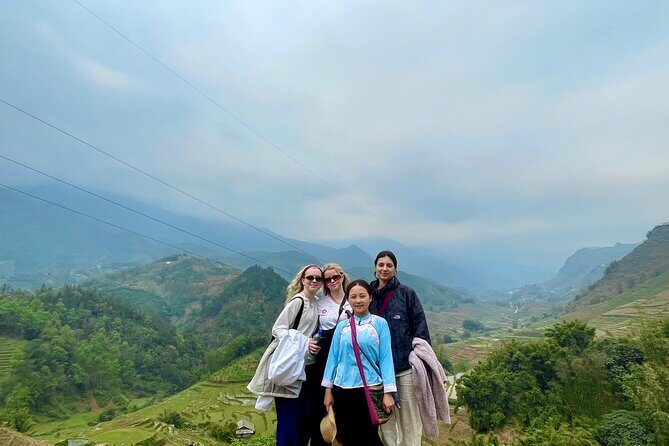
After the initial stops, the route heads toward the north of Sapa to spend more time with the Black Hmong and Red Dao communities. The tour is built around learning how their traditions and customs differ, and it leans into conversation for that.
You’ll likely notice different details through what people explain and how the guide translates the meaning behind them. The tour specifically includes time to talk over a cup of tea, which is a smart move. Tea time gives you a break from constant movement, but it also keeps the experience grounded in social life rather than performance.
Here’s how to get the most from this portion:
- Ask about daily routines (especially farming and household tasks) and what changes through the year.
- Pay attention to how people describe their community values, not just the visible details.
- If you see something you don’t understand, ask right away instead of waiting until later.
One small consideration: when a tour covers multiple communities in a short window, you’ll have to accept that you won’t see everything. The benefit is focus—you’ll leave with clearer comparisons between Black Hmong and Red Dao rather than a blur of rushed stops.
Bamboo forest and rice paddies: the walking that makes it feel real
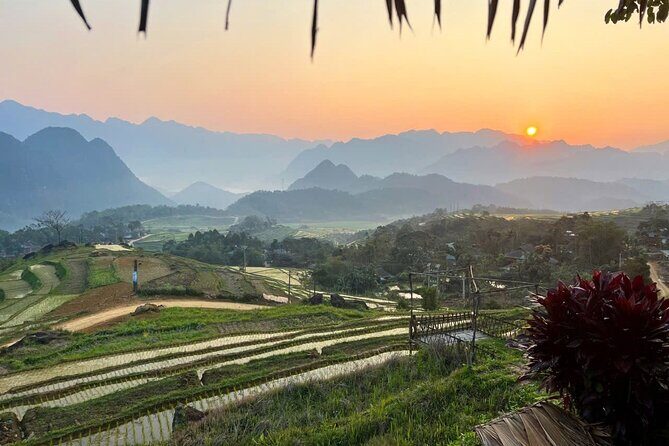
One highlight that shows up strongly in feedback is the trekking style itself: a walk through bamboo forest, above rice paddies, and into local village areas during the 4-hour window. That combo matters, because it changes the feel of the trek.
A bamboo section gives you shade and a quieter trail rhythm. Rice paddies give you the open views that make you pause for photos and appreciate the elevation. Village sections are the “human proof” that this isn’t just scenery.
If you want authentic travel value, focus on how these sections connect. You’re not just moving through nature; you’re moving through how people live near the land.
Southeast Sapa to Muong Hoa Valley: Dzay community time
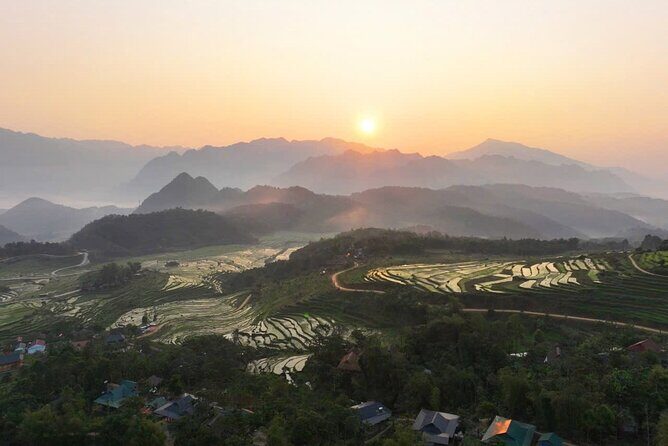
After the north portion, the trek continues toward the southeast of Sapa, aiming for Muong Hoa Valley. This is where the tour shifts its cultural focus to the Dzay ethnic group.
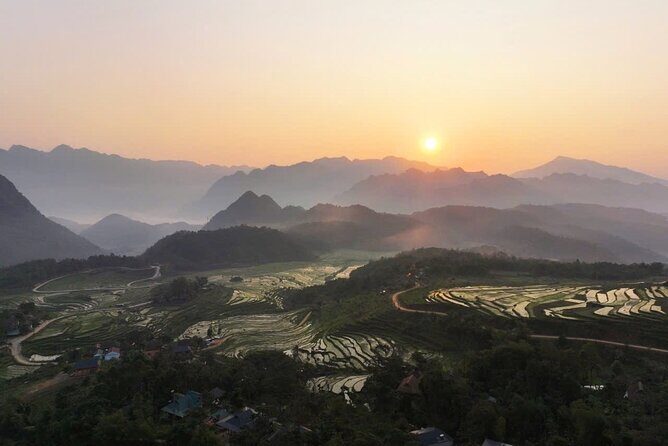
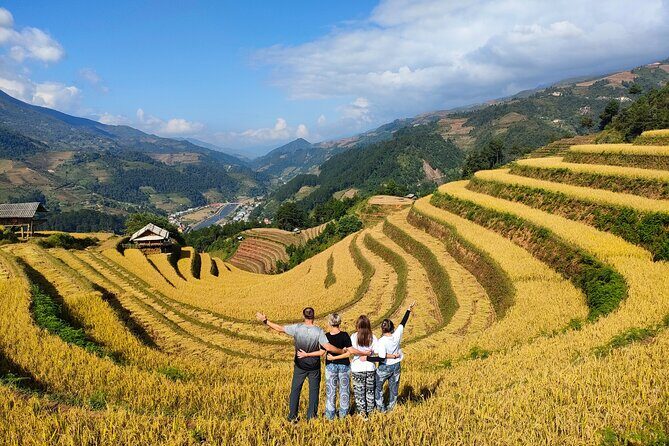
In Muong Hoa Valley, the big visual draw is the terraced fields. Even if you’ve seen photos of Sapa terraces before, seeing them from the trail path (with guide context) usually lands better. The terrain also supports the tour’s pacing: terraced areas give you “stop and look” moments without needing to sprint between attractions.
You’ll meet more locals during this part of the day. That meeting time is key because it’s what turns the valley from a view into an understanding of community life—why these fields matter, how people work them, and what the daily rhythms look like where you’re standing.
A practical tip: wear shoes that handle uneven ground. Terraced routes can be steep in sections, and your guide’s pace will work best if you’re stable. If you’re even slightly unsure about footing, tell your guide early so they can adjust the rhythm.
You can also read our reviews of more hiking tours in Hanoi





Tea, conversation, and respectful photo moments
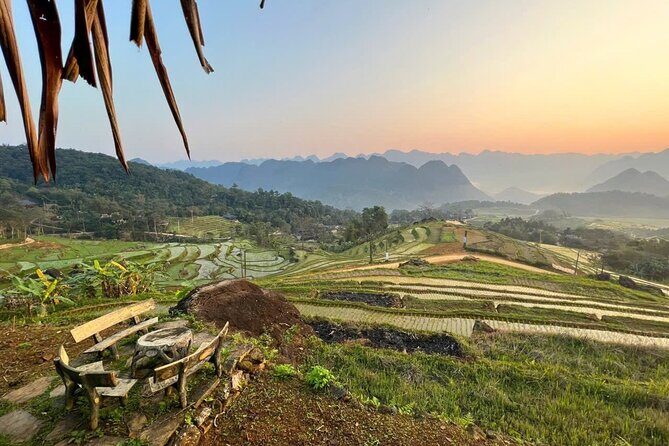
This tour includes a welcome drink and tea conversations, plus photo opportunities with locals. Those details sound small, but they shape the tone of the experience.
When photo stops are built into the flow, people aren’t only performing for the camera. You’re more likely to have a real moment of connection—quick, but meaningful—because the stop is paired with explanation and conversation.
Also, having an English-speaking tour guide helps you move past the tourist skim. You’ll catch the “why” behind customs rather than just the surface “what.” If you’re the type who likes to ask questions, this tour will reward you.
In one piece of feedback, the guide name Dely was called out as making the 4-hour experience beautiful. Even without assuming anything beyond what you’ll find on the day, that kind of comment usually means your guide is actively shaping your understanding, not just translating basic facts.
Getting back to Sapa if your energy runs out

Here’s the practical part that can save you stress: trekking is about 4 hours, and if you get tired, you can ask your guide to arrange a motorbike/car return. The catch: that option is excluded, meaning it’s not included in the base price.
So plan for two scenarios:
- If you’re comfortable walking, you’ll likely follow the full itinerary and enjoy the full cultural sequence.
- If you’re not sure about endurance, bring a realistic mindset. You can still ask for help, but you may pay extra for the return ride.
If you prefer a guaranteed transportation flow, ask in advance how the return ride would be handled for your group size and timing. The tour does offer pickup in Sapa, but not every return option is included.
Price and value: what $33.61 buys you
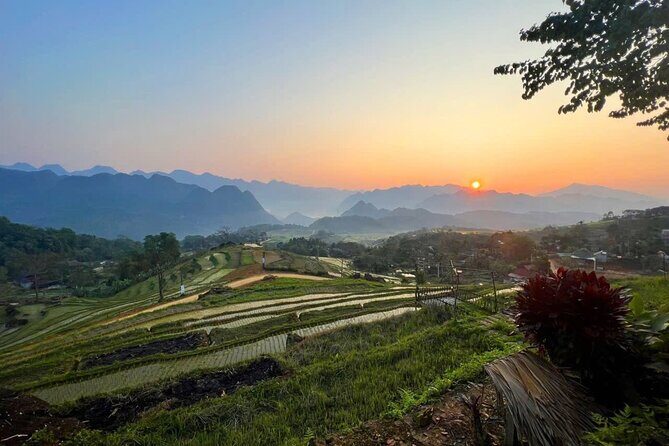
At $33.61 per person, this tour can be great value if you want cultural contact without paying for a full-day commitment. What you’re getting is not just a guide and a trail. The included pieces add up:
Included:
- English speaking tour guide
- Pick-up at your hotel in Sapa
- Admission ticket free (for the trek component)
- A pick-up/drop-off option involving an overnight sleeping bus between Hanoi and Sapa (if you choose that setup)
- Mobile ticket
Not included:
- Any pickup/drop-off surcharge if you’re outside the Old Quarter
- Holiday surcharge
- Drop-off to your hotel by private 7-seater car is listed as ₫500,000 per booking
How to think about the value:
- If you’re already staying in Sapa, the included hotel pickup saves time and hassle.
- If you want a guided introduction to Black Hmong, Red Dao, and Dzay culture in one compact day, the guide time is a big part of the cost.
- If you do need an alternate return ride due to energy, that’s where you should budget extra.
One more angle: the tour notes group discounts and runs as a private experience for just your group. That can be a win if you’re traveling with friends and want flexibility—less waiting, fewer awkward “tour herd” moments.
Who this tour suits best
This tour fits well if you:
- Want an authentic Sapa experience but don’t want to commit to a longer full-day trek
- Appreciate cultural conversation, not only scenery
- Like the idea of learning differences between Black Hmong and Red Dao, then seeing the Dzay community in Muong Hoa Valley
- Want pickup support and an English-speaking guide
It may be less ideal if you:
- Want a long hiking day with lots of distance and multiple viewpoints
- Need a fully included door-to-door return even if you cut the trek short (the motorbike/car return is excluded)
Quick tips to make the most of your 4 hours
- Bring water and small snacks. You’ll move through several stops, and breaks may be short.
- Ask your guide a couple of targeted questions during tea time. You’ll get more out of the explanations that way.
- Use your photo moments respectfully. If someone is explaining something, pause before you shoot.
- Wear shoes with good grip. Terraced areas can be uneven, especially after a damp morning.
- If weather looks shaky, ask your guide what conditions mean for the route that day. You’re choosing a guided hike, not a flexible self-guided walk.
Should you book this Sapa to Muong Hoa ethnic trekking tour?
Yes, consider booking it if you want a compact trekking day that still feels personal and culturally grounded. The 4-hour format is the main reason it works: you get bamboo forest and rice views, plus real community interactions with the Black Hmong, Red Dao, and Dzay—without needing a full-day time block. With pickup in Sapa and an English-speaking guide, it’s built for convenience and understanding, not just checklists.
I’d skip it only if you know you’ll need a guaranteed included return ride at any moment or if you’re craving a longer trek with fewer scheduled community stops. Otherwise, this is a solid value choice for Sapa visitors who want to see the region in a way that’s more than scenic photos.
FAQ
How long is the Sapa trekking experience?
The trek is listed as about 4 hours (approx.).
Where does the tour start?
The tour includes pick-up at your hotel in Sapa.
Is an English-speaking guide included?
Yes. An English speaking tour guide is included.
Is admission required for the trekking part?
The admission ticket is listed as free.
Is the tour private?
Yes. It is private, and only your group participates.
Can I arrange to return to my hotel early if I get tired?
The guide can set up a motorbike/car to bring you back hotel if you are tired, but that return option is excluded.
Is drop-off back to my hotel included?
Drop-off at your hotel by private 7 seater car is not included. It’s listed as ₫500,000.00 per booking.
Are there extra charges if I’m outside Hanoi’s Old Quarter?
Yes. Pickup/drop-off surcharge if outside Old Quarter is listed as not included.
What is the cancellation policy?
You can cancel up to 24 hours in advance for a full refund. If you cancel less than 24 hours before the experience starts, there is no refund.

More Guided Tours in Hanoi


More Tours in Hanoi
- Ninh Binh Full-Day Tour from Hanoi to Hoa Lu, Tam Coc & Mua Cave Via Boat & Bike
★ 5.0 · 4,384 reviews