REVIEW · HANOI
Hanoi: Tire Sandal Workshop with Crafting Experience
Book on GetYourGuide →Operated by EFIS VIET NAM EDUCATION CONSULTING AND TRAINING COMPANY LIMITED · Bookable on GetYourGuide
Rubber soles, real history, and your own hands-on pair. This Hanoi workshop turns Vietnam’s iconic tire sandals into something you can actually make yourself, while an English-speaking guide explains why they mattered. I love the fact that you’re working with a real craft process, not just watching photos and listening from a chair. And I also like the story side: you hear how these sandals showed up in daily life during wartime, tied to Ho Chi Minh’s legacy.
The main thing to consider is that the advertised workshop price is only the start. You’ll pay extra for the materials, and if you want the sandals you make to go home with you, there’s an additional fee—plus you’ll want legs covered since shorts/short skirts aren’t allowed.
In This Review
- Key things to know before you go
- Tire Sandal King’s Workshop: Why This Makes Sense in Hanoi
- What Your 4 Hours Actually Feels Like
- The Ho Chi Minh Museum Connection You’ll See Up Close
- Making the Sandals: Tools, Strength, and a Real Craft Moment
- The History Lesson You’ll Actually Remember
- Price Breakdown: What the $5 Covers (and What You’ll Pay Extra)
- Where to Go: 19 Ngoc Ha Street, and How to Make It Easy
- Photos Included: A Small Comfort That Saves You Time
- Who This Workshop Fits Best
- Quick Practical Tips Before You Start
- Should You Book This Tire Sandal Workshop in Hanoi?
- FAQ
- How long is the tire sandal workshop in Hanoi?
- How much does it cost?
- Where is the workshop located?
- What is included in the price I book?
- What extra costs should I expect?
- Can I keep the sandals I make?
- Is the workshop only for English speakers?
- Are there clothing restrictions?
- Is the activity wheelchair accessible?
- What if I need to cancel?
Key things to know before you go
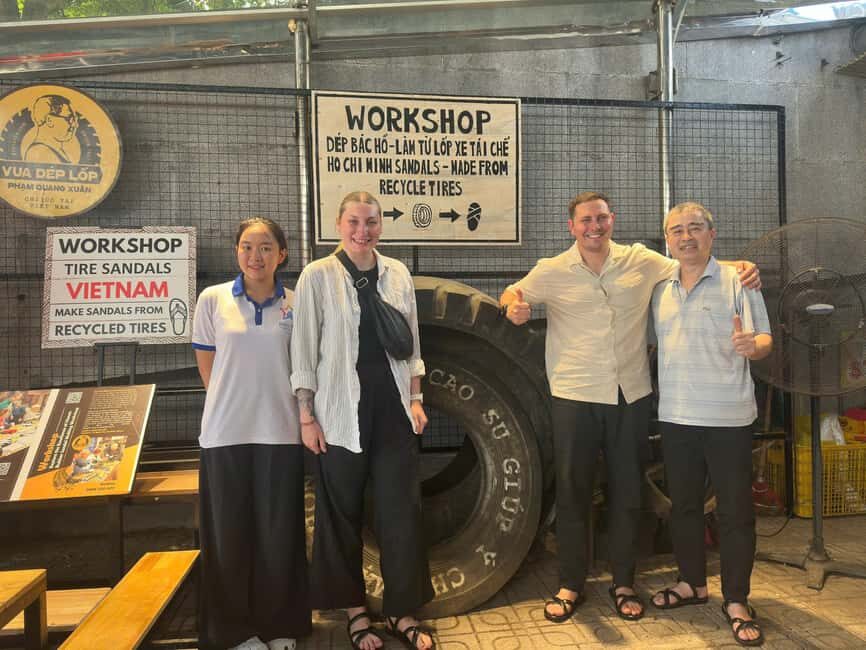
- Hands-on sandal making with step-by-step guidance from local artisans
- English-speaking guide with historical context as you work
- Wartime Ho Chi Minh connection and stories about the sandals’ role in daily life
- Extra costs for materials and for taking your finished sandals home
- A private group session (easy pace, less waiting around)
- Workshop rules include no shorts or short skirts
Tire Sandal King’s Workshop: Why This Makes Sense in Hanoi
Hanoi has plenty of history you can read and museums you can visit. This experience adds a different layer: you learn the craft with your own hands while the guide talks you through what the sandals meant. It’s a practical way to understand a cultural symbol, not a lecture with a “buy a souvenir” ending.
The big draw here is the pairing of making + meaning. You’ll work through traditional steps to build a pair of sandals, and as you go you’ll hear stories that connect those sandals to Ho Chi Minh’s era and to everyday life. That combo is what makes the workshop more memorable than a typical craft demo.
You’ll also be in a private group setting, so questions don’t get lost in a crowd. If you like your travel experiences interactive and personal—without being exhausting—this fits that sweet spot.
You can also read our reviews of more tours and experiences in Hanoi



What Your 4 Hours Actually Feels Like
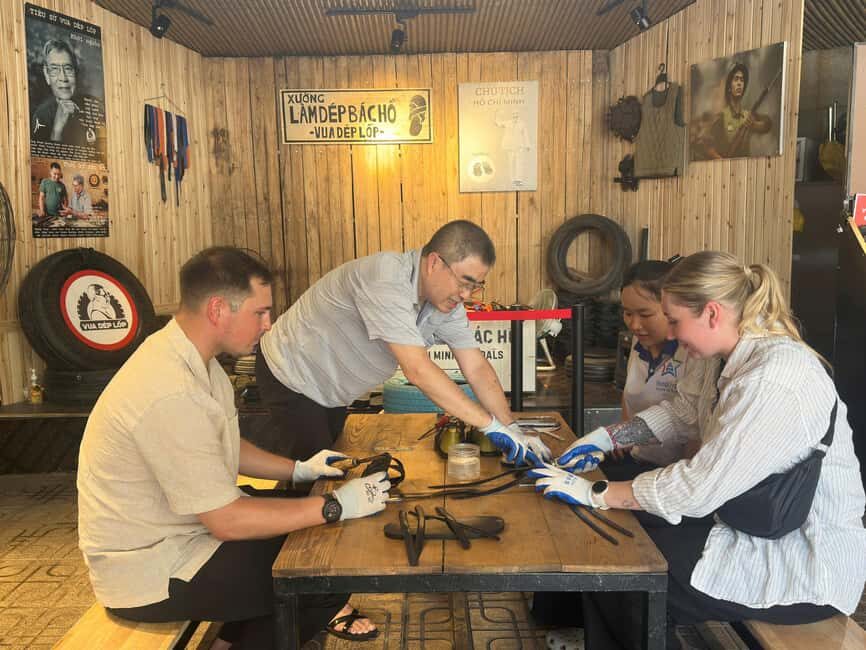
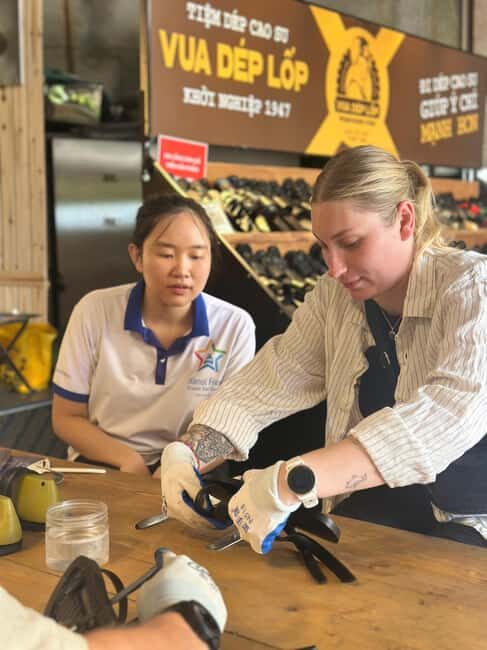
Plan on about 4 hours from start to finish, and expect a hands-on rhythm. The workshop is built around guidance: your local tour guide stays with you, and artisans help you use the tools correctly. You’re not just cutting shapes and hoping for the best. The process is paced so you can finish something you can be proud of.
A typical flow goes like this:
- You meet your guide and get oriented to the workshop setup.
- You start building the sandals using a traditional method.
- You learn how to work with a tool (and you’ll feel that it takes some strength).
- You get historical context along the way, so the craft doesn’t feel random.
The workshop timing can be flexible depending on the start time you choose, which helps if your Hanoi schedule is tight.
One small reality check: the experience is friendly and hands-on, but it’s not a long, slow weekend craft class. If you’re the type who wants extra time to perfect every detail, you might wish it ran a bit longer.
The Ho Chi Minh Museum Connection You’ll See Up Close
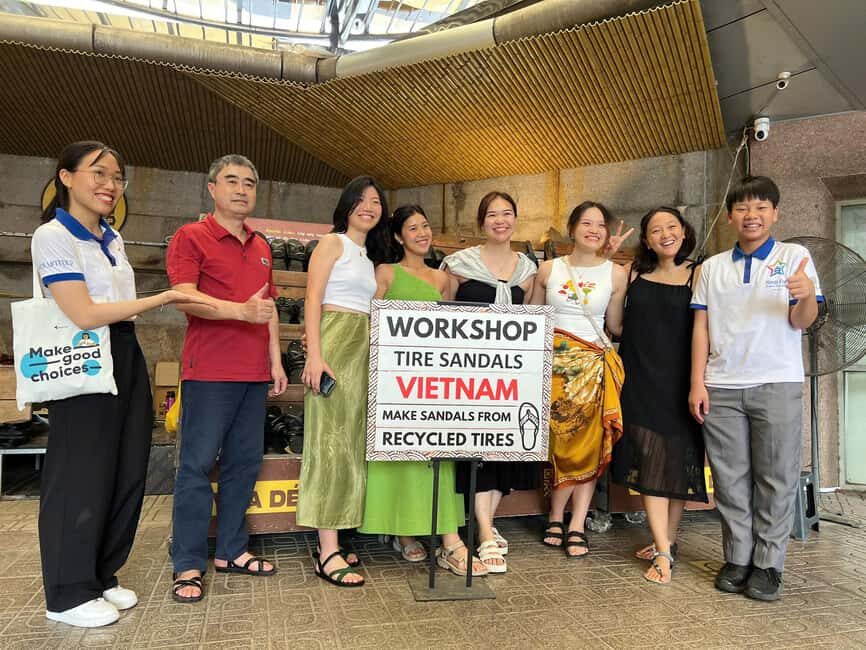
The sandal making happens in the Ho Chi Minh Museum complex area, and on rainy days this matters. The session is described as being under cover, which is a huge comfort in Hanoi weather. Even if it’s dry when you arrive, you’ll still appreciate not being stuck in an exposed outdoor setup with tools and rubber.
There’s also an optional add-on if you want more context. You can visit the Ho Chi Minh Museum with a ticket (paid separately). When you do, your guide helps connect what you’re making to what you’re seeing in the museum—so the day feels connected rather than two separate activities.
Making the Sandals: Tools, Strength, and a Real Craft Moment
This isn’t “press a button and walk away.” You’ll craft your own tire sandals using traditional techniques passed down through generations. Before you start, you’ll likely work with soles that already have holes prepared, which helps keep the session moving. Then it’s your job to use the right tool and finish the build.
Here are the practical details that help you set expectations:
- You’ll learn how to use a tool, and you’ll get help when you need it.
- The work can take some physical strength, especially once you’re pulling and securing parts.
- You’ll have a choice of colors for your sandals.
One detail I really like: you’re guided to do things correctly. In one version of the session, a descendant of Ho Chi Minh is mentioned as helping make sure the sandals are done right. Even if that person isn’t part of every session, the workshop approach is clearly focused on accuracy, not speed.
The History Lesson You’ll Actually Remember
The workshop doesn’t treat history as decoration. As you make the sandals, the guide explains how Vietnam’s iconic tire sandals became associated with Ho Chi Minh during the war. You’ll hear why these sandals became meaningful during wartime and how they connected to daily life.
What I find valuable is that you’re learning the story while you’re physically working. Your brain holds onto it better. You also get the sense that the sandals aren’t just a “war costume” item—they turned into a practical part of life for people who needed sturdy footwear.
Even if you already know the basics, you’ll still get stories that give the sandals a human scale: what they meant day-to-day, not just a headline fact.






Price Breakdown: What the $5 Covers (and What You’ll Pay Extra)

The headline price is low (about $5 per person), but the true value depends on what you want at the end.
Here’s what you should expect to pay on top of the base workshop fee:
- Materials for making tire sandals: 300,000 VND (paid directly at the workshop)
- Taking the handmade sandals home: 200,000 VND (optional)
- Ho Chi Minh Museum entry: 40,000 VND per person (optional)
So if you want the full souvenir outcome (and you skip the museum), you’d be looking at roughly 500,000 VND total for materials + take-home sandals, plus the base price you booked. If you also add the museum ticket, add that 40,000 VND on top.
Is it good value? For me, yes—because you’re paying for real instruction and historical storytelling inside a craft process. But it’s not a “cheap souvenir for free.” If your goal is just to stand nearby and take photos, you’ll feel like the costs add up. If your goal is to learn a craft and leave with something you made, the pricing starts to feel fair.
Where to Go: 19 Ngoc Ha Street, and How to Make It Easy
The workshop address is 19 Ngoc Ha Street in Hanoi. That’s your key navigation point.
The best strategy is to arrive a few minutes early so you’re not rushing into tool work. If you’re combining it with the Ho Chi Minh Museum ticket, ask your guide what they recommend for timing so you’re not trying to squeeze everything into the last minutes of a museum visit.
Also: follow the workshop clothing rule. No shorts or short skirts. Wear something that lets you move comfortably and covers your legs. You’ll be working with tools and materials, so comfortable fabric matters.
Photos Included: A Small Comfort That Saves You Time
You’ll get complimentary photos of your experience, taken by the host. This is one of those “small” benefits that ends up being big: you can focus on the work without constantly stepping away to find the right photo angle.
If you care about documenting your craft moment, this included photo service helps you get that memory without juggling a camera, tool safety, and timing.
Who This Workshop Fits Best
This is a great match if you:
- Like cultural experiences you can do, not just watch
- Want hands-on context around Vietnam’s wartime history
- Enjoy traditional crafts and want a practical souvenir made through real steps
- Prefer a private group experience where you can ask questions
It might be less satisfying if:
- You’re hoping for a long, multi-day style craft course
- You’re mainly interested in museum history and don’t care about making anything
- You dislike physical tasks that require some strength (tool handling and securing parts)
Quick Practical Tips Before You Start
Here’s how I’d prep so the workshop goes smoothly:
- Wear longer clothing that follows the no-short rule.
- Expect to use a tool and apply some strength—so bring a relaxed, capable mindset.
- If you want to keep the sandals, budget for the take-home fee and plan how you’ll carry them afterward.
- Consider the museum add-on if you want the story to continue beyond the workshop floor.
- If you’re combining Hanoi plans that day, choose a start time that gives you buffer before and after, since you’ll be busy for about 4 hours.
And yes: it’s okay if you’re a bit clumsy at first. The workshop is set up to guide you step-by-step.
Should You Book This Tire Sandal Workshop in Hanoi?
Book it if you want a meaningful souvenir and a story you’ll remember, because this experience links craft to history in a way that sticks. The base price is affordable, and once you add the optional take-home fee, you get an actual handmade item you can bring back—made with instruction, not guesswork.
Skip it (or think twice) if you only want light sightseeing, because this is not a passive activity. It’s a hands-on session with extra costs if you want to take the sandals home, and the rules about clothing mean you’ll need to dress appropriately.
If you’re in Hanoi and you like authentic, practical experiences, this is one of the more distinctive ways to spend a half-day. You’ll leave with a craft skill you can talk about—and a deeper understanding of why these sandals became part of Vietnam’s wartime and everyday life.
FAQ
How long is the tire sandal workshop in Hanoi?
The experience lasts about 4 hours.
How much does it cost?
The workshop price is listed as $5 per person, but you should plan for extra fees for materials and optionally for taking the sandals home.
Where is the workshop located?
It’s at 19 Ngoc Ha Street in Hanoi.
What is included in the price I book?
You get step-by-step guidance from local artisans and an English-speaking guide, plus complimentary photos taken by the host.
What extra costs should I expect?
You pay for sandal-making materials (300,000 VND) directly at the workshop. If you want to take your handmade sandals home, there’s an additional fee of 200,000 VND. A Ho Chi Minh Museum ticket is optional (40,000 VND/person).
Can I keep the sandals I make?
Yes, but it’s optional and costs an extra 200,000 VND paid directly to the workshop.
Is the workshop only for English speakers?
Yes. The tour includes an English-speaking guide throughout.
Are there clothing restrictions?
Yes. Shorts and short skirts aren’t allowed.
Is the activity wheelchair accessible?
Yes, the workshop is wheelchair accessible.
What if I need to cancel?
The experience offers free cancellation up to 24 hours in advance for a full refund.