REVIEW · HANOI
5 Traditional Dishes Hanoi Cooking Class with Market Trip
Book on Viator →Operated by Apron Up Cooking Class · Bookable on Viator
Hanoi tastes better when you cook it. This class pairs a market trip with a hands-on 5-dish cooking session, guided in English in Hanoi’s Old Quarter, with instructors named in the experience like Perla and Vy. I like that the format is practical and goal-driven: you shop for ingredients, you cook, and then you sit down and eat what you made.
I love that you’re not just watching. You’ll actively work on multiple dishes, and the class runs with a tight flow that still feels interactive, including adaptations for dietary needs. One possible drawback to weigh is that some components may be prepared for you or sped up in the kitchen to keep everyone on schedule, so it may not feel like total start-to-finish from raw-to-finished for every dish.
In This Review
- Key highlights worth your attention
- Old Quarter meetup and a real market-first approach
- Hanoi’s largest market trip: pick ingredients with purpose
- Back in the kitchen: how the class runs smoothly with 5 dishes
- The menu you’ll cook: techniques behind pho, bun cha, and more
- Pho bo: soup flavor foundations
- Bun cha: BBQ-style pork with noodle bowl energy
- Nem ran: frying that teaches timing
- Papaya salad: fresh, sour, and herb-driven
- Egg coffee (or chocolate): a sweet finish with personality
- Dietary needs: vegetarian versions and flexible instruction
- Eating what you cooked: rice vodka, coffee/tea, and real satisfaction
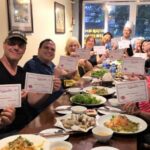
- Your take-home items: recipe book and certificate
- Price and value: why $35.07 can make sense in Hanoi
- Who should book this Hanoi cooking class
- Should you book this Hanoi market-and-cook experience?
- FAQ
- How long is the cooking class?
- How much does it cost per person?
- Where do we meet for the class?
- Is hotel pickup or drop-off included?
- What dishes will we cook?
- Are there vegetarian options?
- How many people are in the group?
Key highlights worth your attention
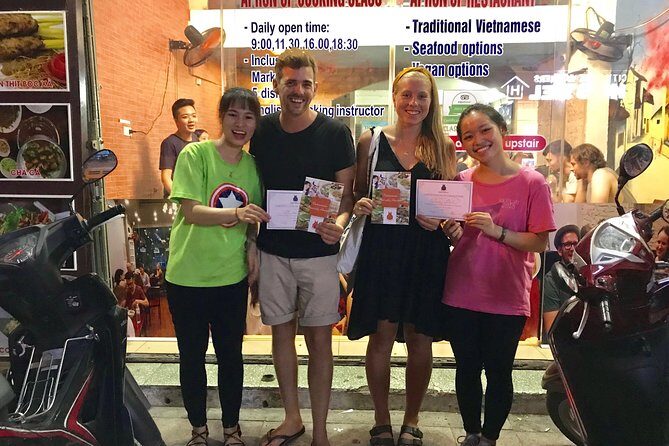
- Hanoi’s largest market stop where you’ll pick produce and spices for what you cook
- 5 classic dishes on the menu: pho bo, bun cha, nem ran, papaya salad, and egg coffee (or chocolate)
- Small groups (max 10) with an English-speaking chef so you can actually participate
- You eat your own creations right after cooking, with complimentary coffee/tea and rice vodka
- Recipe book and certificate so you can reproduce the dishes later
Old Quarter meetup and a real market-first approach
The day starts in Hanoi’s Old Quarter, at 8 P. Gia Ngư, Hàng Bạc, Hoàn Kiếm. There’s no hotel pickup, so you’ll want to plan to arrive on your own and be at the meeting point a few minutes early. The upside of meeting in this area is that you’re already in the neighborhood where you’ll want to be later anyway, with lots of food energy and street life all around.
What I like about the market-first structure is that it answers a simple question you’ll probably have as you travel: why do Vietnamese dishes taste the way they do? Shopping comes before cooking, so when you later handle herbs, noodles, and spices, it’s tied to a reason. You’ll be buying ingredients with a local expert, not just ticking boxes.
And because the group is limited to up to 10 people, the guide can keep an eye on what you’re buying and make sure you understand what you’re using. That matters when you’re trying to cook later at home and remember what each ingredient does.
You can also read our reviews of more shopping tours in Hanoi
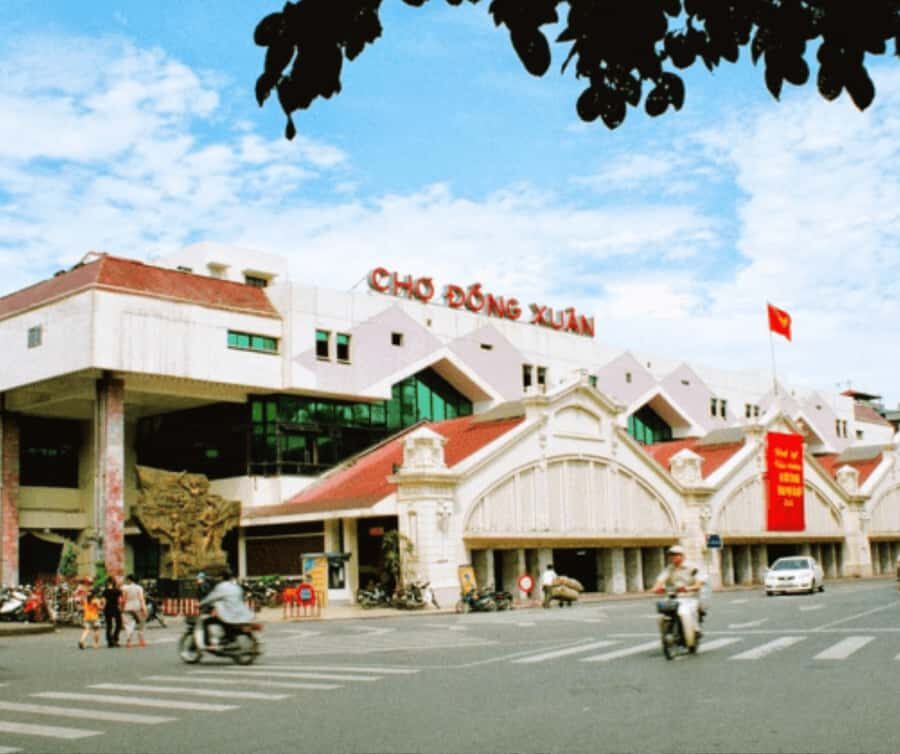
Hanoi’s largest market trip: pick ingredients with purpose
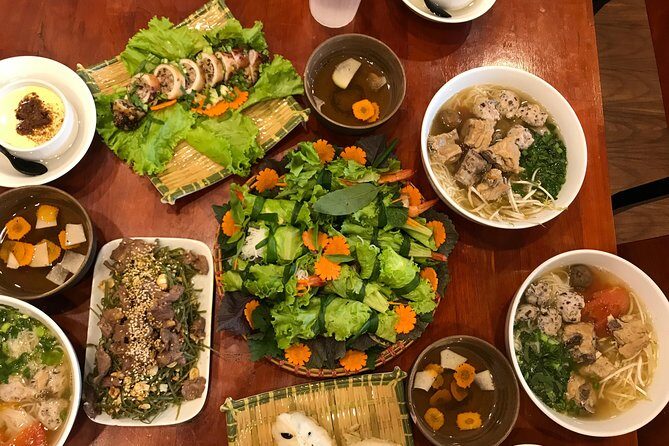
The core of the market time is choosing the right produce and spices for your class dishes. You’ll go with a knowledgeable local guide and learn the basics of Vietnamese cooking through what you select. This is where many Hanoi cooking experiences either become a sightseeing walk or a real skills lesson. Here, the shopping is clearly tied to the menu you’ll cook next.
From what I’ve learned about this style of class, the biggest value is ingredient recognition. You’re not expected to become a spice expert on day one, but you do learn what matters: freshness, how herbs are used, and how the flavors of Vietnamese dishes depend on more than just one sauce. One reviewer specifically called out how it was fun to hear about how broth gets made and to see the herbs and spices used, which matches what this market section is trying to do.
One practical consideration: markets move fast, and there’s a lot to see. If you hate crowds or you’re short on patience, you might find the shopping portion a little more intense than the cooking studio. If you’re relaxed and curious, you’ll come away feeling like you learned a shopping method, not just picked up ingredients.
Back in the kitchen: how the class runs smoothly with 5 dishes
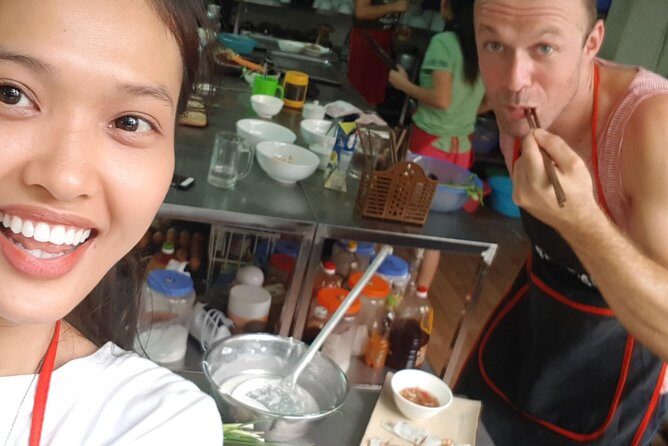
After the market, you return to the cooking space where the real work happens. The class uses an English-speaking chef, and the flow is built to get everyone cooking without turning into a slow, step-by-step lecture. Expect a pace that keeps multiple dishes moving at once, which is exactly how they manage to cover five traditional dishes in about 3 hours 15 minutes (approx.).
This pacing is a big part of the value. You’re on a schedule, but you’re also getting results fast. People describe the class like a well-run operation, and that’s believable: cooking five items at once needs timing, prep organization, and a guide who can keep you from getting stuck.
In a small group, instructors can still check in. Even reviewers who wanted more hand-holding noted that you’re shown what to do and you can participate at each step. The practical message for you: come ready to help, and don’t assume every second will be purely supervised one-on-one. The best experience tends to come when you treat it like a team kitchen where you jump in when your dish is called.
The menu you’ll cook: techniques behind pho, bun cha, and more
You’ll cook five dishes, and you’ll eat them afterward. The menu is listed as:
- Pho bo (beef noodle soup)
- Bun cha (Hanoi BBQ pork noodle)
- Nem ran (fried spring roll)
- Papaya salad
- Egg coffee / chocolate
The smartest way to think about this menu is as five different Vietnamese cooking skills in one class: soup-building, grilled or BBQ-style flavors, frying, fresh salad dressing, and the sweet-creamy finish of egg coffee. Even if you don’t master every technique, you’ll learn what to focus on so you can replicate the flavors later.
Pho bo: soup flavor foundations
Pho bo is the headline comfort dish in northern Vietnam, known for its fragrant broth and noodle bowl. In class, you’re not just tasting pho—you’re building an understanding of how the dish comes together and what ingredients create the base flavor. One review mentioned learning about broth and herbs and seeing the spices used, which lines up with why pho is a great first dish on a market-and-cook course.
You can also read our reviews of more tours and experiences in Hanoi
Bun cha: BBQ-style pork with noodle bowl energy
Bun cha is distinctly Hanoi. It has that satisfying grilled-pork element paired with noodles and fresh components. In a class like this, you’ll practice assembling a dish style that relies on balancing savory, tangy, and fresh notes—exactly the flavor logic you’ll see again and again in Vietnamese food.
Nem ran: frying that teaches timing
Nem ran, fried spring rolls, are a hands-on favorite because you can see progress fast. They also teach you timing and texture: the kind of frying that makes a roll crisp instead of greasy. People repeatedly highlight that the class is fun and very hands-on, and nem ran is one of the reasons why.
Papaya salad: fresh, sour, and herb-driven
Papaya salad brings crunch, color, and a sharp mix of flavors. Even if you’re not shredding everything from scratch, you’ll learn the idea behind the dressing: the balance between tangy and savory plus that fresh herb hit. This dish is also a good match for the market portion because papaya and herbs are the story.
Egg coffee (or chocolate): a sweet finish with personality
Egg coffee is one of those Hanoi treats that makes you smile before you even take the first sip. In the class, you’ll get egg coffee or chocolate as part of the menu. The practical benefit is that you leave with a dessert that feels uniquely Vietnamese, not just another Western-style sweet.
Dietary needs: vegetarian versions and flexible instruction
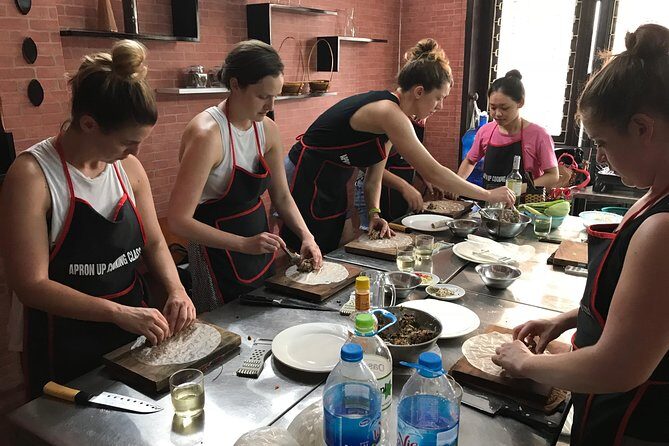
This cooking class is designed with dietary flexibility in mind. The menu states that vegetarian versions are available for vegetarians and non-red meat eaters. That’s important because Vietnamese cuisine can be meat-heavy, especially with dishes like pho bo and bun cha.
Based on how the instructors teach, the class doesn’t treat dietary needs as an afterthought. One review highlighted that their instructor adjusted for allergies, and that’s a meaningful sign. You should still mention your needs clearly when you book, so the chef can plan substitutions ahead of time.
For vegetarians, the key question you should ask yourself is how strict you want to be. The class specifically mentions vegetarian versions, which is a good start. But if your dietary needs are complex, you’ll feel safer when you communicate them early.
Eating what you cooked: rice vodka, coffee/tea, and real satisfaction
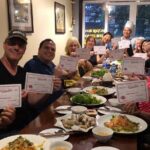
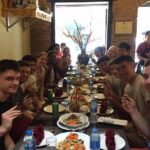
After you cook, you eat your own meal together. This is not a small side snack either—you’re tasting what you made across the five-dish menu. Included in the experience are coffee and/or tea, and there’s also rice vodka provided with the meal.
The rice drink part matters because it changes the mood from classroom to celebration. You’re not just practicing cooking; you’re doing the Vietnamese version of sharing a meal. The class also ties the end of the session to a rewarding payoff: you get to sit down while the experience team handles the mess and cleanup.
One practical tip: come hungry. Multiple people mentioned there was plenty of food and that they left full. With five dishes, you’ll likely get more than you expect, so plan your day accordingly.
Your take-home items: recipe book and certificate
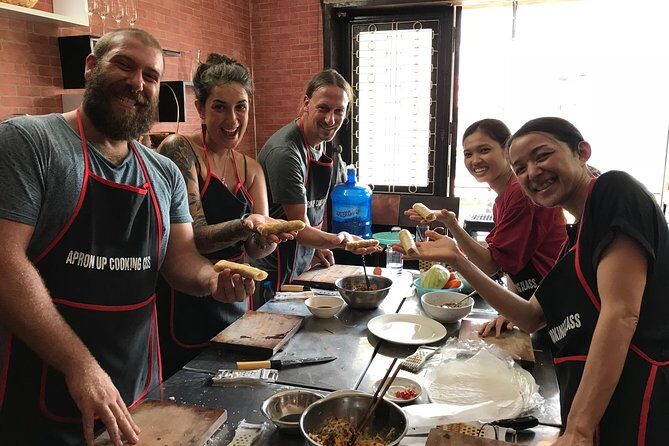
You don’t just leave with a full stomach. You receive a cook book and a certificate. That’s a real advantage if you like repeating what works. Vietnamese cooking can feel intimidating when you only read recipes online, but a small cookbook and a structured class guide you toward the steps you learned in real time.
Some people also note that recipe details can be provided at the end. So even if you don’t memorize everything during the class, you’ll have something to fall back on later.
Price and value: why $35.07 can make sense in Hanoi
At $35.07 per person, this isn’t a bargain you should expect to be cheap, but it can be good value for what you get. Here’s the logic:
- You get a market trip with guided ingredient selection.
- You cook five dishes instead of one or two.
- You receive coffee/tea plus a local rice drink.
- You take home a recipe book and certificate.
A cooking class that includes the market portion usually costs more than a studio-only class, because the guide time and ingredient planning are part of the package. And because the group stays small, you’re paying for instruction you can actually use, not just a demo for a big crowd.
If you compare options, the real question for you isn’t only price. It’s how much of the experience is hands-on versus watch-and-wait. This class is built around participation, and that’s why many people rate it so highly.
Who should book this Hanoi cooking class
I think this works best for:
- Food lovers who want more than one meal and want to understand ingredients.
- Couples or small groups who like interactive activities.
- People short on time who still want a market-to-kitchen experience without spending most of the day on logistics.
It might be less ideal if:
- You want a very slow, ultra-detailed teaching style for every single step.
- You dislike kitchens that run multiple stations at once.
- You’re extremely sensitive to food-safety details, because one person did mention a hygiene concern. That doesn’t mean it was a deal-breaker, but it is something worth keeping in mind if that’s your top priority.
Should you book this Hanoi market-and-cook experience?
If you want an authentic Hanoi food day that ends with a satisfying meal and recipes you can use again, I’d book it. The biggest reason is the combination: market shopping + hands-on cooking + sitting down to eat what you made. And with a menu like pho bo, bun cha, nem ran, papaya salad, and egg coffee, you cover a lot of northern Vietnamese favorites in one go.
If you’re planning your first Hanoi food experience, this is a strong way to get your bearings fast through flavor. Just be ready to participate, come hungry, and arrive at the Old Quarter meeting point on time since there’s no hotel pickup.
FAQ
How long is the cooking class?
The experience runs for about 3 hours 15 minutes.
How much does it cost per person?
It costs $35.07 per person.
Where do we meet for the class?
You start at 8 P. Gia Ngư, Hàng Bạc, Hoàn Kiếm, Hà Nội.
Is hotel pickup or drop-off included?
No. Hotel pickup and drop-off are not included, and the tour ends back at the meeting point.
What dishes will we cook?
You’ll learn to cook pho bo, bun cha, nem ran, papaya salad, and egg coffee or chocolate.
Are there vegetarian options?
Yes. The class offers vegetarian versions for vegetarians and non-red meat eaters.
How many people are in the group?
The class has a maximum of 10 travelers.