REVIEW · HANOI
Hanoi Coffee Workshop: Crafting Your Perfect Brew
Book on GetYourGuide →Operated by Vietnam Vivid Travel · Bookable on GetYourGuide
Six cups of coffee in one lesson.
This hands-on Hanoi coffee workshop is interesting because you don’t just taste Vietnamese coffee—you actually brew it, using the classic phin filter and learning how foam and flavor balancing work. I love the built-in structure: you make your way through iconic styles and taste as you go, so it clicks fast instead of turning into a lecture.
The second reason I like it is practical value: you leave with recipes you can recreate, plus a clear choice of your coffee “adventure” (4, 5, or all 6 styles). One drawback to keep in mind: the coffee is strong, so you’ll want to follow the simple advice to eat beforehand, or you may feel it more than you want.
In This Review
- Key things to know before you brew
- Why This Hanoi Coffee Workshop Feels Like a Shortcut to Real Taste
- Meet at Lotus Hanoi Hostel and Get Comfortable in Air-Conditioned Calm
- The Phin Filter: Learn the Method Behind Strong Vietnamese Coffee
- Your Coffee Menu: Black, Brown, Egg, White, Coconut, and Salt
- Black Coffee (Cà phê đen)
- Brown Coffee (Cà phê nâu)
- Egg Coffee (Cà phê trứng)
- White Coffee (Bạc xỉu)
- Coconut Coffee (Cà phê cốt dừa)
- Salt Coffee (Cà phê muối)
- What You Learn from the Guide: Gene, Moon, Jay, and Ashley Energy
- Timing, Strength, and the One Thing to Do Before You Arrive
- Bring Hanoi Home: Recipes That Actually Make Sense
- Is $12 Worth It? Value Math for Coffee Lovers
- Who Should Book and Who Should Skip
- Should You Book This Hanoi Coffee Workshop?
- FAQ
- What’s the price and how long does the Hanoi coffee workshop take?
- Which coffee styles can I make?
- Does the workshop include tools and ingredients?
- Is the workshop taught in English?
- Can I get vegan or dairy-free options?
- Are there any people who shouldn’t book?
Key things to know before you brew

- Phin filter practice: You’ll brew with the tool Vietnamese coffee is built around, not just watch.
- Pick your caffeine adventure: Choose 4, 5, or all 6 coffee styles.
- 6 iconic flavors: From egg coffee to coconut and the surprising salt coffee.
- English instruction in a small group: Limited to 10 participants, guided by an English speaker.
- Take-home recipes: You get written recipes so the fun doesn’t end when the cup is empty.
Why This Hanoi Coffee Workshop Feels Like a Shortcut to Real Taste

Vietnamese coffee has a reputation: strong, sweet, and a little strange in a way you end up loving. This class helps you understand why, because you’re not only sampling—you’re controlling the variables. You see how grinding, brewing time, filter flow, and sweeteners change the final cup.
I like that the experience is built around immediate feedback. You brew a style, you taste it, and then you adjust. That’s how you learn flavor. And if you’re the type who usually orders one drink and hopes for the best, this gives you a toolset for ordering (and making) smarter choices later.
Also, it’s a social activity without being chaotic. The format is small group, guided, and you get time to ask questions. If you enjoy learning about food through doing, you’ll feel right at home.
You can also read our reviews of more tours and experiences in Hanoi



Meet at Lotus Hanoi Hostel and Get Comfortable in Air-Conditioned Calm
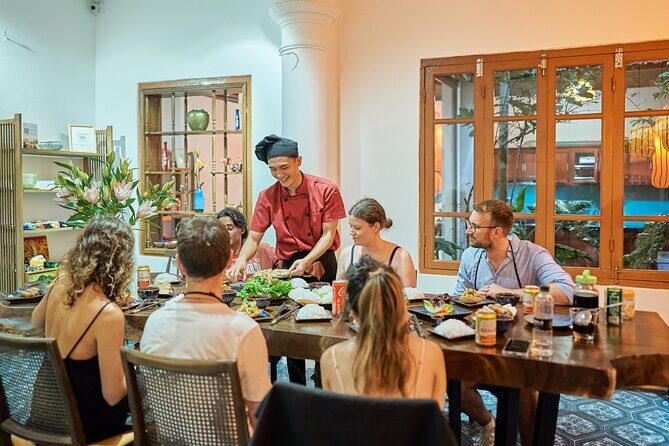
You meet on the 1st floor of the Lotus Hanoi Hostel building. The workshop itself takes place in an air-conditioned space, which matters in Hanoi when you’re already carrying the heat around all day.
The group size is limited to 10 participants, so the instructor can actually explain what you’re doing instead of rushing through steps for a big crowd. You’ll also get English guidance throughout. Several guides mentioned in past sessions (like Gene, Moon, Jay, and Ashley) are described as welcoming, friendly, and easy to understand—so you’re not stuck translating.
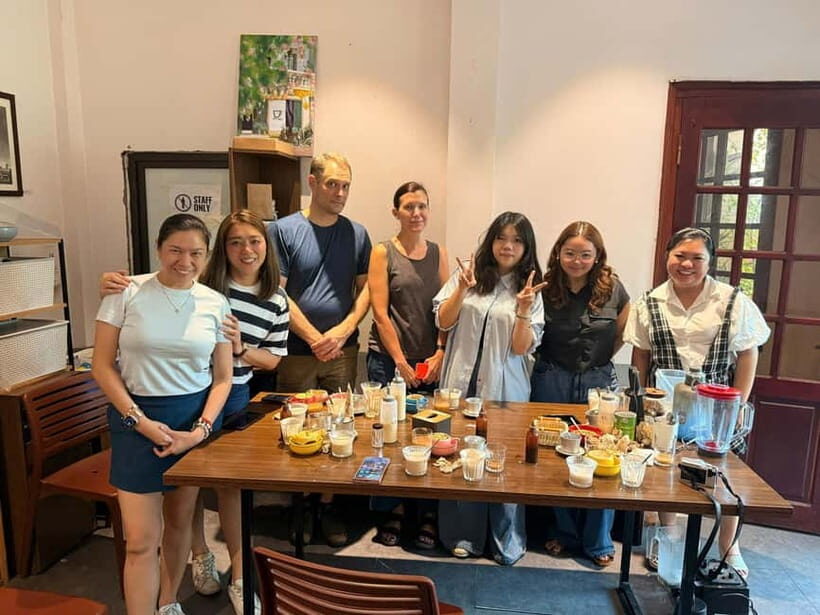
What’s included also helps you relax. All coffee ingredients and tools are provided, plus guided instruction and tasting of each coffee you prepare. That removes the guesswork that often makes cooking classes feel intimidating when you don’t know what you’re looking at.
One small practical note: the workshop offers vegan/dairy-free options upon request. If you have specific needs, tell the staff ahead of time so you’re not stuck trying to “fix it” during brewing.
The Phin Filter: Learn the Method Behind Strong Vietnamese Coffee
The real Vietnamese coffee “wow” moment usually comes from the phin filter. It’s not a fancy gadget; it’s a workflow. You add coffee to the filter, set it correctly, and let time and pressure do their thing. The slow drip is part science, part patience.
In this workshop, you’ll learn the basics of brewing and also how to work with foam and flavor. That’s important because Vietnamese coffee isn’t only about strength—it’s also about texture. For example, certain styles rely on sweetened condensed milk or whipped yolk for a thicker mouthfeel. Others rely on chilled mixing to keep flavors clean and refreshing.
You’ll brew and taste along the way, so you can connect the technique to the flavor. Strong coffee can taste rough when it’s made wrong. Here, you learn what “balanced strong” tastes like—then you can decide how sweet or how intense you want it at home.
If you like street food and markets but also want a calmer, learn-by-doing activity, the phin filter section is a great match. It’s hands-on, but it’s not stressful.
Your Coffee Menu: Black, Brown, Egg, White, Coconut, and Salt
This is the best part for coffee lovers because you’re given a choice, not a one-size-fits-all tasting. You can pick:
- Option 1: 4 coffees
- Option 2: 5 coffees
- Option 3: all 6 coffees
You’ll brew each style you select using traditional methods, and you’ll taste what you make.
Black Coffee (Cà phê đen)
Think of this as the baseline. It’s strong and aromatic, brewed with the phin filter. If you’ve only had Vietnamese coffee as a sweet drink, black coffee is your truth serum. It shows you the coffee’s character before the sweeteners step in.
You can also read our reviews of more tours and experiences in Hanoi



Brown Coffee (Cà phê nâu)
This one is typically more balanced and sweet because it’s made using condensed milk. If you like your coffee “coffee-forward” but still want softness, this is usually the bridge between straight espresso-style intensity and dessert-like sweetness.
Egg Coffee (Cà phê trứng)
Egg coffee is famous for a reason: the whipped egg yolk gives it a creamy, rich texture without tasting like a breakfast dish. It’s still coffee, but the mouthfeel changes everything. This is one of those cups where you’ll taste sweetness and richness layered over coffee bitterness in a way that feels surprisingly smooth.
White Coffee (Bạc xỉu)
Often described as milkier and lighter, white coffee keeps things gentle compared with black coffee. It’s still sweetened, but you get a softer finish that’s easy to sip.
Coconut Coffee (Cà phê cốt dừa)
This is chilled and refreshing, mixing coffee with coconut cream. If you’re traveling in Hanoi and your body is tired of hot drinks, this is where the workshop gets extra likable. It’s also a good choice if you want to experience Vietnamese coffee beyond the “sweet condensed milk” track.
Salt Coffee (Cà phê muối)
Salt coffee is the surprise entry. You’ll get a mix of bitterness, sweetness, and a hint of salt. Many people think salt will ruin sweetness; in practice it often sharpens the flavors and makes the coffee taste more dimensional. If you like tasting experiments—this is the one to try, even if you usually play it safe.
What You Learn from the Guide: Gene, Moon, Jay, and Ashley Energy
You’re not learning coffee from a script. You’re learning from people who actually enjoy talking about it. In past sessions, guides like Gene, Moon, Jay, and Ashley have been described as enthusiastic, friendly, and strong at English.
That matters because Vietnamese coffee can feel confusing at first: multiple sweeteners, multiple textures, and several “classic” variations that sound like they should not work. A good instructor turns those surprises into a simple pattern.
From the feedback, the best guides do three things well:
- They explain what you’re doing in plain language
- They help you adjust to your preferred taste
- They keep it fun, so you pay attention instead of zoning out
One more helpful detail: you’ll typically get recipes after the workshop as well as during it. That means you’re not just remembering the taste—you’re recreating the method.
Timing, Strength, and the One Thing to Do Before You Arrive
The session is listed as 1–2 hours, depending on which option you choose and how your group moves through brewing and tasting. If you’re doing all 6 coffees, expect more time on the tasting and step-by-step brewing.
And yes, caffeine is a big deal here. The coffee is strong enough that the workshop clearly recommends eating beforehand to avoid a caffeine hangover. I’d treat that advice seriously. Even if you love coffee, an empty stomach can turn “fun lesson” into “why is my heart doing this.”
If you’re sensitive to caffeine, start with Option 1 or 2 rather than forcing all 6. You can always come back later, but your body only gets one day.
Bring Hanoi Home: Recipes That Actually Make Sense
A big reason this class is worth your time is that it doesn’t stop at the final sip. You get recipes to take home, built around the coffee styles you brewed.
These recipes matter because Vietnamese coffee often depends on technique, not just ingredients. The phin filter method, the sweetener approach, the way egg yolk is prepared, and how chilled coconut coffee is handled—those details are exactly what you want written down.
If you’ve ever tried to recreate a drink from memory and ended up with something that tasted “almost right,” this is the fix. You’ll have a clear starting point, plus a sense of what to adjust for your own taste.
Is $12 Worth It? Value Math for Coffee Lovers
At $12 per person, this isn’t trying to be a luxury tasting. It’s priced like a practical class. And you’re getting a lot for that price:
- Ingredients and tools are included
- You taste every coffee style you prepare
- You get English guidance
- You take home recipes
- The workshop space is air-conditioned
- Vegan/dairy-free options are available upon request
If you love coffee, the value isn’t only the number of cups. It’s the fact that you learn the method behind each one. That turns a one-time purchase into a repeatable skill.
If you mostly want a quick caffeine hit, you might not feel full value. But if you’re curious, you like learning by doing, or you want a memorable Hanoi activity that’s not just another meal, this is strong value.
Who Should Book and Who Should Skip
This workshop is a great match if you:
- love coffee and want to learn what makes Vietnamese versions different
- enjoy hands-on lessons
- want an activity that’s fun in a small group
- want recipes you can use at home
It may not be a match if you:
- use a wheelchair (the workshop is not suitable for wheelchair users)
- have diabetes (not suitable)
- are looking for a quiet, low-stimulation experience (you’ll be tasting and mixing)
Should You Book This Hanoi Coffee Workshop?
Book it if you want real Vietnamese coffee literacy fast: phin filter technique, flavor building, and six distinct styles you can compare side by side. The small group size and English instruction make it easier to understand what you’re doing, and the take-home recipes are the part that keeps paying off after you leave Hanoi.
Skip it if you’re extremely caffeine-sensitive or you want a non-lab, non-hands-on activity. This is for people who like learning with their hands and their taste buds.
FAQ
What’s the price and how long does the Hanoi coffee workshop take?
It costs $12 per person and runs about 1 to 2 hours, depending on the coffee option you choose and how the session flows.
Which coffee styles can I make?
You can choose among these: black coffee, brown coffee, egg coffee, white coffee, coconut coffee, and salt coffee. You pick 4, 5, or all 6 styles.
Does the workshop include tools and ingredients?
Yes. All coffee ingredients and tools are included, along with tasting of each coffee you prepare and guided English instruction.
Is the workshop taught in English?
Yes. The instructor provides guidance in English.
Can I get vegan or dairy-free options?
Vegan and dairy-free options are available upon request.
Are there any people who shouldn’t book?
The workshop isn’t suitable for wheelchair users and isn’t suitable for people with diabetes. You’re also advised to eat beforehand to avoid caffeine hangover.