REVIEW · HANOI
Experience Traditional Vietnamese Calligraphy Class in Ha Noi
Book on Viator →Operated by Happy Tour · Bookable on Viator
Learning Vietnamese calligraphy is oddly calming.
This traditional Hanoi calligraphy class turns an art form you see around Vietnam into something you can actually make. You’ll hear how Vietnamese calligraphy grew from Chinese calligraphers centuries ago, and you’ll learn why modern styles use different strokes to communicate meaning. You’ll also connect the act of writing to a meditative focus, so the session feels more like practice than performance.
My favorite part is the way the instructor guides you from simple shapes to confident brush control. I also like that you can choose a simple design or sketch your own, then produce a take-home piece from scratch. One drawback to consider: because it’s hands-on and brush-focused, you may spend the first chunk of time adjusting to the tool before your results feel fully satisfying.
In This Review
- Key highlights before you go
- Vietnamese Calligraphy in Hanoi: More Meaning Than You Think
- The 2-Hour Workshop: A Step-by-Step Flow You Can Follow
- Meeting at 371 P. Kim Mã: Why Location and Group Size Matter
- Teaching Style: What Makes the Lines Improve Fast
- Choosing Your Design: Copying or Creating from Scratch
- Brush Technique for Beginners: What to Watch for During Practice
- Your Take-Home Calligraphy: The Memory You Can Hold
- Price and Value: Is $36 Worth a 2-Hour Class?
- Who This Hanoi Calligraphy Class Fits Best
- Should You Book This Vietnamese Calligraphy Class in Hanoi?
- FAQ
- Where is the meeting point for this calligraphy class?
- How long does the workshop take?
- How much does it cost?
- How big is the group?
- Do I get a mobile ticket?
- Will I get confirmation after booking?
- What will I create in the class?
- Is this class suitable for beginners?
- What is the cancellation policy?
- Does the activity end at the same location?
Key highlights before you go
- Small group size (max 6) means more personal feedback and fewer waiting moments
- Renowned local calligrapher leads the workshop and shows techniques used in modern Vietnamese styles
- Brush technique practice includes how to control the pen tip and stroke pressure
- Make-and-take artwork: you leave with the calligraphy you create during the class
- Flexible creative approach: copy a simple design or sketch your own
- Meditation-style pace: writing is taught as focused, calming practice
Vietnamese Calligraphy in Hanoi: More Meaning Than You Think
If you’ve ever admired Vietnamese calligraphy on signboards, letters, or decorative pieces, you might notice something immediately: it’s not just pretty. Vietnamese calligraphy uses brushwork to communicate. In this class, you get the why behind the look. You’ll learn how the art was introduced by Chinese calligraphers centuries ago, then changed over time into modern styles with different purposes and meanings.
That history matters because it changes how you practice. Instead of copying shapes like a worksheet, you start thinking about how a stroke behaves—how it begins, where it swells, and how it ends. Even if you’re a total beginner, that mental shift makes your finished piece feel earned, not accidental.
One more useful context you’ll pick up: Vietnamese calligraphy is often taught alongside the idea of calm concentration. The class is described as connecting artistic writing to meditation. Translation for your day: you’ll likely get the most value if you slow down, breathe, and focus on the stroke in front of you.
You can also read our reviews of more tours and experiences in Hanoi



The 2-Hour Workshop: A Step-by-Step Flow You Can Follow
This is a short session, about 2 hours, so the structure has to be efficient. Here’s what you can expect in the order that usually makes sense for beginners.
First, you’re introduced to the craft and the history basics. You’ll learn about the evolution of Vietnamese calligraphy and why modern styles differ in what they communicate. This sets up the rest of the session so the techniques don’t feel random.
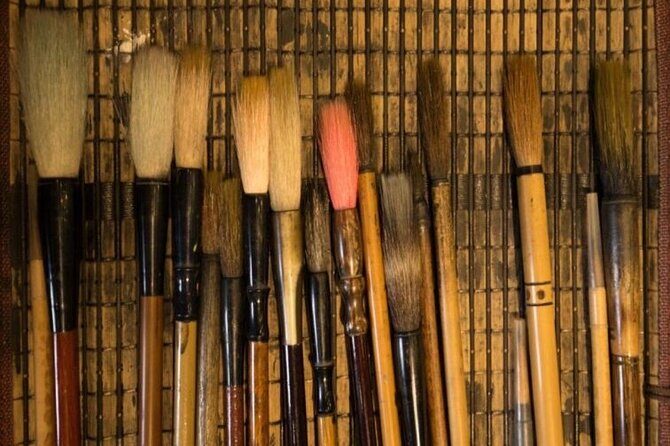
Next comes the tools. You’ll get an introduction to the calligraphy tools before you touch the brush. That’s a smart move for most people: if you start writing too early, you end up fighting the tool instead of learning technique.
Then you’ll learn brush use from the instructor. The goal isn’t speed. It’s control. You’ll practice how to hold and move the brush so the line comes out the way it should.
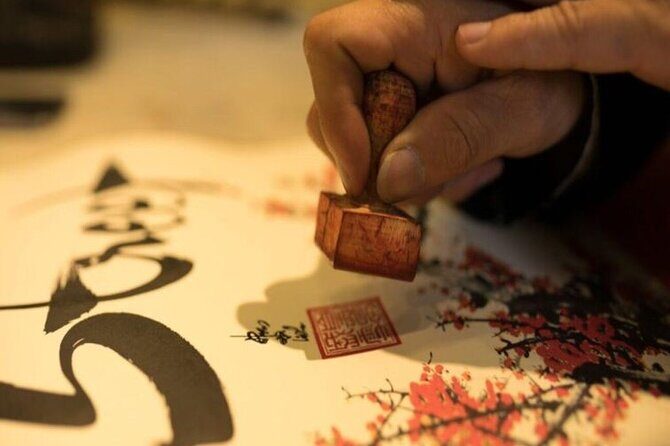
After that, you work on a design. You can choose a simple design or sketch your own, and the instructor shows you how to approach it. This is where the workshop becomes personal: your piece starts to look like your choices, not just the teacher’s example.
Finally, you finish your calligraphy piece and take it home. The activity is built around that final result: learning new technique and leaving with something you made from scratch—something you can frame, gift, or keep as a real memory of Hanoi.
Meeting at 371 P. Kim Mã: Why Location and Group Size Matter
The class meets at 371 P. Kim Mã, Ngọc Khánh, Ba Đình, Hanoi (100000), Vietnam. It ends back at the meeting point, so you’re not dealing with a long transit puzzle after the workshop.
You’ll also be in a “scenic and serene” venue. That matters more than it sounds. Calligraphy is physical and mental. A quiet setting helps your hand steady and your attention stay on the stroke. If you’ve ever tried fine handwriting in a noisy place, you know what I mean: your line changes when your mind is stressed.
The group size is small—maximum 6 travelers. In practice, that usually means you get more direct feedback than you’d get in a larger class. And it helps the pace. If you’re adjusting to the brush, you don’t want to wait too long between corrections.
You’ll receive a mobile ticket, which is convenient. No paper to misplace while you’re planning your Hanoi day.
Teaching Style: What Makes the Lines Improve Fast
The most praised part of this experience is the teaching itself. In past sessions, San-sensei (サン先生) is described as kind, patient, and clearly focused on helping you understand what to do with the brush. The biggest value is not just that the teacher is good—it’s that the instruction is practical and gentle enough for beginners.
One detail that’s worth knowing before you go: Vietnamese brush calligraphy can feel different from what you might know. One review highlights that line-making is quite unlike Japanese calligraphy. The brush tip can wobble or move with a tremble. That’s not a flaw you need to hide. It’s part of the brush behavior.
So instead of thinking, I should already be good at this, think, I’m learning how to guide the brush. When you get the technique right, those wobbles shrink. And when you’re taught patiently, you reach a point where your piece looks correct even if you still feel a little awkward in the middle.
Another key teaching element: you’ll learn that different ways of drawing a single line have meaning. That turns practice into understanding. You’re not just repeating shapes—you’re learning how stroke style connects to what the calligraphy is communicating.
Choosing Your Design: Copying or Creating from Scratch
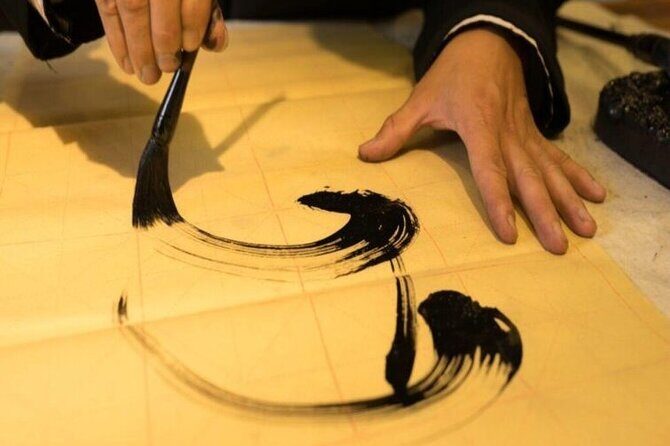
This class gives you options, and that flexibility is genuinely useful.
You can pick a simple design, which helps if you want the most direct path to a satisfying result. If you’re traveling and you don’t want to spend your energy guessing what a good first project should look like, copying a simple design is a smart move.
Or you can sketch your own. If you like having a personal touch—maybe you want your calligraphy to reflect a theme you care about—this is where you can make the experience feel uniquely yours. For many people, that’s the difference between taking a photo of an activity and bringing home a piece you actually value.
Either way, the instructor guides you through the process. The workshop is set up so you learn the techniques and then apply them immediately to your final artwork.






Brush Technique for Beginners: What to Watch for During Practice
Because this is a brush class, your main challenge will be physical coordination. The class helps you address that in a few ways.
First, you learn brush use before you finalize your design. That means you’re not thrown into complex work immediately.
Second, you practice line control. Reviews and the workshop description emphasize that there are different ways to make the line, and each has meaning. That’s important because it changes how you correct mistakes. Instead of chasing perfection, you adjust your stroke style and pressure until it matches what the instructor wants.
Third, you’re working in a group capped at 6. That small size makes it easier for the instructor to see what you’re doing. If you’re holding the brush awkwardly or your stroke isn’t landing well, you can get help before you build bad habits.
If you’ve never done calligraphy before, I’d plan to be patient with the early stage. The first lines are usually messy for everyone. The win is that the class teaches you how to improve within the same session—not weeks later.
Your Take-Home Calligraphy: The Memory You Can Hold
The workshop is designed around one thing: you leave with a piece of calligraphy you made from scratch. For me, that’s the best kind of souvenir. It isn’t mass-made. It’s tied directly to the skill you practiced in Hanoi.
This matters because you’ll remember the learning moments, not just the final look. When you’ve spent time controlling the brush and learning what different strokes mean, the finished artwork feels like a story you can pull out anytime.
Practical note: treat your take-home piece carefully. Even without special instructions provided, a good rule is to keep it flat, avoid moisture, and store it protected so the brushwork stays crisp.
Price and Value: Is $36 Worth a 2-Hour Class?
At $36 per person for about 2 hours, this is priced for a focused cultural activity. The value is in three places.
First, you’re paying for instruction from a calligrapher, not just a demonstration. The workshop includes technique teaching, tool introduction, and guided practice.
Second, the small group size (max 6) improves value. In a larger class, your learning time is diluted because you wait for corrections. Here, the setup supports hands-on guidance.
Third, you leave with something tangible you made. A calligraphy piece is usually a better “memory item” than a ticketed show because it represents your effort, not just attendance.
If you’re the kind of traveler who likes structured, meaningful breaks from sightseeing, this price feels fair. If you’re only looking for photos and don’t care about learning a skill, then you might not get as much out of it.
Who This Hanoi Calligraphy Class Fits Best
This workshop is a great fit if you want an authentic cultural skill with a calm, hands-on pace. It’s also ideal if you enjoy learning through doing—especially with guided support.
It’s especially good for:
- People who like quiet activities with clear steps
- Beginners who want a structured way to learn brush technique
- Travelers who want a take-home artwork, not just a lecture
- Anyone curious about Vietnamese calligraphy history and modern styles
It may be less ideal if:
- You need something very fast with zero practice
- You strongly dislike working with a brush and making a mess during early attempts
- You expect calligraphy to feel exactly like another country’s style on day one
Good news: the workshop description says most travelers can participate, so you shouldn’t have to be a practiced artist to join in.
Should You Book This Vietnamese Calligraphy Class in Hanoi?
I’d book it if you want a skill-based Hanoi experience that ends with something personal in your hands. The best reasons are straightforward: the teaching gets strong praise for being kind and detailed, the class helps you understand stroke meaning, and you get a real take-home piece.
Also, the timing works well. It’s only about 2 hours, so it doesn’t swallow your whole day. And because it’s capped at 6 people, the session feels less like a big show and more like a guided lesson.
If you’re on the fence, think about what kind of souvenir you want. If you want something you can frame and remember, this is one of the more satisfying choices you’ll find in Hanoi.
FAQ
Where is the meeting point for this calligraphy class?
The class meets at 371 P. Kim Mã, Ngọc Khánh, Ba Đình, Hà Nội 100000, Vietnam.
How long does the workshop take?
It runs for about 2 hours.
How much does it cost?
The price is $36.00 per person.
How big is the group?
The activity has a maximum of 6 travelers.
Do I get a mobile ticket?
Yes, you’ll receive a mobile ticket.
Will I get confirmation after booking?
You’ll receive confirmation at the time of booking.
What will I create in the class?
You’ll learn techniques and then create your own unique calligraphy piece from scratch to take home.
Is this class suitable for beginners?
The description says most travelers can participate, and the workshop includes instruction on tools and brush technique, so it’s set up for learners.
What is the cancellation policy?
You can cancel for a full refund up to 24 hours before the start time.
Does the activity end at the same location?
Yes, it ends back at the meeting point.