REVIEW · HANOI
Morning Run Through Historic Hanoi – 12K Signature Route
Book on Viator →Operated by OneTrip With Local · Bookable on Viator
Dawn in Hanoi hits different. This 12K-style morning run is a fast way to see a lot of the city while staying cool and moving with locals’ routines. I like how it blends classic Hanoi landmarks with real wartime context at two major military sites, with an English-speaking guide keeping the story clear and human. One possible drawback: you do need some running/walking stamina, since this is planned as a run route and not a slow stroll.
Two things I especially enjoyed are the small-group size and the guide energy. With a group capped at 10 (often smaller in practice), you’re not lost in the crowd, and it’s easier to ask questions as the route goes by. The other thing: the way guides like Cong and Kien turn museum time into something you can actually remember, not just read off a wall.
If you’re sensitive to early starts, 6:00 a.m. may take a little mental prep. The payoff is that you reach popular spots—especially Train Street—before the day heats up and the crowds show up.
In This Review
- Key highlights that make this run worth your morning
- 6:00 a.m. logistics: how the timing helps you see more, with less hassle
- Hoan Kiem Lake to the French Quarter: the morning warm-up you’ll actually remember
- Opera House and Sofitel Metropole views: culture and city elegance at a runner’s pace
- Old Quarter flower market moments and Long Bien Bridge air
- Trúc Bạch Lake and Trấn Quốc Pagoda: a calmer slice before the war history
- Vietnam War museums: how the stories make the artifacts click
- Ho Chi Minh Mausoleum and McCain Memorial: context on a complicated chapter
- Train Street before the crowds: last-mile payoff (and why arriving early matters)
- Price and value: is $30 worth it in Hanoi?
- Who this tour suits best (and who should skip it)
- Tips to get more out of your morning run
- Should you book this Hanoi 12K-style morning route?
- FAQ
- How long is the Morning Run Through Historic Hanoi?
- Where do I meet and where does the tour end?
- What time does the tour start?
- Is the tour a small group?
- Are entrance fees included?
- Do I need to run the whole time?
Key highlights that make this run worth your morning
- Small-group feel with room to ask questions as you move from landmark to landmark
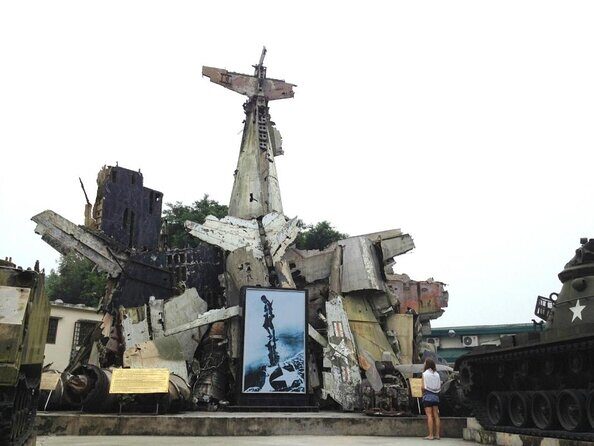
- War-focused stops tied to Vietnam Military History Museum and Hoa Lo Prison (Hanoi Hilton)
- Entrance fees included, so you’re not hunting tickets while you’re already on a schedule
- Iconic Hanoi route beats the heat, starting near Hoan Kiem and ending at Train Street
- Guide storytelling at museum pace, not lecture pace, with English support
6:00 a.m. logistics: how the timing helps you see more, with less hassle
A lot of Hanoi tours feel like they start when the city is already awake, hot, and loud. This one starts at 6:00 a.m., which changes everything. You get cooler air for your 2-hour outing, and streets around the center tend to feel more manageable before the big wave of traffic and foot traffic arrives.
The tour runs as a route with multiple short stops—think photo pauses, quick looks, and short walking segments—so you don’t burn the whole morning waiting at one place. You start at the HSBC ATM area on P. Lương Văn Can in Hàng Trống (Hoàn Kiếm) and you finish at 3 P. Trần Phú, Hàng Bông—right where you want to be for a last look at Train Street. That ending detail matters. Train Street is one of those places where timing controls the experience, and you’ll be in the right window to see daily life before it gets packed.
Price-wise, $30 for a 2-hour, guide-led experience is reasonable for Hanoi, especially because entrance fees are included in the deal. You’re not paying a bunch of separate tickets while trying to keep up with the route. It also helps that the group is capped at 10; you generally get more attention than on big bus-style tours.
You can also read our reviews of more historical tours in Hanoi


Hoan Kiem Lake to the French Quarter: the morning warm-up you’ll actually remember
You kick off with Hoan Kiem Lake (Lake of the Restored Sword), just as the day begins. Even if you’re not a morning-ritual person, this stop works. The lake area is where you can quickly orient yourself to Hanoi’s rhythms: locals doing tai chi, morning exercise, and calm movement that feels like the city’s heartbeat before traffic takes over.
From there, the route flows into the French Quarter. Here, the tree-lined boulevards and grand façades give you a strong sense of Hanoi’s layered identity—colonial-era architecture sitting alongside modern life. The run/walk format means you’re not stuck at one viewpoint. You move through the spaces, and that makes the “wow” factor come from the journey, not just a single photo.
A small practical note: because these stops are short and the group is moving, you’ll want your camera ready and your water situation sorted. Hanoi mornings can still feel humid once the sun starts climbing, even before the true heat arrives.
Opera House and Sofitel Metropole views: culture and city elegance at a runner’s pace
Next up is a look at the Hanoi Opera House. This is one of those landmarks you’ve probably seen in postcards or online, but at street level it hits harder. Seeing it in the morning light helps, and the fact that you’re walking past it keeps you from turning the stop into a long, slow museum detour.
You then pass by the Sofitel Legend Metropole Hanoi, which is more than a pretty building stop. It’s a signpost for old-school elegance in the middle of a working city. Even if you don’t plan to stay at the hotel, the exterior view makes sense of why Hanoi attracts travelers who love architecture and atmosphere.
The benefit of including these stops on a run is simple: you get a quick “architecture scan” without sacrificing your momentum. The only consideration is that if you’re a slow walker or someone who needs lots of time to linger, you may feel slightly rushed. The tour is designed to keep things moving.
Old Quarter flower market moments and Long Bien Bridge air

The route then shifts toward the Hanoi Old Quarter, with a quick visit connected to a local flower market. I like this kind of stop because it adds softness to the morning. You get a brief pause where the city’s energy shifts from streets and traffic to something delicate and colorful—then you’re back in motion.
After that, you head toward the water with Long Bien Bridge. Walking along it is one of those Hanoi experiences that feels atmospheric even when you’re not trying to be poetic. The bridge frames the river, and you’ll notice how Hanoi’s daily life continues around the infrastructure—people moving, the city’s edges in view, and a different tempo than the central streets.
This is also a great part of the route for a breather. If you’re pacing yourself, you can use the bridge section to reset—still moving, but with more open space and fewer tight turns than some Old Quarter streets.
Trúc Bạch Lake and Trấn Quốc Pagoda: a calmer slice before the war history
After the busier landmark energy, you get a quieter moment at Hồ Truc Bạch (Trúc Bạch Lake). Short as it is, this is a useful pause. You can feel the breeze and see local life on the water’s edge without the crush of the biggest tourist zones.
Then the route brings you to Trấn Quốc Pagoda. This temple has a different vibe than you might expect from a “tour stop.” Because it’s set on the lake area, it feels protected and steady—more stillness than spectacle. It’s also a good contrast to the later museum time: you’ll go from spiritual quiet back to wartime artifacts, and having that break improves how you process the story.
If you’re worried about fit, this section is helpful because it gives you a few moments where you can walk slowly and look around. It’s not all sprinting. You’re managing a route, not just chasing speed.
You can also read our reviews of more tours and experiences in Hanoi





Vietnam War museums: how the stories make the artifacts click
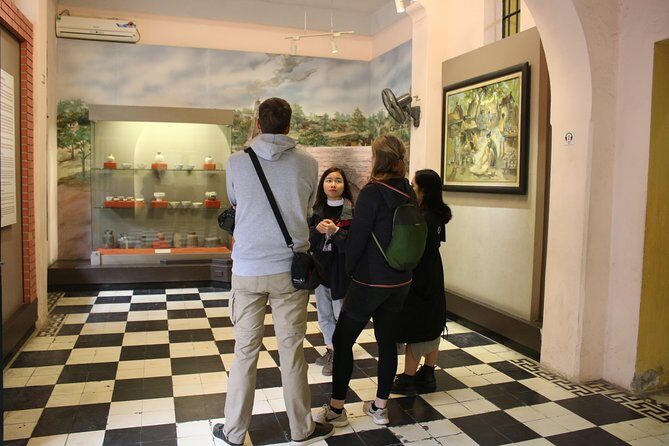
The headline of the experience is clear: you see two top military museums in Hanoi. The approach matters as much as the content. Rather than making museum time feel like a box to tick, the guide keeps the narrative grounded in what you’re looking at and how it connects to Vietnam’s wartime experience.
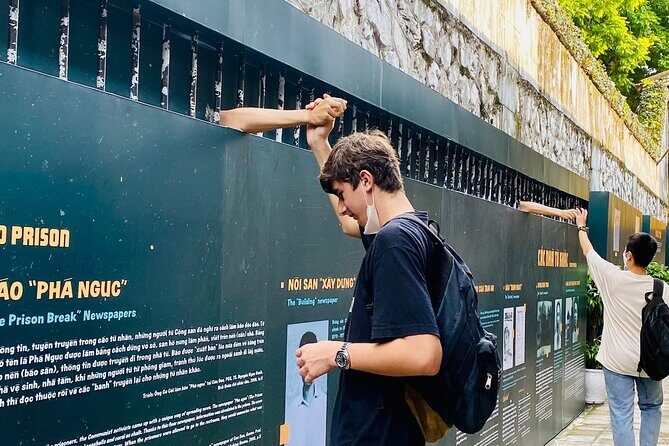
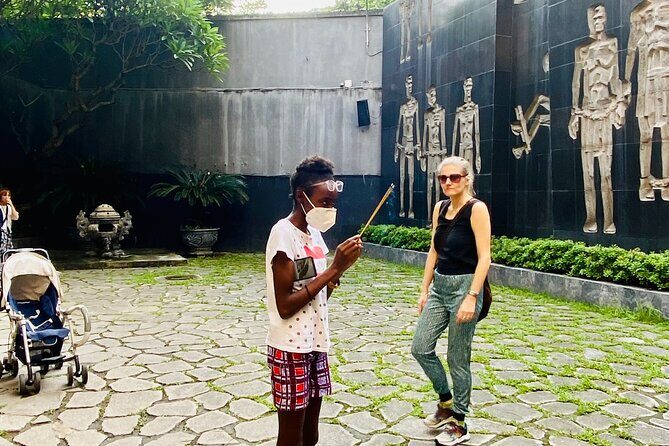
You visit the Vietnam Military History Museum and Hoa Lo Prison, known as the Hanoi Hilton, now operating as a museum. These places are heavy. But the guide style is what can change the whole experience from “I saw things” to “I understood what those things meant.”
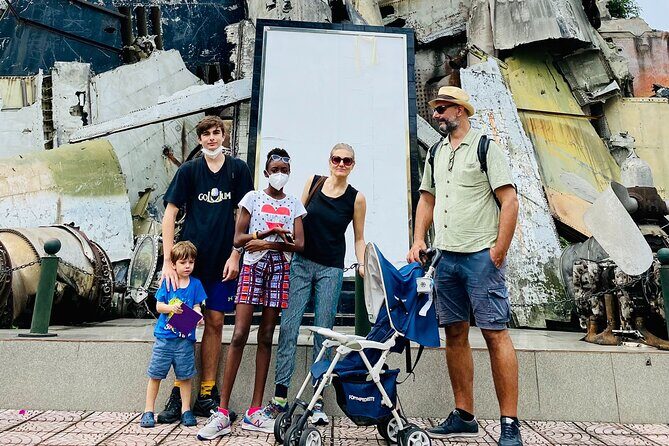
I also think the small-group format helps here. When you can ask a question and hear an answer tailored to what you’re seeing, it sticks. One of the best compliments in the experience is the storytelling—Kien’s ability to connect artifacts to the human side of history is exactly the kind of guiding that makes a museum visit feel worth your time, not just your ticket.
And it’s not just talking. In the route, Cong (a guide name I saw in the feedback) used a smart running tactic: he biked behind to help manage traffic flow during the run. That detail matters for comfort and focus. You can pay attention to the city and the route instead of constantly watching where cars are going.
Ho Chi Minh Mausoleum and McCain Memorial: context on a complicated chapter
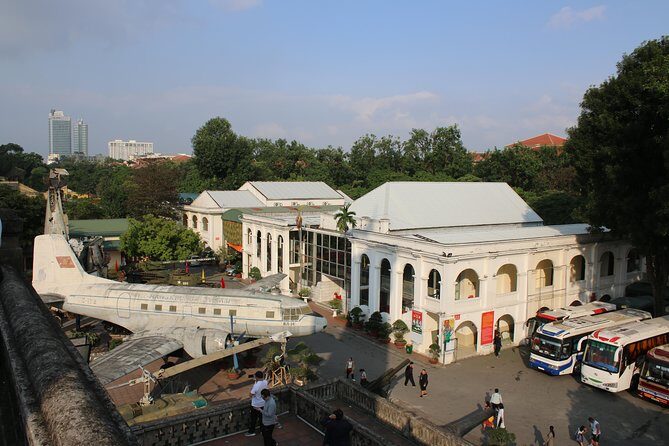
You also get a viewpoint related to Ho Chi Minh Mausoleum, viewed from the outside. Even a quick look can change your sense of scale and symbolism in Hanoi’s political center. The stop is short, but it’s a reminder that history here is not only in museums—it’s in the city’s layout and monuments.
The route then includes the John Sidney McCain Memorial. This is one of those stops that helps broaden the lens. You’re already in wartime context with the museum visits, and this adds another layer to how the Vietnam War is remembered and interpreted through different perspectives.
Important practical note: since stops are brief, you should treat these as orientation points. If you want longer reading or deeper photo time at these sites, plan to return later on your own.
Train Street before the crowds: last-mile payoff (and why arriving early matters)

You end with Hanoi Train Street, and the tour’s finish point is chosen for a reason: you’ll be there early enough to experience it before the rush.
This is the kind of place where the atmosphere depends heavily on timing. Early hours feel more like everyday life brushing right up against train tracks. Later, it can turn into a bottleneck of people waiting for the next moment. The tour’s schedule helps you avoid that worst-case feeling.
If you’re trying to make this your “top photo moment,” bring your camera strap setup so you’re not juggling bags while also scanning for trains. And if you’re the type who likes to watch and listen, slow down here. You’ll get more out of Train Street by staying present rather than sprinting through it.
Price and value: is $30 worth it in Hanoi?
At $30 per person for about 2 hours, I’d call this good value—mainly because of three things:
1) Entrance fees included: You’re not stacking extra costs mid-route.
2) Small group size: It’s easier to get attention from the guide, especially during museum discussion.
3) Guide storytelling plus city structure: You get landmark variety plus two war-history museum experiences, without needing to stitch together tickets and transport yourself.
This isn’t a luxury add-on. It’s a focused, guided morning run built around pacing and short stops. If you want a slow, sit-down, all-day history tour, this may feel too quick. But if you like movement, good explanations, and you want the city’s key textures early, it’s priced like a smart deal.
Who this tour suits best (and who should skip it)
This experience fits best if you:
- can handle a moderate fitness level and enjoy a run/walk pace
- want a guide-led museum experience that focuses on storytelling and meaning
- like combining city landmarks with serious history in the same morning
- prefer small groups (max 10 travelers) so you can ask questions
It may not fit if you:
- hate early mornings and aren’t comfortable starting at 6:00 a.m.
- need long stops at each site, because many stops are short by design
- aren’t comfortable with a route where traffic and movement are part of the experience
Tips to get more out of your morning run
- Wear shoes that work for pavement and quick turns. You’ll be moving between areas rather than staying in one museum room.
- Bring water. Even early, you’ll be active for about 2 hours.
- Pack light. The goal is easy movement through historic streets.
- Come in curious, not just “photos first.” The museum time is where the story lands.
- If you’re ending at Train Street, decide your plan before you arrive—watching trains is easier when you know where you want to stand.
Should you book this Hanoi 12K-style morning route?
If you want a morning in Hanoi that balances movement, landmark views, and two major war-history museum experiences, I think you should book it. The strongest reasons are the guide-driven storytelling (Kien’s museum skill and Cong’s practical support during the run) and the small-group feel that keeps the history understandable.
If you’re chasing only scenery with zero walking effort, you might feel slightly overcommitted. But for most visitors who like to move, learn, and see key sights before the crowds build, this is a solid, time-efficient way to experience central Hanoi.
FAQ
How long is the Morning Run Through Historic Hanoi?
The tour is about 2 hours.
Where do I meet and where does the tour end?
You start at the HSBC ATM at 51 P. Lương Văn Can, Hàng Trống, Hoàn Kiếm, Hanoi, and you end at 3 P. Trần Phú, Hàng Bông, Hoàn Kiếm near Train Street.
What time does the tour start?
The start time shown is 6:00 a.m.
Is the tour a small group?
Yes. The maximum group size is listed as 10 travelers.
Are entrance fees included?
Yes. Entrance fees are included for convenience.
Do I need to run the whole time?
The route is described as a run through the city and the activity calls for a moderate physical fitness level, so you should be comfortable with a run/walk pace.