
REVIEW · HANOI
Hanoi Knife Making Traditional Workshop
Book on GetYourGuide →Operated by Vietnamtravelers · Bookable on GetYourGuide
Fire makes better souvenirs.
This Hanoi knife making workshop in Da Sy village turns a craft legend into something you can actually do, not just watch. You go through the steps of designing, forging, shaping, and sharpening a simple knife while you learn how local blacksmithing evolved from older weapon-making roots into tools for daily life.
Two things I especially like: you get to pick your knife design, and you spend real time at the workbench with a master guiding your hands. I also like the finishing details, like the multi-phase sharpening process and the tar-based chemical wash step that’s described as a secret family recipe. One heads-up: you may not swing a hammer non-stop for every second—there are safety rules and some equipment moments where the workshop team controls the “danger zone.”
In This Review
- Quick hits before you go
- Da Sy village forging: why this knife class feels real
- Hotel pickup and the drive to Hanoi’s outskirts
- Pick your knife design and start with sketching metal
- Hands-on forging with a real master at the anvil
- Shaping, trimming, and the tar-based sharpening steps
- Guides, safety, and the end-of-day tea and shop tour
- The value of your finished knife at home
- Should you book this Hanoi knife making workshop?
- FAQ
- How long is the Hanoi knife making class?
- Is hotel pickup included?
- Is the instruction offered in English?
- What’s included in the price?
- What should I bring?
- Is alcohol or drugs allowed during the workshop?
- Can I reserve now and pay later?
- What is the cancellation policy?
Quick hits before you go
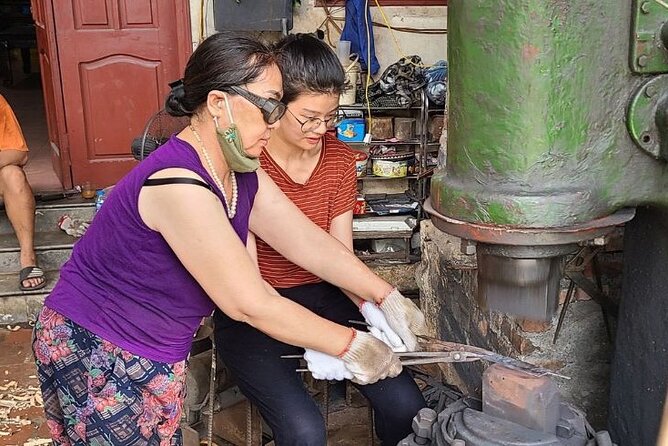
- Da Sy village forging work is the real setting, with a long-running reputation for making blades
- Choose your knife shape before the forging starts, so your finished souvenir feels personal
- Hands-on forging and shaping with step-by-step help from the guide and the master
- Sharpening includes a tar-based wash step, followed by grindstone phases
- Hotel pickup plus small-group feel help the day stay smooth and not chaotic
- You take the knife home, and it’s meant to be practical as well as decorative
Da Sy village forging: why this knife class feels real
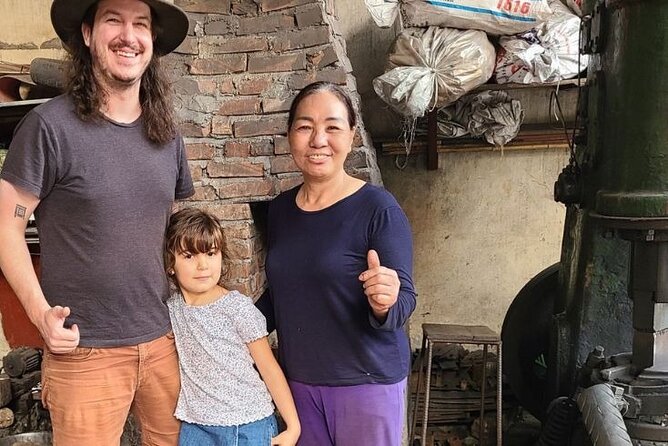
The workshop is set in Dong Bac, outside Hanoi, in and around Da Sy village, known for forging. The story you hear on site connects the craft to older times when this area was tied to weapon production during the Vietnam wars, and then to the shift toward agricultural implements as the needs of life changed.
What makes the setting matter is that you’re not learning blacksmithing in a demo space. You’re learning in the place where the craft is still part of local work culture. That helps the whole experience click: the knife isn’t presented like a toy souvenir. It’s presented like a tool that comes from real practice, real process, and real discipline.
This also affects pacing. The workshop has a structure that mirrors how knives are actually made: sketch the design first, then cut and forge the metal, then shape it, and only later get serious about sharpening. Even if you’re a total beginner, that order keeps you from getting lost and lets you see how each step builds on the last.
You can also read our reviews of more tours and experiences in Hanoi



Hotel pickup and the drive to Hanoi’s outskirts
The day starts with pickup included from your hotel. You’re told to wait about 5 minutes in the lobby, and then a driver takes you out to the village area. This matters because knife-making days can be early, and you don’t want to waste time figuring out routes and transport.
Timing is listed as about 3 hours total, with starting times depending on availability. You’ll also get a 500 ml bottle of water included, which is a small detail but a useful one when you’re going from air-conditioned hotel to village heat or cold.
One practical tip: wear comfortable shoes. The workshop involves standing while you work, and the process includes hot and sharp tools. If you like a neat souvenir, you’ll also want to keep an eye on sleeves and loose clothing and just follow the safety guidance from the team.
Pick your knife design and start with sketching metal
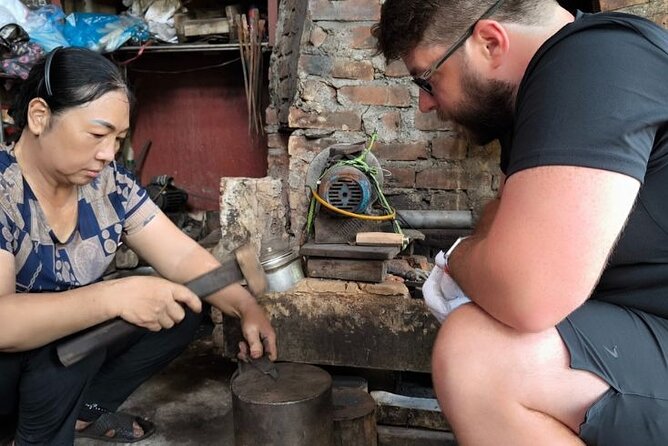
Before any heat hits the forge, you start with the creative part: designing your blade. You begin by sketching the shape of the knife on a sheet of metal. The metal choice is explained as being picked for durability, not just whatever piece is on hand.
Then the workshop moves from sketch to substance. You’ll also have a say in what you make—some people choose from a selection or a photo style they like, and the finished knife reflects that choice. In practice, that means you’re not leaving with a generic blade. You’re leaving with one that looks like the plan you made at the start.
Guides make this easier, especially if your Vietnamese is limited. Names that come up include Tee, Nathan, Khoi, and Minh, and they’re described as doing strong English translation so you know what the master wants you to do at each stage.
This design-and-plan phase is also where your expectations get set. If you’re hoping for full DIY blacksmithing, you might find it more guided than some wild YouTube fantasy. But the payoff is that you still leave with a finished knife that looks intentional, not accidental.
Hands-on forging with a real master at the anvil
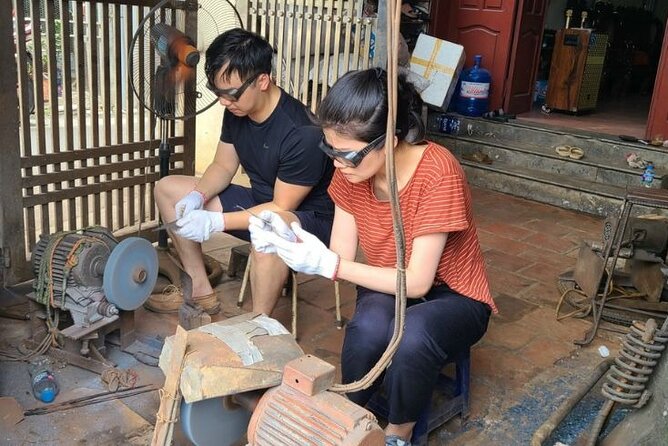
The core of the experience is forging. The process is taught in clear steps: cut out the blade and tang (the part that extends into the handle), then thrust the pieces into crackling embers. After that, shaping begins with hammer work.
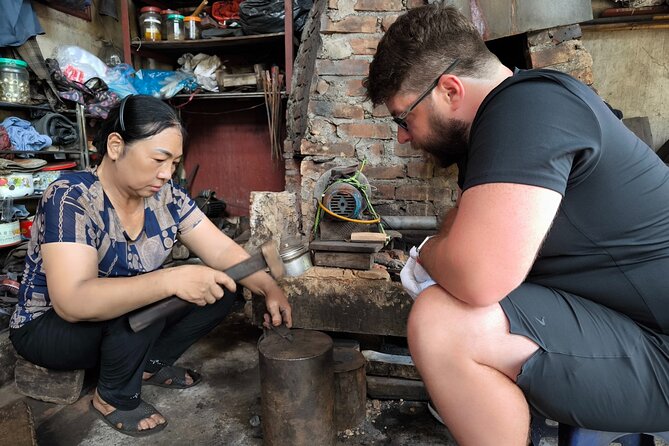
You’ll alternate blows with the maker, which is a helpful structure for beginners. Instead of letting you flail and guessing what “good” looks like, you follow along in rhythm and learn how the blade takes shape through controlled impacts. Your instructors also help correct imperfections—rather than leaving you with a misshapen result.
Some steps involve equipment that’s safer for the workshop team to control (and this comes up in how they explain what you can do yourself). One review-style lesson you’ll hear in plain terms is that you’ll be offered choices about how hands-on you want to be. You can do a lot yourself, but there’s a limit when the process uses a very dangerous machine. That’s not there to ruin the fun—it’s there to keep the day accident-free.
During this portion, you’re working alongside the master, and hospitality is part of the workflow. People also mention strong patience from the craft team, including a craftswoman referred to as Mrs. Tuyen (and also as Do Thi Tuyen in one description). If you like being coached through each motion, this is the moment that makes the class feel like more than just a transaction.
Shaping, trimming, and the tar-based sharpening steps
Once forging and shaping are done, the workshop moves to finishing. You’ll see trimming handled with a hydraulic cutting machine. This is one of those moments where it helps to remember: your job is to learn the process steps, not to prove you can operate every tool.
Next comes sharpening on a grindstone, and this part is surprisingly detailed. The process includes several phases. One step you’ll hear explained involves soaking the blade in a special tar-based chemical wash, described as a secret family recipe. Then the blade goes through additional sharpening phases until it’s ready.
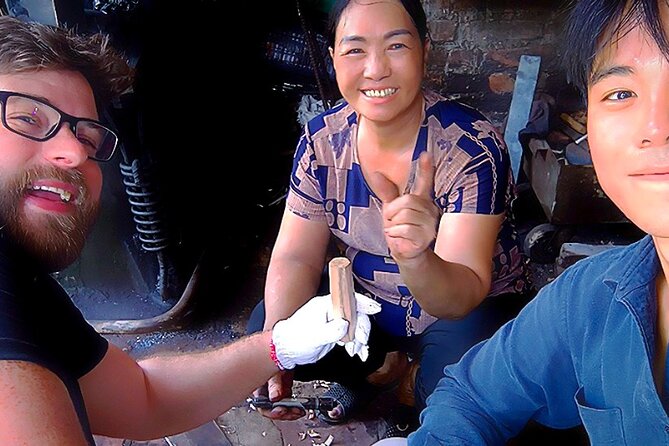
In the workshop, people also mention handle work—carving and shaping a handle to fit your hand, which turns the knife from a blade-only craft project into a usable tool. That handle phase is where many first-timers feel like the knife becomes theirs.
If you’re the kind of person who cares about craft details, you’ll probably love the way the instructors talk through why each stage exists. The sharpening isn’t just a final act; it’s treated like the step that determines what the blade can actually do.
And yes, you’ll end up with something sharp enough to notice. People specifically describe the end product as practical, not just decorative.






Guides, safety, and the end-of-day tea and shop tour
Safety is part of the story here. You’re told to avoid alcohol and drugs, and the workshop emphasizes safe handling around hot metal and sharp tools. A practical warning comes up repeatedly: watch out for fingers, and follow the glove and tool guidance the team provides.
The guides play a big role in making safety understandable without a language wall. Names like Tee, Nathan, Khoi, and Minh show up in guide descriptions, and the theme is consistent: good English explanation, friendly coaching, and enough translation so you don’t feel lost when the master shifts between steps.
The atmosphere often feels family-run. You’re greeted warmly on arrival, and there’s time to chat with locals and learn how the craft fits into daily life. A few people also mention that the day includes extra touches like Vietnamese fruits, tea, and candy, plus time to tour the shop at the end. One description also includes wrapping up with tea and a snack—small things, but they make the day feel like a visit, not a factory appointment.
If you prefer structure, you’ll likely like the way the day is planned. If you prefer total freedom, you might find you’re guided more than you expected. Either way, the result is that you know what’s happening at every stage.
The value of your finished knife at home
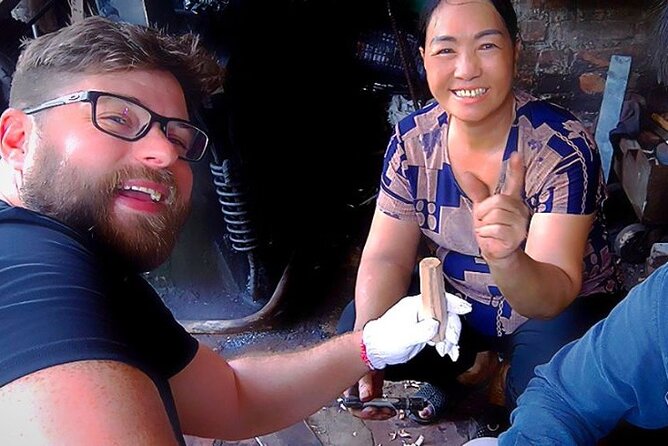
Let’s talk value in real terms. The price is listed at $50 per person for about 3 hours, and the package includes English-speaking instruction, pickup from your hotel, a 500 ml bottle of water, the master and equipment, and the products (meaning you take your knife home).
The best value angle here is the combination of transportation plus a finished item you can actually use. Many “craft classes” include lessons but don’t always give you the full end product. Here, you leave with a knife that’s meant to be practical as well as meaningful—something you can keep and possibly use in the kitchen.
It’s also a good bargain compared to the time you spend doing “experience tourism” that ends with photos only. This one ends with a tangible result that reflects real steps: forging, shaping, and sharpening, including that tar-based wash phase.
There is one pricing consideration to note: a $10 surcharge applies on major holidays such as New Year, Tet holidays, Liberation Day/Reunification Day (30/4), International Workers’ Day (01/05), and National Day (02/09). If you’re going around those dates, check the total price early so it doesn’t surprise you.
Also, this experience is not suitable for people over 95 years. If you’re close to that range or have mobility limits, it’s worth taking that warning seriously.
Should you book this Hanoi knife making workshop?
If you want a Hanoi experience that’s hands-on, culturally grounded, and still fun for beginners, I’d book it. This is one of those rare activities where you do the work, not just watch it. The chance to choose your knife design, then follow the full process until it’s sharp, is a strong combination.
Book it especially if:
- you like making something practical, not only buying a souvenir
- you enjoy learning how craftsmen work through step-by-step process
- you want a small-group feel, and pickup from your hotel
Consider skipping it if:
- you expect an entirely DIY, no-help-from-the-master style where you operate every machine yourself
- you’re sensitive to hot processes and the need to follow safety directions closely
If you go, do it with curiosity and patience. Listen to the guide, watch the master’s hand positions, and treat safety as part of the lesson. That’s how you’ll get the best possible knife—and the best story to tell when you get home.
FAQ
How long is the Hanoi knife making class?
The experience is listed as 3 hours. Starting times can vary based on availability.
Is hotel pickup included?
Yes. Pickup is included, and you wait about 5 minutes in the hotel lobby.
Is the instruction offered in English?
Yes. The workshop includes an English-speaking live tour guide.
What’s included in the price?
The price includes English instruction, a master, equipment, products (you take the knife home), and one 500 ml bottle of water.
What should I bring?
Wear comfortable shoes. That’s the only specific item listed.
Is alcohol or drugs allowed during the workshop?
No. Alcohol and drugs are not allowed.
Can I reserve now and pay later?
Yes. The experience offers a reserve now & pay later option.
What is the cancellation policy?
Free cancellation is available up to 24 hours in advance for a full refund.