REVIEW · HANOI
Secret Handicraft Villages of Hanoi ( Incense and hat Villages )
Book on Viator →Operated by SECRET HANDICRAFT VILLAGES OF HANOI · Bookable on Viator
Want Hanoi without the crowd?
This tour is built for people who like real daily life over postcard sightseeing. You head out of the Old Quarter and into the countryside to visit villages known for the same traditional crafts they still make today. I like that it focuses on how things are made and why they matter, not just quick photo stops.
Two things I really like: first, the incense village start at Quảng Phú Cầu, where incense is tied to temple and home life, so you get context for a Vietnamese habit most visitors only notice from a distance. Second, the day keeps the group small, so the countryside workshops feel practical and personal instead of rushed. One thing to watch: the tour info can feel a little confusing about whether you booked the full-day or half-day version, so double-check that before you go.
In This Review
- Key highlights to expect
- Why these Hanoi craft villages beat the Old Quarter tour loop
- Quảng Phú Cầu: seeing incense at temples and in local homes
- Chuong Village: conical hat craft time and a meal break
- Ha Thai lacquer painting: resin layers, pigment work, and patient technique
- Small-group comfort: pickup, max 12, and why it matters
- Price and value: what $35 really includes in the real countryside
- Best-fit traveler: who will enjoy this most
- Should you book the Secret Handicraft Villages of Hanoi tour?
- FAQ
- What is the duration of the tour?
- How much does the tour cost?
- Do they offer pickup?
- Do I need a printed ticket?
- How long is each stop?
- Which parts include admission fees?
- What is the group size limit?
- Can most people participate?
- What happens if I cancel?
- How soon will I get confirmation after booking?
Key highlights to expect
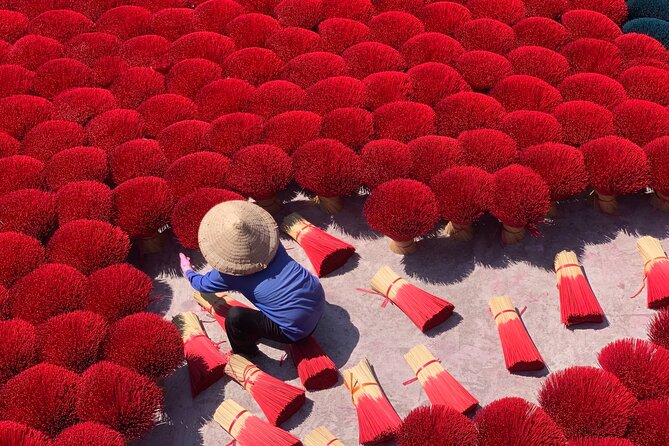
- Quảng Phú Cầu incense village and the everyday role of incense in temples and local houses
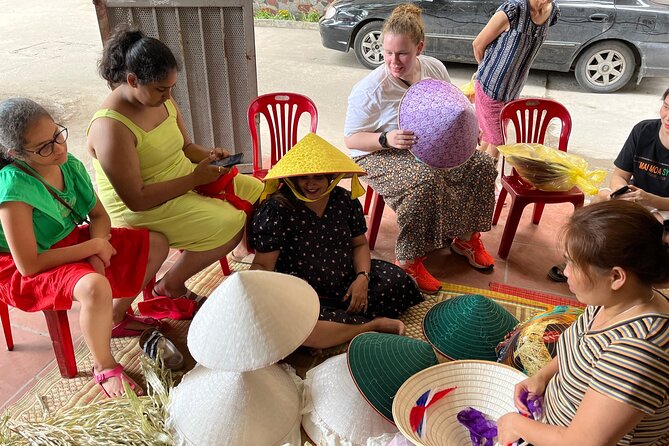
- Chuong Village craft time plus a meal break, with conical leaf hat-making
- Ha Thai lacquer painting with a step-by-step look at layers of resin and pigment
- A small group (max 12 travelers) that helps the villages feel less touristy
- Pickup plus a mobile ticket, so you’re not stuck figuring out logistics on your own
Why these Hanoi craft villages beat the Old Quarter tour loop
Hanoi’s Old Quarter is charming, sure. But it’s also where you go when you want to shop and wander with everybody else. This experience takes you in the opposite direction: out toward the villages where the crafts are still the point of the day.
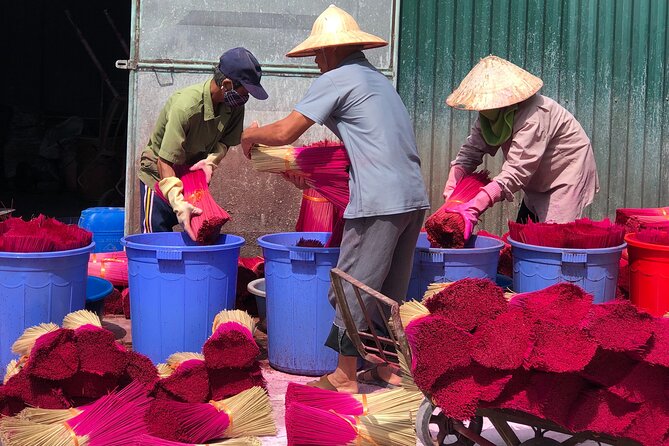
The value here is that each stop connects a craft to real usage. Incense is not an abstract “tradition.” You’ll understand why sticks get lit at temples and at local homes. The cone hat isn’t just a souvenir shape. It comes from village know-how using cone-shaped leaf materials. And lacquer work isn’t a generic art demo. You’ll see the process of building layers—wood base, resin, pigment—one stage at a time.
That’s why this tour works even if you’re not a craft person. You’re learning the logic of the craft. How materials turn into a finished object.
You can also read our reviews of more tours and experiences in Hanoi.



Quảng Phú Cầu: seeing incense at temples and in local homes

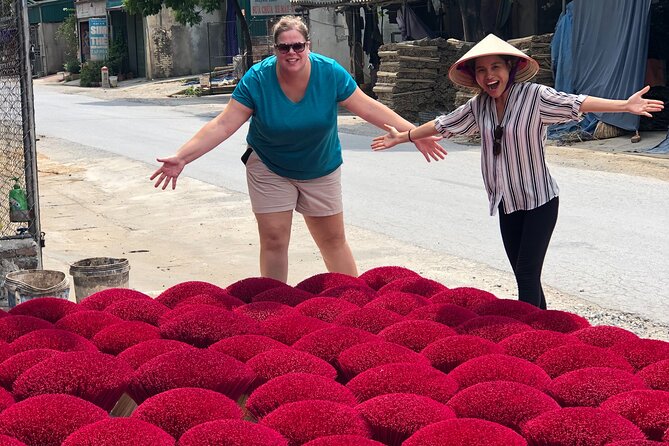
Quảng Phú Cầu is your first stop, and it sets the tone fast. Incense is everywhere in Vietnam—at temples, yes, but also in everyday spaces where people mark moments with smoke and scent. This village is known for the incense craft, and it’s recently been highlighted in National Geographic, which tells you it isn’t just a random stop on a route.
You’ll spend about two hours here, and admission is free. That matters more than it sounds. When the first stop doesn’t add a paid ticket, you’re more free to focus on the experience rather than watching costs add up.
What to look for:
- How the craft supports daily ritual, not just ceremonial use
- The visual beauty of the work itself—bundles, sticks, and the look of active making
- The way incense becomes part of the fabric of the village day
Possible drawback: if you’re expecting a hands-on incense workshop, this stop may feel more observational than tactile. The tour’s strength is context and seeing incense as a living practice, so if that’s your style, you’ll be happy.
Chuong Village: conical hat craft time and a meal break
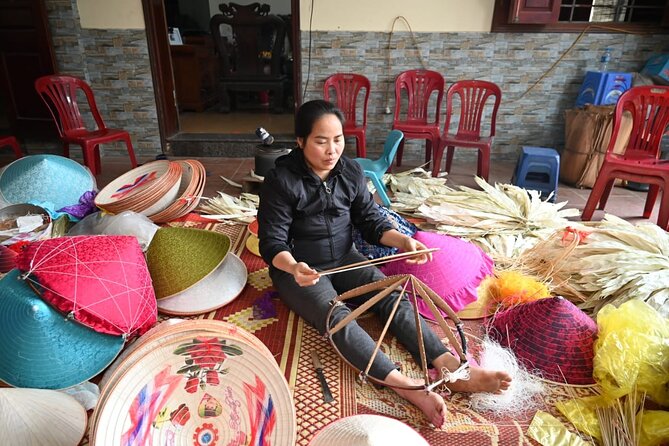
After incense, you’ll head to Chuong Village for roughly three hours. This is where the day gets more interactive. You’ll learn about the cone-shaped leaf tradition behind the conical hats that show up across Vietnam—and you get time to enjoy the village rhythm rather than rushing through.
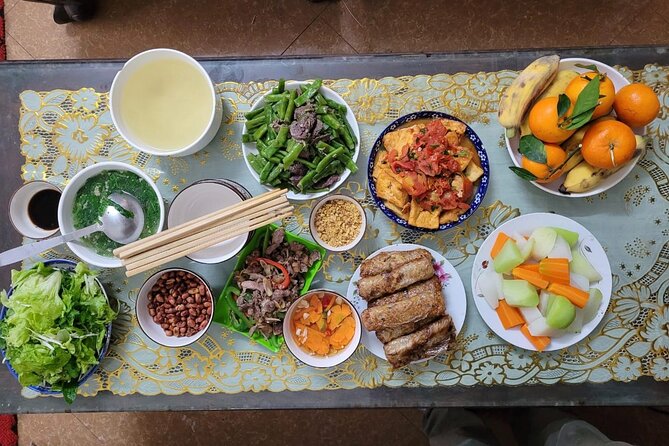
This stop also includes a break to eat, and it’s timed as a chance to reset before the lacquer segment. The best advice I can give: treat this meal as part of the show. You’re not just “stopping to eat.” You’re eating in the countryside context that makes the craft make sense. After the meal, there’s also a local tea (or a beer) option before you move on.
Admission at this stop is free, so you’re not paying extra here either. That gives you a bit more control over your budget, especially if you plan to buy small crafts as souvenirs.
What might surprise you:
- How much craft detail goes into something that looks simple in photos
- How quickly the day changes gear when you stop thinking of hats as “souvenirs” and start seeing them as village production
Ha Thai lacquer painting: resin layers, pigment work, and patient technique
Next comes Ha Thai Village and the lacquer painting experience, about two hours. This is the most “art process” stop of the day, and the ticket is included for you. You’ll meet a local artist and learn the craft’s history, then see the work from the ground up.
Here’s the important part: lacquer painting is slow by design. You’re not just applying color. The craft begins with preparing a wooden base, then building up layers using resin and pigment. Watching each stage helps you understand why lacquer art often looks so smooth and deep—it’s literally layered.
Because you’ll be hearing about the background of the ancient craft and watching the stages happen, this stop is ideal if you like:
- Traditional processes explained clearly
- Art that has a “made by hand, step by step” feel
- Learning why materials behave the way they do
One consideration: if you were hoping for a full workshop where you walk away with your own lacquer piece, the information provided points more to learning and observation than guaranteed take-home creation. It’s still valuable because you understand the craft at a functional level.
Small-group comfort: pickup, max 12, and why it matters
The tour caps at 12 travelers, which is a big deal on village days. The difference shows up fast: fewer people mean you’re more likely to move at a normal pace and spend time asking questions instead of waiting your turn for a photo.
Pickup is offered, so you’re not doing the tiring “where do I meet?” dance in Hanoi traffic. And you’ll receive a mobile ticket, which is convenient if you hate printing papers or keeping track of slips in a day bag.
The total time runs about 7 to 8 hours. That’s long enough to feel like a real countryside outing, not a quick hit. So plan your day like an adult: wear comfortable shoes and bring sunscreen or rain protection, because villages mean you’re outside for stretches.



Price and value: what $35 really includes in the real countryside
At $35 per person, this is a budget-friendly craft outing for Hanoi. But the smart way to judge it isn’t just the number. It’s what you’re getting alongside the visits.
In the day you get:
- Transportation from pickup into the countryside
- A structured route through three craft-focused stops
- Guide-led context that turns crafts into something you can explain afterward
- Admission that’s free for the first two stops and included for lacquer painting
That admission split matters. When a tour includes at least one paid craft entry, you’re not just paying for transport and standing around. You’re paying for access.
Also keep an eye on the description wording about full-day versus half-day. One common confusion is booking the “wrong length” for what you thought you purchased. If you want the full experience—incense, hats, and lacquer in one go—make sure you’ve selected the 7–8 hour version.
Best-fit traveler: who will enjoy this most
This is a strong match if you:
- Want to see Vietnam beyond the tourist lanes
- Like traditional crafts with real materials and real use
- Prefer a smaller group setting
- Enjoy learning why something exists, not just taking home a photo
It’s also good if you’re the type who ends up buying something simple but meaningful. This tour sets you up to understand what you’re seeing when you shop later—incense work, hat-making, and lacquer layers make more sense when you’ve watched the process.
If you’re the kind of traveler who only wants dramatic views or big monuments, you might find the craft pace slower than the history-and-architecture tours. Think of this as an “everyday Vietnam” day, not a headline-sights day.
Should you book the Secret Handicraft Villages of Hanoi tour?
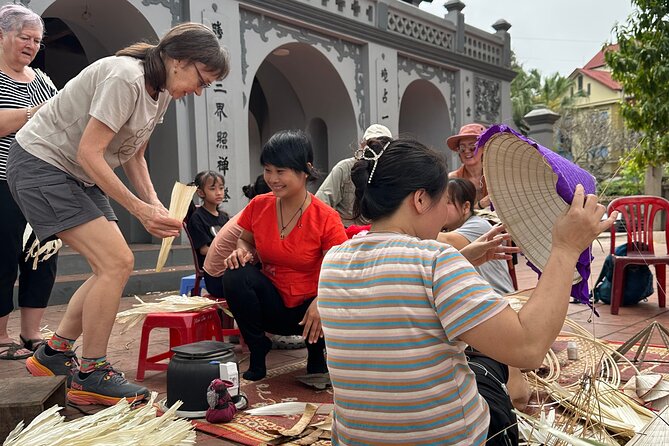
Yes, if you want an honest break from Old Quarter routines and you like the idea of learning craft processes where they’re still practiced. The biggest strengths are the craft-focused stops, the small-group size, and the fact that admissions are handled in a way that keeps the day feeling value-based rather than pay-and-skip.
Book it if incense, conical hats, or lacquer art are on your interest list, even slightly. You’ll come away with more than souvenirs. You’ll understand what makes each craft tick—from incense rituals in village life to the layered build of lacquer work.
Skip or reconsider if you need guaranteed hands-on making at every stop, or if you’re unsure whether you’re booking the full-day version. A quick double-check solves that.
FAQ
What is the duration of the tour?
The tour lasts about 7 to 8 hours.
How much does the tour cost?
It costs $35.00 per person.
Do they offer pickup?
Yes. Pickup is offered.
Do I need a printed ticket?
No. The tour uses a mobile ticket.
How long is each stop?
The stops are roughly: Quảng Phú Cầu (2 hours), Chuong Village (3 hours), and Ha Thai Village for lacquer painting (2 hours).
Which parts include admission fees?
Admission is free for the Quảng Phú Cầu and Chuong Village stops. The Vietnamese lacquer painting at Ha Thai Village has an admission ticket included.
What is the group size limit?
The tour has a maximum of 12 travelers.
Can most people participate?
Most travelers can participate.
What happens if I cancel?
You can cancel for a full refund if you cancel at least 24 hours before the experience start time. If you cancel less than 24 hours before, the amount paid is not refunded.
How soon will I get confirmation after booking?
You’ll receive confirmation at the time of booking, unless you book within 15 hours of travel. In that case, confirmation will be received as soon as possible, subject to availability.