REVIEW · HANOI
Ninh Binh Photo Explorer
Book on Viator →Operated by Vietnam in Focus - Day Tours · Bookable on Viator
Morning light makes Ninh Binh work.
This full-day photo-focused tour takes you into Vietnam’s northern lowlands for scenic boat rides, steep viewpoint climbs, and rural village scenes. I like that it’s built around getting shots at the right times, not just checking places off a list, and you’ll work with a professional photographer leader in a group capped at 6.
Two things that really stand out for me are the chance to photograph real working moments (like the boat operators at Tam Coc) and the on-the-ground teaching, including composition and exposure tips shared by guides such as Phuong, Duc, Linh, and Toan. One consideration: it starts at 6:00 am and includes a 500-step climb, so you’ll want moderate fitness and comfortable shoes.
In This Review
- Ninh Binh Photo Explorer: what kind of day is this?
- Price and what you’re really paying for ($327.18, max 6 people)
- Group rhythm and timing: why the 6:00 am start matters
- Tam Coc Nature Reserve and the cave boat ride
- Hang Múa: 500 steps, iconic angles, and controlled pacing
- Hoa Lu ruins and the story behind the shots
- Ninh Van stone carving village and Gia Thuy ceramics
- Van Long Nature Reserve at sunset: rural scenes with real motion
- What the pro photographer actually helps with (not just where to stand)
- Who should book this tour, and who might prefer something else?
- Gear and shooting strategy for this exact itinerary
- Should you book Ninh Binh Photo Explorer?
- FAQ
- What time does the tour start?
- How long is the Ninh Binh Photo Explorer?
- What is the group size?
- Is pickup included?
- What’s included in the price?
- Is there a lot of walking or climbing?
Ninh Binh Photo Explorer: what kind of day is this?
This is a 10-hour small-group photography outing based in Ninh Binh, departing from Hanoi in the early morning. You get hotel pickup, transport all day, food and drinks, and a pro photographer who guides your group through a mix of views, craft scenes, and rural life. It’s not a slow sightseeing day. It’s a plan made for light, angles, and timing.
The biggest value here is that your day is structured around photo opportunities that actually behave differently through the morning. Tam Coc is best when it’s quiet and the light is still soft. Hang Mua rewards effort with iconic angles. Later, the craft villages and Van Long bring in more close-up, human-scale storytelling.
If you’re a beginner who wants direction, great. If you’re an enthusiastic amateur, you’ll still benefit from practical coaching. And if you’re somewhere in between, you’ll appreciate how the itinerary mixes teachable moments with real subjects you can’t stage.
Price and what you’re really paying for ($327.18, max 6 people)
At $327.18 per person, this isn’t the cheapest way to see Ninh Binh. But it’s also not a budget bus tour. For the price, you’re paying for several things that matter to photographers:
- A small group size (maximum 6) so your guide can actually notice your framing and help you adjust.
- Private transportation and a full day schedule that keeps moving early, before crowds and harsh light.
- A professional photographer leader, plus food and drinks during the day.
- Entrance fees where stated, including national park admission (and the Tam Coc boat/area ticket component is included in the day plan).
Where value can feel uneven is if you’re only chasing one or two quick photos and you don’t care about learning. But if you want to come home with better images and a clearer sense of how to shoot in changing light, the structure is doing the heavy lifting for you.
You can also read our reviews of more tours and experiences in Hanoi.

Group rhythm and timing: why the 6:00 am start matters
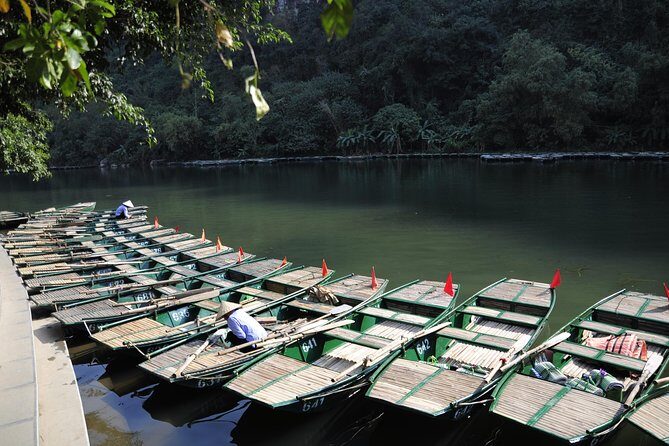
You leave at 6:00 am from Hanoi by minibus, and you’ll reach Tam Coc around 7:30. That early timing is the difference between getting clean, calm compositions and showing up after the place gets busy.
In practice, early arrival also gives your guide room to scout vantage points and pace the group. Several photographers’ tips and coaching are most useful when you have breathing space to try an idea and see the result. The day plan also includes breaks, not just a nonstop march.
One more practical thing: because you’re heading up and down stairs and walking short distances at viewpoints, you’ll want to treat this like a morning out with real movement. Pack water, and wear shoes you don’t mind getting dusty.
Tam Coc Nature Reserve and the cave boat ride
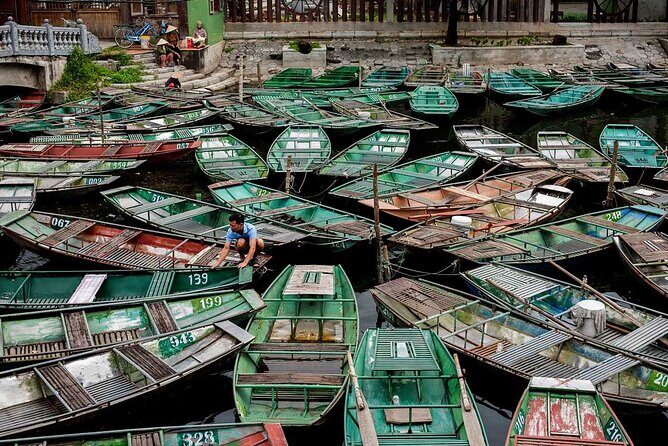
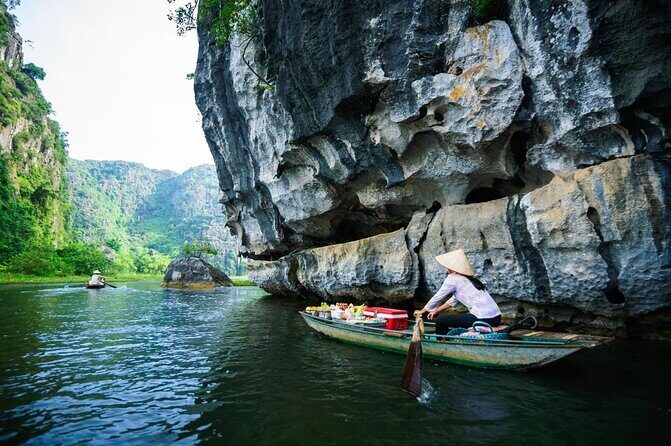
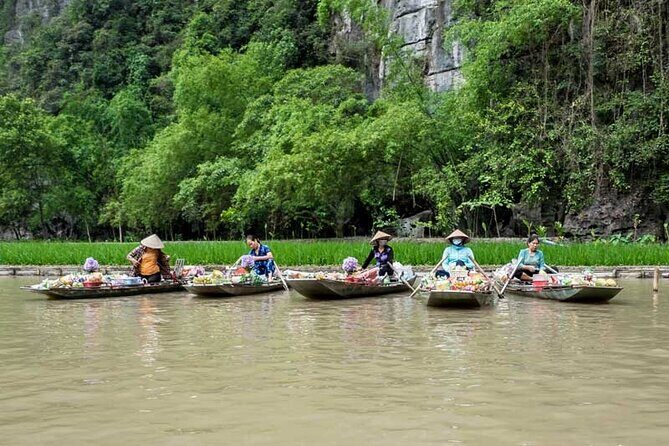
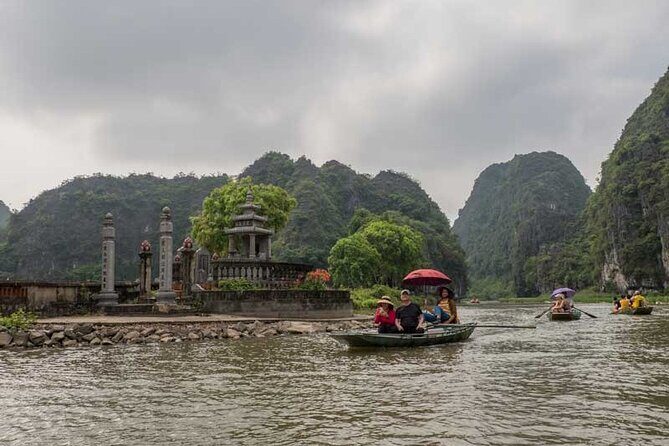
Tam Coc is your first major subject, and it’s a great way to warm up your eyes. The day starts with a boat trip through the valley and caves at Tam Coc Nature Reserve, with about 3 hours at this stop.
Why it’s a strong photo start:
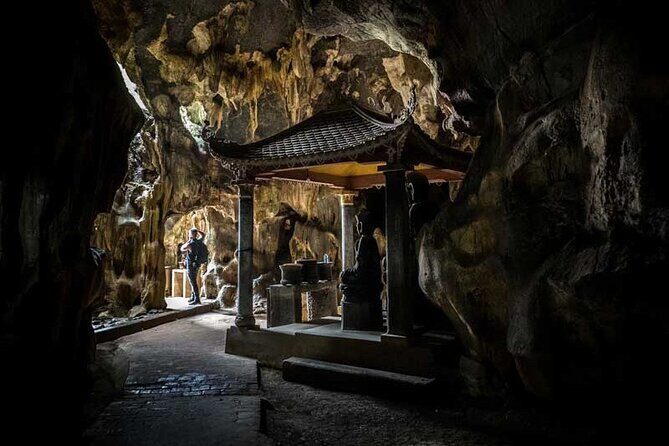
- You’re shooting a mix of narrow waterways, cave openings, and green valley views.
- You can frame boats and riders in ways that feel documentary, not just scenic.
- You get short walks to vantage points, which means you can change angles instead of shooting the same direction all morning.
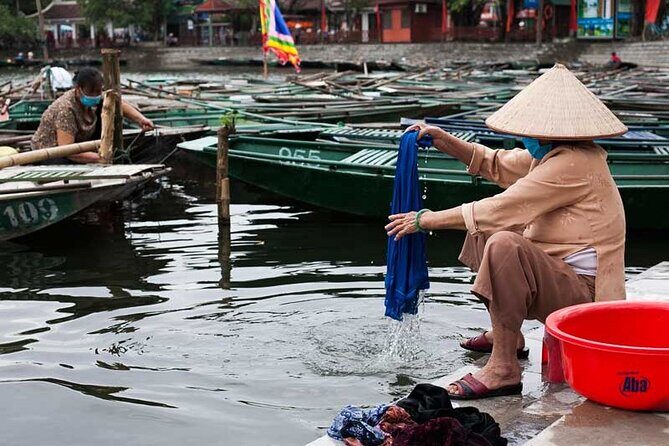
There’s also a human detail that photographers love: you’ll have a chance to capture images of the boat operators, who continue the age-old tradition of rowing their vessels by foot. That’s the kind of subject that adds story to a picture, and it’s easier to catch when your group arrives early and your guide has time to position you.
What to watch for: boat photography often means dealing with moving subjects and uneven light. Your photographer leader can help you choose camera settings and decide where to place the horizon and boat in the frame.
Hang Múa: 500 steps, iconic angles, and controlled pacing
After Tam Coc, you head to Hang Múa for one of the day’s most recognizable views. The itinerary includes a steep climb of 500 steps and about 2 hours here, with the admission ticket listed as free.
The real reason this is such a good photo stop is the geometry. From the viewpoint, you get dramatic angles over the surrounding area, and you can build photos that feel iconic because the composition naturally funnels the eye.
The coaching component helps too. In the best moments, you’re not just looking at the view. You’re learning how to frame it:
- where to stand for stronger foreground shapes,
- how to balance bright sky with darker rock formations,
- and how to time your shot so the light doesn’t wash everything out.
One small drawback to plan for: the climb is real. Even if you can manage it, it slows the group rhythm. The guides are used to this pacing, and if your group includes different fitness levels, you may find your leader gives you options for how much climbing you want to do on that portion of the day.
Hoa Lu ruins and the story behind the shots
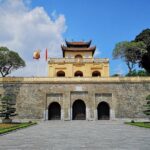
The tour highlights include photo opportunities connected to Vietnam’s ancient capital, Hoa Lu. Even if you’re mainly there for the scenery, Hoa Lu adds meaning to the images because you’re not only photographing shapes in the countryside—you’re also photographing traces of the past.
For me, the advantage of mixing Hoa Lu with more modern rural scenes later is that you get a wider range of subject matter in one day:
- architecture and ruins for structure and texture,
- boats and cave openings for curves and depth,
- and village craft for close-up storytelling.
Tip mindset: when you’re shooting ruins, don’t only aim for wide shots. Try a few frames of details—carvings, stone edges, shadows on walls. Those shots are usually easier to make look sharp and intentional.

Ninh Van stone carving village and Gia Thuy ceramics
Stop 3 is where the tour shifts from big views to hands-on craft. You spend about 3 hours visiting two craft villages: Ninh Van stone carving and Gia Thuy ceramic work.
This is a smart pairing for photographers because the materials force different techniques:
- Stone carving gives you texture, dust, tools, and strong contrast.
- Ceramic work gives you repeated motions and warmer, earth-toned atmospheres.
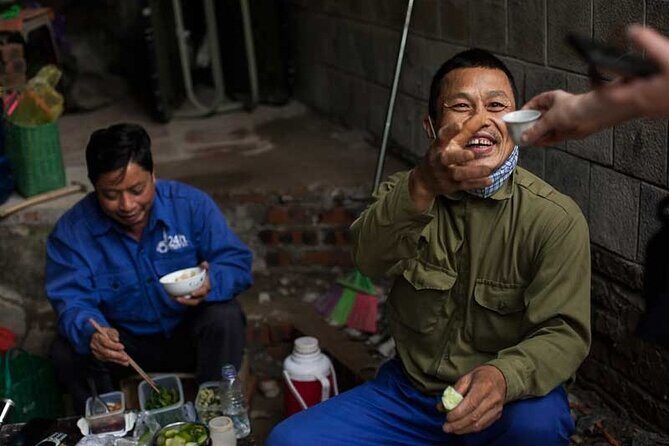
At Ninh Van, the idea is to photograph locals carving statues and headstones by hand. The stone is sourced from limestone karst mountains in the region, and the craft has been carried on for nearly a century. That matters for your photos because it gives you a coherent narrative: the raw material is local, and the work is skill-based rather than mass-produced.
At Gia Thuy ceramic village, you photograph traditional manufacture of pots using local clay. Again, you’re not just photographing a product. You’re photographing the process—hands at work, tools in motion, and the environment around the production.
Possible drawback: craft villages can be crowded in certain seasons. The group size helps, but you may still want to be ready for changing light under roofs and workshop walls.
Van Long Nature Reserve at sunset: rural scenes with real motion
Your final stop is Van Long Nature Reserve, about 2 hours. This is where the day becomes more about rural life than big scenic drama.
The setting is described with details that are excellent for photography:
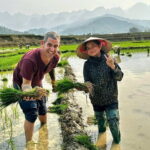
- farmers bringing in cattle and buffalo,
- buffalo taking dips in the rivers,
- schoolchildren cycling home along the dykes.
Those are moving subjects, and they make your photos feel alive because the scene isn’t staged. It’s daily life happening on a timeline. And because you’re going toward sunset, the light tends to soften, making it easier to capture faces, animals, and reflections without the harshest midday glare.
How to use the time well: don’t only shoot at the widest angles. Spend some time on the mid-frames where you can show relationship—person plus animal, animal plus water, child plus road. Those are the images people remember after the trip.
What the pro photographer actually helps with (not just where to stand)
The tour is led by a professional photographer leader, and the coaching shows up in how guides talk about composition and exposure. In the experience’s feedback, guides including Phuong and Duc are praised for being patient tutors who explain technique in a way that helps you improve fast.
Here’s what that kind of instruction usually means for you during a day like this:
- Composition choices: how to frame subjects with leading lines, how to simplify backgrounds, and how to avoid distraction.
- Exposure control: which settings to try as the light shifts from bright sky to shaded cave areas and back again.
- Practical pacing: when to shoot quickly and when to slow down and wait for the moment.
Another useful detail from feedback: guides may adjust how the group experiences certain parts based on energy levels. If you’re traveling with mixed abilities (for example, multi-generation groups or a mix of photographers and non-photographers), a good guide helps keep everyone included without making the day feel chaotic.
Who should book this tour, and who might prefer something else?
This tour is a strong match if:
- you want a photo workshop feel without needing to be an expert already,
- you like early starts and structured itineraries,
- you enjoy mixing subject types: boats, viewpoints, crafts, and daily rural scenes.
It may be less ideal if:
- you dislike stair climbing (there’s that 500-step climb),
- you’re only interested in very casual photos and don’t want to follow a schedule,
- you get grumpy early in the morning.
If you’re traveling solo, you’ll likely enjoy the small group. If you’re traveling with friends, you’ll appreciate the group cap, because it keeps you from being lost in a crowd. Families can also work well, especially if everyone is ready for a long day and moderate walking.
Gear and shooting strategy for this exact itinerary
You’ll be shooting in changing conditions across the day: open-air viewpoints, cave areas, craft workshops, and rural sunset scenes. Without giving you strict gear rules, here’s the practical mindset that fits this route:
- For Tam Coc, expect moving boats and changing brightness. Bring your patience and be ready to refine your frame after you see how light hits the water and cave openings.
- For Hang Múa, you’re climbing to a single key viewpoint. Use the climb to your advantage by scouting where you’ll stand before you start taking a lot of frames.
- For craft villages, focus on hands, tools, and local material. Those details often look better than overly wide shots because they show real work.
- For Van Long, plan for motion. Cycling children, cattle, and buffalo move through the scene, so leave room in your timing.
Also, since the tour includes food and drinks, you can concentrate on shooting and not spend time hunting for basics during the day.
Should you book Ninh Binh Photo Explorer?
I’d book it if you want a photo day with structure, time for learning, and real subjects rather than just scenic stops. The early 6:00 am start, the small group size, and the pro photographer leader are the core reasons it feels worth the money at $327.18.
Skip it only if you know you can’t handle the 500-step climb or you’re looking for a relaxed, low-effort day.
If you do book, you’ll get the most from it by showing up ready to walk a bit, listen to guidance, and try shots more than once. Ninh Binh rewards that kind of attention.
FAQ
What time does the tour start?
The tour start time is 6:00 am, with hotel pickup from Hanoi.
How long is the Ninh Binh Photo Explorer?
The duration is about 10 hours.
What is the group size?
It’s a private small group with a maximum of 6 people.
Is pickup included?
Yes, pickup is offered.
What’s included in the price?
Food and drinks, national park entrance fee(s) as listed, private transportation, and a professional photographer leader.
Is there a lot of walking or climbing?
Yes. You’ll have a moderate fitness level, including a steep climb of 500 steps at Hang Múa.
![[2D1N] Halong Amanda Cruise - Luxury Unique Cruise on Bay - Day One on the Bay: Welcome on Board, Classic Activities, and a Fun Evening Pace](https://c.thehanoiguide.com/wp-content/uploads/2d1n-halong-amanda-cruise-luxury-unique-cruise-on-bay.jpg)