REVIEW · MU CANG CHAI
Full Day Private Trekking Mu Cang Chai
Book on GetYourGuide →Operated by Indigenous Adventures · Bookable on GetYourGuide
Rice terraces with the people who live them.
This full-day private trek in Dong Bac, Vietnam takes you off the usual track and into H’mong villages, forest paths, and viewpoints many visitors never reach. I love that you get a local H’mong English-speaking guide (so the places make sense, not just look pretty) and that lunch plus 1.5L of bottled water are included. The one caution: expect real uphill/downhill hiking on steep slopes, so it’s not a casual stroll.
If you want Mu Cang Chai at its most human—walking with someone who knows the footpaths—this is the kind of day that sticks. On the trail, guides like Yien are often praised for being friendly, speaking strong English, and explaining customs while you hike. Still, this tour is not for everyone, especially if you have back issues or trouble with steep terrain.
In This Review
- Key highlights worth getting excited about
- Mu Cang Chai rice terraces and H’mong culture, not just a photo stop
- Pickup timing and the 3km radius around Nga Ba Kim market
- Hau De village at 8:30 and Hau De waterfall at 9:40
- Hill of wind and the Mâm Xôi bé viewpoint
- Mũi Giày (shoe rice field) at 11:30: big viewpoints, steep effort
- Lunch on the ridge: local styles and options that actually help
- Raspberry hill at 14:00 and the terrace center walk
- Panoramic hill at 15:40 and the full return by 16:00
- How hard is this trek really? Terrain, distance, and who should skip it
- Price and value: is $67 per person worth it?
- What to bring so you don’t regret it after lunch
- Should you book this Full Day Private Trekking Mu Cang Chai?
- FAQ
- How long is the Full Day Private Trekking Mu Cang Chai?
- What does the price include?
- Is the guide English-speaking?
- Is this tour private?
- Where are the pickup and drop-off locations?
- Do I need to pay for entry to Raspberry hill?
- What time does trekking start?
- What should I bring?
- Who is the tour not suitable for?
- Can I cancel for a refund?
Key highlights worth getting excited about
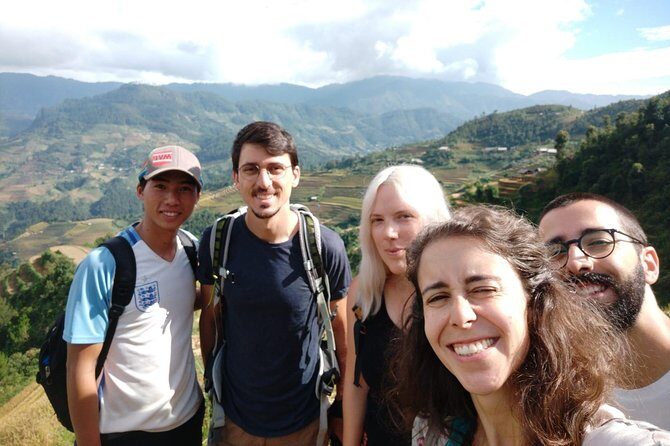
- Private, local-guided trek: you’re hiking with a H’mong guide who knows the small village routes.
- Rice terrace viewpoints beyond the crowds: photo stops plus ridge viewpoints, including Mũi Giày.
- Waterfall and village time: you pass through Hau De village and reach Hau De waterfall.
- Raspberry hill ticket included: entry to Đồi Mâm xôi La Pán Tẩn is built into the price.
- Fuel included: lunch (vegetarian or vegan options welcome) and a full 1.5L water bottle.
Mu Cang Chai rice terraces and H’mong culture, not just a photo stop
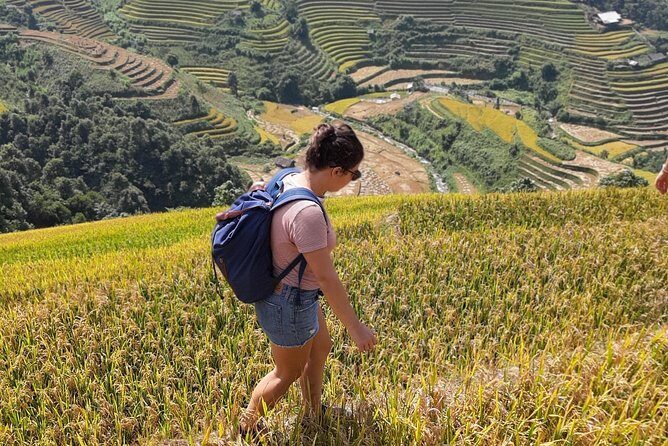
Mu Cang Chai’s rice terraces are famous for a reason, but a big part of the magic is how the land is lived in. This trek is built around that idea: you’re not only looking at terrace “scenes,” you’re moving along paths that connect hamlets, viewpoints, and working fields.
Your H’mong guide leads you through places where there aren’t tourist lines. That changes the feel fast. Instead of feeling like a visitor, you’ll likely feel like you’ve borrowed a farmer’s routine for a day—walking the slopes, taking in the views, and seeing how the terraces fit into daily life.
You’ll also get the human layer. The guide explains customs and the meaning behind what you see, which is exactly what turns pictures into memories. If you like travel days where you learn while you move, this is a strong match.
You can also read our reviews of more private tours in Mu Cang Chai

Pickup timing and the 3km radius around Nga Ba Kim market
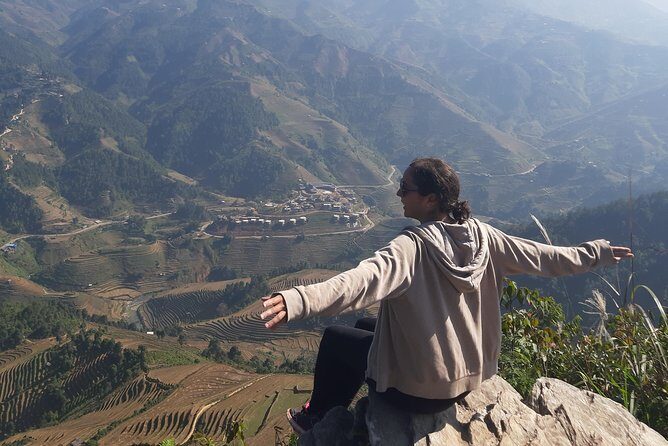
This tour runs as a full day, starting early. You’ll be picked up from locations around Nga Ba Kim market within a 3km area, with pickup options such as Tea & Coffee Ăn Vặt Tú Lệ, La Pán Tẩn, LE CHAMP TU LE RESORT HOT SPRING & SPA, Mù Cang Chải District, Garrya Mù Cang Chải, and Cầu Ba Nhà.
Plan to wait at your hotel or meeting spot about 5 minutes before the scheduled pickup time. The reason is simple: you’ll start trekking around 8:00 am, so the day depends on smooth timing.
If you’re the type who hates rushing, still do yourself a favor and get ready early. Morning starts mean cooler air for hiking and better light for photos.
Hau De village at 8:30 and Hau De waterfall at 9:40
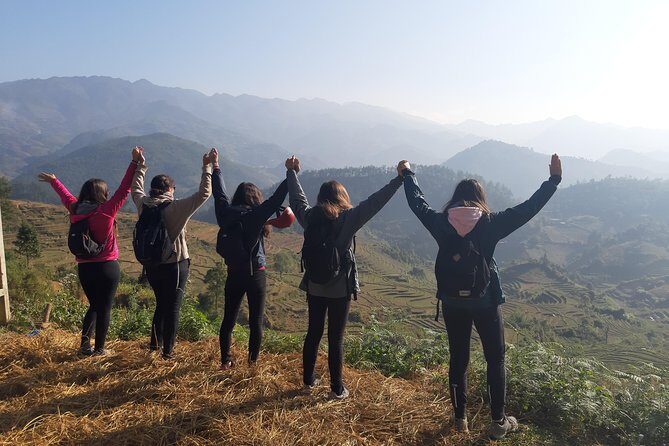
Your day kicks off with trekking beginning at 8:00 am, then you’ll reach Hau De village around 8:30 am. This village stop matters because it’s the first place where you can connect the terraces to people. You’re not just walking through scenery; you’re seeing where the scenery comes from.
Around 9:40 am, you’ll arrive at Hau De waterfall. Waterfall stops can be hit-or-miss on some tours, but here it works because it breaks the rhythm of rice terraces and ridge walking. It’s a natural pause where the air feels different and your eyes reset.
Practical note: if you’re sensitive to slippery footing, watch your step near water. The tour includes guided walking, but you’ll still want stable shoes and a careful pace.
Hill of wind and the Mâm Xôi bé viewpoint
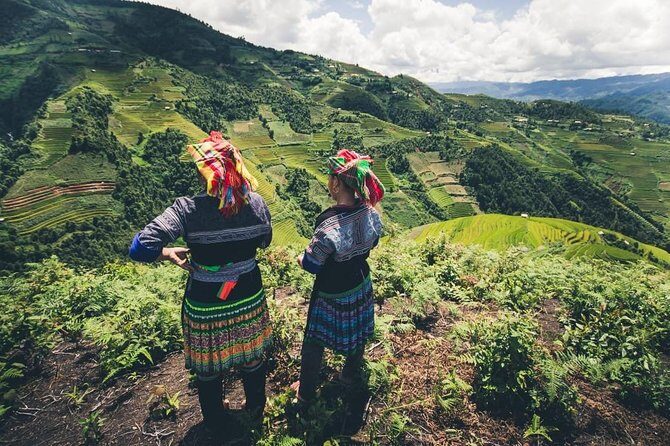
At about 10:30 am, you’ll hit the Hill of wind, a viewpoint designed for the kind of photo angle that makes Mu Cang Chai look dramatic without needing filters. From this spot, you’ll look toward Mâm Xôi bé (the smaller “bird’s egg” style terrace shape).
The big value here is timing and pacing. This is before lunch, when your energy is usually higher. It’s also a mental “checkpoint” in the middle of the morning trek—enough distance to feel like you earned it, not so much that you’re exhausted.
Drawback to know: the morning route involves lope up and down (uphill and downhill slopes), so your legs start learning the terrain early. You’ll get better results if you accept that your speed will be slower than on flat walks.
Mũi Giày (shoe rice field) at 11:30: big viewpoints, steep effort
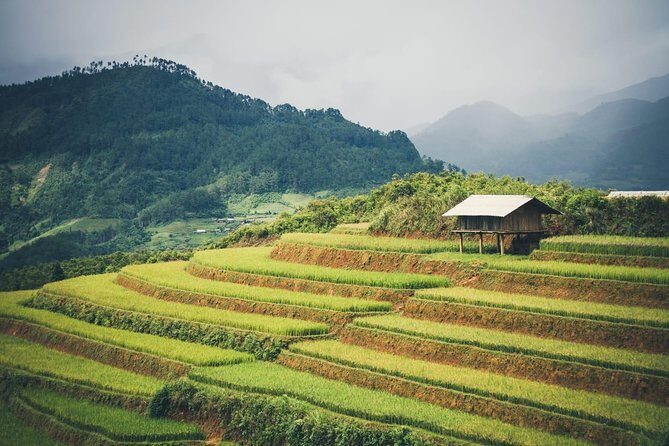
Around 11:30 am, you’ll get to the shoe rice field viewpoint (Mũi Giày). This is one of those terrace formations that turns heads because it looks like a recognizable shape when viewed from the right angle.
Here’s what I think makes this stop special: it rewards attention. The guide doesn’t just point—your walk plus the viewpoint helps you “read” the terraces as a system of paths, slopes, and water control. That turns your photo into something more interesting.
And yes, this is also the stage where many people feel the hike. You’re heading toward lunch, but you still have work to do. If you pace yourself early, you’ll arrive looking fresh instead of red-faced and gasping.
Lunch on the ridge: local styles and options that actually help
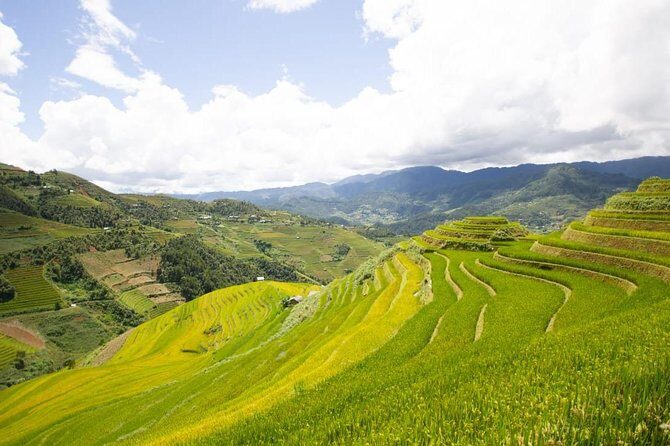
Lunch comes around 12:00 pm, with a break built in (about 1 hour). The meal is local style, and vegetarian or vegan options are welcome, which matters if you don’t eat like a standard omnivore.
Even though it’s “just lunch,” timing is everything on a trek. This reset keeps you comfortable for the afternoon’s rice terrace centers and the final panoramic hill views.
My practical advice: don’t treat lunch as a food festival. Eat enough to power the hike, then take the short rest seriously. If you sit too long, you may cool down before the next walking stretch.
Raspberry hill at 14:00 and the terrace center walk
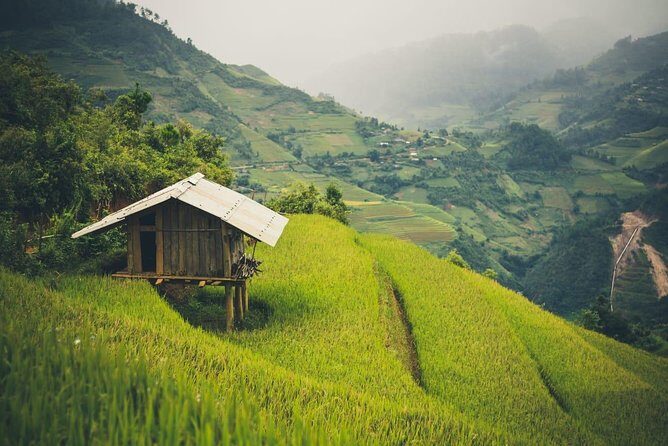
After lunch, you’ll continue the journey. By 14:00 pm, you’ll reach Raspberry hill rice field: Đồi Mâm xôi La Pán Tẩn (entry tickets are included). This is the “name stop” on the day, so it’s worth showing up ready to look—quietly watch how the terraces roll away, and take in how the fields change texture with the slope.
At 14:30 pm, you’ll visit the centre of terrace fields. This part is valuable because it shifts you from viewpoint-land to walking-inside-the-terrace-feel. You’ll see how the terraces relate to nearby village life and how paths connect different sections.
Potential drawback: afternoon light can be strong depending on cloud cover, so bring sunscreen and sunglasses if you have them. You’ll be moving between shaded patches and bright ridges.
Panoramic hill at 15:40 and the full return by 16:00
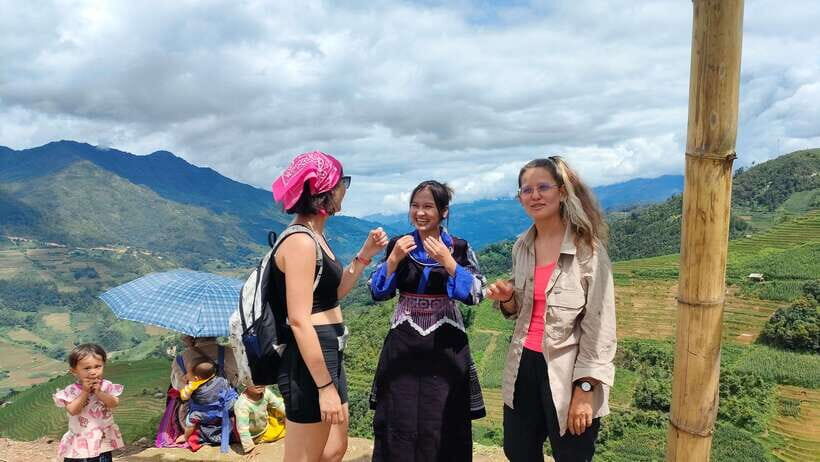
At around 15:40 pm, you’ll enjoy views from the Panoramic hill. This is your final major “take it all in” moment before heading back. By now, you’ve built enough context that the view feels like a story, not a single frame.
You’ll return to the starting point around 16:00. That gives you a full day out, but it also keeps the tour within an easy-to-plan travel window. If you’re trying to fit Mu Cang Chai into a tight itinerary, this timing is practical.
How hard is this trek really? Terrain, distance, and who should skip it
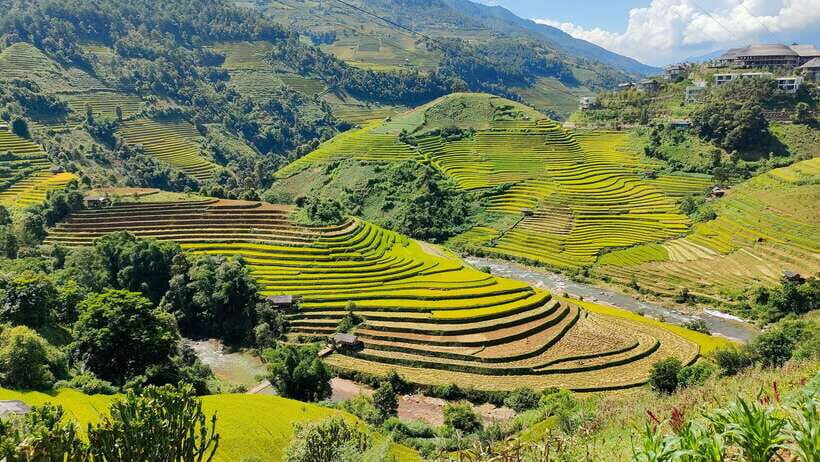
This is a trekking day, not a light walk. The route includes up-and-down slopes that challenge your trekking skills and improve your fitness. One of the best clues comes from the kind of distance described: the hike is often around 10 km depending on how the group moves and how photo stops pace the day.
So here’s the honest check-in:
- If you’re used to hiking and you have stable shoes, you’ll probably find it challenging but doable.
- If you dislike steep terrain or struggle with balance, you might find it tiring fast.
It’s also not suitable for:
- Children under 5
- Pregnant women
- People with back problems
- Wheelchair users
- People over 220 lbs (100 kg)
If you’re on the edge, choose carefully. The guide helps you along the route, but you still control your body’s comfort level.
Price and value: is $67 per person worth it?
At $67 per person for about 8 hours, this sits in the “value for a private guided day” category—especially because key extras are included. You’re not just paying for a guide; you’re paying for the whole experience that would cost more if assembled separately.
What’s included that actually moves the needle:
- Local English-speaking H’mong guide
- Lunch (local style; vegetarian or vegan welcome)
- Bottle of water (1.5L/person)
- Entry tickets to Đồi Mâm xôi La Pán Tẩn
- Pickup and drop-off within a 3km radius around Nga Ba Kim market
Also, it’s a private group, which can matter a lot in hiking. Fewer people to negotiate with, fewer pace conflicts, and more chance to take photos when you want, not when the group decides.
If you’re the type who hates generic tours and prefers a route that feels like it was chosen by someone who lives there, the value makes sense.
What to bring so you don’t regret it after lunch
Don’t show up underprepared. This is a walking day across slopes, so pack like you mean it:
- Hiking shoes (non-slip matters more than you think)
- Sunscreen
- Comfortable clothes that can handle heat and sweat
- A daypack for your essentials
You’ll also be out for most of the day, so dress in layers if mornings feel cool and afternoons get sunny.
Should you book this Full Day Private Trekking Mu Cang Chai?
Book it if you want more than terrace sightseeing. Choose this trek if you care about:
- A local H’mong guide who explains customs and the meaning behind what you see
- Viewpoints with a reason, including Mũi Giày and Raspberry hill (Đồi Mâm xôi La Pán Tẩn)
- A day that includes Hau De village and Hau De waterfall, not just “stop, snap, move on”
Skip it (or pick a gentler option) if you’re dealing with back issues, mobility limits, pregnancy, or if steep uphill/downhill hiking sounds like misery rather than a goal.
If you’re comfortable hiking and you want an authentic Mu Cang Chai day with real local context, this one is a strong yes.
FAQ
How long is the Full Day Private Trekking Mu Cang Chai?
The tour lasts about 8 hours.
What does the price include?
Lunch (local styles with vegetarian or vegan welcome), 1.5L of bottled water per person, an English-speaking local guide, entry tickets to Đồi Mâm xôi La Pán Tẩn, and pickup/drop-off within 3km around Nga Ba Kim market.
Is the guide English-speaking?
Yes. The live tour guide speaks English, and Vietnamese is also available.
Is this tour private?
Yes. It’s a private group.
Where are the pickup and drop-off locations?
Pickup and drop-off are offered around Nga Ba Kim market within 3km, with options including Tea & Coffee Ăn Vặt Tú Lệ, La Pán Tẩn, LE CHAMP TU LE RESORT HOT SPRING & SPA, Mù Cang Chải District, Garrya Mù Cang Chải, and Cầu Ba Nhà.
Do I need to pay for entry to Raspberry hill?
No. Entry tickets to Raspberry hill rice field (Đồi Mâm xôi La Pán Tẩn) are included.
What time does trekking start?
The day begins with trekking around 8:00 am. Starting times may vary, so check availability.
What should I bring?
Bring hiking shoes, sunscreen, comfortable clothes, and a daypack.
Who is the tour not suitable for?
It’s not suitable for children under 5, pregnant women, people with back problems, wheelchair users, and people over 220 lbs (100 kg).
Can I cancel for a refund?
Yes. You can cancel up to 24 hours in advance for a full refund.