REVIEW · CAT BA ISLAND
CatBa: Authentic Vietnam Cooking Class and local market tour
Book on GetYourGuide →Operated by Cat Ba Local · Bookable on GetYourGuide
Your dinner starts at the market.
This Cat Ba cooking class links a real local market run with a hands-on session at Linda Kitchen, so you’re not just watching food videos. I like two things most: the ingredient shopping and bargaining with local vendors, and the step-by-step guidance in English. The one catch is that you’ll be doing some buying and negotiating, so if that sounds stressful, plan to keep it light and friendly.
You’ll get pick up from your stay around Cat Ba town, then head to Cat Ba market. The group stays small (up to 10), which helps the host actually guide you through what to do next. As the evening settles, you’ll sit down with the meal you made yourself, plus egg coffee as the finish.
If you want something structured but not stiff, this is a very practical choice. You get the tools, the recipes in action, and a certificate of appreciation at the end—so the experience feels complete, not like a random restaurant stop.
In This Review
- Key highlights you’ll actually feel during the class
- A market-to-kitchen plan that makes sense for Cat Ba
- Pick-up in Cat Ba Town and a straight shot to the market
- Cat Ba Market: choosing ingredients and bargaining without turning it into a fight
- Linda Kitchen: the real reason this class works for beginners
- What you’re actually eating, and why the meal feels better than a restaurant
- Price and value: why $30 can be a good deal here
- Who this cooking class is best for
- Small-group layout and the vibe you should expect
- Should you book the Cat Ba market cooking class?
- FAQ
- How long is the Cat Ba cooking class?
- What time does the tour start?
- How much does it cost?
- Is the tour led in English?
- What is included in the price?
- Is it suitable for children or people with mobility needs?
Key highlights you’ll actually feel during the class
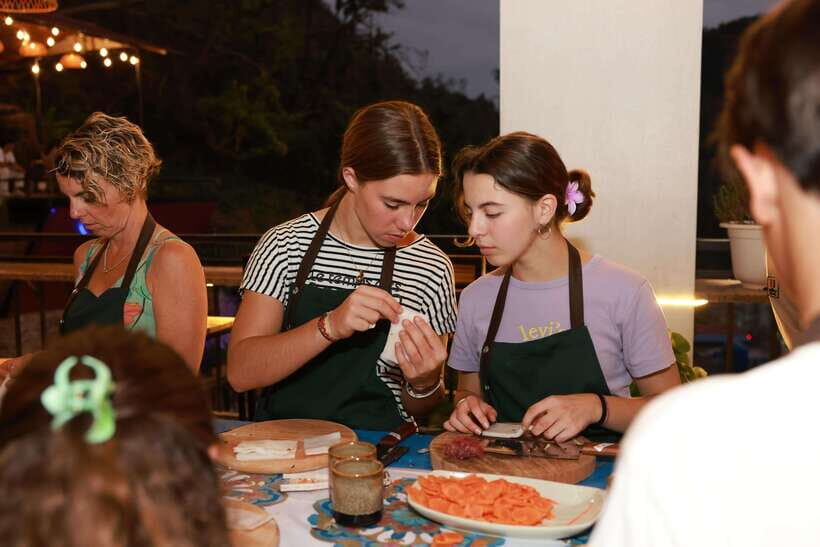
- 4 PM market start with enough time to choose ingredients before cooking begins
- Cat Ba market ingredient selection plus friendly bargaining with vendors
- English-speaking host/guidance that walks you through each step
- Linda Kitchen cooking session designed for a small group (up to 10)
- Egg coffee and a shared meal right after you cook, not hours later
A market-to-kitchen plan that makes sense for Cat Ba
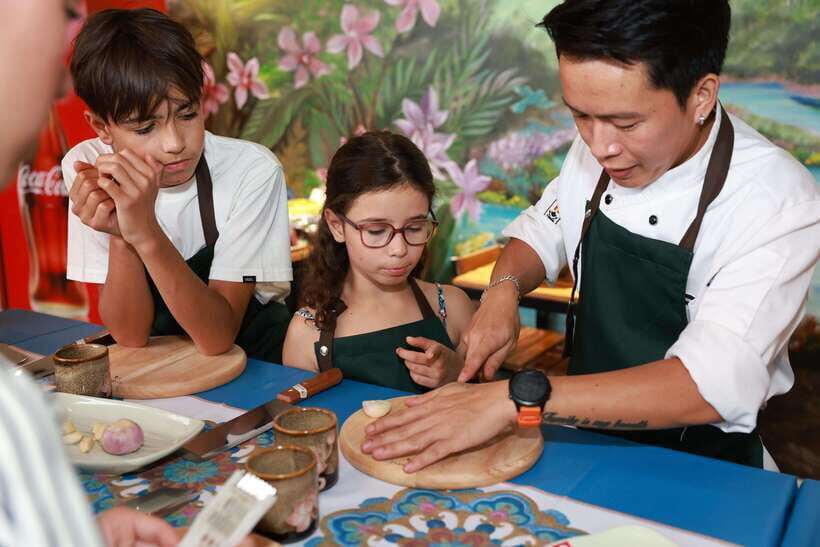
A cooking class works best when it starts with the food reality. Here, you don’t show up already stocked with vegetables and meat. You start at the Cat Ba market, where the choices are the whole point: you’ll pick ingredients you’ll later cook, and that changes how you understand the dishes.
The timing is built for the late afternoon. The main set off is 4 PM, and since the cooking session leads into sunset, the whole flow feels natural for an evening activity. If you’re traveling at a slower pace, this timing also keeps you from juggling a half-day of logistics.
Cat Ba Local is the provider, and the host or greeter speaks English. That matters because cooking classes often fail when instructions are vague. Here, the guidance is meant to be clear enough that you can follow along even if you’re a total beginner.
You can also read our reviews of more tours and experiences in Cat Ba Island.



Pick-up in Cat Ba Town and a straight shot to the market
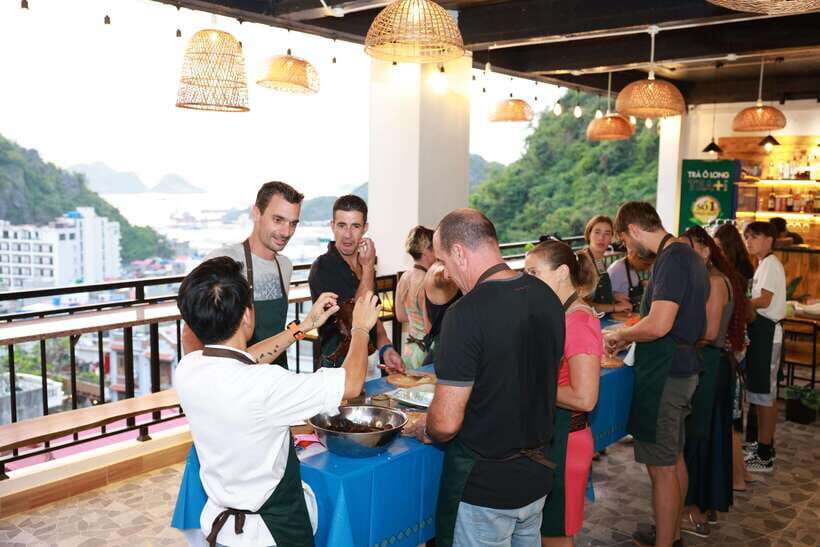
You’ll be picked up from your stay around Cat Ba town. That’s a real value piece, because getting to the market on your own means figuring out routes and timing while you’re already hungry.
From the pickup to Cat Ba market, expect a straightforward transfer. The class is designed for flow, not detours. Also note the small group size limit of 10 participants—this typically means you spend less time waiting and more time doing.
One small detail worth knowing: the experience includes skip the line through a separate entrance. That usually translates to fewer awkward minutes standing around, especially if the venue has busy times.
Cat Ba Market: choosing ingredients and bargaining without turning it into a fight
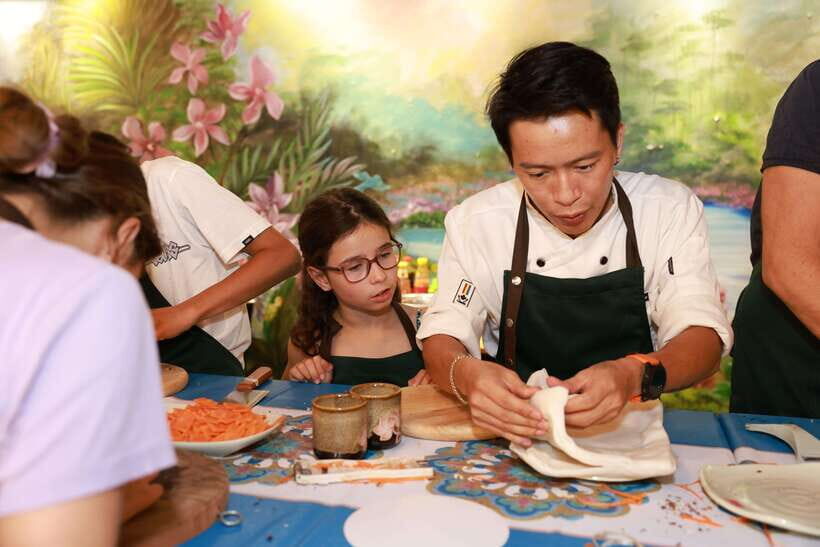
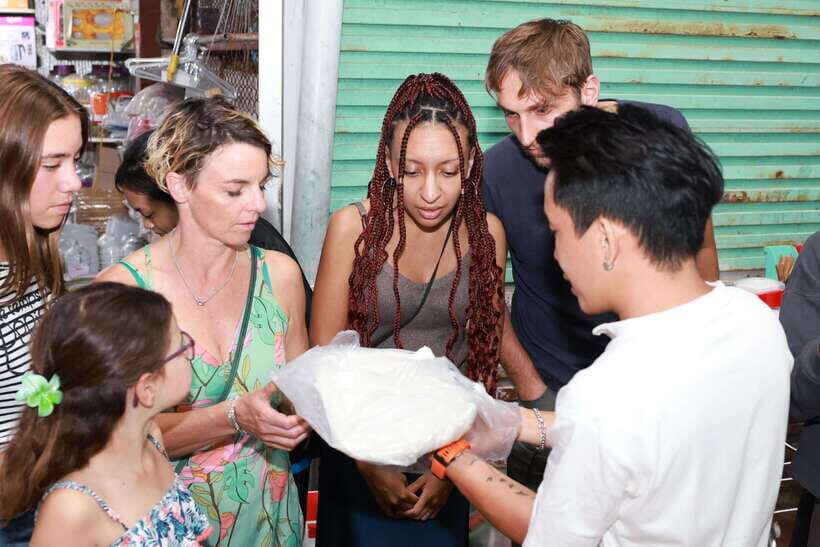
The market part is the most culturally active piece of the experience. You’ll head to Cat Ba market to select fresh ingredients, and you’ll have a chance to negotiate with vendors. This isn’t a performance. It’s a practical way to learn how ingredients are chosen where the cooking happens.
I like that the class encourages you to engage. Even a small amount of bargaining teaches you more than just taking photos. You’ll learn the rhythm of the market: ask, compare, decide, then move on before you lose your appetite for the next stall.
What to expect at the stalls
You’ll be selecting the ingredients you’ll cook later. That means you’ll want to pay attention to what looks fresh and what seems appropriate for the dishes the host is planning. Since the class includes food and equipment, your job is basically to help choose and then follow the host’s method once you’re at Linda Kitchen.
How to bargain calmly
You don’t need to win. Keep it friendly and brief. If the price feels too high, you can simply ask for a better rate and be prepared to accept the vendor’s answer. The goal here is participation, not getting a perfect discount.
A consideration for some people
If you hate negotiating at all, the market can feel uncomfortable. The workaround is mental: treat it like a cultural exchange. Ask, smile, and if you don’t like the price, move on. You still get the benefit of seeing how ingredients come together for Vietnamese cooking.
Linda Kitchen: the real reason this class works for beginners
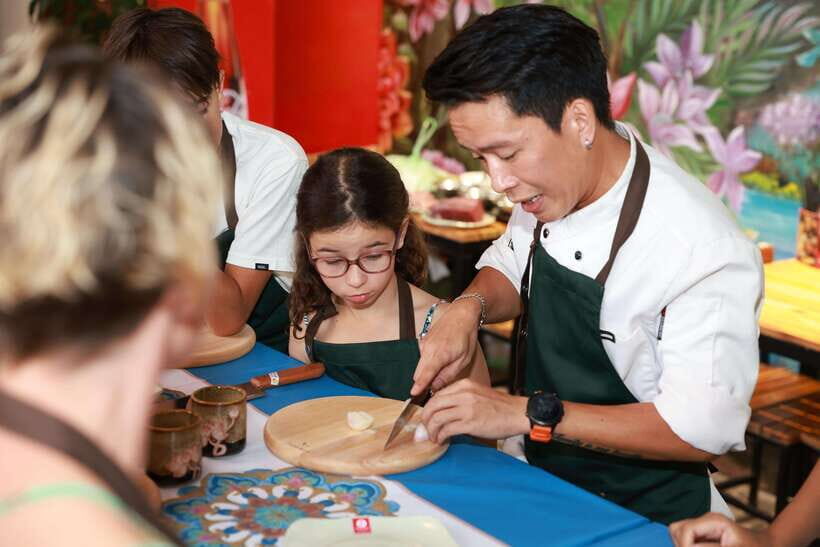
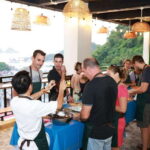
After the market, you’ll gather at Linda Kitchen to cook. This is where the experience turns from shopping into skill-building.
The host guides every step. That point gets repeated in the strong feedback this class has built over time. The overall pattern is clear: people feel confident because the teaching is structured, and the pace is controlled enough for non-cooks.
This matters because Vietnamese cooking can sound intimidating when you read it on paper. In practice, you’re not expected to freestyle. You’re guided through:
- prepping raw ingredients
- cooking them using the class method
- presenting the dishes when they’re done
Also, since cooking equipment and the dishes recipients are included, you’re not scrambling to find tools or containers. That’s another subtle value point. When classes start charging you for everything, the price stops making sense fast. Here, the core gear is part of the package.
Small-group pace is your advantage
With a limit of 10 participants, you’re less likely to get left behind. In a bigger crowd, cooking classes often become a long wait between steps. Here, the structure is built around you being able to follow the host’s hands and explanations.
What you’re actually eating, and why the meal feels better than a restaurant
The class ends with a meal you crafted yourself. That sounds obvious, but it changes the experience in real ways. When you cook, you notice textures, smell changes, and timing. When you eat a dish you cooked, the flavor makes more sense.
You’ll also get 1 drink included with your meal. On top of that, egg coffee is included. Egg coffee is one of those simple-but-special Vietnamese treats that often becomes the memory you carry home, because it’s different from typical café drinks.
There’s a practical reason the egg coffee matters. It turns the class into a full evening event: you cook, eat, and then finish with a local-style drink. You don’t need to find dessert plans. You don’t need to squeeze in a café stop after you’re already satisfied.
Presentation is part of the lesson
You’ll learn how to present your dishes at the end. That’s not just for photos. It pushes you to treat the meal as something finished, not a half-finished cooking experiment. Even if your plating is simple, you’ll feel the payoff when everyone sits down together.




Price and value: why $30 can be a good deal here
At $30 per person for about 4 hours, this class sits in the affordable zone for hands-on food experiences. The best way to judge value is to look at what you receive, not just the sticker price.
You get:
- food (the meal you cook)
- 1 drink
- egg coffee
- cooking equipment
- dishes recipient (serving/receiving set for your dishes)
- a certificate of appreciation
That’s a lot bundled for the money, especially in a tour format that includes market shopping and guided instruction. If you tried to recreate this solo, you’d still pay for ingredients, cooking access, and local guidance. Here, your payment buys the full package: market time, the teaching, and the meal.
The real value is the combination. A market visit without cooking is a different experience. Cooking without market shopping is also different. This one links both, so your choices feel meaningful.
Who this cooking class is best for
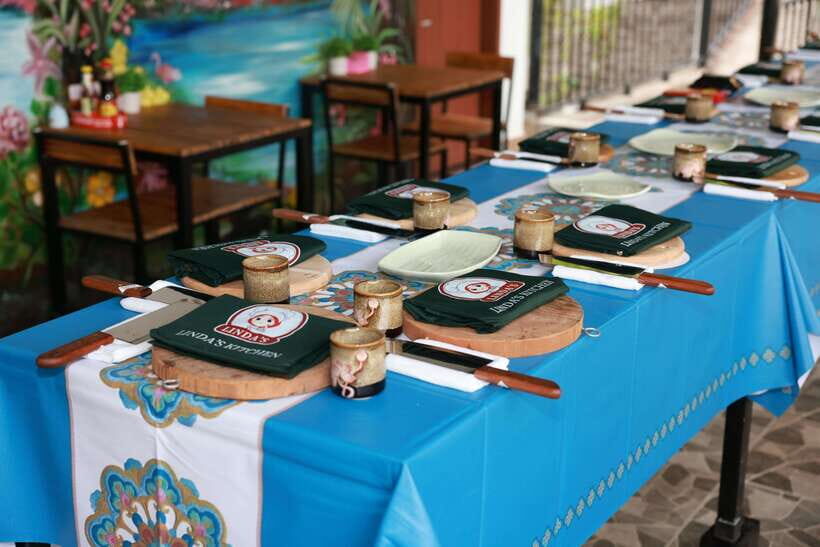
This is a good fit if you want a low-key activity that still feels hands-on and personal. The teaching style seems especially appreciated by people who think they can’t cook well. If you like clear instructions and a calm pace, you’ll likely enjoy the format.
It also suits travelers who enjoy practical culture: how people shop for food, how they talk prices, and how cooking starts with what’s fresh. If you’d rather talk to real vendors than just walk past them, this gives you a reason to slow down.
You should reconsider if:
- you strongly dislike bargaining
- you’re looking for a high-energy party-style tour
- you’re traveling with very young children (it’s not suitable for children under 3 years)
Small-group layout and the vibe you should expect
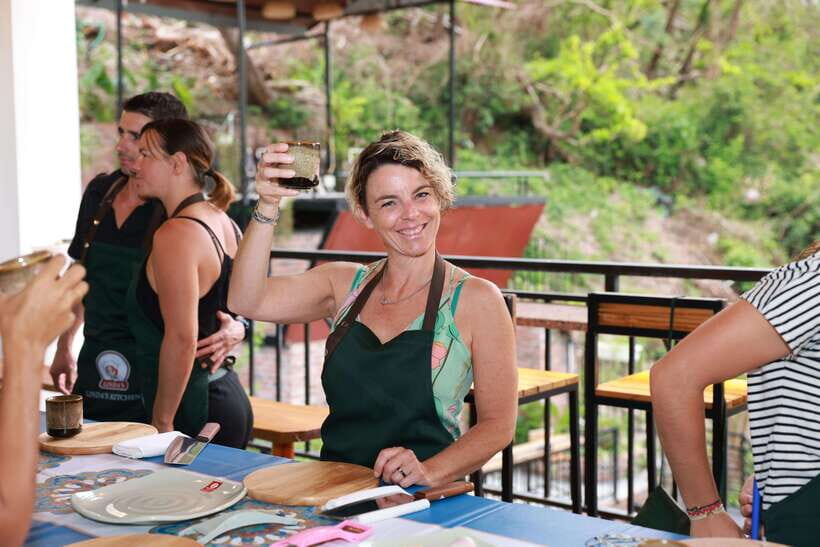
The class is limited to 10 participants, and that shapes the vibe. You’ll spend more time doing and less time waiting. It also makes the host’s feedback feel targeted, not generic.
In the feedback, one theme comes up clearly: people find the cooking session relaxed, and they enjoy cooking together as a group. That’s the sweet spot for a cooking class. It should feel like you’re learning in a friendly kitchen, not being rushed through a checklist.
Even the music and sunset timing can add to the feel. As the sun sets over Cat Ba, you’ll savor your meal with soothing music. It’s not just dinner; it’s a planned end to the day.
Should you book the Cat Ba market cooking class?
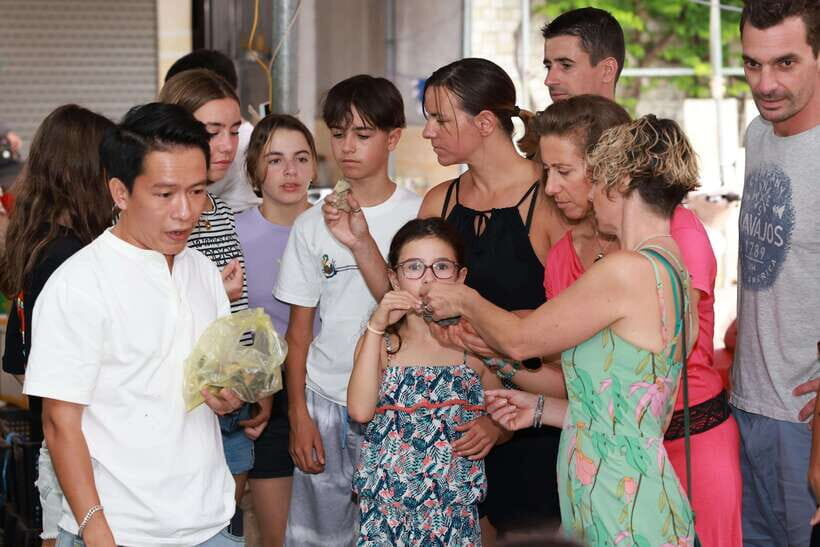
Yes, I think you should book it if you want a structured, beginner-friendly Vietnamese cooking experience that includes real market life. The value is strong for the price because you’re getting the market ingredient selection, the guided cooking, a full meal, and egg coffee.
Book it especially if you care about learning how dishes come together from fresh ingredients. And if you’re even slightly curious about bargaining, treat the market as practice. Keep it simple, be polite, and focus on the bigger win: you cook what you picked.
FAQ
How long is the Cat Ba cooking class?
The experience runs for 4 hours.
What time does the tour start?
The set off described is 4 PM. Starting times may vary, so check availability for exact options.
How much does it cost?
It costs $30 per person.
Is the tour led in English?
Yes. The host or greeter speaks English.
What is included in the price?
Food, 1 drink, egg coffee, cooking equipment, dishes recipients, and a certificate of appreciation are included.
Is it suitable for children or people with mobility needs?
It’s not suitable for children under 3 years. It is wheelchair accessible.