
REVIEW · HANOI
3 Hours Hanoi City Walking Tour with Optional Train Street
Book on Viator →Operated by HNK Vietnam Travel & Tour Hanoi · Bookable on Viator
Hanoi on foot is one of the best shortcuts to understanding the city. This 3-hour Hanoi City Walking Tour strings together big-name sights and quiet alley life, with a guide helping you connect what you see to the city’s past—especially the way French influence shows up in the architecture and street scenes. I like that it starts right in the Old Quarter, so you can get your bearings fast without a long commute.
What I also like is the practical bonus of Railway Alley (Đường Tàu), where you can either pass through or slow down for a coffee break while trains run by nearby. One possible consideration: the tour stays close to active streets and walking pace, so if you want lots of seated time or a slow stroll, you may feel the pressure in a few spots.
In This Review
- Key Things to Know Before You Go
- Where This Hanoi Walking Tour Really Shines
- Old Quarter Start: Getting Oriented Without Stress
- Culture Exchange Center: A Quick Hit of Hanoi’s Story
- Ancient House: Tube Houses and the Logic of Tight Space
- Kim Ngan Temple: A Living Layer of the Old Quarter
- Dền Ngọc Son: A Temple Stop with a Strong Name Behind It
- St. Joseph’s Cathedral: French Influence You Can See
- Đường Tàu (Railway Alley): Optional Coffee or Quick Pass-By
- Đồng Xuân Market: Where Locals Shop (Not Just Tourists Browse)
- Old City Gate (O Quan Chuong): Thang Long’s Edge
- Walking Pace, Comfort, and What to Bring
- Who This Tour Fits Best
- Booking Recommendation: Should You Choose It?
- FAQ
- What’s the duration of the tour?
- How much does the tour cost?
- Is hotel pickup included, and where does it work?
- Will I be able to choose whether to stay at Railway Alley?
- What’s included in the price?
- Are there meals or snacks included?
- How many people are in the tour?
Key Things to Know Before You Go
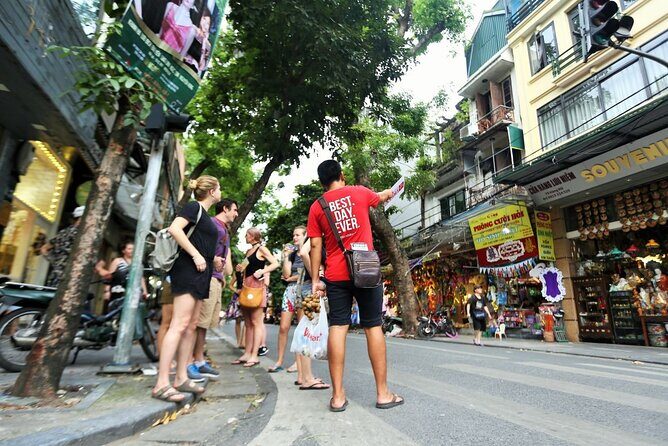
- Old Quarter–only pickup keeps logistics simple if you’re staying nearby
- Railway Alley time is flexible: pass by or stop for a drink and coffee break
- Cultural stops are specific, not random: temples, a French landmark, and a classic tube house
- Small-group feel with a maximum of 30 people for a short 3-hour outing
- You end back in the Old Quarter, with a clear plan to return to your hotel
Where This Hanoi Walking Tour Really Shines
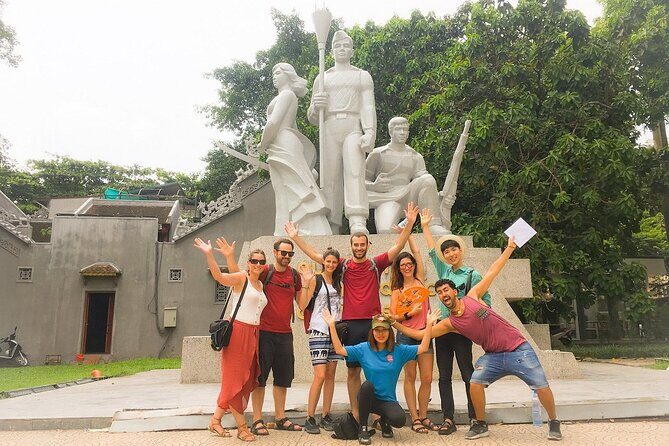
This is the kind of tour that helps you do two things at once: see places with real names and also understand why those places look the way they do. In a few hours, you move through the Old Quarter’s maze of lanes, then out into a wider slice of Hanoi life—religious buildings, market energy, and French-era architecture.
The time window matters. Three hours is long enough to pick up context and short enough that you’re not exhausted by mid-afternoon. You’ll cover major hits like St. Joseph’s Cathedral and Đồng Xuân Market, but the route also includes more local, everyday stops so it doesn’t feel like a checklist.
Price-wise, $26 is a fair fit for a guided walk that includes hotel pickup within the Old Quarter, bottled water, and “landing and facility fees,” plus an English-speaking guide. You’re paying for guidance and saved time, not for a museum ticket collection—most admissions listed are free.
You can also read our reviews of more walking tours in Hanoi



Old Quarter Start: Getting Oriented Without Stress
Your experience begins with a pickup if you’re staying in the Old Quarter. That’s a big deal in Hanoi, where crossing streets and finding meet points can eat up energy. The tour begins at 24B P. Lý Quốc Sư, Hàng Trống, Hoàn Kiếm, Hà Nội 10000, but the practical plan is that you’ll be collected from your hotel/hostel as long as it’s in the Old Quarter area.
You’ll then move into the Old Quarter itself and a nearby information stop where you’ll get a clearer sense of what the city looked like over time. The Hanoi Old Quarter Culture Exchange Center is especially useful early on. It’s not just photos; it’s where you can see documents and older papers that help explain how Hanoi changed across centuries instead of feeling stuck in “now.”
This is also where the tour’s style makes sense: you’re not rushed straight to the biggest postcard spots. You get context first, then the streets start making more sense.
Culture Exchange Center: A Quick Hit of Hanoi’s Story
At the Hanoi Old Quarter Culture Exchange Center, you’re looking at exhibits that explain the area’s long evolution—how the Old Quarter formed, how it developed, and why so many lanes feel linked to specific kinds of work and trading. You don’t need to be a history buff to get value here. Even with limited time, it helps you notice patterns later when you’re walking.
You’ll likely appreciate this stop if you’re the type who likes to connect details—like the kinds of crafts people historically associated with certain streets—to what you see around you today. It’s also a good short reset if the morning heat (or midday pace) starts to feel like it’s climbing.
Ancient House: Tube Houses and the Logic of Tight Space
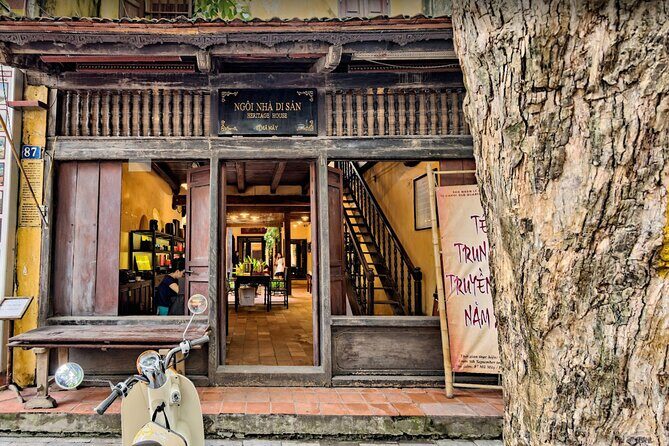
Next up is the Ancient House, a stop geared toward understanding Hanoi’s classic architectural form: the tube house. The whole point of a tube house isn’t just style—it’s about how people built for narrow lots and limited space while still creating functional home layouts.
In practical terms, this is one of those stops that changes how you look at the neighborhood. After seeing the tube-house idea explained, you’ll start noticing why storefronts and home entrances are often arranged the way they are, and why streets can feel dense even when each family lived on a relatively narrow plot.
Drawback to consider: this is a short visit, so if you want deep architectural photography or slow time inside, you might want extra independent time afterward.
Kim Ngan Temple: A Living Layer of the Old Quarter
Then you head to Kim Ngan Temple, one of the older temples in the Old Quarter, built in the 15th century during the Lê Dynasty. The temple is tied to an ancestor associated with silver-making—an angle that makes the religious stop feel connected to everyday life and work, not separate from the city’s economy.
This kind of stop is where the tour quietly does something clever: it avoids treating the Old Quarter as only markets and street scenes. You get religion and tradition, but also the link to crafts and trades.
If you’re sensitive to crowded areas, you’ll probably prefer to watch from a respectful distance and let the flow of visitors move. The tour keeps it to about 20 minutes, which is usually enough to register what it is without turning it into a long waiting game.
You can also read our reviews of more city tours in Hanoi






Dền Ngọc Son: A Temple Stop with a Strong Name Behind It
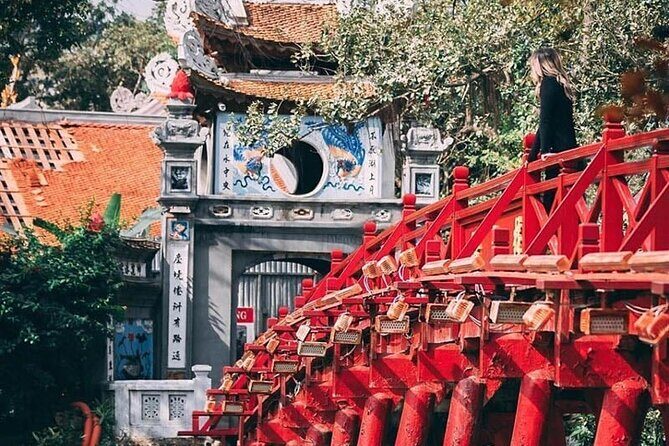
At Dền Ngọc Son you’ll visit the temple area linked to Trần Hưng Đạo, a major military commander from the Trần Dynasty. There’s also a tie to Văn Xương Đế as part of the temple tradition.
This stop is valuable because it shows how Hanoi’s public space is shaped by cultural memory. It’s not just architecture; it’s a place with a named figure behind it. That makes the streets feel less random, especially when you’re already picking up context from the culture center earlier.
One more practical note: temple stops can mean stairs and uneven paths. Wear shoes you trust.
St. Joseph’s Cathedral: French Influence You Can See
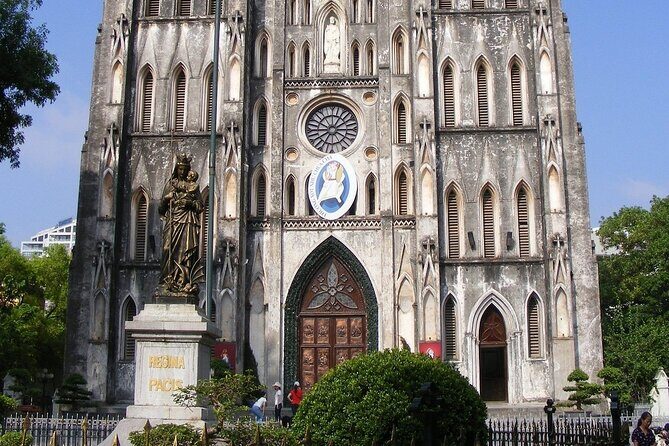
St. Joseph’s Cathedral is where the French influence becomes visually obvious. The tour explains that it was first built by the French during the period of war, and today it functions as a historical attraction and a witness of colonization-era presence in Vietnam.
I like this stop because it gives you something tangible to compare against the rest of the route. After seeing temple structures and Old Quarter design, you get a completely different architectural mood. It’s a quick way to understand how foreign power left physical traces, not just political memories.
Time here is short, but the location is worth it. If you want to linger for photos or to look around more carefully, plan to add extra minutes after the tour ends.
Đường Tàu (Railway Alley): Optional Coffee or Quick Pass-By
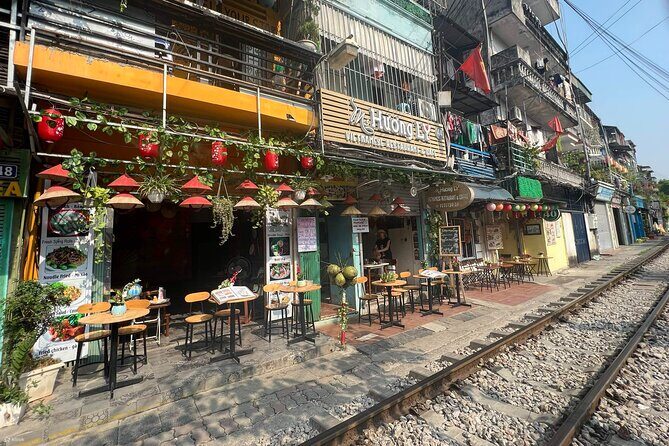
The headline experience is Đường Tàu, often called Railway Alley, where trains still operate daily. You’ll spend about 30 minutes here, and the key detail is that you can choose how you want to experience it.
- You can pass by and simply watch the street-life and train connection.
- Or you can stay for a coffee break and drinks while the trains run nearby.
That choice matters. If you want the sensation of being “in the moment,” sitting and ordering a drink makes sense. If you prefer quick photos and then moving on, you won’t feel trapped in one place for too long.
One consideration: this is an active rail corridor area. Even if the tour doesn’t specify rules, you’ll want to keep your head on during busy moments and follow your guide’s cues.
Đồng Xuân Market: Where Locals Shop (Not Just Tourists Browse)
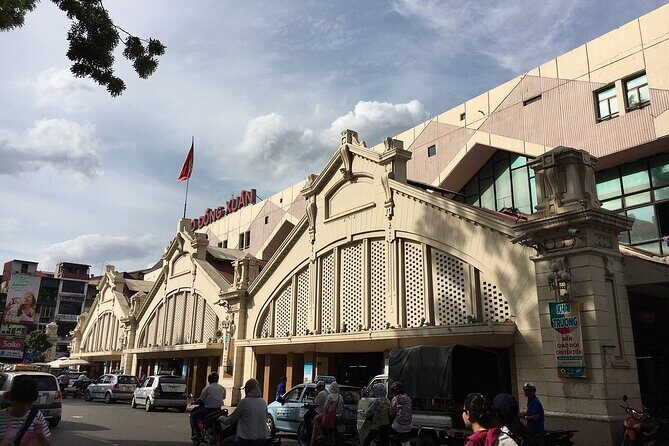
Next is Đồng Xuân Market, described as a place where local people buy ingredients, food, and herbal medicine—often with good prices. This stop changes the tone of the tour again: you move from heritage buildings into a real daily shopping scene.
You don’t need to be planning meals to appreciate it. The value is watching how commerce works here, and seeing how market life connects to Hanoi’s food culture and everyday routines.
The market time is about 30 minutes. That’s enough to see the type of products sold and get a sense of scale, but it’s not enough for serious shopping. If you want spices, snacks, or a more thorough browse, treat this as your orientation stop and plan a separate longer visit later.
Old City Gate (O Quan Chuong): Thang Long’s Edge
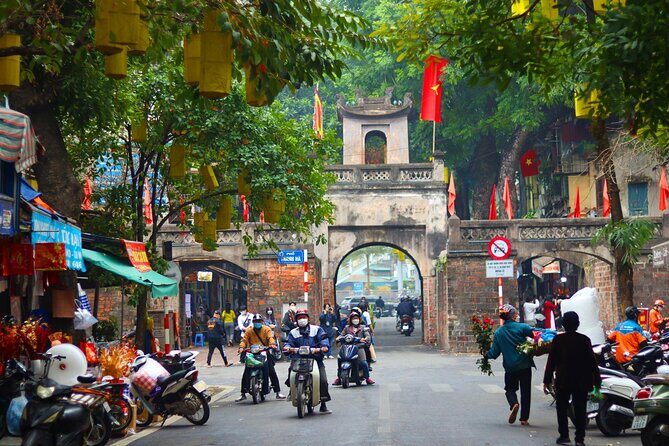
The tour finishes with the Old City Gate, tied to the Thang Long Citadel—specifically the last old gate area to enter the citadel. The guide frames Old East Gate (O Quan Chuong) as worth seeing not just for its historic significance, but because it’s attached to everyday life in Hanoi.
This is a strong closing stop because it pulls the theme together. You started with the Old Quarter’s long evolution. You moved through crafts-connected temple history, French architecture, and modern street life. Ending at the gate helps you feel that Hanoi isn’t only a collection of sights—it’s a city shaped by boundaries, movement, and layered purposes.
Time here is about 15 minutes, so use it for observing details rather than forcing a huge walk-around.
Walking Pace, Comfort, and What to Bring
This is a walking tour with an overall duration of about 3 hours. That’s a sweet spot for many people, but it still means you’ll be on your feet for the whole time.
What I’d bring:
- Comfortable shoes (you’ll be moving through narrow lanes and temple areas)
- Sun or rain protection, because Hanoi weather can swing fast
- A light snack or drink if you like to have backup—the tour includes bottled water, but snacks aren’t listed
Also, food isn’t included. That matters if you’re hungry at the end. The tour includes the chance to grab coffee at Đường Tàu if you stay there, but don’t count on extra meals built into the price.
Who This Tour Fits Best
This tour makes the most sense if you want:
- A guided route through Hanoi’s Old Quarter that doesn’t feel like a rushed bus tour
- A fast way to understand how the city evolved, including the French architectural influence
- A chance to experience Đường Tàu without turning it into a whole day
It’s also a good fit for first-timers who like structure, but still want to walk through real streets and stop at places tied to everyday Hanoi life (like the market).
If you already know Hanoi well and want deep museum time or long photo sessions, you might prefer a longer, more specialized tour. But for a short introduction, this one has a clear shape and a practical pace.
Booking Recommendation: Should You Choose It?
I’d book this tour if you’re staying in the Old Quarter and you want a guided walk that hits the key themes quickly: heritage, architecture, and market culture, plus that unforgettable rail-alley stop.
I’d think twice if:
- You hate walking for 3 hours in a single go
- You’re very sensitive to active-street environments
- You want a heavy focus on shopping or long indoor time at each site
For most visitors, though, it’s a strong value. You’re paying for guidance through a compact route, and you get smart context that helps you understand what you’re seeing long after the walk ends.
FAQ
What’s the duration of the tour?
The tour runs for about 3 hours.
How much does the tour cost?
It costs $26.00 per person.
Is hotel pickup included, and where does it work?
Pickup is included from hotels located in Hanoi’s Old Quarter. The tour meets at 24B P. Lý Quốc Sư, Hàng Trống, Hoàn Kiếm, Hà Nội 10000, Vietnam.
Will I be able to choose whether to stay at Railway Alley?
Yes. At Đường Tàu (Railway Alley), you can pass by or rest and have a coffee break (and drinks are available there during the day).
What’s included in the price?
Included are pickup (Old Quarter hotels), walking back to your hotel if there is only one group, bottled water, landing and facility fees, and an English-speaking tour guide.
Are there meals or snacks included?
No. Snacks, food, and anything not mentioned as included are not included.
How many people are in the tour?
The tour has a maximum of 30 travelers.



More Walking Tours in Hanoi



More Tours in Hanoi
- Ninh Binh Full-Day Tour from Hanoi to Hoa Lu, Tam Coc & Mua Cave Via Boat & Bike
★ 5.0 · 4,384 reviews