
REVIEW · HANOI
Vietnam War: Uncovering Hanoi’s Untold Stories
Book on GetYourGuide →Operated by ONETRIP WITH LOCAL TRAVEL CO., LTD · Bookable on GetYourGuide
Hanoi keeps receipts from the Vietnam War.
This tour shines a flashlight on what life felt like when Vietnam was divided, and how the country rebuilt itself as the Cold War heated up. I especially like the conversation-style storytelling, with time for questions, and the fact you end up far from the postcard Hanoi most people see.
The possible drawback: it’s a lot of history in a short window, and you’ll be walking through city streets that may be busy, uneven, and not for everyone.
In This Review
- Key Things You’ll Really Notice
- Hanoi’s Vietnam War Story Starts on the Streets, Not at the Monuments
- The 3-Hour Format: Walking Time, Then a Taxi Reset
- Meeting Point You Can Actually Find (And a Easy Pre-Start Coffee)
- Cho Gioi Area: Where Daily Life Reflects Big History
- Kham Thien B52 Memorial: When a War Site Becomes a Personal Story
- Train Street and the Pause for Coffee or Tea
- Price and Value: $28 Isn’t Just a Walking Tour Fee
- Best Fit: Who Should Book, and Who Might Skip It
- A Smart Way to Pair This With the Rest of Your Day
- Should You Book This Hanoi Vietnam War Walk?
- FAQ
- How long is the Vietnam War Hanoi walk?
- What is the meeting point for the tour?
- What does the tour cost?
- What’s included in the price?
- Does the tour run in rain?
- What should I bring?
- Is it suitable for everyone?
- Does the tour support a charity?
Key Things You’ll Really Notice
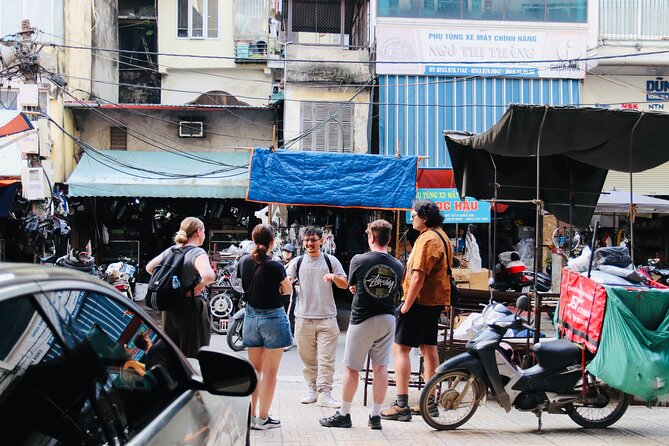
- Cho Gioi area scenes that connect everyday life to wartime and post-war realities
- Kham Thien B52 memorial that turns a weapon-related site into human-scale memory
- Train Street stop for a quieter break where daily life and the past sit side by side
- Short taxi ride halfway so the walk stays manageable (and still feels local)
- Coffee or tea included, plus a relaxed pace that leaves room to talk
Hanoi’s Vietnam War Story Starts on the Streets, Not at the Monuments
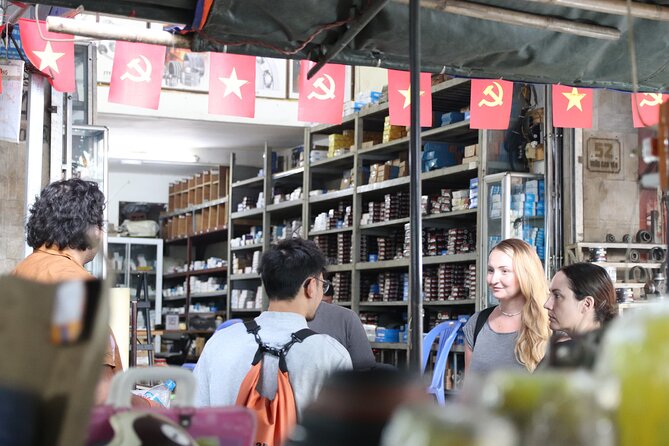
If your Hanoi game plan is only Hoan Kiem and major landmarks, this tour adds a different layer fast. You’ll be moving through neighborhoods that don’t exist to impress photos. Instead, they help explain how people lived—under pressure, under rationing and planning, and under a political system that shaped daily routines in very direct ways.
The tour’s theme is the dark side of the story behind famous monuments. That sounds heavy, but it’s delivered in a grounded way: you’re not just hearing dates. You’re learning how real families navigated the years when the North and South were pulling Vietnam into different futures.
What I like most is the balance. You get war context, yes, but you also get the local, human angle: how ordinary people adapted, what communities built, and how the unification of Vietnam changed what life looked like after the fighting.
One more practical win: the format feels like a chat. You’ll have guide time to ask questions, not just sit through a monologue. Guides such as Dung, Kien, and Cong are known for making the stories clear in English and answering follow-ups without rushing you.
You can also read our reviews of more tours and experiences in Hanoi.



The 3-Hour Format: Walking Time, Then a Taxi Reset
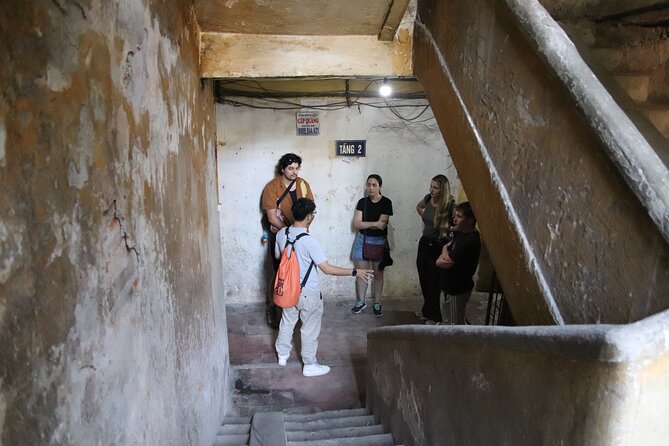
This experience runs about 3 hours, with a short taxi ride about halfway through. That matters because it keeps the tour from turning into an endurance test while still letting you see the city at street level.
The tour moves in a relaxed rhythm. You’ll start at a local meeting point on Chua Vua Street, then spend time on foot in smaller lanes and neighborhood edges. The taxi segment is there to reposition you efficiently, so you’re not spending the whole day stuck in traffic or bouncing between far-apart sites.
Because it operates rain or shine, pack for weather. Comfortable shoes are non-negotiable here. The course is city sidewalks and street crossings, and you’ll want breathable clothing for the conditions you get.
Also note: it’s not suitable if you have vertigo or epilepsy. If that applies, it’s worth choosing a different kind of Hanoi experience.
Meeting Point You Can Actually Find (And a Easy Pre-Start Coffee)
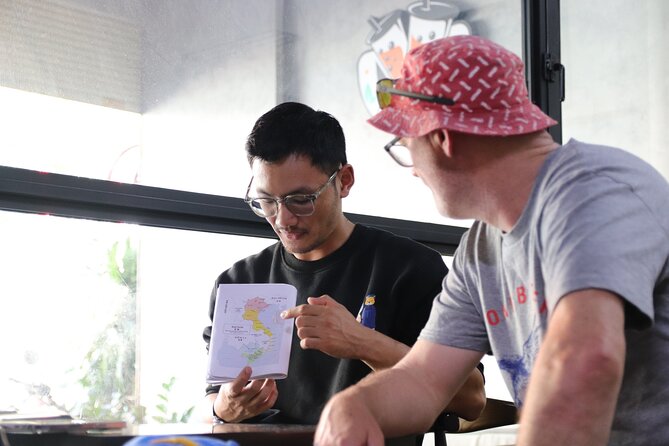
You meet at 24B Chua Vua Street, in front of a secondary school called Trường Tung học cơ sở Đoàn Kết. It’s about 2.5 km from Hoan Kiem Lake, or around 3.5 km from Hanoi Old Quarter.
The area is local-feeling and practical. There’s a coffee shop nearby and second-hand bicycle sellers. Even if you arrive early, you won’t feel lost in a tourist bubble.
The tour ends back at the meeting point. That’s helpful because you don’t have to plan a complicated pickup after the walk. It also makes it easier to pair this with another nearby stop.
Cho Gioi Area: Where Daily Life Reflects Big History
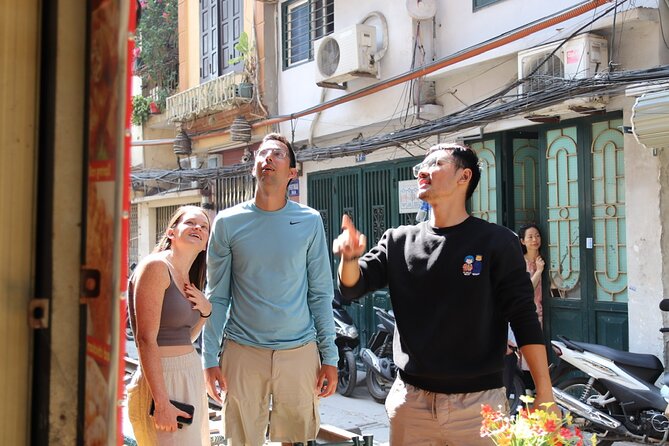
The heart of the tour’s value is what happens around Cho Gioi. This is the kind of Hanoi neighborhood you won’t find from a quick bus loop. You’ll spend time learning how people lived when Vietnam’s system was heavily planned, and how scarcity and control shaped routines.
This part of the walk is especially strong if you want context. You’ll learn not just that the country was divided, but what that division meant for everyday decisions—how people worked, traded, and survived in the gaps between official policy and real life.
Some parts of this neighborhood story also connect to market life, including areas associated with black-market trade and the city’s older patterns of barter and supply. Even when the topic is complicated, the way it’s explained stays human: families, neighborhoods, and everyday coping strategies.
If you’re a history buff, you’ll probably enjoy how the guide ties national events to street-level outcomes. If you’re not a history buff, you’ll still get it, because the focus stays on how people lived.
Kham Thien B52 Memorial: When a War Site Becomes a Personal Story
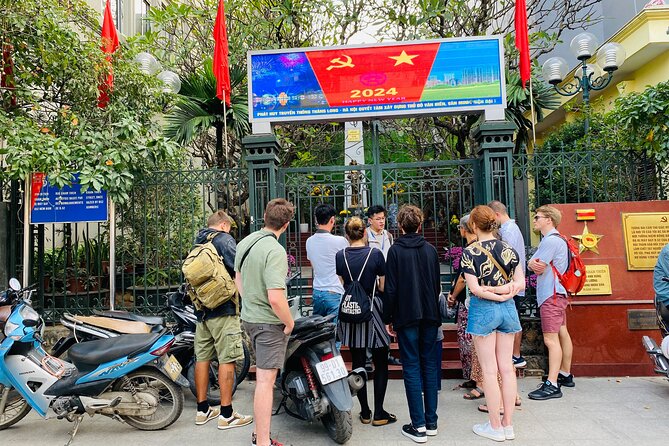
Next comes the Kham Thien War memorial, tied to the B52. This isn’t a stop for ticking off a name on a map. It’s where the tour shifts from background history into direct remembrance.
The memorial is a reminder that modern war leaves marks that last longer than the headline. What you’ll likely notice is the way the guide frames it: not just as destruction, but as proof of how Vietnam endured and how the damage affected people over time.
Guides often bring in personal or family connections when explaining this period. That’s where the tour’s emotional weight becomes clearer. When someone can explain what their family lived through, the war becomes more than a chapter in a textbook.
Practical note: you’ll want to bring your attention here. This stop benefits from listening closely, because the details matter. You’ll probably want to ask questions, too—this is one of the places where conversation-style storytelling really pays off.



Train Street and the Pause for Coffee or Tea
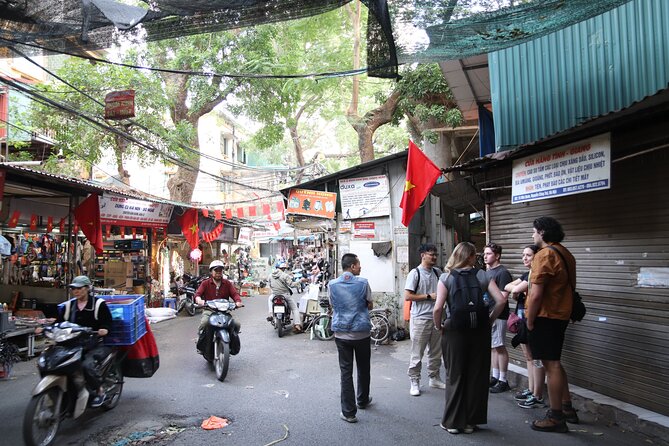
Then you reach Hanoi Train Street, but with a history lens on. Instead of treating Train Street like a photo set, you’ll use it as a marker for how the city keeps going.
The tour includes coffee or tea, and the stop here gives you time to sit, breathe, and process what you just learned. Train Street is famous for its energy, yet you’ll be able to enjoy it at a calmer moment rather than only as a chaotic spectacle.
This part of the tour is also where you see how the past and present share space. A rail line that symbolizes older city planning now supports a street-life economy. The point isn’t to romanticize anything. It’s to show you how places evolve, even when scars remain.
If you have a sweet tooth or you’re used to snack breaks during walking tours, this is usually a good point to treat yourself. Some guides also encourage you to choose from drinks available at nearby cafés, so you’ll likely have options beyond the basic tea or coffee.
Price and Value: $28 Isn’t Just a Walking Tour Fee
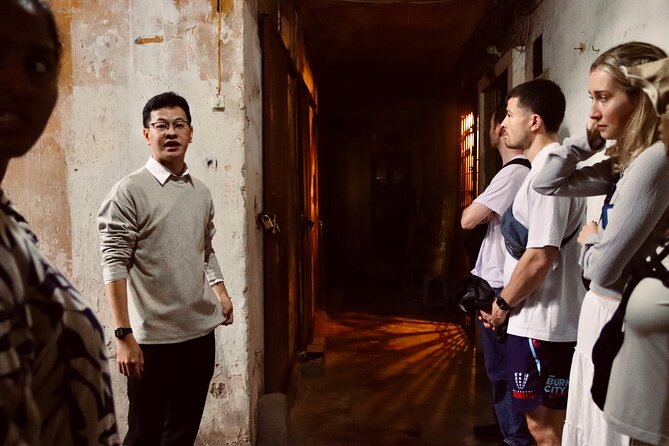
At $28 per person, this tour is priced for what you actually get: guide storytelling, time in neighborhoods outside the usual tourist map, and included refreshments.
Here’s why the value feels solid:
- You get a guided walk of about 3 hours, not a quick drive-by.
- You get coffee or tea included, which matters more than it sounds when you’re walking for hours.
- There’s a short taxi ride that saves energy and keeps the routing efficient.
- And there’s a charitable component: 20% of the profit is donated to the Vietnam Association for Victims of Agent Orange/Dioxin and Blue Dragon Children’s Foundation in Hanoi.
That last part is the most meaningful value lever. Many Hanoi tours give you context. Fewer tie that context to a direct support mechanism. If that matters to you, this tour earns its place in your schedule.
Could $28 still feel “not cheap” if you only want casual sightseeing? Sure. But if you’re aiming to understand modern Vietnam—why things look the way they do today—this price is reasonable.
Best Fit: Who Should Book, and Who Might Skip It
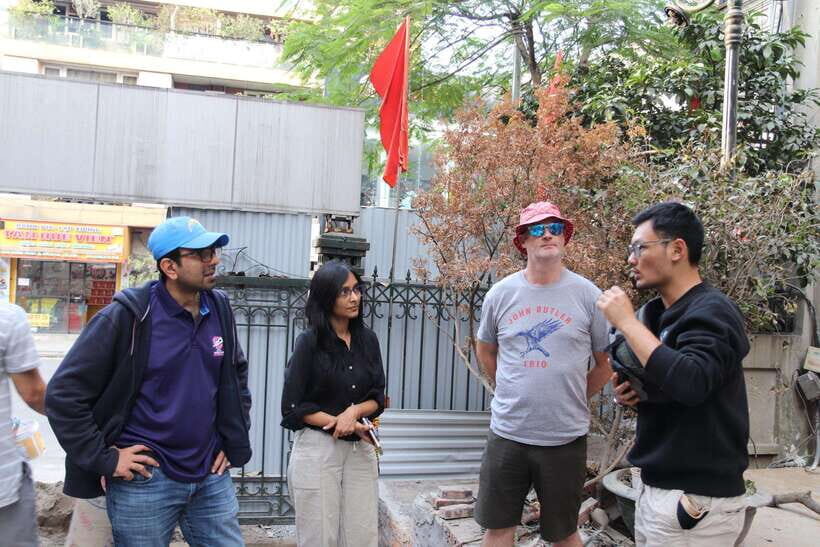
This tour is a great fit if you want modern history tied to daily life. It works well for first-time visitors who know a few headlines but want the street-level explanation of what the country went through and how that changed communities.
It also suits solo travelers and small groups because it’s chat-based. A good portion of the experience is built around questions, not just watching.
You might want to skip it if:
- you want only light sightseeing and don’t want war-era context
- you’re sensitive to serious topics tied to bombing and long-term impacts
- you have vertigo or epilepsy (this experience isn’t suitable)
If you’re traveling with teenagers, it’s often a strong option because the guide’s storytelling tends to connect policy and conflict to how people live now.
A Smart Way to Pair This With the Rest of Your Day
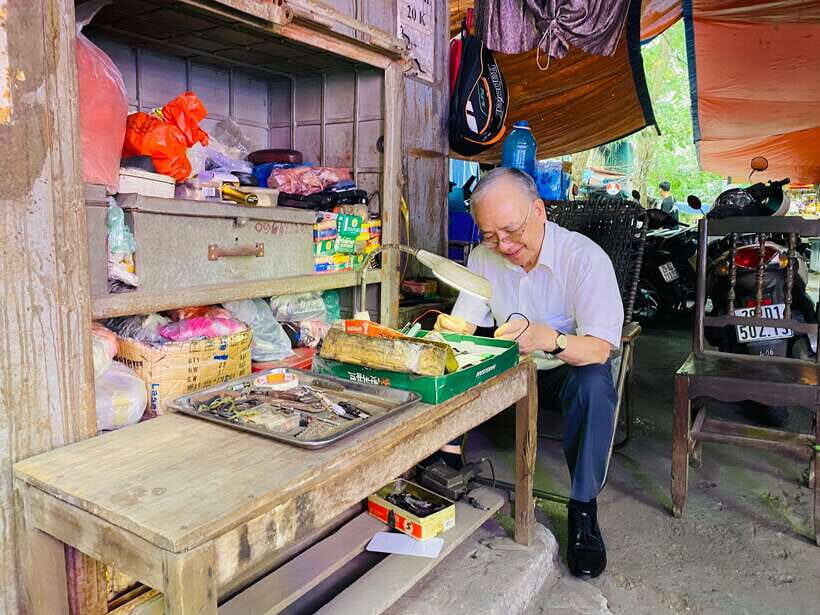
Because the tour ends where it starts, you can keep things simple after. If you want to continue the theme of war and memory, there’s a practical nearby add-on you might consider: Maison Centrale prison is described as a short walk from where the tour concludes, and it can be a good follow-up stop as you head back toward the Old Quarter area.
Even if you don’t add anything else, you’ll finish with better context for what you see around Hanoi later. After this, monuments and museums stop feeling like isolated history. They start feeling like part of the city’s living explanation.
Should You Book This Hanoi Vietnam War Walk?
Book it if you want more than a surface-level Hanoi. This is one of those experiences that turns a city into a classroom without making you feel like you’re stuck in class. The guide-led conversation style, the neighborhood focus, and the stops connected to the B52 memorial and Train Street create a route that feels both thoughtful and practical.
One last check before you commit: wear comfortable shoes, plan for rain possibility, and be ready for a serious topic handled in a grounded way. If that sounds like your kind of travel, this tour is an easy yes at $28—especially with the added charitable impact.
FAQ
How long is the Vietnam War Hanoi walk?
It lasts about 3 hours, with a short taxi ride midway through.
What is the meeting point for the tour?
You meet at 24B Chua Vua Street, in front of Trường Tung học cơ sở Đoàn Kết. It’s about 2.5 km from Hoan Kiem Lake and about 3.5 km from Hanoi Old Quarter.
What does the tour cost?
The price is $28 per person.
What’s included in the price?
The tour includes a tour guide, stories of locals during the war, coffee or tea, and a short taxi ride.
Does the tour run in rain?
Yes. It operates rain or shine, so bring an umbrella or raincoat if the forecast calls for it.
What should I bring?
Bring comfortable shoes and breathable clothing.
Is it suitable for everyone?
It’s not suitable for people with vertigo or epilepsy. The tour is in English.
Does the tour support a charity?
Yes. 20% of the profit is donated to the Vietnam Association for Victims of Agent Orange/Dioxin and Blue Dragon Children’s Foundation in Hanoi.