REVIEW · HANOI
Knife Making in Blacksmith Village in Hanoi
Book on GetYourGuide →Operated by Beyond Backstreet Tours · Bookable on GetYourGuide
Red-hot steel can look scary. It also feels surprisingly controlled here. In Da Sy blacksmith village (Kien Hung Commune, Ha Dong Town, Hanoi), you’ll learn how a traditional craft works and then help make a hand-made knife you can use back home.
I really like two things about this workshop: you finish with a practical souvenir (not just a decoration), and you get real explanations from Mai, the English-speaking facilitator who keeps the whole experience clear, friendly, and safe. One thing to plan for: you’ll be near sparks and hot metal, so you’ll need to follow the clothing rules—long sleeves and long pants, and no dress.
This is also built for real people, not just photos. The group is small (limited to 10), the workshop runs about 2.5 hours, and you meet right at the entrance of a football field next to a green fence.
In This Review
- Key highlights at a glance
- How the Da Sy Knife-Making Workshop Works in 2.5 Hours
- Meeting Mai by the Football Field and Getting to the Village
- From War Weapons to Kitchen Tools: Why Da Sy Matters
- Inside the Forge: The Full Knife-Making Process You’ll Practice
- The Safety Stuff That Actually Keeps It Fun
- What You Get for $54 and Why It’s Fair Value
- Small Group Energy: The Difference Between Watching and Doing
- Who Should Book This Hanoi Knife Workshop
- Should You Book Knife Making in Blacksmith Village in Hanoi?
- FAQ
- What is the duration of the knife-making workshop?
- How much does it cost?
- Where do I meet the guide?
- Is the knife included, or do I just watch?
- What should I wear to stay safe around sparks?
- Is English available during the workshop?
- Do I need to arrange transport from Hanoi?
- Is it refundable if plans change?
Key highlights at a glance
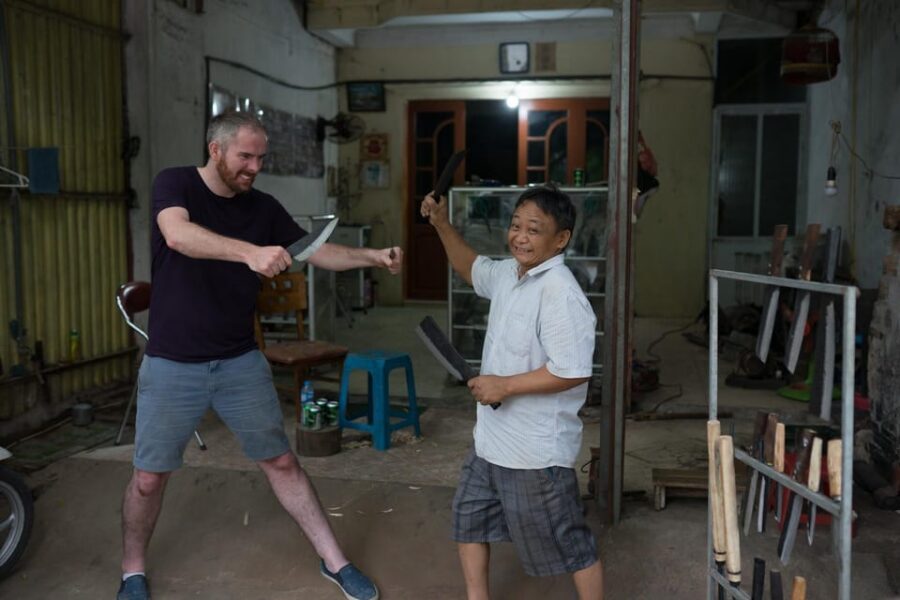
- Da Sy village craft with a practical outcome: you make a simple knife you can actually use.
- You go through the whole process, from rough drafts to tempering and sharpening.
- English support from Mai, plus hands-on help throughout.
- Safety gear included: mask and eye protection accessories.
- Small group size: capped at 10 participants.
- Spark-friendly clothing required: long sleeves and long pants.
How the Da Sy Knife-Making Workshop Works in 2.5 Hours
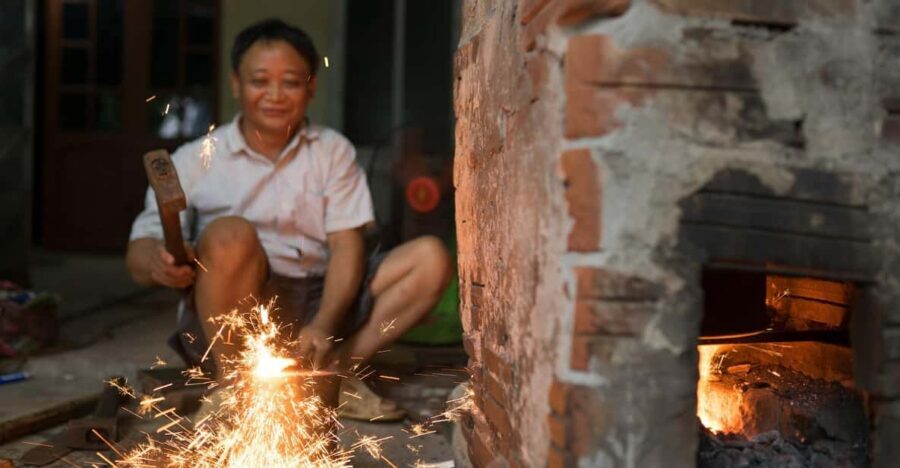
You’re signing up for a “do it” experience, not a lecture with a quick photo stop. The session is about 2.5 hours, and it’s structured to take you through the full workflow of making a simple knife.
What makes it work well for most schedules is that it’s focused. You’re not trying to master blacksmithing as a lifelong career. You’re learning enough to understand what’s happening at each stage—especially why heat, hammering, and tempering matter—while still producing a finished knife.
Because the group is limited to 10 participants, you get time to ask questions and get help when you’re at the anvil. If you’ve ever tried a hands-on class where you wait your turn forever, you’ll appreciate the pace here.
You can also read our reviews of more tours and experiences in Hanoi.



Meeting Mai by the Football Field and Getting to the Village
The day starts with a simple meeting point: the guide waits at the entrance of a football field, next to a green fence. From there, the activity ends back at the same meeting spot.
That might sound basic, but it’s useful. You don’t need to figure out complicated rendezvous points around town. And if you’re staying in Hanoi, you can plan this as a single block rather than a half-day chase.
If you want door-to-door help, pick-up and drop-off within Hanoi can be included for an additional cost. If not, expect to handle getting to the meeting point on your own.
The workshop also notes that timings are flexible. If the listed starting time doesn’t fit your plans, message in advance and the host will check whether another time is available.
From War Weapons to Kitchen Tools: Why Da Sy Matters
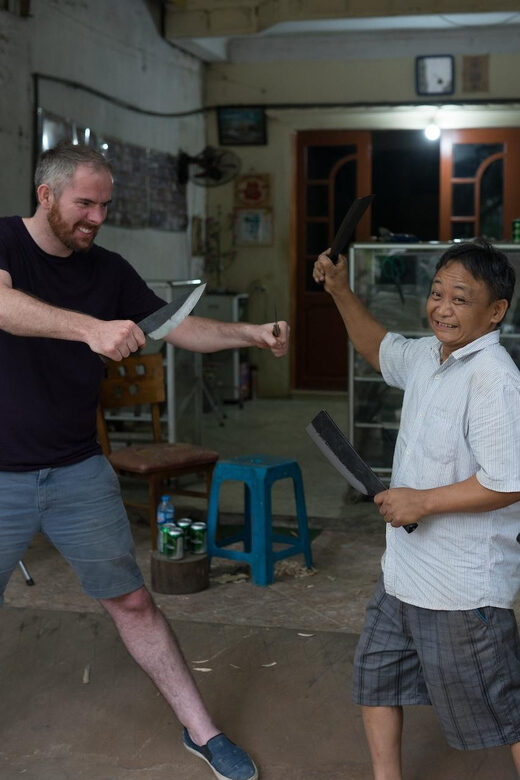
Da Sy is a blacksmithing village with a long forging connection. During Vietnam’s wars, the village supported the military with weapons. After peace returned about 40 years ago, the craft shifted toward agricultural and everyday needs—ploughs, rakes, machinery parts, and kitchen implements.
That change matters because it explains the vibe of what you’re doing. You’re not just playing with fire for fun. You’re stepping into a village tradition that has adapted to real local needs over time.
In this workshop, you’ll learn the basic techniques of handmade forging even though blacksmithing today can be supported by machines. You’ll see what the old approach gives you: a feel for the metal and a better understanding of how quality is shaped through the steps.
It also helps you understand something practical: why the process includes repeated stages—heat, hammering, and then cooling/strengthening—rather than just one long blast of work.
Inside the Forge: The Full Knife-Making Process You’ll Practice
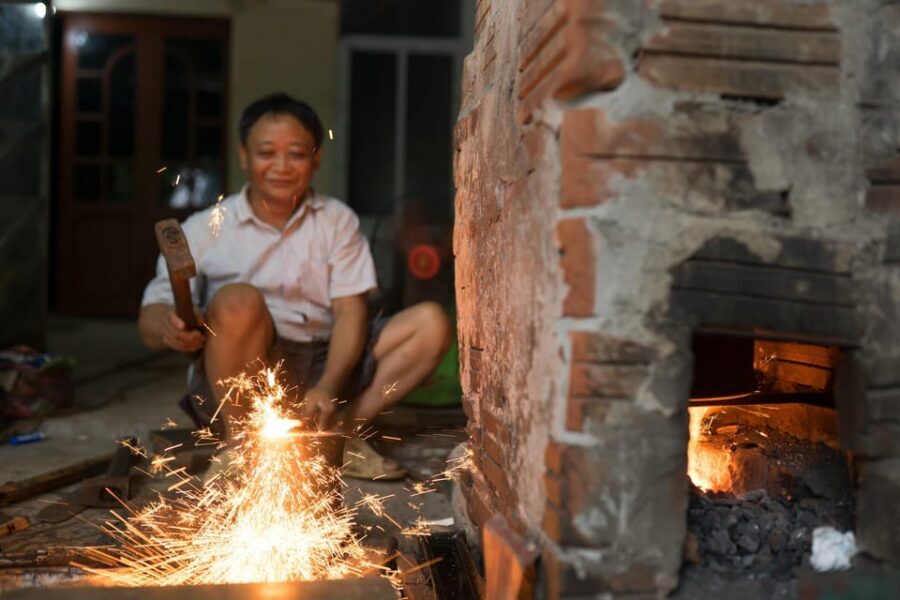
The workshop walks you through the processes of making a simple knife. You’re not just watching someone else do the work.
Here’s what you can expect to cover:
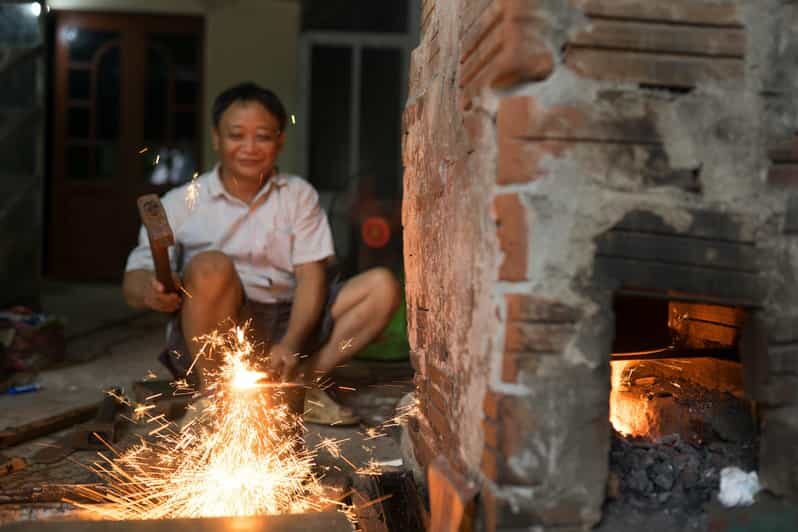
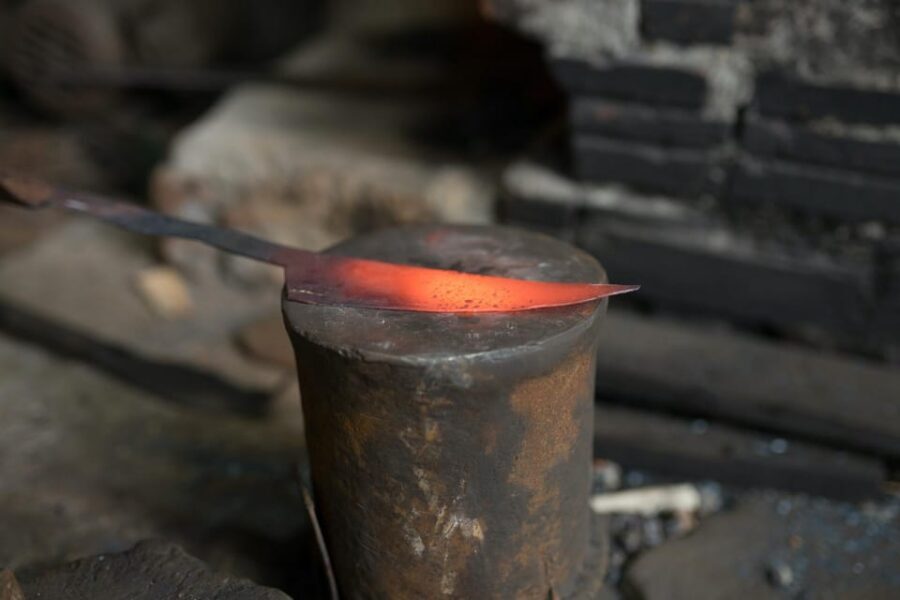
You’ll start with the idea of a rough draft—shaping the metal into the basic form. Then comes the “keep the fire going” part of blacksmith life. That means working with red-hot iron and using hammers to hit it into shape. Expect the heat to be a major factor throughout, because it affects how easily the metal moves.
Next is tempering, described as strengthening the metal with water. This step is key because it changes the knife’s performance. Tempering isn’t just tradition; it’s what turns a shaped piece of metal into something that can handle real use.
Finally, there’s sharpening. The course includes finishing the knife into a usable product. So while forging is the dramatic part, the end goal here is a tool you can bring home—not a metal sculpture.
Even if you only do a portion of each stage, you’ll get a guided understanding of what each part is for. That’s where the English facilitator helps: you can connect the physical actions to the reason behind them.
The Safety Stuff That Actually Keeps It Fun
Sparks are part of the deal with forging. The workshop makes the safety requirements plain, and I’d treat them as non-negotiable.
Long sleeves and long pants are highly recommended to avoid sparks. Also, don’t wear a dress. You’ll be closer to the heat and hammering than in a typical workshop, and loose or exposed clothing can become a problem fast.
Good news: you’re not left to guess. The class includes mask and eye protection accessories, so you can protect your eyes and face while you work around hot metal.
If you’re deciding what to wear, think practical first: long pants, sleeves you don’t mind getting a little dusty, and footwear you can stand in for the duration. It’s a place where comfort beats style.
One more practical note: the workshop advises you to make sure you have check-in luggage to carry your knife home. That’s the difference between “great souvenir” and “great souvenir you can’t transport.”



What You Get for $54 and Why It’s Fair Value
The price is listed at $54 per person, for a workshop lasting about 2.5 hours. At first glance, knife making might sound like a luxury experience. But what you’re paying for is more than a tour ticket.
You’re paying for:
- Tools and materials provided, including equipment to make the knife
- A facilitator who can guide you in English
- Safety gear (mask and eye protection accessories)
- Light refreshments
- And most importantly, you take home the knife you made, not just a certificate
The included “knife to take home” is what flips the value from entertainment to usefulness. Many souvenirs look cool but won’t survive daily life. Here, you’re leaving with something you can actually use back home as a cooking knife, or at least keep as a reminder.
Two small things to know so there are no surprises:
A knife cover is not included. If you think you’ll store it safely or travel with it again, plan for a cover. And you’ll want to bring the right luggage to bring it home safely in your check-in bag.
Small Group Energy: The Difference Between Watching and Doing
The group is limited to 10 participants, which changes the feel of the experience. With a smaller group, you’re less likely to spend the whole time waiting for a turn, and more likely to get direct help.
The experience provider, Beyond Backstreet Tours, also keeps the structure tight with an English-speaking facilitator. In practice, that matters when you’re learning a process with multiple steps. You want clear instructions before you’re asked to hit, shape, temper, or sharpen.
And based on what people say after the workshop, the hosting style plays a big role. Mai is described as both informative and supportive, with assistance from start to finish. There’s also mention of feeling safe during the activity, which is exactly what you want when you’re handling anything hot and sharp.
Who Should Book This Hanoi Knife Workshop
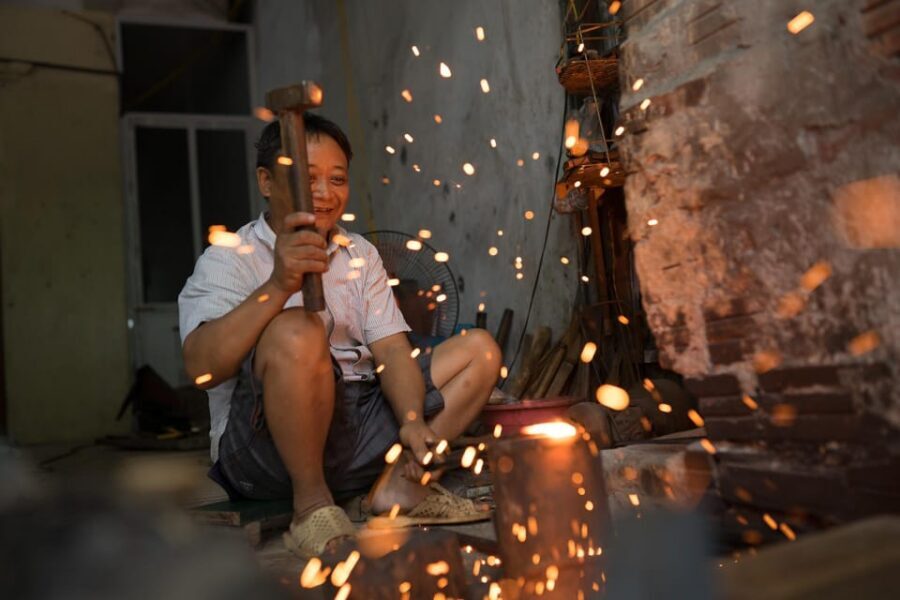
This workshop fits best if you like hands-on craft and you enjoy learning how everyday life works outside central tourist circuits.
It’s a great fit for:
- Families with older kids/teens who can handle the basic safety rules and want a real activity
- People who want a meaningful craft souvenir instead of another store-bought trinket
- Food lovers who appreciate a good cooking tool and like the story behind it
- Anyone curious about Vietnamese village life beyond the big sightseeing hits
If you’re the type who hates heat, sparks, or close-range workshop settings, you might find it stressful. But if you follow the clothing guidance and take the safety gear seriously, it’s exactly the kind of “I did that” memory that sticks.
Should You Book Knife Making in Blacksmith Village in Hanoi?
If you want a Hanoi experience that’s practical, hands-on, and tied to real local work, I’d book it. You’re not just passing through a neighborhood—you’re learning a craft that used to support weapons during wartime and now supports everyday tools.
For me, the decision comes down to value and outcome. For $54, you get instruction in English, the safety gear, the process experience, refreshments, and a knife you take home. That’s hard to beat for a workshop style day.
Do it if you’re ready to wear long sleeves and long pants, follow safety rules, and plan for transporting a real knife in check-in luggage. If that sounds like your kind of souvenir, this one is a strong yes.
FAQ
What is the duration of the knife-making workshop?
The workshop runs for about 2.5 hours.
How much does it cost?
The price is listed as $54 per person.
Where do I meet the guide?
Meet at the entrance of a football field next to a green fence.
Is the knife included, or do I just watch?
You make a simple knife during the course and take it home. A knife cover is not included.
What should I wear to stay safe around sparks?
Long sleeves and long pants are highly recommended, and you should not wear a dress.
Is English available during the workshop?
Yes. The instructor/facilitator is English speaking.
Do I need to arrange transport from Hanoi?
Pick-up and drop-off within Hanoi can be arranged for an additional cost, but it isn’t included by default.
Is it refundable if plans change?
Free cancellation is available up to 24 hours in advance for a full refund. There is also a reserve now & pay later option.