REVIEW · HANOI
Hanoi: Vietnam Military History Museum and Hanoi Museum Tour
Book on GetYourGuide →Operated by CRAFT VILLAGE HANOI TOUR · Bookable on GetYourGuide
Tank shells and ancient dragons, in one tour.
This is a focused, guided visit that packs Hanoi’s two largest museums into one smooth outing. You’ll move from indoor galleries full of war artifacts and technical documents to an outdoor display yard, then finish at the Hanoi Museum for thousands of years of capital history. It’s not just “see stuff”—the guide helps connect objects to what happened and when.
I especially like two moments: seeing the T54B tank (No. 843) linked to the April 30, 1975 attack on Saigon’s Presidential Palace, and the way the Hanoi Museum uses an inverted-pyramid design that shapes light and shade inside. One practical thing to plan for: you’re touring large museums with lots of walking, and rain or flooding can slow the route, so comfy shoes matter.
In This Review
- Key highlights you’ll actually remember
- A 5-hour private loop through Hanoi’s two biggest museums
- Vietnam Military History Museum: war artifacts, documents, and national treasures
- A note on tone
- T54B tank No. 843: the date becomes a real object
- From indoor galleries to the outdoor yard by Hanoi Flag Tower
- Nguyen Dynasty cannons, and why that matters
- Hanoi Museum: the inverted-pyramid design that controls the light
- What you’ll see on each floor (and what to focus on)
- First floor: Ly dynasty dragons and early documents
- Second floor: natural artifacts that ground the capital in place
- Third floor: bronze drums, coins, ceramics, and everyday life
- Fourth floor: paintings and photos of old and modern Hanoi
- Price and logistics: how $62 per person becomes real value
- Who this tour suits best (and who might want another plan)
- Should you book this Hanoi Military History and Hanoi Museum Tour?
- FAQ
- How long is the Hanoi Military History Museum and Hanoi Museum tour?
- Where does the tour start and end?
- Do I need to buy tickets in advance?
- What will I see at the Vietnam Military History Museum?
- What artifacts are shown outdoors near Hanoi Flag Tower?
- What is the Hanoi Museum known for?
- How is the Hanoi Museum arranged inside?
- What languages are available for the live guide?
- Is the tour private and wheelchair accessible?
- What’s the cancellation and payment flexibility?
Key highlights you’ll actually remember
- T54B tank No. 843 tied to the final days of the Vietnam War, with clear historical context
- Four national treasures inside the Vietnam Military History Museum’s collections
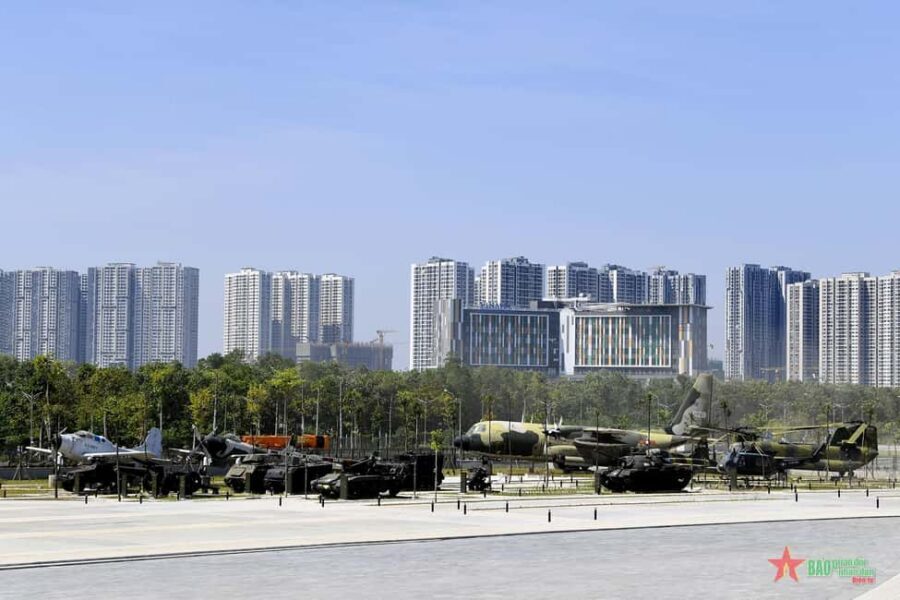
- Indoor-to-outdoor war artifacts including airplanes, tanks, artillery, and landmines near Hanoi Flag Tower
- American F-111A tail remnant displayed as a standout outdoor artifact
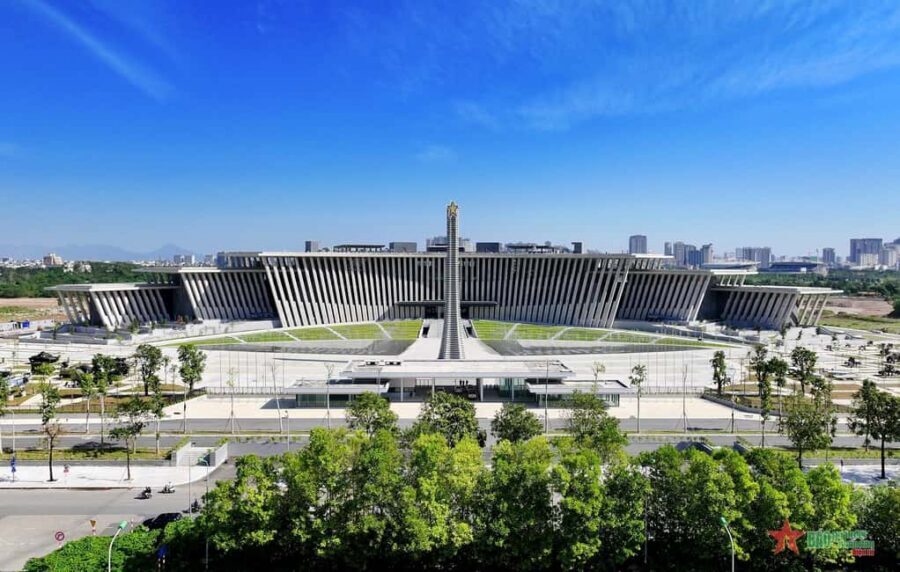
- Hanoi Museum’s inverted-pyramid architecture with terraces that block direct sunlight
- Up to 70,000 artifacts spanning Hanoi’s story across multiple dynasties to modern times
A 5-hour private loop through Hanoi’s two biggest museums
If you want one day that feels efficient and meaningful, this tour is built for you. It starts with pickup in central Hanoi, then you head straight into two major museum experiences without the usual hassle of figuring out what to see first.
The format is a private group with a live guide (multiple language options are available). That matters here, because these museums can be overwhelming if you’re walking without a guide—war history has a lot of terms, dates, and equipment, and the guide’s job is to make it readable.
You’ll also get small “reset points” along the way: photo stops and guided time inside. It helps keep the day from feeling like nonstop museum sprinting.
One more detail I appreciate: it’s not just indoor galleries. You’ll also see the outdoor display yard at the foot of Hanoi Flag Tower, which turns history from glass-case objects into a kind of open-air “timeline.”
You can also read our reviews of more historical tours in Hanoi


Vietnam Military History Museum: war artifacts, documents, and national treasures
This is the bigger draw if you’re interested in the mechanics of conflict—how weapons worked, what kinds of equipment existed, and how different sides fought. The Vietnam Military History Museum is the largest in Hanoi, and it’s also recognized as one of the national museum group of Vietnam.
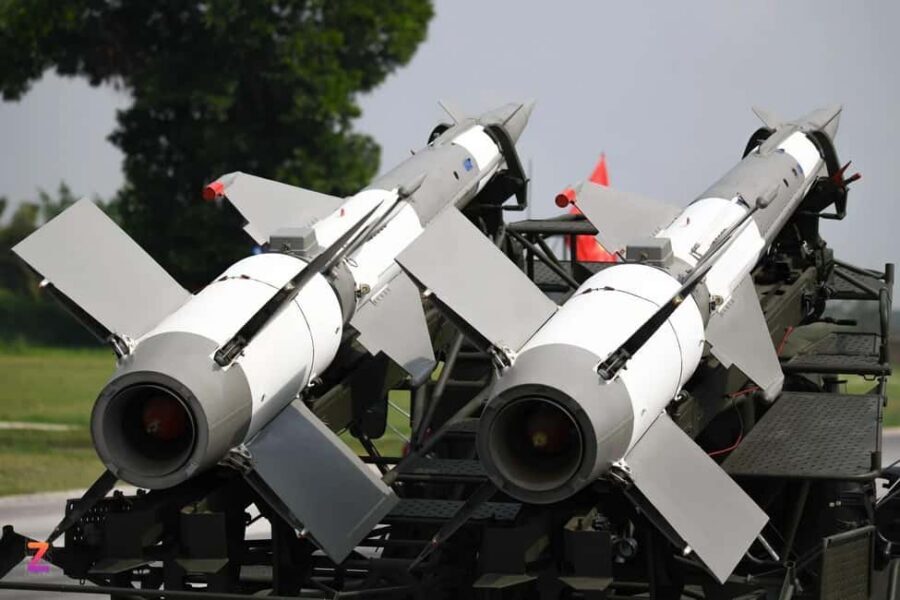
Your visit begins indoors across three buildings. Expect a lot of material that goes beyond “this is a tank” or “this is a plane.” The museum includes artifacts and documents that help explain purpose and process—things like shell mines, infrared optics, and communication-style items (including phones).
A detail that stuck with me as an example of how specific this place gets: you may see wooden wattles tied to the famous Bach Dang naval battle against the Mongolian army in 1288. That’s a reminder that the museum isn’t purely 20th-century modern war—it also points to earlier resistance and tactical ingenuity.
There’s also a strong focus on weapon categories and battlefield technology. You can learn about different types of bombs used by the US and Vietnamese artillery, and the museum connects that to what the Vietnamese forces needed to counter in real conditions. Another example is the display of butterfly bombs—produced by the US and used by France in the Indochina War. That kind of “weapon lineage” helps you understand how conflicts in this region overlap in time.
And yes, there are four national treasures among the collection. The point isn’t to chase paperwork. It’s that when a museum marks items as national treasures, it usually signals rarity, importance, and preservation—so it’s worth taking time on the set pieces.
A note on tone
This museum is war-focused. Some displays are visually heavy, including large weaponry and battle remnants. If you’re sensitive to that, go in with the mindset that you’re here for history and documentation, not entertainment.
T54B tank No. 843: the date becomes a real object

A standout part of the day is the moment you see the T54B tank No. 843, manufactured by the Soviet Union. The museum links it to the attack on Saigon Presidential Palace (now the Independence Palace) on April 30, 1975.
For me, what makes this kind of object powerful isn’t the metal itself. It’s the way a guide can attach the tank to a precise moment in history. Instead of “end of the war happened,” you start thinking in terms of operations, locations, and decision-making during the final phase.
The museum’s approach also helps you see the tank as part of a broader system. You’re not just looking at a single artifact—you’re surrounded by other items that explain how different forces fought, what they used, and what “winning” looked like on the ground.
You’ll also see additional visually memorable pieces linked to resistance history, including a bronze soldier statue created by sculptor Tran Dinh Hoe in 1960. That kind of artwork helps balance the technical displays with something more human and symbolic.
From indoor galleries to the outdoor yard by Hanoi Flag Tower
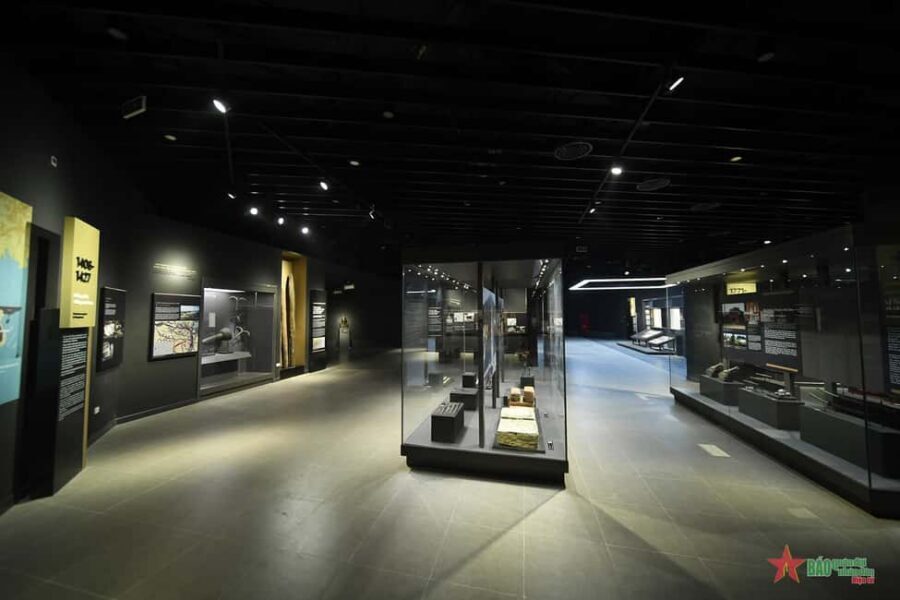
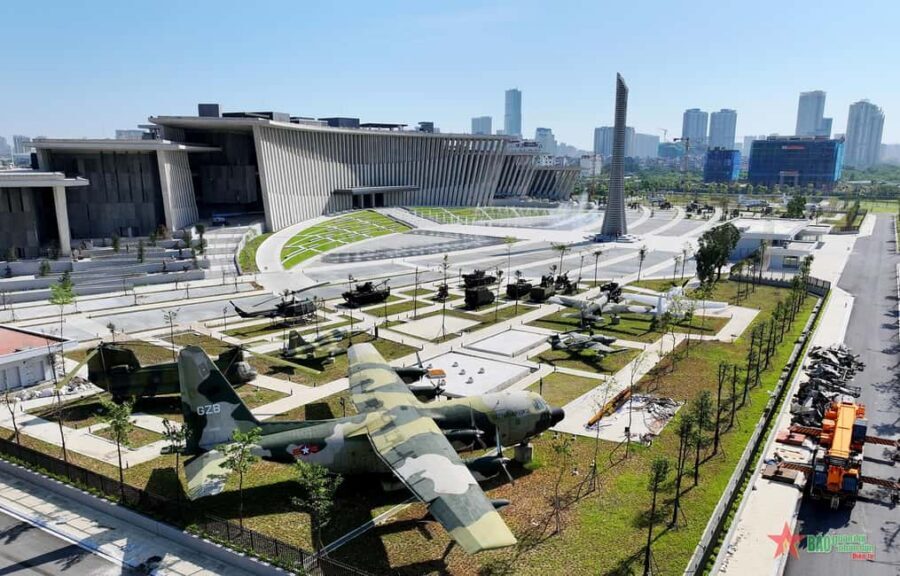
After the indoor buildings, you’ll head outdoors to the display area at the foot of Hanoi Flag Tower. This part feels more open, and it changes the way you experience the history.
In the outdoor section, you can expect to see items like:
- airplanes and tanks
- artillery
- landmines
- other larger remnants
One particular artifact mentioned in the tour description is the tail of the American F-111A that crashed directly into the ground. It’s exactly the sort of physical remnant that turns abstract war stories into something you can stand next to and really process.
This outdoor yard also helps you understand how the museum organizes stories. Indoors, you learn through documents, components, and curated displays. Outdoors, you learn through scale and presence—how big things were, how equipment ended up in conflict zones, and how remnants became evidence.
You can also read our reviews of more museum experiences in Hanoi



Nguyen Dynasty cannons, and why that matters
You may also spot cannons of the Nguyen Dynasty made in the 19th century, discovered near Thang Long Citadel in 2003. This matters because it widens the historical lens. The museum isn’t limited to one war era; it shows how military technology and defense efforts shaped Vietnam across centuries.
If you’re trying to understand Vietnam as a place shaped by defense, conflict, and resistance over time, those earlier centuries make the later 20th-century story feel less like a one-off.
Hanoi Museum: the inverted-pyramid design that controls the light
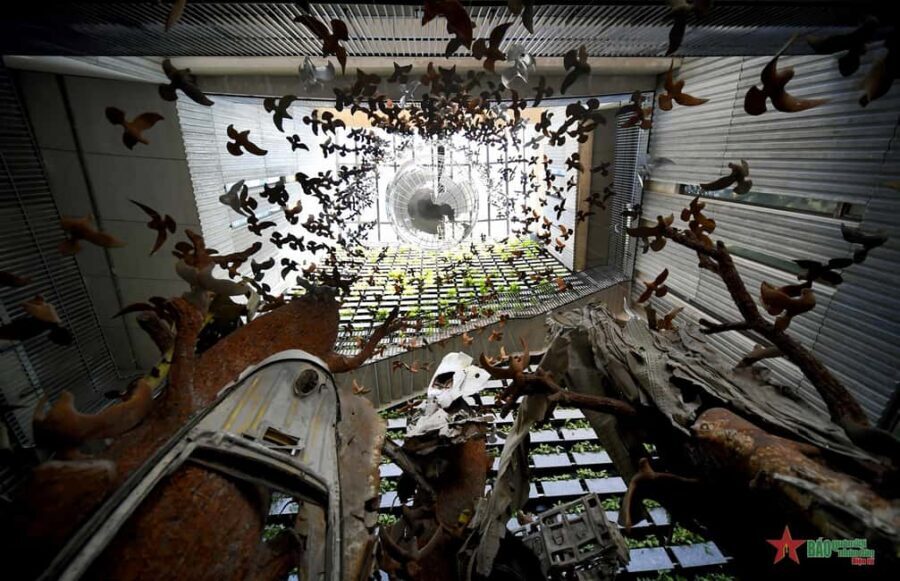
After the military history, the tour shifts gears to a calmer theme: the history of Hanoi’s capital through objects, art, and architecture.
The Hanoi Museum is part of construction works created to celebrate the 1000th anniversary of Thang Long – Hanoi. That anniversary connection isn’t just a trivia detail—it helps explain why the museum feels like a deliberate, city-scale effort to tell Hanoi’s story.
Architecturally, it’s a standout. The museum’s main building covers more than 54,000 square meters across four floors arranged like an inverted pyramid with terraces. The terraces extend outward, and the higher levels cast shadows on the lower ones, which helps shield indoor exhibits from direct sunlight.
Translation for you: it’s designed for comfort and preservation. Instead of harsh light bouncing off displays, the building’s shape supports how collections are shown. On a hot day, that’s a big deal. On a rainy day, it keeps the museum experience stable even when the street weather changes.
When you enter the grounds, you’ll also see displays that introduce Hanoi’s history, including replicas of traditional Vietnamese villages. That helps you “enter” the story before you go floor by floor.
What you’ll see on each floor (and what to focus on)
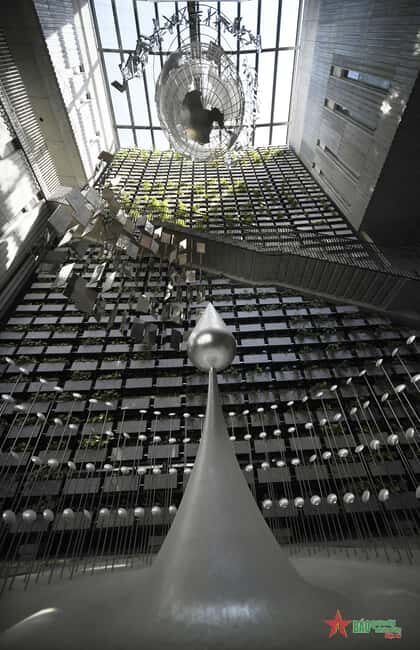
The Hanoi Museum is built so each floor has a different feel. You’ll typically start lower and work upward through layers of time.
First floor: Ly dynasty dragons and early documents
On the first floor, you may see pillars carved with dragon figures from the Ly dynasty, along with documents and artifacts connected to the Ly – Tran – Le dynasties. If you like the visual language of dynasties—motifs, symbols, and how power was expressed—this is the place to slow down.
Second floor: natural artifacts that ground the capital in place
The second floor includes natural-history style displays, such as the skeleton of the Hoan Kiem Lake turtle and a shrimp specimen from West Lake, plus pictures of Hanoi’s scenery and people. This is a smart balance after war history. It reminds you Hanoi is a living environment, not just a sequence of events.
Third floor: bronze drums, coins, ceramics, and everyday life
On the third floor, you’ll encounter older material culture: bronze drums, copper coins, ancient ceramic vases, ivory, dragon statues, stone turtle statues, and other ancient objects. This is where the museum feels like a time machine, because artifacts that were once normal daily or ceremonial objects become museum-scale proof of long continuity.
Fourth floor: paintings and photos of old and modern Hanoi
The fourth floor shifts toward the more recent record—paintings and photos showing old and modern Hanoi. It’s also the level where you can find areas for conference rooms, art studios, a library, and temporary exhibitions.
One more practical point: even if you don’t read every label, walking this floor-to-floor design gives you the museum’s structure in your head. That’s the difference between a museum you “completed” and one that actually sticks.
Price and logistics: how $62 per person becomes real value
The tour price is $62 per person for about 5 hours. At this level, you’re paying for three things that matter in Hanoi:
- a live guide to explain what you’re seeing (especially important for war technology and museum organization)
- skip the ticket line, so your time goes to exhibits instead of waiting
- private-group attention, which helps the experience feel less rigid and more responsive
You’ll also cover two big institutions in one day, which is usually harder to do efficiently on your own—especially if you don’t know how much time each museum needs.
A small realism check: because this is a private tour with a driver and time for photo stops, the day feels smoother than a do-it-yourself plan. Still, you’ll spend real time on your feet. If you hate museum hopping, pick a different day. If you like focused learning, this is a solid fit.
Who this tour suits best (and who might want another plan)
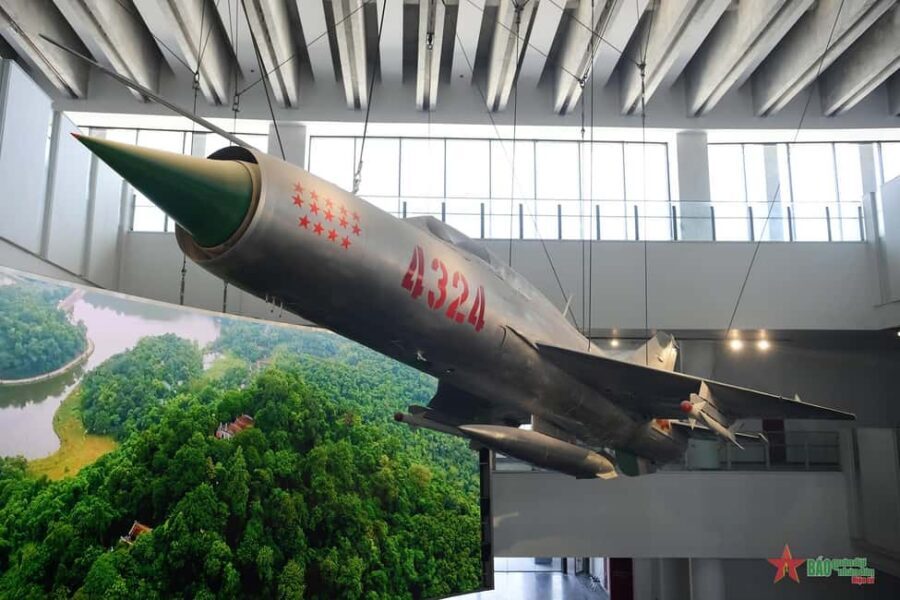
This tour is ideal if you want:
- a history-heavy day without guessing what matters most
- context around the Vietnam War that connects objects to events (like the T54B tank and the F-111A remnant)
- Hanoi history that covers more than one era, through dynasties and city change
It also works well as a “big day” option when weather or city logistics make walking around on your own annoying. One relevant real-world detail: the day can be affected by rain and flooding, and your driver may adjust venue access when roads get tricky. That flexibility is part of why a guided tour can feel less stressful.
It may not be your best match if you only want light sightseeing. This is museums with serious themes, including warfare and military remnants.
Should you book this Hanoi Military History and Hanoi Museum Tour?
If you like museums that explain cause-and-effect—how weapons, technology, and strategy shaped outcomes—yes, book it. The T54B tank No. 843, the outdoor yard at Hanoi Flag Tower, and the Hanoi Museum’s inverted-pyramid architecture give you two different ways to understand Vietnam and the capital city.
You should especially consider it if you:
- want two major museums in one half-day block
- care about seeing the specific signature artifacts (not just “a tank,” but the tank tied to April 30, 1975)
- appreciate a live guide who can handle different languages and answer questions
If you’re unsure, choose based on your tolerance for war-related content. For the right traveler, this is a smart, high-value day that turns Hanoi into a place where you can read history with your eyes.
FAQ
How long is the Hanoi Military History Museum and Hanoi Museum tour?
The tour runs for 5 hours (a single day).
Where does the tour start and end?
Pickup and return are both in Hanoi.
Do I need to buy tickets in advance?
The tour includes skip the ticket line, so you can avoid waiting.
What will I see at the Vietnam Military History Museum?
You’ll see indoor exhibits across three buildings and outdoor displays. Highlights include the T54B tank No. 843 linked to the April 30, 1975 attack on Saigon’s Presidential Palace (now the Independence Palace), plus a collection that includes four national treasures and war-related items like bombs, optics, shell mines, and more.
What artifacts are shown outdoors near Hanoi Flag Tower?
Outdoor exhibits include airplanes, tanks, artillery, landmines, and other artifacts. One specifically mentioned highlight is the tail of the American F-111A that crashed into the ground.
What is the Hanoi Museum known for?
It has a unique inverted-pyramid architectural style with terraces designed to reduce direct sunlight. It also displays more than 70,000 artifacts.
How is the Hanoi Museum arranged inside?
The museum has four floors, each with different themes. The first floor includes pillars and artifacts from early dynasties; the second floor includes natural artifacts like items from Hoan Kiem Lake and West Lake; the third floor features ancient objects such as bronze drums and coins; the fourth floor has paintings and photos, plus areas for library and studios and temporary exhibitions.
What languages are available for the live guide?
The live guide can operate in many languages, including Chinese, English, French, German, Italian, Japanese, Korean, Portuguese, Russian, Spanish, Indonesian, Thai, and Vietnamese.
Is the tour private and wheelchair accessible?
It’s a private group and is wheelchair accessible.
What’s the cancellation and payment flexibility?
You can cancel up to 24 hours in advance for a full refund. There’s also a reserve now & pay later option.




More Historical Tours in Hanoi



More Tours in Hanoi
- Ninh Binh Full-Day Tour from Hanoi to Hoa Lu, Tam Coc & Mua Cave Via Boat & Bike
★ 5.0 · 4,384 reviews