REVIEW · HANOI
Hanoi Traditional Craft & Ancient Beauty (Day Trip)
Book on Viator →Operated by Asia Travel & Leisure · Bookable on Viator
Countryside Hanoi feels like a reset button. On this private day trip from Hanoi, you leave the city for outer villages where daily life ties into worship, plus a pagoda with stories you won’t hear by simply reading plaques. You also get a private air-conditioned car with hotel pickup, and you control how long you want to linger at each stop.
I really like the way this trip mixes practical craft (incense production) with a spiritual site (Thay Pagoda), then closes with slow wandering in Duong Lam Ancient Village. The incense stop matters because incense is still part of Vietnamese festivals and religious ceremonies, not just a tourist photo moment. And at Thay Pagoda, you’ll hear about Monk Tu Dao Hanh, including his teaching and healing work, plus how he’s linked to wrestling and water puppetry.
One thing to plan for: the day can run 6 to 8 hours and includes countryside driving (including a route out roughly 35 km). If you’re sensitive to long transit times or you hate a full-day schedule, it may feel like a lot in one shot.
In This Review
- Key highlights worth your time
- How this Hanoi countryside day trip keeps things easy
- The incense production stop: where worship starts
- Thay Pagoda: Temple of Heavenly Blessings and living tradition
- Duong Lam Ancient Village: slow lanes, older rhythms
- The private car experience: what it costs you, and what it saves
- Price and value: is $170 fair for this format?
- Who this tour is best for (and who should skip it)
- Small details that can make or break the day
- Should you book Hanoi Traditional Craft & Ancient Beauty?
- FAQ
- What time does the Hanoi day trip start?
- How long is the experience?
- Is hotel pickup included?
- Is there a private vehicle?
- What’s included in the price?
- Are snacks included?
- What are the main stops?
- Can I control how long I stay at each place?
- Do I need an admission ticket for the pagoda?
- What if the weather is bad?
Key highlights worth your time
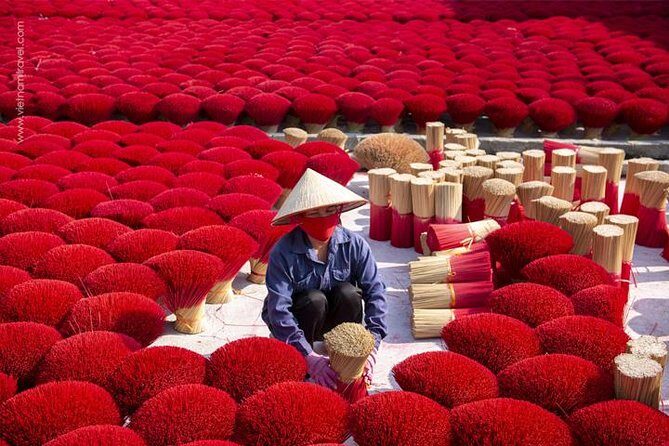
- Incense craft in action: watch the village work tied to everyday worship rituals
- Thay Pagoda with specific cultural stories: Monk Tu Dao Hanh and local traditions
- Flexible timing: you decide how long to stay at each place
- A true countryside feel: quiet lanes in Duong Lam Ancient Village after Hanoi traffic
- Private, air-conditioned transport with hotel pickup and included lunch
How this Hanoi countryside day trip keeps things easy
The biggest value here is not the list of sights—it’s the low-friction logistics. You get hotel pickup and a private air-conditioned vehicle, so you don’t waste energy figuring out routes, bargaining over transport, or stitching together multiple half-days. The pace is also in your hands: you can spend more time where you’re curious and less time where you’re not.
You’re also looking at a very “outer Hanoi” day. Instead of sticking to the usual city circuit, you head outward to craft production and older village spaces. That shift is why the day feels calmer than central Hanoi. Even if you love big-city energy, it’s refreshing to trade scooters and sidewalks for workshops and village lanes for a few hours.
You can also read our reviews of more tours and experiences in Hanoi


The incense production stop: where worship starts
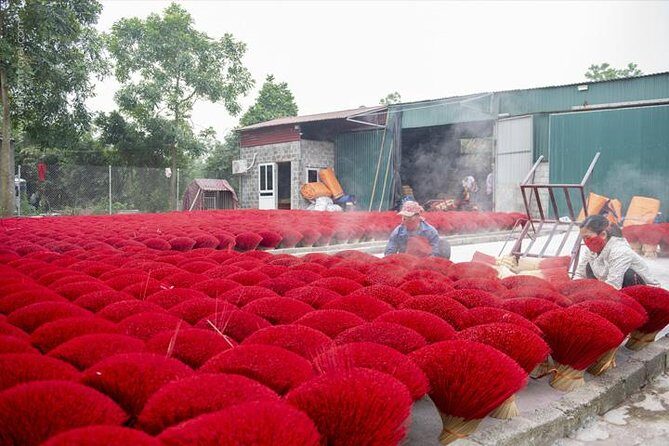
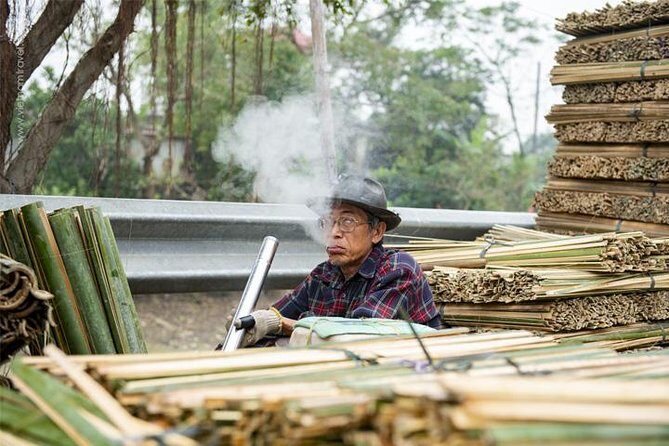
Early on, the trip takes you to a village area where incense used in Vietnamese worship rituals is produced. This is one of those stops that’s easy to misunderstand if you only think of incense as something you buy at a shop. Here, you’re seeing the process tied to real customs—incense is treated as an irreplaceable part of traditional festivals and religious ceremonies in Buddhist contexts across Vietnam.
What I like about this stop is that it gives you a “why.” When you later see a temple space, you’re not guessing how people use incense or why it matters. You can also ask questions while you watch the production process, because it’s not just a brief photo stop. You’ll have time to observe the craft production and then move on, which makes the overall day feel connected rather than random.
Practical note: incense and workshop areas can mean strong smells and sometimes warmer conditions. If you’re sensitive, plan for that and bring along basic comfort items (like water and a light layer). Bottled water and lunch are included, but snacks aren’t, so consider grabbing something small for between meals.
Thay Pagoda: Temple of Heavenly Blessings and living tradition
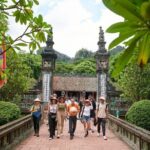
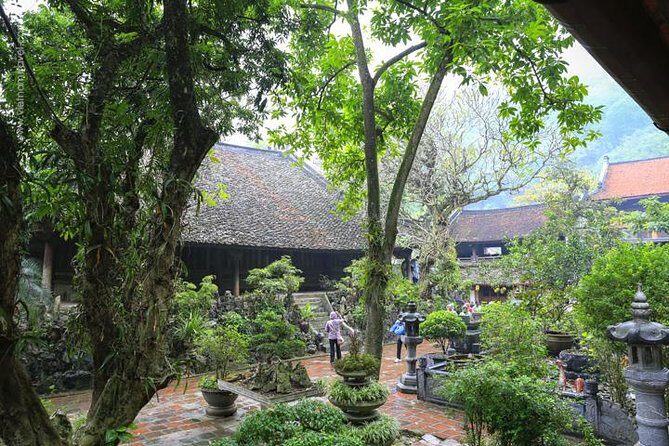
After the incense area, you continue to Thay Pagoda, also known as the Temple of Heavenly Blessings. This pagoda is associated with restoring historical and cultural values of Vietnam. What makes it more than a scenic stop is the story link to Monk Tu Dao Hanh.
From what you’ll learn, Monk Tu Dao Hanh was known for teaching and healing locals. He’s also associated with establishing traditions such as wrestling and water puppetry. That’s important context: it frames the temple not only as a quiet place of worship, but also as a cultural hub tied to how communities entertain, train, and care for one another.
You’ll spend time at Thay Pagoda, and admission is included. That matters because it removes one more decision and lets you focus on the experience itself—wandering, listening, and asking your guide about what you see. The pagoda setting also has a very “human pace” feel: you’re not rushing through galleries; you’re absorbing atmosphere and meaning.
If you want the best version of this stop, keep your schedule flexible. Don’t force it to match some tight checklist. Let your guide’s explanation guide how you look around. If the place resonates, stay a little longer. If you’re more interested in craft and village life, you can shorten it and move on.
Duong Lam Ancient Village: slow lanes, older rhythms
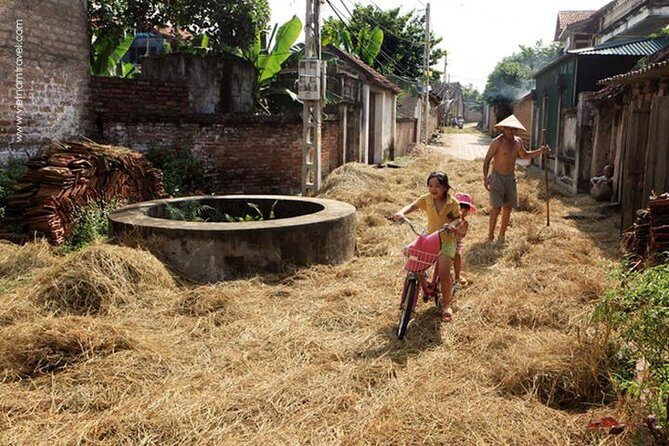
Duong Lam Ancient Village is your finish point, with time to wander its alleyways and learn about heritage. This is the part of the day that tends to feel most different from Hanoi’s street scene. The village lanes give you a chance to see older forms of community layout and daily movement—far calmer than sidewalks packed with motorbikes.
I like that the trip doesn’t treat Duong Lam as a quick stamp-and-go location. You’re given time to explore at your own pace, which is exactly what helps in older neighborhoods where you’ll notice details only when you slow down a touch. Even if you don’t have time to “read everything,” you’ll pick up the feel of how the village works.
Drawback to be aware of: you should expect some walking and uneven footing in older village areas, even if you control the duration. If you prefer minimal walking, you’ll still enjoy the experience, but plan on comfortable shoes and take breaks when needed.
The private car experience: what it costs you, and what it saves
This is a private tour, so the car is just for your group. That means quieter conversation, fewer waits, and more control over timing. You can decide how long to spend at each stop, which is a huge deal on a day that includes driving out of the city.
It also means you’re buying time. A public bus or shared taxi could shave money, but you’d lose flexibility and likely add stress. For many people, the real benefit is that you can “right-size” your day. If you want to linger at the incense production, you can. If you feel the pagoda story is enough in one pass, you can move on to Duong Lam.
Bottled water and lunch are included, which helps keep the day from turning into a series of extra purchases. Still, don’t ignore the “snacks not included” part. A long day can cause low-energy moments, especially if you’re walking more than you expected in village alleys. A small snack in your bag can keep you happy without having to hunt for food mid-route.





Price and value: is $170 fair for this format?
At $170, this isn’t the cheapest way to do a countryside circuit. The value comes from the private setup and the included basics: hotel pickup, an air-conditioned vehicle, lunch, bottled water, and all fees and taxes.
Here’s how I’d judge the price against your priorities:
- If you hate navigation stress and want a straightforward plan, private pickup is the main value driver.
- If you care about context (like how incense ties into ceremonies, and how Monk Tu Dao Hanh is linked to local cultural traditions), the guide time becomes part of what you’re paying for.
- If you’re the type who enjoys wandering with freedom, the “you decide how long” format prevents the day from feeling rushed.
If, however, you’re comfortable building your own itinerary and you’re traveling light with strong stamina, you might find lower-cost options. But you’d be trading away time flexibility—one of the best parts of this tour.
Who this tour is best for (and who should skip it)
This day trip suits you if you want:
- A smooth countryside day without self-planning
- Culture that connects craft, worship, and village heritage
- A calm reset after Hanoi’s intensity
- Flexibility on pacing, not a rigid schedule
It may be less ideal if:
- You dislike full-day programs
- You’re very sensitive to long driving times
- You’re looking for a high-volume highlight marathon with lots of stops every hour
I also think it’s a strong choice for first-time Hanoi visitors who already know the basics and want something outside the common center-city loop. The trip is designed to take you outward, not just around.
Small details that can make or break the day
Because you’re going rural for part of the day, a few practical tweaks help:
- Bring a light layer for temperature swings between indoor/outdoor areas
- Pack a snack since it’s not included
- Wear comfortable shoes for village alley walking
- Stay flexible with timing—this tour is built for adapting to your interest level
Guides can heavily influence how the day feels. In past experiences with guides such as Sunny, Ziap, and Tan, the emphasis was on storytelling and cultural explanation rather than quick checkmarks. That style tends to make the incense and pagoda stops more meaningful because you’re hearing how each place connects to Vietnamese life.
Should you book Hanoi Traditional Craft & Ancient Beauty?
I’d book it if you want a structured but not rigid day outside Hanoi—incense craft, Thay Pagoda, and Duong Lam Ancient Village in one run, with private transport and included lunch. The biggest reason is simple: it reduces friction and lets you slow down where it counts, especially in Duong Lam’s lanes.
I would hesitate only if you strongly prefer saving every minute for central Hanoi, or if a 6–8 hour itinerary feels too tiring for you. For the right traveler, though, this is a very practical way to get beyond the city buzz and understand why incense and temples still shape daily ritual in Vietnam.
FAQ
What time does the Hanoi day trip start?
The tour starts at 8:00 am.
How long is the experience?
It runs about 6 to 8 hours.
Is hotel pickup included?
Yes. Pickup is offered from your hotel in central Hanoi.
Is there a private vehicle?
Yes. You travel in a private air-conditioned vehicle, and only your group participates.
What’s included in the price?
The tour includes air-conditioned transportation, bottled water, lunch, and all fees and taxes. Admission ticket(s) are included as well.
Are snacks included?
No. Snacks are not included.
What are the main stops?
You’ll visit an incense production village area, then Thay Pagoda, and finish with time to explore Duong Lam Ancient Village.
Can I control how long I stay at each place?
Yes. You decide how long to spend at each stop.
Do I need an admission ticket for the pagoda?
No. An admission ticket is included.
What if the weather is bad?
The experience requires good weather. If it’s canceled due to poor weather, you’ll be offered a different date or a full refund.