REVIEW · HANOI
Hanoi Street Photography in a Vintage Community
Book on Viator →Operated by Momentlives Photography tours · Bookable on Viator
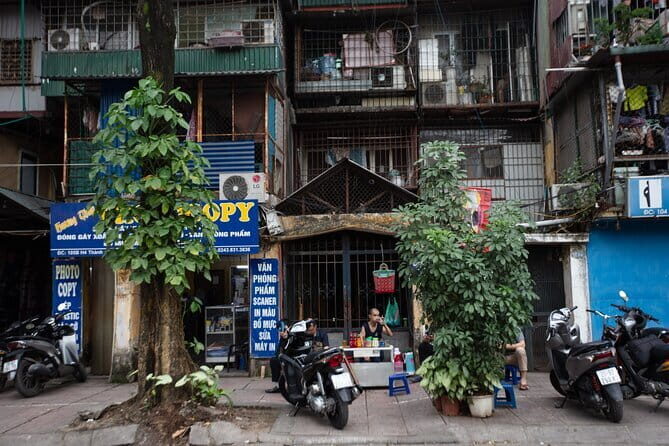
A maze of old lanes makes photos click fast. This Hanoi street photography workshop takes you away from the usual sights and into a residential area shaped by state-built housing from the 1960s—a Soviet-model look that’s still part of everyday life. The streets feel lived-in: aging walls, staircases that show their age, tangled overhead wires, and lots of human moments between scooters, shops, and tiny homes.
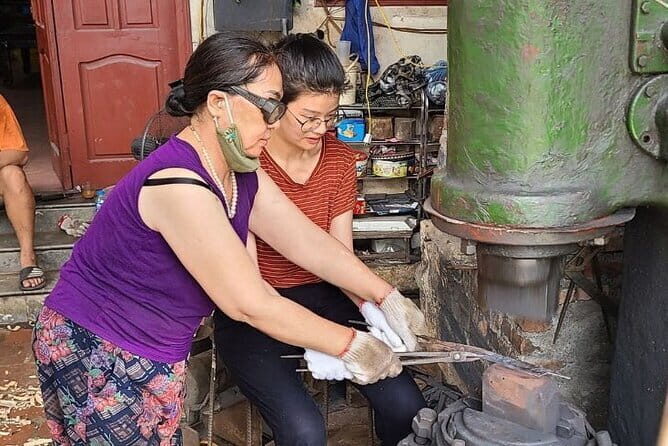
I especially like the up-close access to daily routines. You’re not just photographing buildings. You’re photographing how people pass time—tea stalls, neighborhood repair shops, barbers, kids and older folks relaxing near a playground, and a colorful market atmosphere. The second thing I really liked is how practical the photo help is. Guides such as Mike, Son, and James focus on real shooting decisions, including camera setting advice, so you get results you can actually use.
One consideration: this is a neighborhood walk, not a museum route. Expect tighter lanes and a steady flow of street activity, so if you need lots of slow, quiet breaks, you’ll want to pace yourself and plan for some walking.
In This Review
- Key Things That Make This Shoot Worth It
- Soviet-Style Housing in Hanoi: Why the Backgrounds Look Different
- The 4-Hour Flow: How the Walk Stays Productive
- Your Photo Stops: Markets, Tea Stalls, Shops, and Everyday Faces
- Colorful markets and loud street life
- Roadside tea stalls (small scenes, big atmosphere)
- Scooter repair shops and barbers
- A playground with kids and elders
- Architecture details that frame the story
- Working With the Guides: From Mike to Son to James
- Camera-Smart Tips for a Maze of Old Lanes
- Keep an eye on shadows and bright stall areas
- Use lane geometry to create depth
- Move your framing, not just your feet
- Photograph “in-between” moments
- Price and Value: Is $98 Fair for Four Hours?
- Who Should Book This Vintage Neighborhood Photo Tour?
- Should You Book This Hanoi Street Photography Workshop?
- FAQ
- How long is the Hanoi street photography workshop?
- What is the price?
- Is pickup included?
- What does the tour include?
- Is lunch provided?
- What is the cancellation option?
Key Things That Make This Shoot Worth It
- Off-the-tourist-map residential lanes with real textures and real people
- Street-level photo instruction that helps you adjust camera settings on the fly
- Small group size (max 4 travelers) for better attention and less waiting
- Stops that mirror daily Hanoi life: markets, tea stalls, repair shops, barbers, and a playground
- Pickup and an air-conditioned vehicle, plus coffee and/or tea to keep the morning smooth
- Architecture with a clear visual story from Soviet-influenced housing
Soviet-Style Housing in Hanoi: Why the Backgrounds Look Different
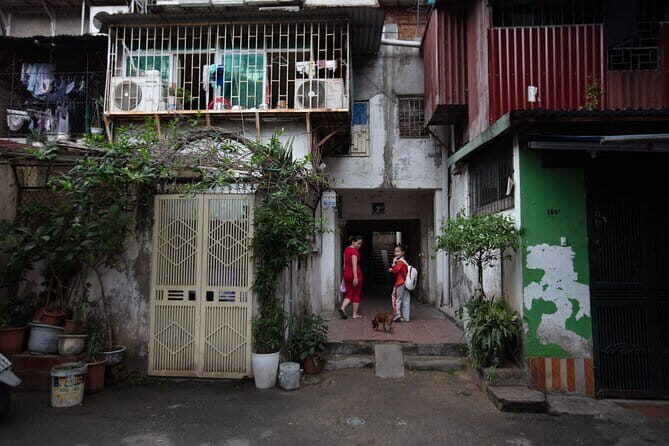
Hanoi has layers. What makes this area so photogenic is that you’re photographing a specific kind of housing story: residential blocks built for working-class people after the French retreated, with design ideas inspired by the Soviet model. The result is a visual language you don’t see in the postcard zones.
When you’re choosing a photo location, you usually look for variety—lines, textures, repetition, and little details that reward stepping closer. Here you get all of that. You’ll find yellowing walls next to worn staircases, plus the kind of overhead clutter—tangled electric wires, cables, and close building edges—that instantly gives photos depth and realism.
And it’s not just “old.” The streets feel current because life is still happening there. That matters because street photography is at its best when time feels suspended but movement never stops. The neighborhood’s architecture supplies the structure, and the people supply the motion.
You can also read our reviews of more photography tours in Hanoi

The 4-Hour Flow: How the Walk Stays Productive
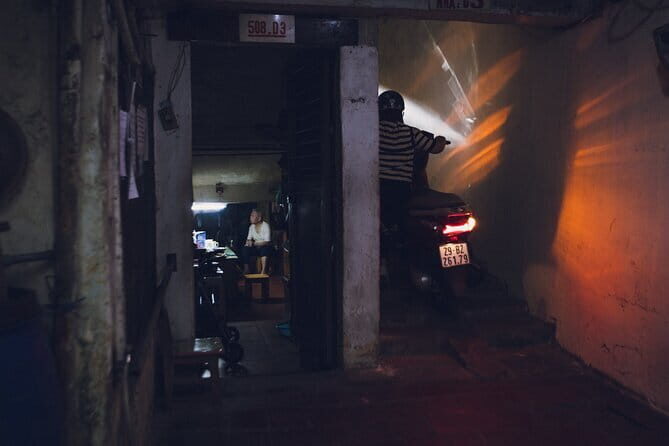
This experience is about about four hours of shooting, with pickup offered. You’ll travel to the neighborhood by air-conditioned vehicle, then spend the main time walking and photographing the area’s daily scenes.
The workshop format is built for momentum. Instead of bouncing between far-flung attractions, you’re working inside one compact environment—the maze of lanes around older residential buildings. That means you can stay focused on one style of photography: street portraits, street details, small scenes, and architecture-with-people framing.
A practical way to think about the timing: you’ll get enough time to:
- find compositions in the architecture and lane geometry
- stop for tea-stall and market moments
- capture people at rest (kids, elders, neighborhood routines)
- ask for guidance without feeling rushed
The day’s success depends on your willingness to move with the group. When you’re in tight lanes, the best shots often happen after you’ve walked ten minutes and your eyes adjust to the chaos. If you arrive expecting wide-open views at every turn, you might feel a little boxed in. But if you’re okay with close, human-scale scenes, it’s a great fit.
Your Photo Stops: Markets, Tea Stalls, Shops, and Everyday Faces
The heart of this workshop is straightforward: you photograph life in a vintage residential area. Here’s what that looks like in real shooting terms.
Colorful markets and loud street life
Markets are where you’ll get the most variety quickly. You’ll be photographing stalls, movement, hands, and expressions. Even if you’re not aiming for portraits, markets create natural lines—rows of goods, pathways between scooters and pedestrians, and background layers that help your photos avoid the “empty street” look.
Roadside tea stalls (small scenes, big atmosphere)
Tea stalls are gold for street photography because they’re both social and practical. People pause. Conversations happen. Someone pours tea. Someone watches the street. The stall itself gives you an anchor: a corner you can frame again and again.
For you, this is where the workshop’s guidance tends to shine. You can practice settings and composition while there’s real action, instead of relying on random moments that happen too fast.



Scooter repair shops and barbers
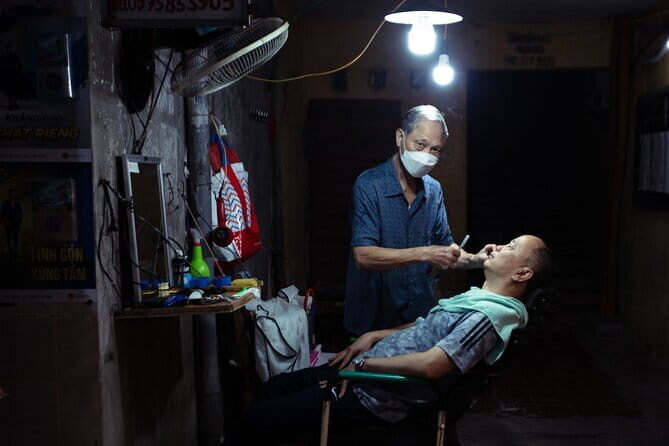
Repair shops and barbershops are excellent for detail shots. You’ll see tools, parts, textures, and people in the middle of a task. For close photography, these are the places where you can frame the story without needing a perfect “pose.”
If you like documentary-style images, these stops usually deliver. If you’re more into cinematic street portraits, watch for the “in-between” moments—someone looking up, someone passing by, a glance that catches light.
A playground with kids and elders
One of the best parts of the day is the variety of age groups. Kids and elders playing or relaxing near a playground gives you scenes that feel warm and unscripted. It also helps balance your photo set. Markets can skew dramatic and noisy; playground scenes often add calm, body language, and gentler pacing.
When the guide leads you here, it’s a chance to slow down just enough to get frames with expressions instead of only textures.
Architecture details that frame the story
Finally, you’ll photograph the buildings themselves—the maze-like lane structure, the old housing blocks, and the neighborhood’s visual clutter like tangled wires and worn staircases. Think of architecture here as a character. It makes the neighborhood feel specific and believable, not generic.
The trick is not to photograph buildings alone. Your best results will likely come when you include people as scale, or when you capture a doorway, stairwell, or wall and let a passerby complete the frame.
Working With the Guides: From Mike to Son to James
A photography workshop lives or dies on instruction. The strong point here is that guides don’t just point at scenes; they help you make decisions.
In the experience, you’ll have a photography instructor with you. In practice, that means you can ask for help with camera settings, not only after a missed shot but while you’re still in the moment. People who’ve done this style of shoot with Momentlives have called out that guides like Mike helped them get better results because he explained camera settings and the way to approach framing.
Other guides in the Momentlives lineup—like Son and James—also come up in strong feedback for blending cultural context with real shooting tips. That’s important because street photos often fail for a simple reason: you can’t read what’s happening fast enough. Cultural awareness and practical photo guidance together help you move quicker and shoot smarter.
What to do to get the most out of your guide:
- ask how to handle quick street movement with your camera
- mention your gear (phone vs camera, and the kind of lens if you have one)
- show interest in the area, not just the photo result
- take their suggestions even if the first frame feels awkward
Camera-Smart Tips for a Maze of Old Lanes
You don’t need fancy gear, but you do need to be ready for shifting light and close spaces. Old neighborhoods bring mixed conditions: daylight filtering between buildings, shadows on staircases, and bright stall areas that can fool your exposure.
Here are the kinds of things you’ll want to watch for during the shoot:
Keep an eye on shadows and bright stall areas
If you’re shooting in manual or semi-manual, your exposure will bounce between bright signage and darker doorways. If you’re shooting auto mode, check whether your camera is consistently keeping faces readable. One of the workshop’s values is that you can correct this in real time with instructor guidance.
Use lane geometry to create depth
In tight areas, the street itself is the “leading line.” Get a little lower or step slightly to the side and let the lane guide the viewer. When wires and buildings overlap, don’t fight it—use it to build layered depth.
Move your framing, not just your feet
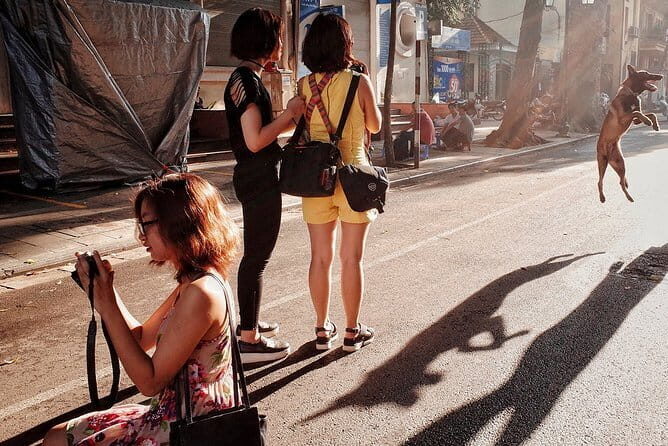
In these neighborhoods, walking a bit changes your background completely. Instead of standing in one spot, try small shifts: one step left, tilt a touch, and wait for one person to enter the frame.
Photograph “in-between” moments
The people parts of the day—the tea pause, the shop routine, the moment kids glance your way—tend to create the most memorable shots. Don’t always wait for the perfect expression. Aim for the believable moment.
If you’re a beginner, this is also a useful place to learn. You can practice basic exposure behavior and composition rules without the pressure of formal settings.
Price and Value: Is $98 Fair for Four Hours?
At $98 per person for about four hours, you’re paying for three things: instructor guidance, transport support, and time in a specific neighborhood environment.
Here’s why the price can make sense:
- You’re not doing this alone. The workshop includes a photography instructor, so you can improve your results during the shoot.
- You get pickup offered and an air-conditioned vehicle, which helps you arrive ready instead of spending energy on transit.
- You get coffee and/or tea, small but real comfort when you’re walking and shooting.
- The group is tiny: maximum 4 travelers, which usually means more chance for the instructor to help you directly rather than only teaching at the edges.
- Group discounts apply, which can make it easier if you’re traveling with a friend.
What you should factor in: lunch and dinner aren’t included. You’ll want to plan for food before or after, especially if you’re the type who likes to eat without rushing. Also, a short half-day can mean you’ll want to keep your energy up so you don’t burn out early.
Overall, this feels best for photographers who want more than just a walk with a camera. If you want quick skill building plus authentic scenes, the value lands pretty well.
Who Should Book This Vintage Neighborhood Photo Tour?

This workshop suits you if you:
- want real neighborhoods instead of only landmark photos
- enjoy street photography that includes people, shops, and daily routines
- want practical camera setting help, not just vague “take pictures here” guidance
- prefer smaller groups so you can ask questions and adjust quickly
- like architecture with personality—especially when people and aging details share the same frame
It might feel less ideal if you:
- hate walking or dislike tight, older-lane spaces
- need long seated breaks
- only want sweeping skyline shots or wide vistas
Because the focus is street life and neighborhood textures, your results will depend on your comfort with closeness—both physically and visually.
Should You Book This Hanoi Street Photography Workshop?
Book it if you want photos that feel grounded and specific to Hanoi. The biggest reason is the pairing of vintage Soviet-influenced housing with everyday scenes like tea stalls, repair shops, barbers, markets, and a playground. That combination makes it easier to build a photo set with variety but still one clear theme.
I’d also book it if you care about learning. The presence of an instructor—and the fact that guides such as Mike, Son, and James focus on camera setting guidance—makes this more than a sightseeing walk with a camera.
Hold off if you only shoot landscapes, or if you need lots of quiet time away from street motion. This is a working neighborhood. If that sounds like your kind of photography, you’ll likely have a great time.
FAQ
How long is the Hanoi street photography workshop?
It runs for about 4 hours.
What is the price?
The price is $98.00 per person.
Is pickup included?
Pickup is offered.
What does the tour include?
It includes a photography instructor, an air-conditioned vehicle, and coffee and/or tea.
Is lunch provided?
No, lunch and dinner are not included.
What is the cancellation option?
You can cancel for a full refund up to 24 hours in advance.