
REVIEW · HANOI
Hanoi Knife Making Traditional Workshop
Book on Viator →Operated by Hanoi Day Trips · Bookable on Viator
A real knife starts with a sketch.
This Hanoi knife making class takes you to a craft village outside the city where forging has been practiced for centuries, shifting over time from weapons to tools for everyday farming. I especially like that you get hands-on instruction through the full process, and that you’ll learn from a family-style workshop with a real working rhythm instead of a staged demo. One thing to consider: the activity depends on good weather, and you’ll need a moderate level of physical comfort for the work setting.
What really makes it click is the step-by-step progression. You begin with design and metal choice, move into forging with hammer-and-anvil methods, then finish with sharpening on a grindstone, including a special tar-based chemical wash mentioned as a secret family recipe. If you want a practical souvenir that feels earned, this is one of the better-value ways to spend half a day near Hanoi.
In This Review
- Key Highlights You Should Care About
- A Hammer, an Anvil, and a Craft Village Outside Hanoi
- How the 3.5-Hour Knife Session Actually Moves
- Getting From Hanoi: Pickup, Air-Conditioned Comfort, and a Small Group
- Design the Blade: Sketching the Shape Before Anything Gets Hot
- Forging Step: Cutting the Blade and Tang, Then Working the Ember Heat
- Shaping the Blade: Hammer Rhythm and Trimming With a Machine
- Sharpening on a Grindstone: Multiple Phases and a Tar-Based Wash
- The Makers: Patient Guidance and a Workshop With Real Pride
- Your Take-Home Knife: More Than a Souvenir
- Price and Value: What $50 Buys in This Hanoi Workshop
- What to Expect at Each Moment (and Where It Might Feel Tough)
- Who Should Book This Hanoi Knife Making Workshop
- Make It Better: Simple Ways to Get the Most From the Workshop
- Should You Book It? My Decision Guide
- FAQ
- How long is the Hanoi knife making workshop?
- How much does it cost?
- Does the price include transportation and an English guide?
- What’s included for making the knife?
- What’s not included?
- Is pickup available?
- How big is the group?
- What if the weather is bad?
- Can I get a full refund if I cancel?
Key Highlights You Should Care About
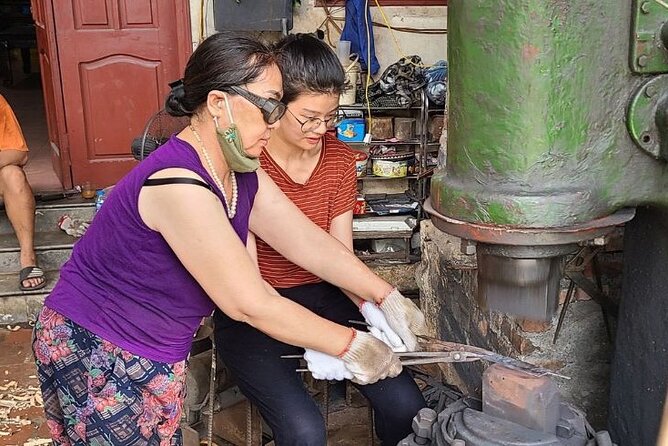
- Small group size (max 10) means more attention while you work the tools and ask questions
- English guide support keeps the hands-on steps clear, not mysterious
- Full knife process from design to sharpening, not just a quick making session
- Forging-focused craft village with generations of experience behind it
- Tar-based chemical wash step adds a memorable, traditional detail to the finish
A Hammer, an Anvil, and a Craft Village Outside Hanoi
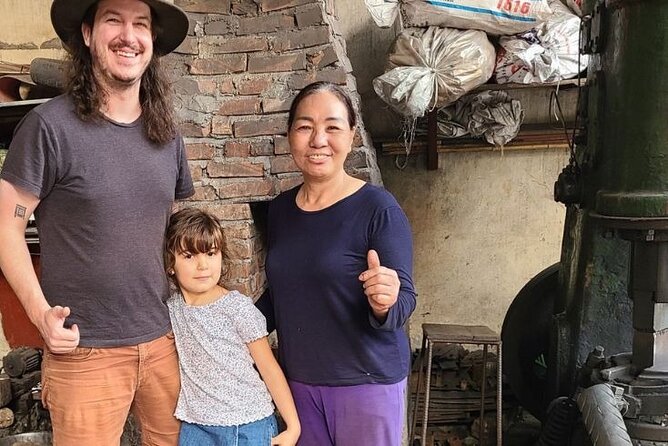
This experience is built around traditional forging, done the way it’s been done in the region for a long time. The workshop takes place in a village known for knife making, with roots going back several hundred years, and it connects the dots from Vietnam-war-era weapons to today’s agricultural implements. That context matters because you’re not only learning a hobby skill. You’re seeing a working craft that adapted to real local needs.
Even if your goal is a take-home knife, you’ll probably leave with a better sense of how metalwork culture lives outside tourist shortcuts. The workshop feels like a working place: family members guide the process, and you’re there to follow the steps that lead to a usable blade.
You can also read our reviews of more tours and experiences in Hanoi.



How the 3.5-Hour Knife Session Actually Moves
The class runs about 3 hours 30 minutes. That’s long enough to do the real work without feeling rushed, but still short enough that you can fit it into a normal Hanoi itinerary without losing a whole day.
The pace is hands-on. You’ll handle parts of the process while the makers manage the steps that require extra precision and tool control. Because there’s forging heat, tool work, and standing time, you’ll want to be comfortable being active for a bit, which matches the moderate physical fitness note.
Also, keep an eye on the weather. The experience requires good weather, and if it’s canceled for that reason, you’ll be offered another date or a full refund.
Getting From Hanoi: Pickup, Air-Conditioned Comfort, and a Small Group
Start in Hanoi, with an option for pickup. You’ll ride in an air-conditioned vehicle to the craft area on the outskirts, which helps a lot if you’re traveling in hot, humid hours. The idea is simple: you start the day in the city, then shift into a workshop environment without logistics headaches.
This is capped at 10 travelers maximum, so it doesn’t turn into a conveyor belt. In past sessions, the atmosphere has leaned patient and friendly, which is exactly what you want when you’re learning something you’ve never done before.
You’ll also receive a mobile ticket, and confirmation happens at booking. Small things, but they make the day feel smoother.
Design the Blade: Sketching the Shape Before Anything Gets Hot
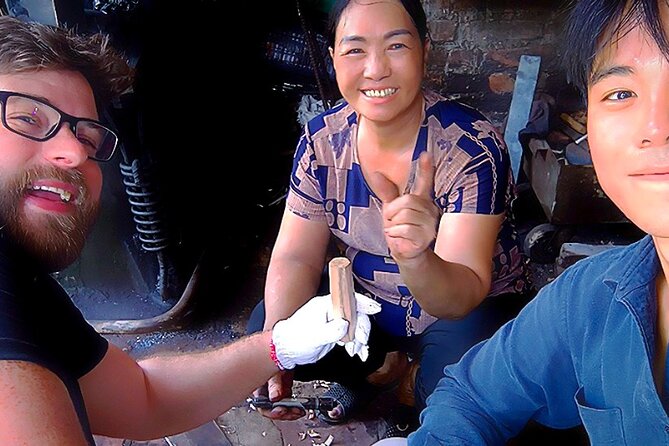
The first step is design and planning. You start by sketching the shape of the blade on a piece of metal, choosing the metal for durability. This isn’t just artistic decoration. In knife making, the outline you choose affects how the blade will handle later during forging and sharpening.
What I like about leading with design is that it gives you a reason to pay attention to later steps. When you’re watching the maker hammer the metal, you’ll understand what that hammering is trying to achieve: turning your intended blade profile into something real.
In a workshop like this, the biggest takeaway is that metalwork is a process. It starts on paper, then becomes heat, then becomes form.
Forging Step: Cutting the Blade and Tang, Then Working the Ember Heat
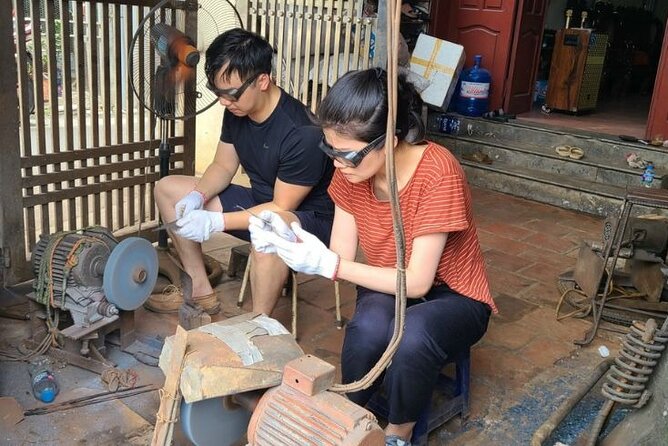
After the initial shaping, you move into forging. You’ll see the blade and the tang (the part that extends into the handle) cut from the metal and then thrust into crackling embers.
Forging is where traditional craft really shows its character. The process relies on timing, heat control, and repeated strikes that slowly change the shape. It’s also where you’ll likely appreciate how much training goes into keeping the metal consistent.
One detail worth noting: this class isn’t presented as a magic trick. The steps are described clearly, from cutting out the blade and tang to shaping with hammer blows. That transparency helps you enjoy the experience even if you’re not technical.






Shaping the Blade: Hammer Rhythm and Trimming With a Machine
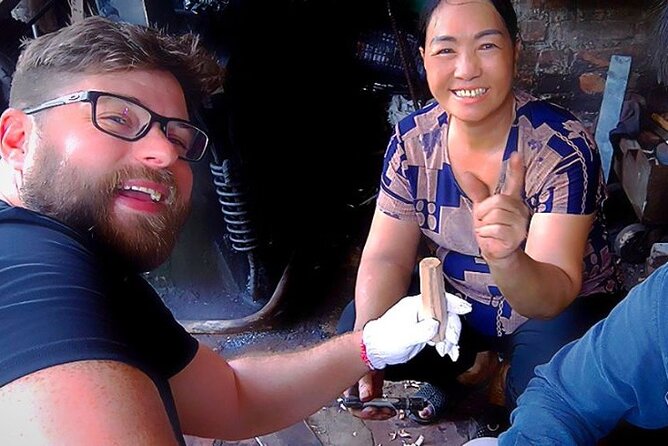
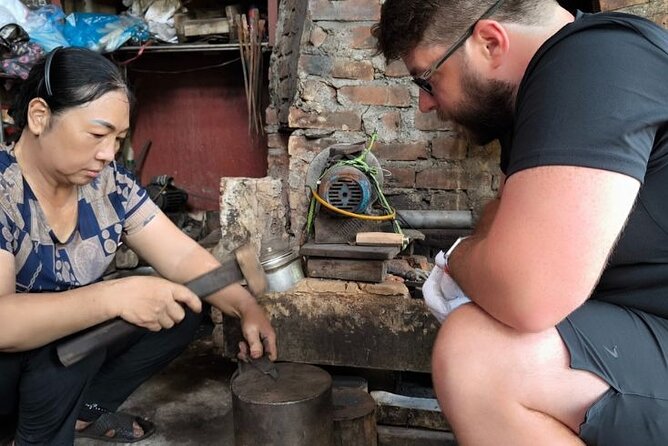
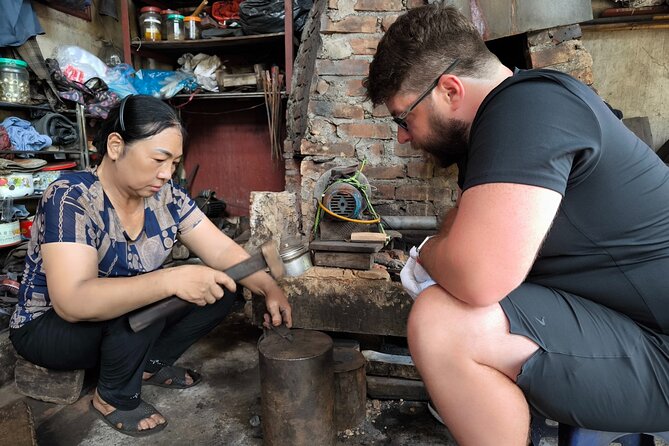
Next comes shaping. You’ll alternate blows with the maker to shape the blade. That back-and-forth rhythm is a big part of the learning, because you’re not just watching someone else do everything. You’re experiencing the effort it takes to refine the basic geometry.
After shaping, any imperfections are trimmed using a hydraulic cutting machine. It’s a practical blend: traditional techniques for the core transformation, plus modern tools to tidy edges and make the result more consistent.
This is one of those moments where the workshop stays grounded. It doesn’t pretend that every stage is done with only old methods. Instead, it focuses on getting you to the end product—while still keeping the craft identity intact.
Sharpening on a Grindstone: Multiple Phases and a Tar-Based Wash
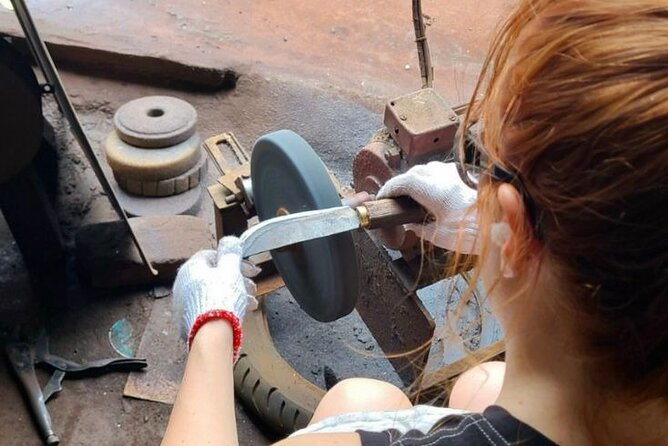
Sharpening is the finish line. You’ll see the blade sharpened on a grindstone, and the process has several phases. One phase includes soaking the blade in a tar-based chemical wash, described as a secret family recipe.
That tar-based step is not just a weird footnote. It’s the kind of traditional finishing process that makes the blade feel like a craft product, not a factory item. It also creates a story you can tell later, because you’ll remember that there was a specific, traditional step tied to the makers themselves.
If you enjoy learning why something is done a certain way, you’ll probably find this part especially satisfying. You go from rough metal form to a blade that looks like it belongs in real hands.
The Makers: Patient Guidance and a Workshop With Real Pride
The most consistently praised part of this workshop is the patience of the family workshop. People talk about maker-staff who guide you step by step and keep things friendly, even if you’re starting from zero. One guide name that shows up in the experience is Nathan, described as patient and engaging, and doing a great job keeping the group comfortable during the journey.
Another detail I took from the workshop descriptions: the family starts training early, with one instructor mentioning they begin at around 12 years old. That’s a strong clue that this isn’t a short-term side hobby. It’s a skill that’s been practiced long enough to become instinctive.
Also, the class is small and structured, which helps when you want to ask questions and actually understand what’s happening rather than just moving along with the group.
Your Take-Home Knife: More Than a Souvenir
You’ll leave with a knife you made during the class. That matters because it changes your relationship to the object. A purchased souvenir has no context. This one has steps, heat, effort, and a sequence of craft decisions behind it.
If you like practical keepsakes, this is a good fit. And if you don’t need a knife in daily life, it can still make a meaningful gift because the story is specific and real: design, forge, shape, sharpen, finish.
Just remember it’s a real sharp tool. Treat it like you would any cutting item when storing or transporting it.
Price and Value: What $50 Buys in This Hanoi Workshop
At $50 per person, this class is priced like an activity, not like a museum ticket. The value comes from what’s included. You get an English tour guide, an air-conditioned vehicle, and the iron material used for the knife work.
Lunch isn’t included, and tips aren’t included either, so plan a bit for that. But for the time commitment and the materials included, this feels like a fair deal, especially because the group stays small.
If you’re comparing options in Hanoi, focus less on the headline and more on the “included” list. Here, your money directly supports the craft process itself, not just transportation plus a photo stop.
What to Expect at Each Moment (and Where It Might Feel Tough)
Here’s the realistic shape of the experience:
- You start in Hanoi, then go out to the craft village with transportation support
- You begin with design and planning before metalwork begins
- You work through forging and shaping, guided by makers in the workshop
- You finish with sharpening and a traditional tar-based finishing step
- You leave with the knife you made
The main drawback to consider is that this is hands-on tool work with a moderate physical component. If you prefer fully seated, low-effort activities, this may feel like more work than you expected. Heat, hammering motions, and standing in the workshop environment aren’t hard for everyone, but they aren’t a gentle stroll either.
The good news: the workshop is designed for normal visitors, not black-belt metalworkers. The guidance is part of the experience, and the workshop’s reputation for patience makes a difference.
Who Should Book This Hanoi Knife Making Workshop
This is ideal if you want something more memorable than another market stop. You’ll probably enjoy it if you like practical learning, don’t mind getting your hands involved, and want to see craft culture beyond city streets.
It’s also a good pick for small groups or solo travelers who like structured activities. With a group cap of 10, you’re less likely to feel lost or ignored during the steps.
If you have zero interest in tools or metalwork, the workshop may feel slower than you want. And if heat exposure or physical effort isn’t your thing, you’ll want to think twice given the moderate fitness note.
Make It Better: Simple Ways to Get the Most From the Workshop
You’ll get more out of it if you show up ready to participate. Ask questions during the steps, especially when the maker explains what each part of the process is for. The design stage is a great time to get oriented, because it connects directly to what you’ll see later in shaping and sharpening.
Also, treat the day as learning, not just collecting. You’ll enjoy it more if you focus on the sequence—sketch, cut, ember forging, shaping, trimming, sharpening—rather than fixating on whether your knife looks identical to someone else’s.
Finally, plan your schedule around the roughly 3.5-hour window. You’ll want time before and after for travel and a normal meal break since lunch isn’t included.
Should You Book It? My Decision Guide
If you want an authentic Hanoi experience with real skill involved, I’d book it. The class blends tradition and practicality: a forge-focused village, clear step-by-step instruction, and a small-group format that keeps the teaching personal. The best sign is how consistently people highlight the patience of the family makers and the feeling that you’re learning a complete process, not just watching.
Skip it only if you want a super low-effort activity, or if weather-dependent outdoor timing doesn’t work with your schedule. Otherwise, at $50 with transport, English guidance, and the materials included, it’s a strong value for a hands-on craft day outside the usual Hanoi routine.
FAQ
How long is the Hanoi knife making workshop?
The experience runs about 3 hours 30 minutes (approx.).
How much does it cost?
It costs $50.00 per person.
Does the price include transportation and an English guide?
Yes. The tour includes an air-conditioned vehicle and an English tour guide.
What’s included for making the knife?
The experience includes the iron material for the class.
What’s not included?
Lunch and tips are not included.
Is pickup available?
Pickup is offered.
How big is the group?
The workshop has a maximum of 10 travelers.
What if the weather is bad?
The experience requires good weather. If it’s canceled due to poor weather, you’ll be offered a different date or a full refund.
Can I get a full refund if I cancel?
You can cancel for free up to 24 hours in advance for a full refund.