
Hanoi feels personal on this walk. I love how the tour mixes everyday street scenes with story time, and how you get built-in photo moments in the Old Quarter. You’ll cover the city with a local perspective and street-level history.
Our guide, Son, was a big part of why this works so well. He keeps the pace friendly for the group and is flexible about where you want extra time, with a small 15-person group so nobody gets left behind.
One thing to plan for: it runs best in good weather, and it’s steady walking through active streets, so wear comfy shoes. The good news is most stops are outside with no extra admissions needed.
In This Review
- Key Highlights You’ll Actually Feel
- Why This Hanoi Walk Works So Well in 3 Hours
- From Đồng Xuân Market Into the City’s Story Engine
- Phùng Hưng Mural Street: Friendship Art You’ll Want to Photograph
- Đường Tàu and the Old Train-Track Moment
- Huong Phùng: A Well-Preserved French Indochina Building
- St. Joseph’s Cathedral: The Wartime Story Behind a Big Church
- Hoàn Kiếm Lake Walking Street: Sword Legends in Plain View
- Ly Thái Tổ Park: Where a Statue Signals a Capital Shift
- Sofitel Metropole Hanoi Story Corner: Joan Baez in 1972
- Hanoi Opera House Finish: Summer 1945 and the August Uprising
- Price and Logistics: Does $15 Make Sense?
- Who Should Book This Walk (and Who Might Not)
- Quick Prep Tips So You Enjoy It More
- Should You Book This Hanoi Highlights and Lesser-Known Corners Tour?
- FAQ
- How long is the walking tour?
- What time does the tour start, and where does it meet?
- Where does the tour end?
- Is there any admission fee for the stops?
- How large is the group?
- What happens if the weather is poor?
Key Highlights You’ll Actually Feel
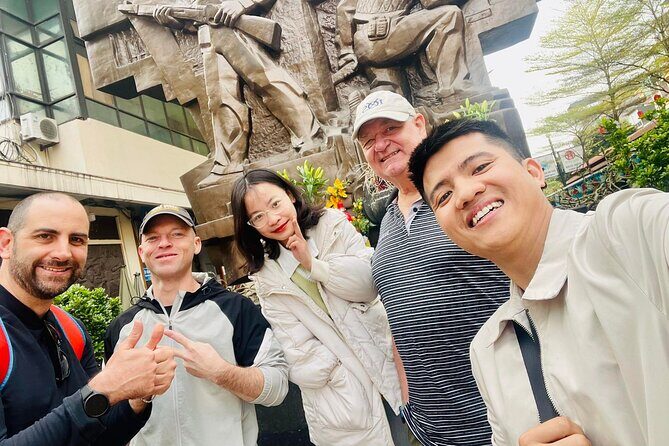
- Son’s flexible storytelling: You’re not stuck on rails; the guide adapts to the group’s pace.
- Dong Xuan Market start: A fast way to connect commerce, old city layout, and major historical context.
- Phùng Hưng Mural Street: A friendship gift linked to Korea, with great photo angles.
- Đường Tàu train-track viewing: See trains pass near local homes for video-worthy moments.
- French Indochina + Roman Catholic landmarks: One of the best-preserved French buildings in the Old Quarter and St. Joseph’s Cathedral’s wartime story.
- Opera House end tied to 1945 events: You finish where the August uprising is associated with summer 1945.
Why This Hanoi Walk Works So Well in 3 Hours
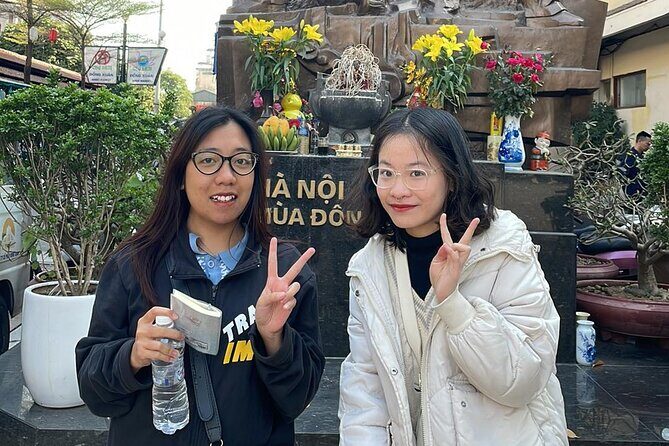
A good Hanoi tour should do two things fast: help you read the city, and give you places you’d miss if you were wandering alone. This one does that with an easy structure—start at a major market, move through a cluster of iconic Old Quarter sights, then land at a landmark tied to 1945 events.
I like that it stays practical. You’re not asked to do anything complicated. You walk, you stop, you listen, you look, you shoot photos. With a price around $15 per person for roughly 3 hours, the value comes from how much ground it covers and how many story beats you get along the route.
The best part is how it handles the tension Hanoi always has: old vs. new, sacred vs. everyday, history vs. traffic noise. Instead of trying to sound poetic, Son just connects dots—like why a street mural matters, or why a church’s history is tied to war years. It’s the kind of explanation that makes you feel oriented within your first morning.
You can also read our reviews of more walking tours in Hanoi



From Đồng Xuân Market Into the City’s Story Engine
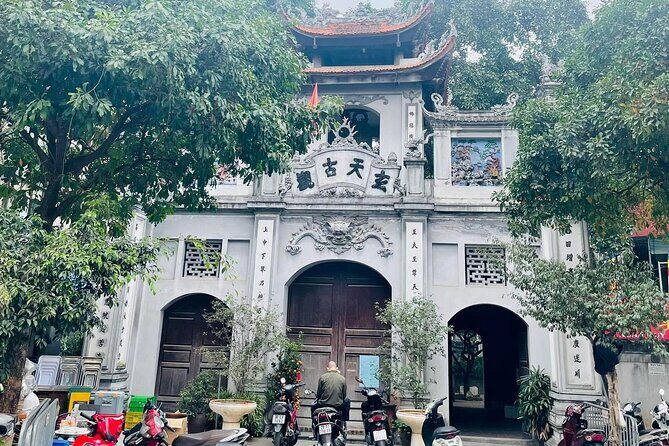
You begin at Đồng Xuân Market, right in central Hanoi. This is a smart start point because it’s naturally busy and local. Even if you’re not shopping, you get that immediate sense of Hanoi as a working city, not a museum.
Your guide sets the stage here by pointing out older layers of the city and referencing where major fighting took place. It’s not the kind of history lecture where you’re lost in dates. It’s more like learning the logic of the place you’re standing in—why this area mattered, and why Hanoi’s downtown looks the way it does.
What to expect: you’ll get a quick orientation before the route moves into quieter side streets and photo stops.
My tip: arrive a few minutes early so you’re not sprinting into the start, especially if you need to confirm your meeting spot.
Phùng Hưng Mural Street: Friendship Art You’ll Want to Photograph
Next comes Phùng Hưng Mural Street, an art wall meant as a gift for the friendship from the Korean Government. It’s one of those stops that’s both visual and informative: you get a sense of modern relationships between countries, but it’s grounded in a very street-level Hanoi setting.
This is also a great break from the big-sight rhythm. After the market, a mural wall gives your eyes somewhere to rest while your guide explains the significance behind the artwork. And yes—you’ll have plenty of chances for photos. The walls and angles are built for picture-taking, and the street layout makes it easy to get multiple shots without feeling like you’re fighting a crowd.
Practical note: the stop is brief (about 20 minutes), so don’t try to turn it into a long photo session. If you’re serious about pictures, ask Son for the best angles while you’re there.
Đường Tàu and the Old Train-Track Moment
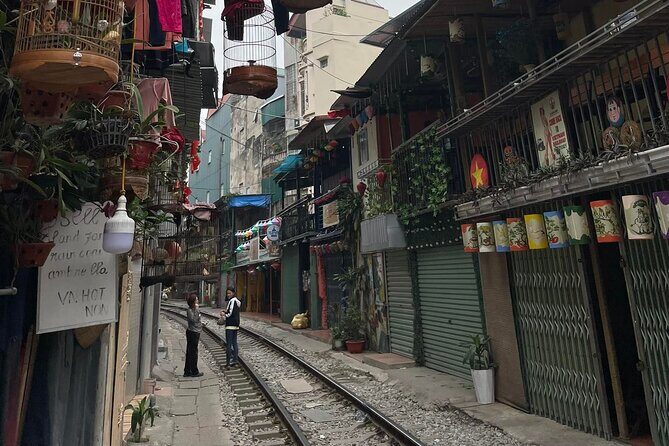
Then you hit Đường Tàu, the famous stretch where a train passes near local houses. This stop is pure energy. You’re not reading about history—you’re watching transportation happen in real time in a built neighborhood.
In the area around the old tracks (often associated with Long Biên), the views can feel almost cinematic. The framing is what makes it special: the rails cut through everyday life, so you get that rare mix of movement, architecture, and daily routine in a single minute.
Why I like this part: it gives you a Hanoi moment that doesn’t require any planning. You show up, you stand where you’re guided to stand, and the city does its thing.
Potential drawback: timing matters. If the train schedule or viewing conditions don’t line up perfectly, it can feel like the moment is shorter than you hoped. Still, even without a long wait, the visuals are memorable.
Bring: your phone, a charged battery, and a bit of patience. This is one of the most video-friendly parts of the route.
Huong Phùng: A Well-Preserved French Indochina Building
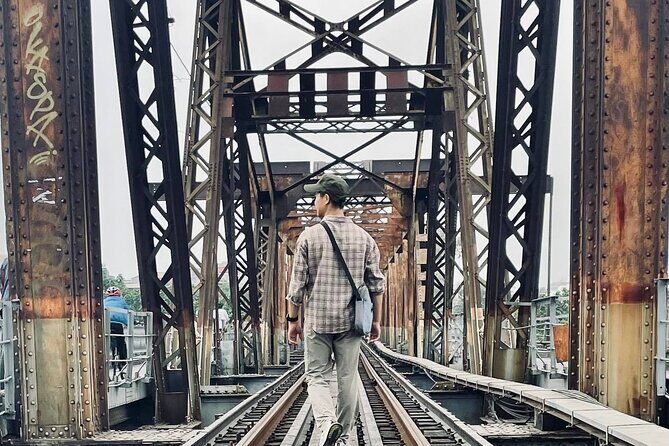
After the train-track stop, the tour returns to architecture. Huong Phung is where you see a well-preserved French Indochina building in the Old Quarter.
This is a good mid-tour reset. Instead of more motion, you get a chance to slow down and look closely at facades and the way French colonial design fits into Hanoi’s tighter streets. The guide’s explanation helps you understand why these structures matter, especially in a downtown that has changed a lot over time.
What makes it worth your time: it’s not just sightseeing. When a guide points out design details and historical context, it turns a quick photo stop into something that stays in your memory.






St. Joseph’s Cathedral: The Wartime Story Behind a Big Church
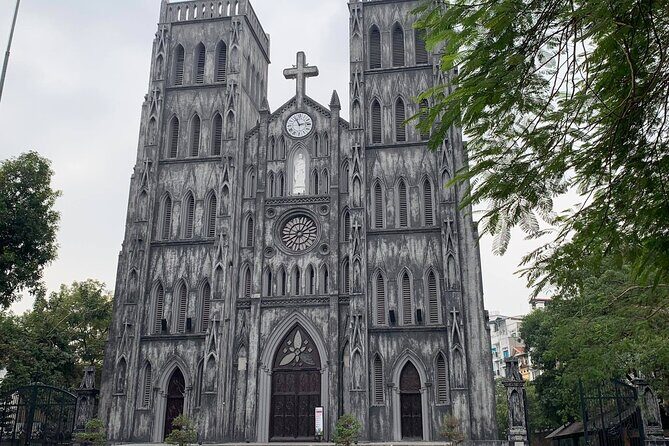
The route continues to St. Joseph’s Cathedral, described as the largest Roman Catholic church in Hanoi. What you’re really here for is the story: it was shut down for more than 20 years during the Vietnam War, and hearing that context makes the building feel less like a postcard and more like a witness.
You’ll get a short window to absorb it, and the guide’s narrative gives the place weight. This is the kind of stop where silence can happen naturally—because once you know what happened here, you tend to look a little longer.
Practical thought: keep an eye on whether services or local activity affect what you can see comfortably. The tour includes this stop as a briefing moment, not an all-day church visit.
Hoàn Kiếm Lake Walking Street: Sword Legends in Plain View
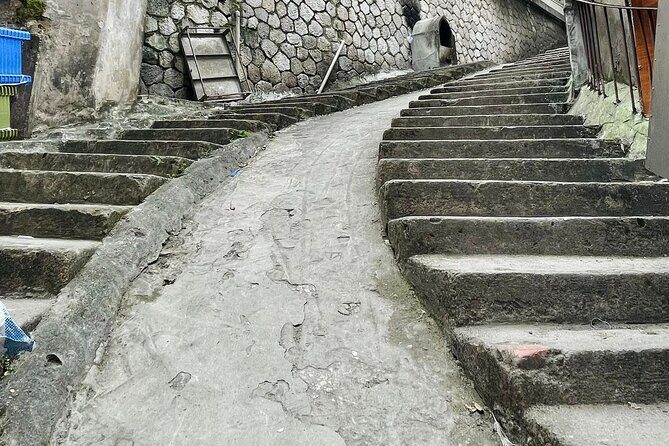
From the cathedral area, you move toward Hoàn Kiếm Lake Walking Street. Here the focus is on the lake’s famous story, tied to a sword legend.
This stop works especially well if you’ve arrived in Hanoi feeling a little overwhelmed. Hoàn Kiếm Lake is a central reference point, and knowing the story helps you understand why this area has such a pull for locals.
You’ll also get a sense of how the lake sits inside the city’s daily rhythm. Even when the streets feel busy, the guide’s narration keeps you anchored to the meaning of the place.
Tip for photos: if the light is strong, take quick shots first, then let Son explain the story. You’ll come back to pictures later with better context.
Ly Thái Tổ Park: Where a Statue Signals a Capital Shift
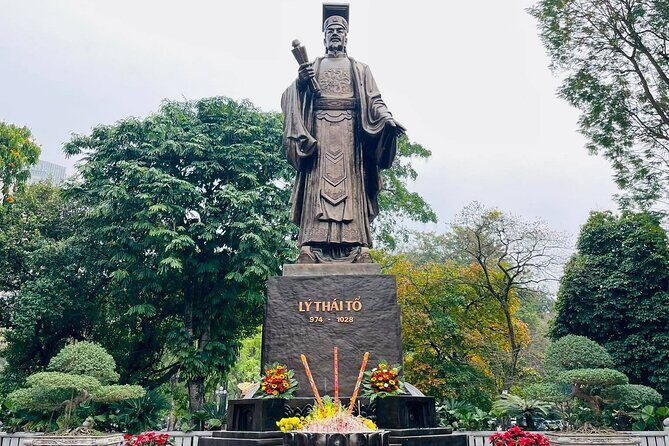
Next is Ly Thái Tổ Park, with up-close time at the statue of the 3rd King of Vietnam, the ruler associated with moving the capital to what we now know as Hanoi.
I like this stop because it turns a park into a timeline. It’s not just greenery; it’s a marker of political change. And in a walking tour like this, those markers help you make sense of why Hanoi matters beyond being a place to eat and shop.
The time here is short (around 15 minutes), so your best strategy is to look first, then listen. If you flip that order, you may miss the meaning of what you’re seeing.
Sofitel Metropole Hanoi Story Corner: Joan Baez in 1972
One of the more surprising stops is the Sofitel Metropole Hotel area—spelled out in the tour description as the Hanoia Metropole stop. The story involves Joan Baez, the American folk singer and activist, who was a guest of the hotel over Christmas in 1972 when the Americans began their campaign.
This is a great example of why a guide matters. On your own, you’d likely walk past the hotel area and miss how international history connects to a specific place on a specific street. Even if you only catch the main points, it gives you a wider frame for the war years.
Why it’s good value: not every walking tour includes a pop-culture-to-politics connection like this. It adds variety without adding extra time.
Hanoi Opera House Finish: Summer 1945 and the August Uprising
You end at the Hanoi Opera House, tied to the August uprising in summer 1945. Finishing here is smart because it’s a clear capstone. Your brain has been collecting stories all morning—markets, murals, train tracks, churches, legends—and then you close with one major political timeline.
This ending also helps you plan the rest of your day. Once you’re near the Opera House and the central streets around it, you can decide what you want next: coffee, a museum, or simply more wandering with better instincts.
Price and Logistics: Does $15 Make Sense?
At about $15 per person for roughly 3 hours, this tour is one of the more affordable ways to get structured orientation in Hanoi. Most stops are described as having free admission, so you’re not paying entry fees at every location.
The big value is not the number of stops—it’s the quality of the connections. Son’s approach is story-first and street-practical. When a guide helps you connect a mural, a church closure during war, and an uprising tied to 1945, the walk becomes a living map.
Small group size (maximum 15) also matters for comfort. You can ask questions without shouting. You can pause for a photo without the group feeling like it’s being dragged.
Who Should Book This Walk (and Who Might Not)
This tour is a strong match if:
- you want an organized first look at central Hanoi
- you like photography mixed with explanations
- you want local context without a classroom vibe
- you enjoy walking but still want a timed structure
It may not be ideal if:
- you hate walking in active city streets for about 3 hours
- your schedule makes flexibility hard, since it depends on good weather
- you want a very deep, academic history course (this is story-and-stops, not a full semester)
Quick Prep Tips So You Enjoy It More
- Wear shoes you can walk in for a long stretch.
- Bring water, even if you’ll take short breaks.
- Keep your phone charged for the train-track video/photo moment.
- If you want more time at a stop, ask Son early. He’s flexible.
Should You Book This Hanoi Highlights and Lesser-Known Corners Tour?
If it’s your first time in Hanoi, I’d book it. It’s built to help you get your bearings quickly, without losing the fun of discovery. The route mixes the Old Quarter’s visual details with a few big historical anchors, and the guide name Son comes up for a reason—his flexibility and local perspective make the walk feel personal.
If you already know Hanoi very well and want only offbeat destinations far from the center, you might find this route too focused on central landmarks. But for most people, especially those arriving for the first time, it’s a smart, budget-friendly way to turn a morning walk into a real understanding of the city.
FAQ
How long is the walking tour?
The tour runs about 3 hours.
What time does the tour start, and where does it meet?
It starts at 9:30 am. The meeting point is Đồng Xuân Market.
Where does the tour end?
The tour ends at the Hanoi Opera House.
Is there any admission fee for the stops?
The stops listed in the tour are marked as free admission.
How large is the group?
The tour has a maximum of 15 travelers.
What happens if the weather is poor?
The experience requires good weather. If it’s canceled due to poor weather, you’ll be offered a different date or a full refund.


More Walking Tours in Hanoi


More Tours in Hanoi
- Ninh Binh Full-Day Tour from Hanoi to Hoa Lu, Tam Coc & Mua Cave Via Boat & Bike
★ 5.0 · 4,384 reviews