
Hanoi on two wheels is a shortcut to real life. This tour blends iconic sights with everyday streets, then cools everything off on Banana Island on West Lake. You’ll ride with an English-speaking guide (often guides like Tee, Minh, Khoi, or Sang), who helps you read what you’re seeing instead of just pointing at it.
I especially like the contrast: loud traffic energy on the city side, then calm greenery and lake views once you’re out there. I also like how the route builds in time for food, so lunch or dinner isn’t just a reward, it’s part of understanding Hanoi. One drawback to plan around: you need to be a regular cyclist and feel comfortable threading through heavy motorbike traffic.
In This Review
- Key highlights you’ll actually feel
- From Old Quarter lanes to Train Street: the Hanoi you can feel
- Long Bien Bridge and Ho Chi Minh Mausoleum: history with road access
- Banana Island on West Lake: peace after the traffic
- Food that teaches Hanoi: Bun Cha, Pho, and friends
- The family home stop: the everyday Hanoi lesson
- Getting through Hanoi traffic without losing your nerve
- Price and value: what $34 buys you in real terms
- Who should book this ride, and who should pass
- So should you book it?
- FAQ
- How far is the cycling on this tour?
- How long does the tour take?
- What’s included in the price?
- Do I get hotel pickup?
- Is there food on the tour?
- Will I visit Banana Island?
- Will I see Train Street?
- Is the tour only for good weather?
- Is it suitable for kids, pregnant travelers, or people with mobility impairments?
Key highlights you’ll actually feel

- Train Street timing: get in place to watch trains pass inches from shops and homes.
- Banana Island relief: a peaceful West Lake break after busy inner-city riding.
- Family home visit: learn how local people live, not just what to photograph.
- Food tasting plus lunch/dinner: Bun Cha, Banh Mi, Pho Cuon, and Pho are built into the day.
- Guide-led safety in traffic: you’re not DIY-ing Hanoi roads.
From Old Quarter lanes to Train Street: the Hanoi you can feel
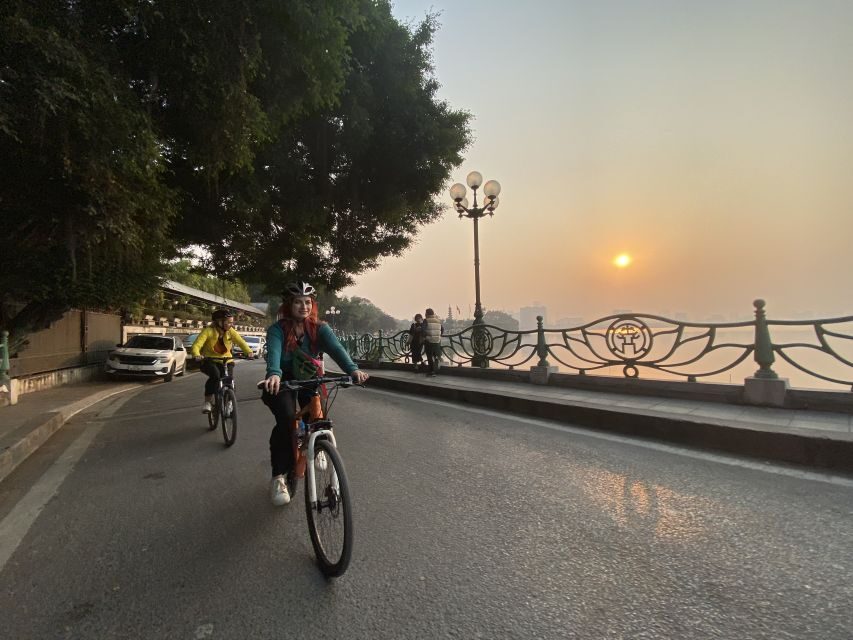
The day starts in the Old Quarter, where the streets are narrow and the city runs on motion. Even the first stop feels like orientation: you get short sightseeing time to reset your bearings, then you’re back on the bike, moving at local speed. It’s one of those areas where walking is slow and driving is stressful—cycling sits in the sweet spot.
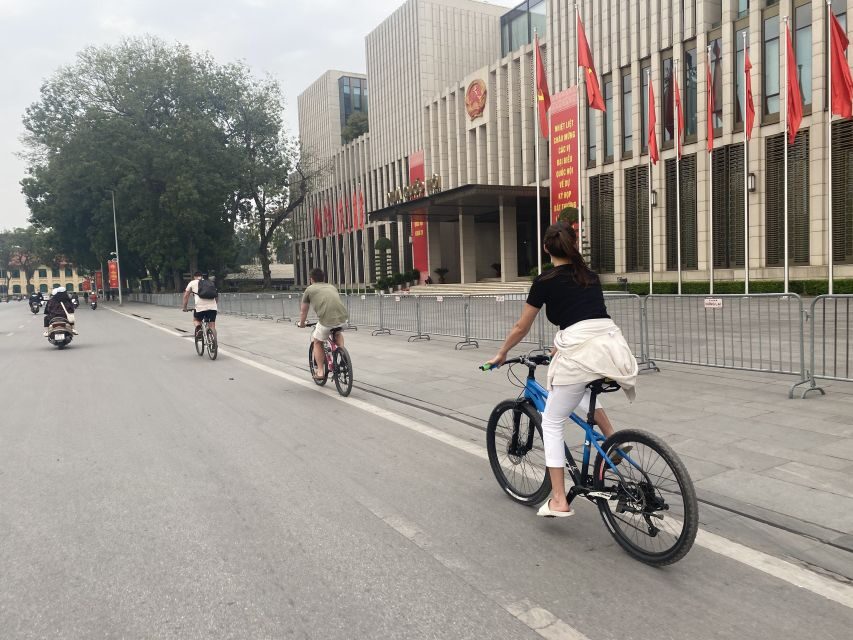
You’ll also get a guided stop at Hồ Hữu Tiệp, which includes a photo moment and a guided explanation. This matters because Hanoi isn’t just postcard scenery. It’s a city with layers—politics, war memory, and modern everyday life stacked close together. A good guide helps you notice those layers instead of rushing past them.
Then comes one of the best “wait, what?” moments in the city: Train Street in the Old Quarter. The street is lined tightly, and a railway track runs through, so trains pass very close to people’s doors and businesses. On this tour, the guide times it so you can watch the train go by. You’re also likely to grab a cold drink while waiting (that kind of small pause keeps the adrenaline from turning into fatigue).
If you want a mental map of Hanoi, Train Street is a great marker. It shows you how the city’s infrastructure and daily life overlap—Hanoi didn’t spread out politely. It grew, layer by layer, and it still operates that way.
You can also read our reviews of more cycling tours in Hanoi
- Ninh Binh Full-Day Tour from Hanoi to Hoa Lu, Tam Coc & Mua Cave Via Boat & Bike
★ 5.0 · 4,384 reviews



Long Bien Bridge and Ho Chi Minh Mausoleum: history with road access
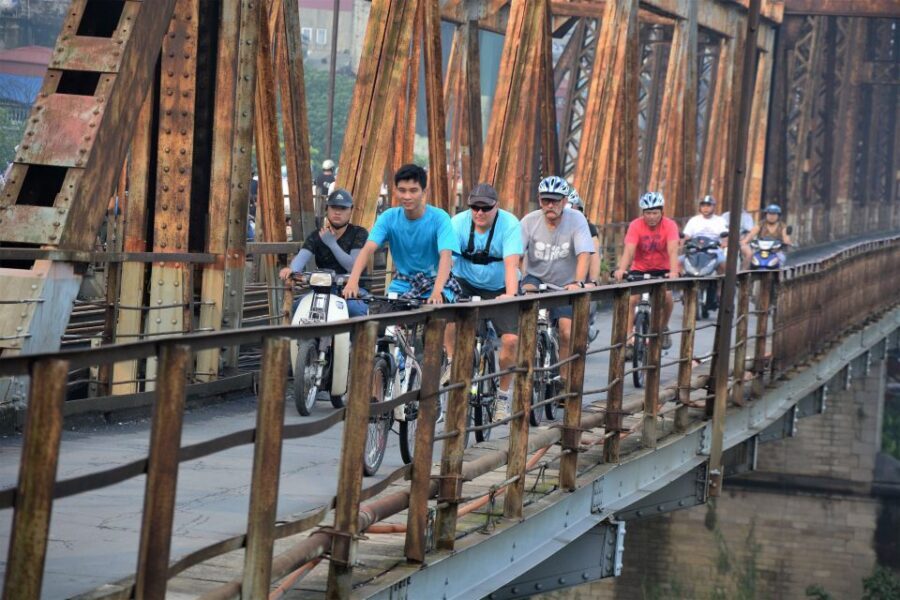
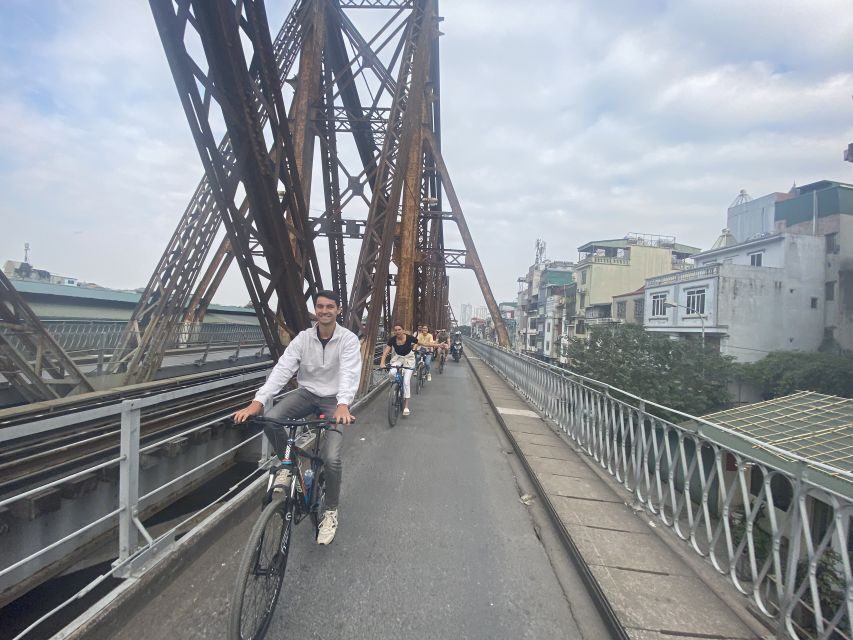
This route also covers major landmarks by bike, which is a big part of the value. For example, Long Bien Bridge—built by the French in 1903—spans the Red River and is one of those places where photos are easy but understanding takes time. When you ride across, you feel the scale more than if you just stand on a sidewalk.
You may also make time for Ho Chi Minh Mausoleum, with a chance to view the embalmed body of Ho Chi Minh inside. The mausoleum is a heavy, official space, and the bike tour format keeps you from losing the day to transit. You get the chance to see it, then you’re back into the streets where the rest of Hanoi is happening.
The catch with landmarks on a bike tour: you’ll move faster than someone doing a museum day. That’s not a flaw—just know what you’re buying. You’re getting flow and context, not slow and quiet. If you want lingering stillness, you can always return later, but the bike tour gets you a strong first impression.
Banana Island on West Lake: peace after the traffic
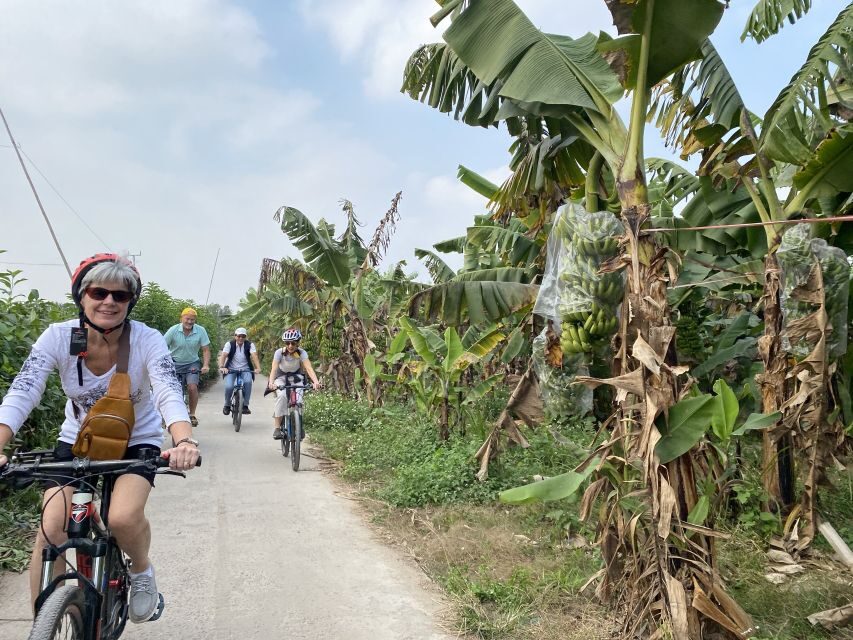
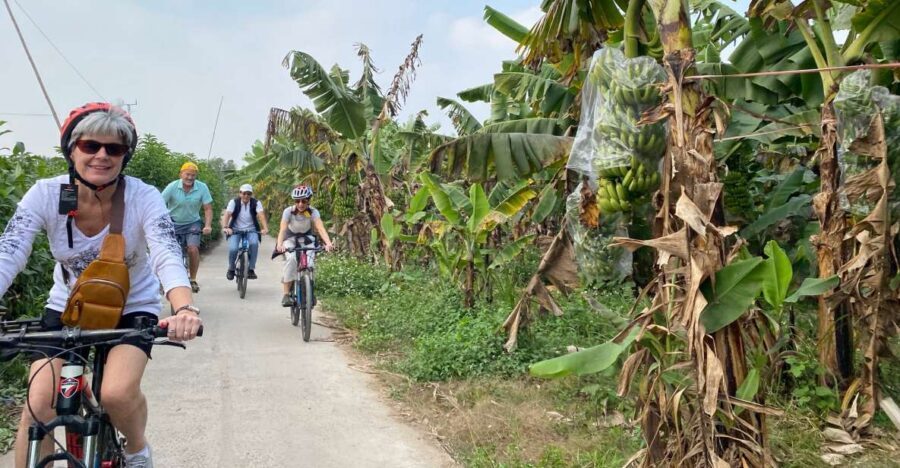
Here’s why this tour earns its reputation: it doesn’t stay trapped inside the tourist-intense city. You’ll make your way to Banana Island, a small island on West Lake reached by a short boat ride.
Think of it as the mental exhale. The city side can feel like nonstop honking, lane weaving, and motorbikes appearing from angles you didn’t even know existed. Then you’re on the lake, with greenery around you and a slower rhythm. Even if you’re not a “nature person,” it changes your whole mood.
People often miss this kind of contrast when they only do walking routes in Hanoi. The bike tour does the opposite: it pairs intensity with calm. That makes the day easier to enjoy, and it makes you remember Hanoi as more than just traffic and temples.
One tip: Banana Island is a contrast point, so don’t treat it like a quick photo stop. Sit a moment, look at the water, and let your brain catch up. The tour structure gives you that space.
Food that teaches Hanoi: Bun Cha, Pho, and friends
The itinerary builds in two food moments: a food tasting segment and then lunch or dinner at the end. That’s a smart design. When food is part of the ride, you understand the neighborhoods better, and you’re more likely to try dishes you’d never pick on your own.
Your meal plan can include classic Hanoi favorites like Bun Cha, Banh Mi, Pho Cuon, and Pho. You may also stop for local drinks along the way. Cold water is included, so you’re not stuck searching while you’re out riding.
One place you might end up with lunch is Bamichao, where a guide suggestion called out the Banh Mi Chao style (the plate version of Banh Mi, served in a way that changes the experience). Another guide suggestion that pops up in real-world stories is Bun Cha as a must-try at a local spot you wouldn’t stumble into.
What you’re really getting here is more than calories. A guide can explain why a dish is eaten a certain way, what to expect in taste, and how the meal fits daily life in Hanoi. It’s the difference between eating in a restaurant and eating with context.
If you have dietary preferences, your best bet is to talk to the guide on the day. Some guides have adapted menus for special needs, so it’s worth asking rather than assuming.
The family home stop: the everyday Hanoi lesson

One of the tour highlights is a visit to a family home to learn about daily life of local people. This is the part of the day that usually sticks in your mind longer than any landmark.
Why? Because it shifts your perspective. Hanoi can be viewed as history and architecture, but living there is meals, chores, family rhythms, and small routines. A family home stop gives you a chance to see that side up close, and it also makes the city feel less like a “place to visit” and more like a place with real neighbors.
Practical note: you’ll want to be respectful and follow the guide’s instructions. This is a cultural visit, not a zoo moment.






Getting through Hanoi traffic without losing your nerve

Let’s talk about the main reality check: Hanoi traffic is intense. The tour is designed for people who are comfortable biking, because you’re joining the flow of real roads, not a closed course.
The good news is the guide handles the hard part: route choice, timing, and how to merge and cross where you otherwise would hesitate. Many guides on this tour (Tee, Minh, Khoi, and others) are repeatedly praised for keeping riders safe while explaining what’s happening around you. People describe it as scary at first, then manageable with a guide’s lead.
The bike part matters too. You’ll be provided a bicycle and helmet. The route covers about 10 km / 6 miles, which is a moderate distance for most adult fitness levels, especially since you stop a few times for photos and food.
Also, the tour runs rain or shine. A raincoat is included if needed. That’s not just comfort—Vietnam rain can change road conditions quickly, so being prepared helps you keep calm and keep riding.
If you’re thinking, I can bike but I’m not sure about Hanoi roads, be honest with yourself. This tour is safe in the sense that the guide knows how to lead you, but you still need to be a confident cyclist. If you’re the type who freezes at the first intersection, pick a different style of tour.
Price and value: what $34 buys you in real terms
At $34 per person, this is strong value for Hanoi. Here’s why: the price covers more than bike rental.
Included items are hotel pickup and drop-off in the Old Quarter, the bike and helmet, an English-speaking guide, lunch or dinner, all entrance fees, cold water, and a raincoat if needed. That’s a lot of costs bundled together, especially the guided component and entrances.
You’re also getting a full route with several major stops plus local experiences like the family home visit. If you tried to replicate it on your own, you’d spend time figuring out logistics, finding the right local food spot, and paying for transport while trying to stay safe in traffic.
One extra consideration: there’s a $10 surcharge on certain holidays (New Year, Tet holidays February 8–12, Liberation Day/Reunification Day April 30, International Workers’ Day May 1, and National Day September 2). It’s not a dealbreaker, but it can change the final price if your dates fall in those windows.
Who should book this ride, and who should pass

This tour is best for you if you:
- want a first-time orientation to Hanoi that mixes big sights with side streets
- enjoy cycling and don’t mind that the roads feel alive and unpredictable
- like food that comes with explanation, not just a menu choice
- want an off-city contrast like Banana Island without spending a whole day commuting
It may not be the right fit if you:
- are not comfortable cycling in heavy traffic
- are traveling with children under 8 years
- are pregnant
- need mobility assistance (people with mobility impairments are listed as not suitable)
Another practical note: alcohol and drugs are not allowed, and baby carriages aren’t permitted.
Group size can also affect the experience. The tour offers private or small groups, which can make Hanoi traffic feel less overwhelming. Some people ride as individuals on private tours, so you may get extra attention.
So should you book it?
If you’re excited by the idea of learning Hanoi through movement, I’d book this. It’s one of the few ways to combine Old Quarter energy, landmark access, and a calming break on West Lake in a single day.
But if Hanoi traffic would stress you out to the point you’d be tense the whole time, don’t force it. This isn’t a leisurely bike path. It’s a guided bike day designed for people who can ride confidently and follow a leader.
FAQ
How far is the cycling on this tour?
You’ll approximately cover 10 km / 6 miles.
How long does the tour take?
The duration is 3 to 8 hours, depending on the starting time and the day’s pacing.
What’s included in the price?
It includes hotel pickup and drop-off in the Old Quarter, bicycle and helmet, English-speaking guide, lunch or dinner, entrance fees, cold water, and a raincoat if needed.
Do I get hotel pickup?
Yes, pickup and drop-off are included in the Old Quarter. Pickup is optional, and if you choose it, you’re picked up from your hotel lobby.
Is there food on the tour?
Yes. There’s food tasting during the ride, and then lunch or dinner with local dishes.
Will I visit Banana Island?
Yes. Banana Island is included and is reached by a short boat ride from West Lake.
Will I see Train Street?
Yes. The tour includes a stop at Train Street, timed so you can watch a train pass by.
Is the tour only for good weather?
No. It runs rain or shine. A raincoat is provided if needed.
Is it suitable for kids, pregnant travelers, or people with mobility impairments?
No. It’s listed as not suitable for children under 8, pregnant women, and people with mobility impairments.



More Cycling Tours in Hanoi
- Ninh Binh Full-Day Tour from Hanoi to Hoa Lu, Tam Coc & Mua Cave Via Boat & Bike
★ 5.0 · 4,384 reviews



More Tours in Hanoi
- Ninh Binh Full-Day Tour from Hanoi to Hoa Lu, Tam Coc & Mua Cave Via Boat & Bike
★ 5.0 · 4,384 reviews