REVIEW · HANOI
Hanoi: Artisan Tour with Incense, Hat-Making, or Ceramics
Book on GetYourGuide →Operated by Tinny Travel Co.Ltd · Bookable on GetYourGuide
Craft smell plus real hands-on work.
This is a smart Hanoi artisan day: you go to the heart of Quang Phu Cau incense and/or Chuong conical hat craft, not just photo stops. The workshops mean you get to try the making process, and the guide keeps things clear and practical. One thing to plan for: the half-day options don’t include lunch, and if you add Train Street you handle your own return.
What I like is how the day mixes learning with doing. You’ll get an English-speaking guide from the Hanoi Old Quarter area, and you’re led through the village rhythm with time for photos along the way. Plus, it’s priced for value: at around $15 per person, you’re paying for transport, guide time, entrance fees, and workshop instruction in one package.
The only real caution is logistics on the Train Street add-on. You’ll likely end there with time to grab a coffee and wander, but your return back to your hotel is on you, so keep that in mind if you’re tired or traveling late.
In This Review
- Key things you’ll remember
- Why these Hanoi craft villages fit together so well
- Pick the right option: incense and hats, ceramics, or the full mix
- Half-day: Incense village + conical hat village
- Half-day: Bat Trang ceramics + optional Train Street
- Full-day: Incense + hats + ceramics + lunch + optional Train Street drop-off
- Getting picked up in the Old Quarter and what the travel time feels like
- Quang Phu Cau incense village: the workshop you can smell
- Chuong conical hat village: make, paint, and take something away
- Bat Trang ceramics village and the artist house workshop
- Train Street add-on: the easy way to do it, and the one rule to follow
- Price and value: what $15 covers and why it feels fair
- Photo and craft tips that make the day smoother
- Who should book this artisan tour, and who should skip it
- Should you book this Hanoi incense-and-craft tour?
- FAQ
- FAQ
- What craft villages are included in this Hanoi tour?
- How long is the half-day vs full-day tour?
- Is lunch included?
- Does the tour include a conical hat?
- Is there an English-speaking guide?
- Are entrance fees included?
- Where do pickup and drop-off happen?
- Is Train Street part of the tour?
- Who handles getting back from Train Street?
- Are there extra costs during holidays?
- What should I bring and is it wheelchair accessible?
Key things you’ll remember

- Working workshops where you actually try the craft, not only watch
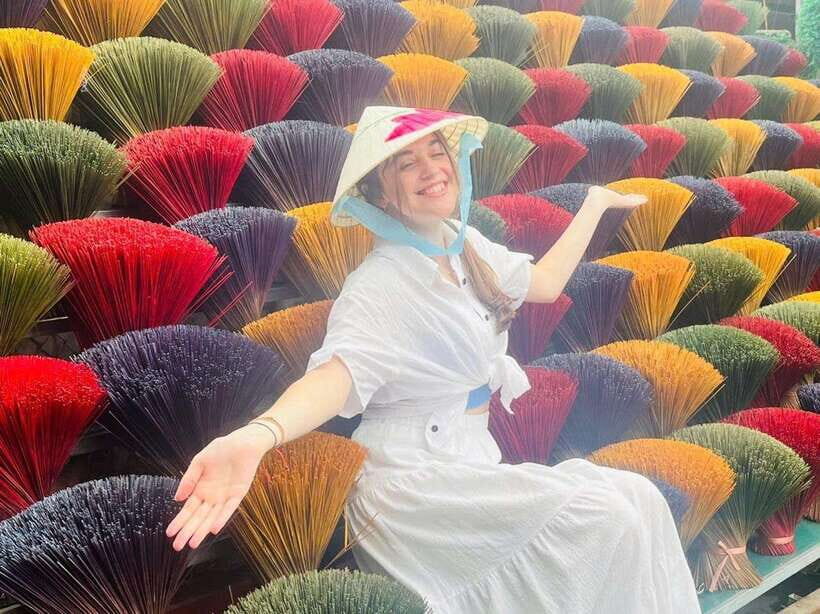
- Quang Phu Cau incense village with photos that look like a postcard
- Chuong conical hat making and painting time with a guide
- Bat Trang ceramics village plus an artist house/workshop visit
- Optional Train Street drop-off with a simple plan for getting back
- Guides who focus on comfort and helpful explanations, including solo travelers getting picture help
Why these Hanoi craft villages fit together so well
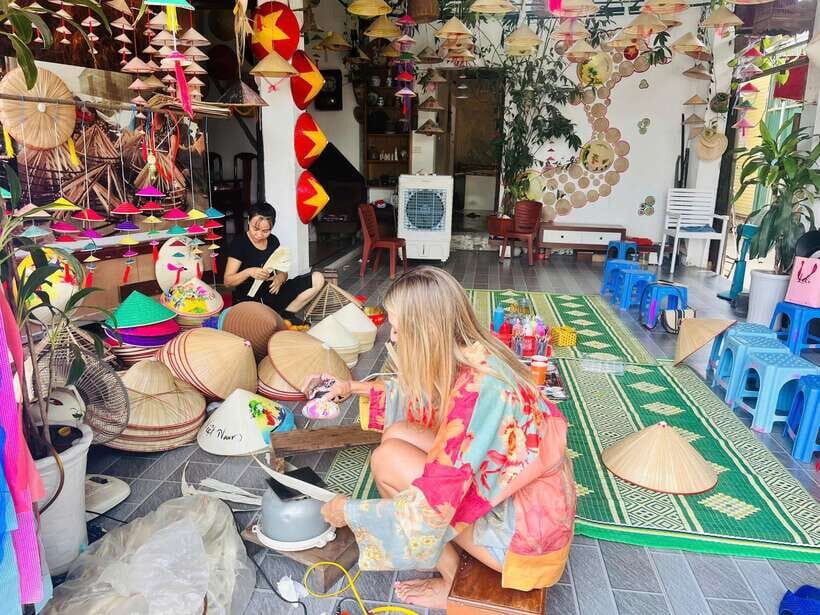
Hanoi has no shortage of things to see, but this tour is built around one idea: everyday Vietnamese items are also art. Incense, conical hats, ceramics, bowls, vases—these aren’t “souvenirs from a shop.” They come from specific places with specific methods, and you get to see the workflow in real time.
I also like the pacing. The day is structured with clear time blocks—workshop time first, then a guided visit/photo moment—so you’re not constantly waiting around. And you’re not forced into a sales pitch. The best reviews emphasize that the guides keep it focused on the craft and the process.
If you’re the type who enjoys cultural context but wants it tied to something you can point at—smoke, clay, paper-thin layers of hat material—this works.
You can also read our reviews of more tours and experiences in Hanoi.



Pick the right option: incense and hats, ceramics, or the full mix
You have three ways to shape the day based on what you want most.
Half-day: Incense village + conical hat village
This is the most classic combo. You start with Quang Phu Cau, then continue to Chuong conical hat craft, with optional Train Street at the end. The half-day length is about 6 hours. It’s timed either for the morning run or the afternoon run, and it’s designed as a focused hit without lunch.
What you’ll like most here is the contrast. Incense is all about scent, materials, and repetitive steps. Conical hats are visual—layered shaping and paintwork—so your brain gets variety fast.
Half-day: Bat Trang ceramics + optional Train Street
If pottery is your thing, go with the Bat Trang ceramics village option. You’ll learn the village’s craft basics, visit an ancient house/workshop linked to a ceramic artist, then have hands-on time to make your own piece (a cap, vase, or bowl) with guidance.
This option tends to feel more relaxed if you love slower, detail-focused crafts where you can take your time with technique.
Full-day: Incense + hats + ceramics + lunch + optional Train Street drop-off
This is the “do it all” day: Quang Phu Cau incense, Chuong conical hats, then Bat Trang ceramics, usually with a local, home-cooked lunch in between. You’ll end back in central Hanoi with an optional Train Street drop-off.
Full-day makes sense if you’re limited on time in Hanoi or you don’t want to choose between incense, hats, and ceramics. The trade-off is a longer day and more time spent in transit.



Getting picked up in the Old Quarter and what the travel time feels like

Most departures are built around hotels in the Hanoi Old Quarter area, with pickup and drop-off in the same neighborhood area (Hoàn Kiếm / Old Quarter). That matters. You spend less time crossing the city, and your craft day starts faster.
From the schedule, you should expect some driving time on the bus (one segment is listed at about 70 minutes), plus shorter transfers once you’re out in the craft zone. In the middle of a day like this, “how the bus feels” is real. One common note from feedback is that the bus can be a bit cramped. If you’re tall or you hate tight seating, dress for comfort and try to choose your seat when you board.
Also: you’ll want comfortable shoes. These villages are the kind of places where you stand, walk a bit between workshops, and take photos without a lot of smooth paths.
Quang Phu Cau incense village: the workshop you can smell

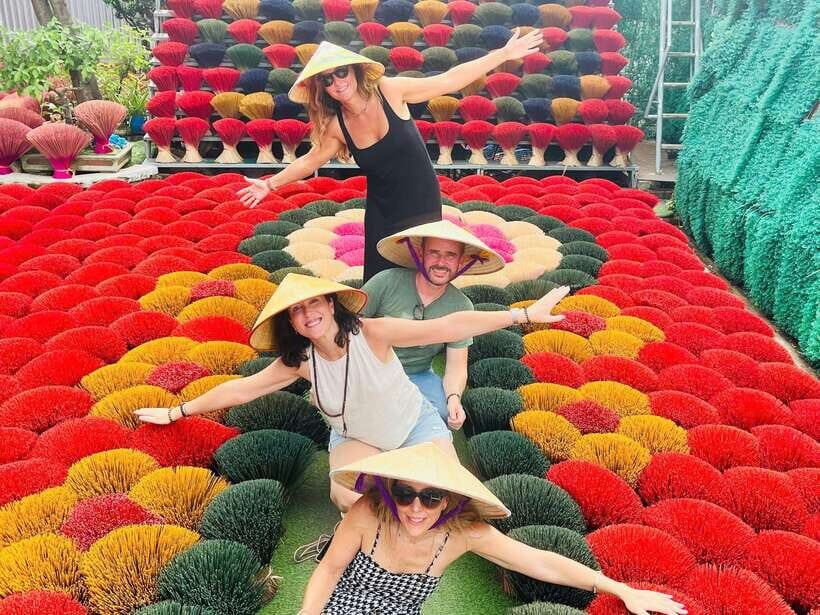
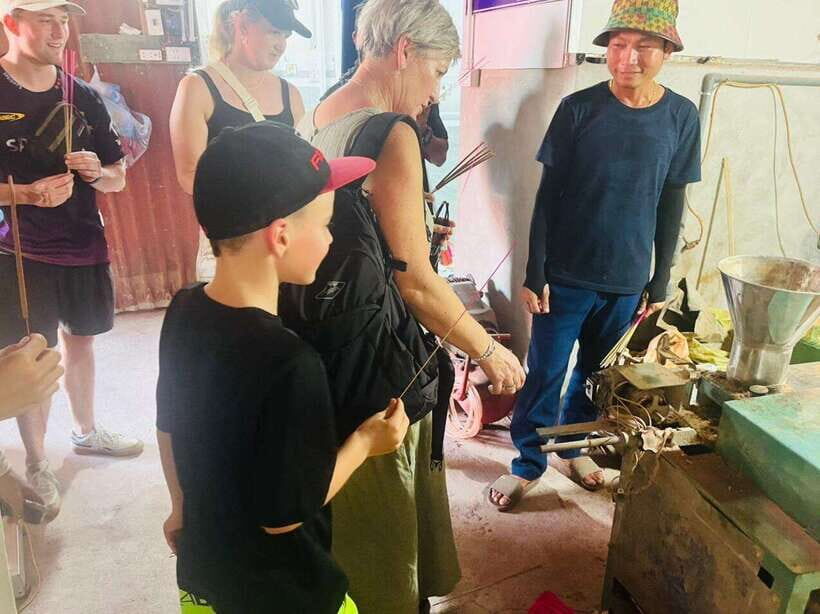
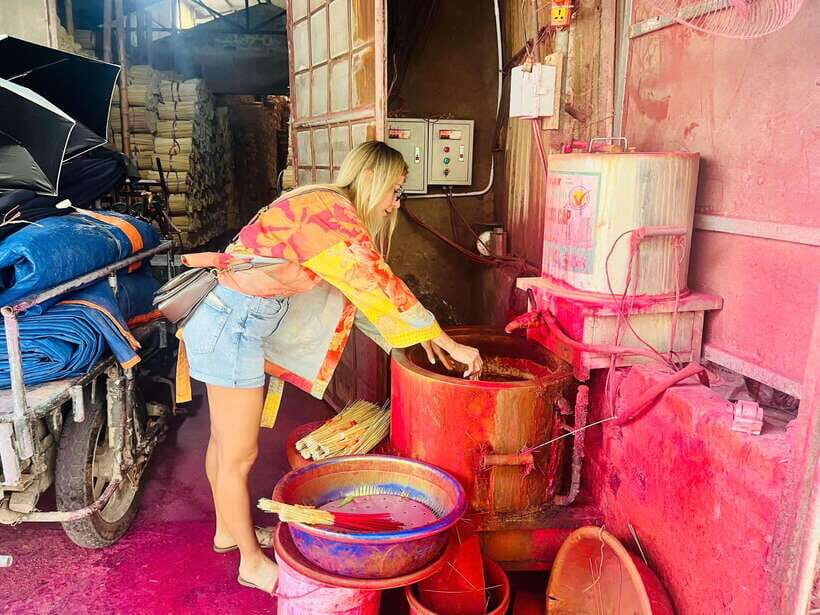
The incense stop is the centerpiece of this tour’s Vietnam-tradition theme. Quang Phu Cau is known as a core incense-making area, and you’ll walk through the village to learn how incense sticks are produced. The visit typically includes about 1.5 hours for workshop time and guided explanation.
Here’s what makes it more than a cultural checkbox:
- You see how a repeatable craft becomes a finished, fragrant product.
- You get time for photo moments in the colored, working-village scenes.
- The guide helps connect the steps you’re seeing with why the technique matters.
If you’re worried the scent will be overpowering, don’t. You’ll notice it, but it’s also part of the experience. I’d just recommend going at a comfortable pace and wearing something you’re okay with smelling faintly afterward.
One more practical thought: if you’re sensitive to strong odors, this tour can still work, but bring a small amount of breathing comfort (like a mask you’re comfortable wearing) just in case.
Chuong conical hat village: make, paint, and take something away
Conical hats are one of those icons everyone recognizes, but this tour gives you the “how.” At Chuong Conical Hat Craft Village, you’ll get a mix of:
- guided tour and photo stop time
- hands-on workshop time (about 1.5 hours)
- making and painting your own hat
The guide element really matters here. Conical hats can look simple from a distance, but the workshop turns it into a sequence of steps. When you’re guided through the process, you’re more likely to finish with something you feel good about instead of rushing and getting frustrated.
Feedback also highlights how friendly the artisans are and how the experience can feel calm and welcoming. People note the focus is on the process, with time to decorate and paint—not only a quick demonstration.
You’ll also receive one conical hat per person as part of the included value, so your souvenir comes from your own work. That’s a nice upgrade from buying a hat that already exists on a shelf.
Bat Trang ceramics village and the artist house workshop
If incense and hats are the vibe, ceramics are the texture. Bat Trang ceramics village is where you’ll see how craft tradition stays alive through hands-on production.
Your stop includes a guided visit with time for photos, plus a deeper workshop segment (listed as about 100 minutes). Then there’s an additional layer: a visit to an ancient house/workshop of a ceramic artist, where you’ll get a talk about the village’s history and admire handmade pieces.
What makes this part worth your time is the “two-view” approach:
- You learn village-level craft methods.
- You then step into a personal artist’s space and see how craftsmanship translates into specific works.
You’ll also have a chance to make your own piece—something like a cap, vase, or bowl—with guide support. Even if your first attempt isn’t gallery-level, the value is in the guided practice. You’ll leave understanding why ceramic forms and decorations take the shape they do.
Train Street add-on: the easy way to do it, and the one rule to follow
Train Street is optional, but it’s a popular end point. The tour can drop you at Train Street, and you’ll have time to grab a coffee and explore on your own.
Two practical notes:
- The coffee and anything else you want to buy are at your own expense.
- You’re responsible for your return to your hotel from Train Street, usually by taxi.
I’d plan Train Street as your wander-and-feel it moment, not a “schedule-perfect” activity. If you’re traveling with a tight next plan, either keep it flexible or skip the Train Street add-on and head back right after the final craft stop.
If you do go, bring common sense: keep your time window short, don’t take unnecessary risks, and treat it as a quick, fun finale.
Price and value: what $15 covers and why it feels fair

At $15 per person, this tour is priced like a practical local experience rather than a high-end production. What you’re getting bundled is the big cost drivers:
- hotel pickup and drop-off in the Old Quarter area by comfortable bus
- an English-speaking guide
- entrance fees
- workshop instruction
- and a water bottle per person
- on the hat-focused portions, 1 conical hat per person
- on the full-day option, home-cooked lunch
The real value comes from the mix: you’re not paying extra for “watching.” You’re paying for guided learning plus participation. That matters because craft villages can otherwise turn into long, dusty waits and occasional photo stops.
The one time you might pay extra is on major holiday dates: there’s a listed $5 per person surcharge on New Year, Lunar New Year, Christmas, and national holidays. If your travel dates fall near those, check before you lock it in.
Photo and craft tips that make the day smoother

You’ll take photos anyway, but you can make them better with a few small choices.
First, wear shoes that can handle a craft village floor. You’ll likely stand for workshops and move between stations. Clean, comfortable shoes keep you from cutting your workshop time short just to rest your feet.
Second, treat the craft stations like a tiny class. Go slowly. Ask the guide to show the step again if you’re unsure. The better guides in feedback were praised for patience—people specifically mention guides like Lilly, Lana, Louisa, and Lou Lou being helpful and even stepping in to help solo travelers take photos.
Third, keep your plan for Train Street simple. If you’re adding it, you’ll want enough time for the coffee and a relaxed walk, not a rushed dash between viewpoints.
Finally, remember the main souvenir logic: the hat you make is included, so it can double as a practical item. Ceramics might be more delicate, so if you plan to transport anything fragile afterward, plan for careful packing.
Who should book this artisan tour, and who should skip it
This tour fits well if you:
- like hands-on learning over passive sightseeing
- want a concentrated craft day outside central Hanoi
- enjoy traditional items like incense, hats, and ceramics for their practical design
- want an English guide and clear guidance while you participate
It may not be ideal if you:
- have mobility limits or need wheelchair access (it’s listed as not suitable for wheelchair users)
- are pregnant (also listed as not suitable for pregnant women)
- travel with pets (pets aren’t allowed)
Also consider your tolerance for time on the bus. One note from feedback says the bus can feel cramped, so comfort matters if you’re picky about seating.
Should you book this Hanoi incense-and-craft tour?
If you want one high-value cultural experience that mixes making with seeing, I’d book this. The strongest reason is simple: you’re not only watching artisans—you’re joining the process, whether that’s incense stick-making, shaping and painting a conical hat, or trying a ceramics project with guide help.
Choose based on what you want most:
- Pick incense + conical hats if you want the most recognizable Vietnam crafts and a straightforward half-day.
- Pick ceramics if you love hands-on detail and want the artist house/workshop context.
- Pick full-day if you want maximum craft coverage plus the included home-cooked lunch, and you don’t mind a longer day.
FAQ
FAQ
What craft villages are included in this Hanoi tour?
You can visit Quang Phu Cau Incense Village, Chuong Conical Hat Craft Village, and/or Bat Trang Ceramics Village, depending on the option you choose. There’s also an optional stop at Train Street.
How long is the half-day vs full-day tour?
The half-day options run for about 6 hours. The full-day option runs roughly 8:00 to 16:30.
Is lunch included?
Lunch is included only on the full-day tour as a home-cooked lunch. The half-day tours do not include lunch.
Does the tour include a conical hat?
Yes. The tour includes 1 conical hat per person.
Is there an English-speaking guide?
Yes. The tour includes an English-speaking tour guide.
Are entrance fees included?
Yes. All entrance fees in the plan are included.
Where do pickup and drop-off happen?
Pickup and drop-off are provided in the Hanoi Old Quarter area around Hoàn Kiếm / Old Quarter. The tour notes two pickup options and two drop-off locations in that same area.
Is Train Street part of the tour?
Train Street is optional. If you choose it, the tour can end with a drop-off at Train Street for you to explore and enjoy a coffee, with costs at your own expense.
Who handles getting back from Train Street?
You are responsible for your return from Train Street (the tour indicates you’ll need to go back on your own, such as by taxi).
Are there extra costs during holidays?
Yes. There’s a $5 USD per person surcharge on New Year, Lunar New Year, Christmas, and national holidays.
What should I bring and is it wheelchair accessible?
Bring comfortable shoes. The tour is listed as not suitable for wheelchair users and not suitable for pregnant women.




More Tours in Hanoi
- Ninh Binh Full-Day Tour from Hanoi to Hoa Lu, Tam Coc & Mua Cave Via Boat & Bike
★ 5.0 · 4,384 reviews