REVIEW · HANOI
Handmade Incense Making Activity in local village from Hanoi
Book on Viator →Operated by Duc Nguyen · Bookable on Viator
Incense has a way of grabbing your attention. This is a full Hanoi day that turns that smell into a hands-on craft, moving from morning city stops to a craft village known for incense making and its bamboo toothpick tradition. You get the story, the visuals, and then you actually make your own incense sticks.
I especially like the small group size (capped at six) plus hotel pickup and drop-off, which keeps the day calm and efficient. I also like the food plan: pho for breakfast, a famous creamy egg coffee afterward, and then a proper village lunch to keep you fueled.
One consideration: the experience requires good weather, and you’ll be on the move for most of about six hours. If rain hits, plans can shift.
In This Review
- Key things that make this incense day work
- From Hanoi morning streets to incense smoke in one smooth day
- Morning stops: Hoan Kiem Walking Street and Chua Ly Trieu Quoc Su
- The ride out to Ha Dong and craft-village outskirts
- Incense & bamboo toothpick village: the moment thousands of bundles show up
- Hands-on incense making: learning the process, then making your own sticks
- Food stops: pho, egg coffee, and a traditional village lunch
- Souvenirs and the ride back to your hotel
- Price and value: why $68 can make sense for this day
- Who this incense-making tour is best for
- A few booking and weather notes you shouldn’t ignore
- Should you book the incense village day from Hanoi?
- FAQ
- What is the duration of the Hanoi incense-making activity?
- How much does the tour cost?
- Do you pick up guests from their hotel?
- How many people are in a group?
- What do I eat during the day?
- Where does the tour stop during the city portion?
- What transport do you use to get to the craft village?
- Is incense-making included, or do I just watch?
- What happens if the weather is poor?
- Can I get a full refund if I cancel?
Key things that make this incense day work
- Max six people means you’re not lost in a crowd during the craft lessons.
- Hotel pickup and drop-off saves time in Hanoi traffic and gets you to the village without hassle.
- Pho breakfast and egg coffee make the morning feel like a real Hanoi food tour, not just a workshop stop.
- A craft village visit with thousands of incense bundles creates some of the most photogenic moments of the trip.
- Hands-on incense making: you learn the process from local artisans and craft your own sticks.
From Hanoi morning streets to incense smoke in one smooth day
This is the kind of activity that feels made for people who like both food and crafts. You start with classic Hanoi city sights, then you step out to a craft area where incense is made as a daily tradition, not a tourist show. The pace is guided and organized, but the group stays small enough that you can ask questions and actually talk to the people running the workshop.
The experience is provided by Duc Nguyen, and that matters because the day’s value isn’t only the end product. It’s the explanation of why incense matters in Northern Vietnam, and the practical look at how artisans work. One of the best parts is the chance to move beyond watching and to get your hands involved.
You’re also not stuck on a rigid schedule. The group cap and the door-to-door pickup mean the tour is built for comfort and flow, not sprinting.
You can also read our reviews of more tours and experiences in Hanoi.



Morning stops: Hoan Kiem Walking Street and Chua Ly Trieu Quoc Su
The day begins around 8:30 am, with pickup from your hotel in Hanoi. After that, you’ll hit Hoan Kiem Walking Street as your first atmosphere check. This is a great start because you get the lively city feel early, before you trade street noise for village calm and incense scent.
Then comes Chua Ly Trieu Quoc Su, where you pause as part of the route. I like having this kind of stop early in a day like this, because it gives incense context right away. You’re not just jumping to “how to make incense.” You’re also seeing the kinds of spaces where incense is typically used and understood.
A practical tip: wear shoes you can walk in easily. Even if the time at each stop is brief, Hanoi mornings can mean lots of small, uneven steps.
The ride out to Ha Dong and craft-village outskirts
From the central city stops, you’ll travel toward Ha Dong and beyond. This part is more than a commute. It’s where you get the “why” behind the craft-village world around Hanoi.
The transport is either a chauffeur-driven motorbike or a private car, depending on how many people are in your group. Since the trip uses private car for 3+, you can usually expect a comfortable ride if you’re traveling with a couple of friends. Either way, the benefit is the same: you don’t waste your morning figuring out routes, hiring multiple rides, or squeezing into the wrong vehicle at the wrong time.
You’ll also learn about the legacy of older craft villages in the region—especially those known for knife-making. Even if you’re there for incense, I like this because it shows the broader skill culture around Hanoi’s outskirts: families passing down techniques, refining materials, and turning local expertise into daily work.
If you’re sensitive to traffic fumes, this is a good time to keep your water handy and take a slow breath when you step out.
Incense & bamboo toothpick village: the moment thousands of bundles show up
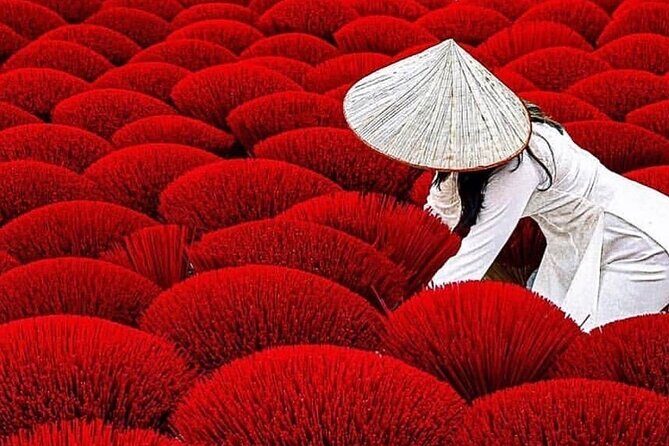
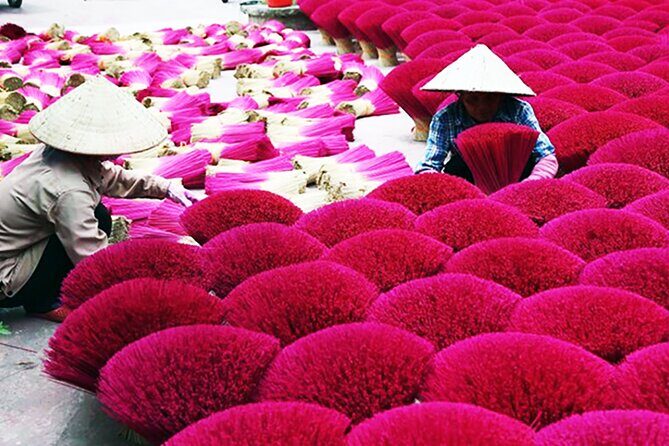
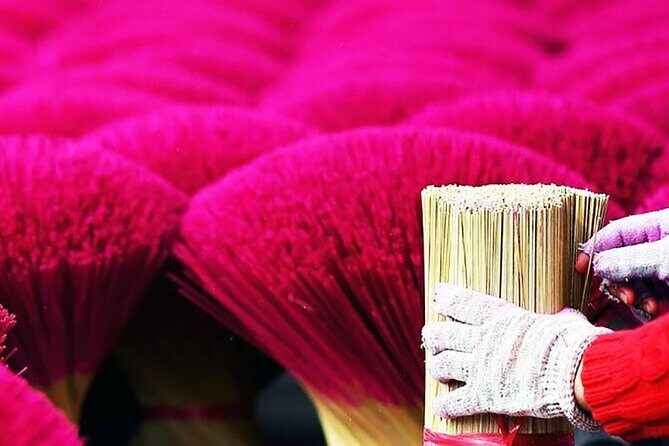
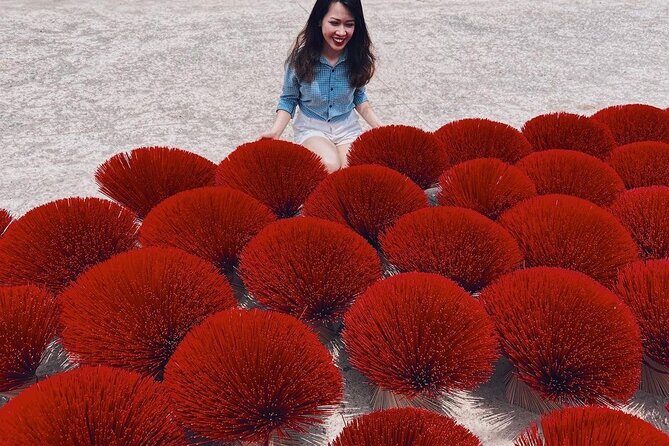
This is the headline stop. You’ll visit the Incense & Bamboo Toothpick village, where the tradition runs deep and the visuals are dramatic. The key image here is the sight of thousands of incense bundles, arranged like huge flowers under the sun.
That’s the kind of scene that’s hard to fake. It’s not just a “workshop building with samples.” It’s a production space where you can see the scale of the craft. Even if you’re not a photographer, you’ll probably find yourself slowing down to really look at the textures and colors.
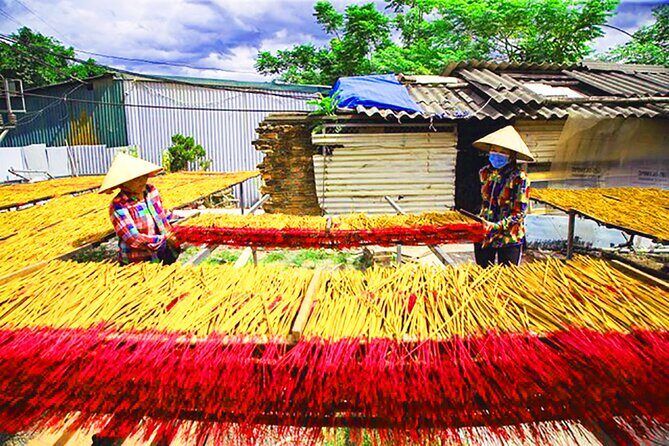
You’ll also spend time in traditional village houses while witnessing production methods taught by local artisans. This is one reason the small group cap matters. In a bigger group, you’d spend your time waiting your turn. Here, the day gives you enough attention to connect what you’re seeing with what you’ll do next.
What to watch for during this part:
- How the bundles are arranged and how they’re handled before they’re finished
- The way artisans explain the purpose behind the steps
- The overall rhythm of the village workspace
If you want photos, aim for steady light and avoid rushing. The best shots come when you stand back for a moment first, then move in when you understand the layout.
Hands-on incense making: learning the process, then making your own sticks
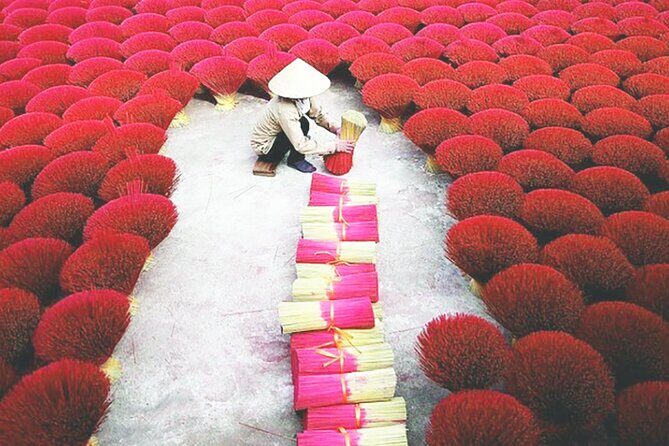
This is the part most people remember, and it’s also the part that turns a village visit into a real skill experience. You’ll learn ancient production methods directly from artisans, then you’ll try crafting your own incense sticks.
The exact technique can vary by workshop, but the format is consistent: you’re not just handed a finished product to buy. You’re shown how incense is made and then guided through the creation of your sticks. That’s where the day earns its value.
I like hands-on craft experiences for one simple reason: your brain pays attention. When you’re doing the steps, you notice details you’d otherwise skip. You also end up with something personal—something you can bring home that still carries the story of how it was made.
Practical advice for the workshop:
- Expect incense materials to smell strong. If you’re sensitive to fragrance, let your guide know early.
- Wear clothing you’re okay with getting a little dust or residue on it, even if you’re not using messy equipment.
- Ask what you should do with your sticks once you’ve made them. The goal is that they keep well after the trip.
One of the best moments here is that you’re not only working and leaving. You may also have time to chat with the owners of the incense village afterward. That kind of conversation is where you hear the real human side: how families keep the craft going, what they want visitors to understand, and what incense symbolizes beyond the scent.



Food stops: pho, egg coffee, and a traditional village lunch
Let’s be honest: a day that includes an incense workshop needs good fuel, and this one delivers.
Early on, you’ll enjoy an authentic pho breakfast rated highly on TripAdvisor. Then you’ll shift to Hanoi’s famous egg coffee—the creamy signature style served by locals. This combo works because it’s both comforting and energizing. You start warm and savory, then you get the sweet, rich coffee experience that makes you feel like you’re really in Hanoi.
At the village lunch, you’ll eat a traditional home-cooked style meal at a local restaurant. The point isn’t fancy plating. The point is simple: you get real local food in the setting where the craft happens. One food detail that tends to show up in this kind of program is Banh mi, which fits naturally with a lunch spread and gives you that crispy, savory break from the incense smoke.
If you’re planning around eating, keep this in mind: the day runs about six hours. You won’t be starving between stops, but you also won’t have a long sit-down restaurant dinner at the end. If you’re prone to getting hangry, eat slowly during pho and use egg coffee as your energy bridge.
Souvenirs and the ride back to your hotel
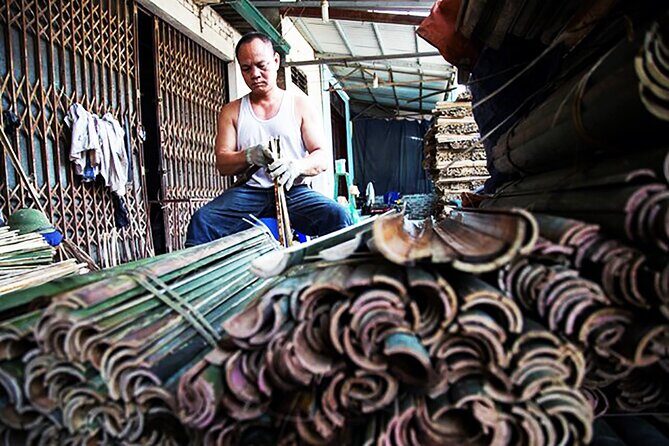
Near the end, you’ll browse handcrafted souvenirs. This is the right time for shopping because you’ve already seen the process. You’re not buying blindly. You can make choices based on what you learned and what you liked in the workshop space.
Then it’s a comfortable return transfer back to your hotel. This matters in Hanoi because the city can eat time. Door-to-door service keeps your day from turning into “find a ride, negotiate, wait, repeat.”
Also, if you’re traveling with a service animal, note that service animals are allowed.
Price and value: why $68 can make sense for this day
At $68 per person, this is not a “cheap fast activity.” But it’s priced like something that includes real on-the-ground value.
Here’s what you’re paying for, in practical terms:
- Pickup and drop-off across Hanoi (time and hassle saved)
- Small group format (maximum six people)
- Guided craft access with hands-on incense making
- Meals included: pho breakfast, egg coffee, and a village lunch
If you tried to recreate this yourself, you’d likely spend money on transport to the incense area, pay for a guide, and still end up hunting for the food stops. What makes this a better deal is that it bundles the craft experience with the Hanoi food elements in one smooth run.
A final thought: the experience averages 22 days booked in advance. That doesn’t guarantee anything, but it’s a sign that people plan this as a highlight day.
Who this incense-making tour is best for
This fits best if you like:
- Hands-on activities where you make something tangible
- Hanoi food as part of your sightseeing, not as an afterthought
- Cultural crafts where the process and the people matter
It’s also a good match for people who want a guided experience without being stuck in a huge crowd. The max of six makes it easier to hear the explanations and easier to get answers during the workshop.
If you’re the type who dislikes workshops, or you only want quick photo ops, you might find the hands-on portion more time-consuming than you’d like. But if you’re even mildly curious about how incense becomes sticks you can light at home, this day is built for you.
A few booking and weather notes you shouldn’t ignore
This activity requires good weather. If conditions aren’t right, you’ll be offered a different date or a full refund. Since incense-bundle visuals and village workspace rely on outdoor or sun-drying conditions, weather can affect the experience.
Also note the format requires a minimum number of travelers. If the minimum isn’t met, the experience may be rescheduled or refunded.
Should you book the incense village day from Hanoi?
I’d book it if you want a genuinely small-group day that mixes Hanoi’s food culture with a craft you can take home. The best reason is the balance: city morning stops, real village production, and a workshop where you actually make incense sticks—not just watch.
Skip it only if you hate hands-on tasks or if you need a totally flexible, weather-proof plan. Since the day depends on conditions, plan it earlier in your trip window so you have options if Hanoi weather changes.
If your goal is a memorable, aromatic souvenir with a story attached, this one earns its place on your Hanoi list.
FAQ
What is the duration of the Hanoi incense-making activity?
It runs for about 6 hours (approx.).
How much does the tour cost?
The price is $68.00 per person.
Do you pick up guests from their hotel?
Yes. Hotel pickup and drop-off across Hanoi is included.
How many people are in a group?
The group is capped at a maximum of 6 travelers.
What do I eat during the day?
You’ll have pho for breakfast, egg coffee, and a traditional lunch in the incense craft village.
Where does the tour stop during the city portion?
The tour includes stops at Hoan Kiem Walking Street, Chua Ly Trieu Quoc Su, and Ha Dong.
What transport do you use to get to the craft village?
You travel by chauffeur-driven motorbike or private car, depending on group numbers (private car for 3+).
Is incense-making included, or do I just watch?
Incense-making is included. You’ll learn production methods and try crafting your own incense sticks.
What happens if the weather is poor?
The activity requires good weather. If canceled due to poor weather, you’ll be offered a different date or a full refund.
Can I get a full refund if I cancel?
You can cancel for a full refund up to 24 hours in advance of the experience start time.