Quiet practice starts fast.
In a Hanoi pagoda setting, you get a structured mix of Buddhist rituals and meditation training, not just a sit-and-hope experience. I like that the guide starts with clear ritual rules so you know how to participate respectfully from minute one, including chanting solemn sutras and learning what the teachings mean in everyday life.
The second thing I really liked is the chance to talk with monks and hear about ethics, renunciation, and compassion in plain language. One consideration: an air-conditioned vehicle isn’t included, so plan for some time on your feet and traveling without AC, especially in warmer parts of the day.
In This Review
- Key highlights you will actually feel
- Pagoda welcome: rules first, then rituals
- Sutras and ethics: lessons you can carry home
- Qigong, mindful breathing, and the body prep you’ll be glad you did
- Walking meditation: focus with motion
- The art of touching peace: learning methods, not just vibes
- Talking with monks: questions about doctrine and daily life
- Releasing animals and gratitude: compassion with a ritual frame
- Price, timing, and what your $60 really buys
- Who this retreat suits best
- Should you book this half-day meditation retreat in Hanoi?
- FAQ
- FAQ
- How long is the half-day mindfulness meditation retreat in Hanoi?
- Where does the retreat take place?
- What activities are included during the retreat?
- Is lunch included?
- What ticket format do I need?
- Is an air-conditioned vehicle included?
- How far in advance is this retreat commonly booked?
Key highlights you will actually feel
- Sutra chanting with context so it doesn’t feel like a random performance
- Qigong and mindful breathing before the main meditation
- Walking meditation that helps you stay focused without getting stiff
- Conversation with monks about doctrines and a noble life
- Releasing animals as a compassion practice paired with gratitude
- Vegetarian lunch included to keep the tone grounded after rituals
Pagoda welcome: rules first, then rituals
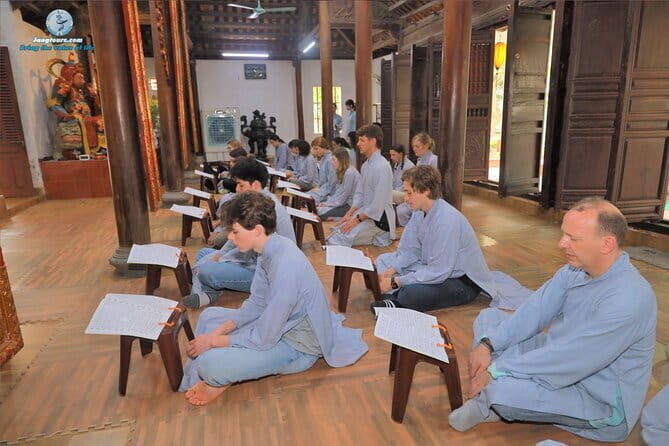
This retreat starts the way many spiritual practices should: with order. You arrive at the pagoda, and your guide lays out the rules early, so you can participate without guessing. That matters. When the environment already has deep meaning, your job is to match the pace instead of barging in with your own routine.
Then comes chanting the solemn sutras. The point isn’t to turn you into a scholar. It’s to help you experience the rhythm of Buddhist teachings as something lived, not just read. You also get instruction on the profound Buddhist doctrines and how to apply the lessons to daily life, which is where the spiritual side becomes practical.
If you’re the type who usually thinks meditation is mostly about silence, this might surprise you—in a good way. The ceremony is the lesson.
You can also read our reviews of more tours and experiences in Hanoi

Sutras and ethics: lessons you can carry home
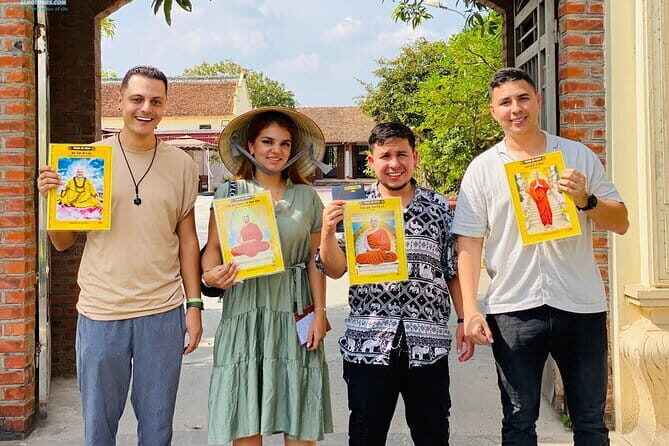
After the chanting, you shift from ritual sound to meaning. You learn about what the Buddha’s teachings cover and the ethical themes you can bring into your day. You’re not asked to memorize anything. Instead, you’re guided toward understanding the ideas behind gratitude, loving-kindness, and compassion.
I like that this is framed as carry-with-you knowledge. “Ethics and life” sounds broad, but here it’s tied to actions you’ll practice later: focusing the mind, walking slowly on purpose, and being careful with how you treat living beings.
One practical tip: treat the instruction as a checklist for behavior, not an exam. If your takeaway is one small change in how you react, that counts.
Qigong, mindful breathing, and the body prep you’ll be glad you did
Before you settle into deeper meditation, you do qigong and mindful breathing. Think of it as warming up your attention. Your breathing becomes the anchor, and the body work gives you something concrete to do before your mind gets loud.
This part is valuable because it reduces the usual beginner problem: sitting still while feeling restless. With breathing and gentle movement, you learn how to work with discomfort instead of fighting it. You’re also building steadiness so the later meditation session feels more possible.
And yes, you get quiet time afterward too. Tranquil moments come during the process, not only at the end.
Walking meditation: focus with motion
Walking meditation is one of those things that can sound simple until you try it. Here, you get guided practice so you learn the rhythm of mindful steps. It’s a smart choice for a half-day retreat because it trains attention while keeping your body engaged.
If you tend to get antsy during long stillness, walking meditation can save your sanity. You’ll also likely notice how easy it is for the mind to wander—and how quickly you can bring it back when you have a physical cue.
Keep your pace gentle. The goal isn’t fast. It’s awareness.
The art of touching peace: learning methods, not just vibes

The retreat then moves into meditation technique. You’ll learn the correct method of meditation and how to focus the mind for true happiness. That phrasing can sound lofty, but the structure is what matters: you’re taught how to center yourself, then practice.
This is the part where you should pay attention to cues from your guide. Even small instructions—what to do with attention, how to settle your focus—make a big difference between wandering and actually practicing.
Also, don’t rush the experience. In a 4-hour format, the retreat can feel like it has a lot of stations. But meditation doesn’t work by speed. It works by consistency, even if you only have a few sessions.






Talking with monks: questions about doctrine and daily life
The most anticipated moment on this retreat is also the most human: you talk with monks. This isn’t just listening from a distance. You get a chance to understand Buddhist doctrine more deeply, hear about the noble life of those who renounced worldly pleasures, and explore lofty ideals in a way that connects to your own life.
This is where the retreat becomes less abstract. When you hear about renunciation, you also get a chance to ask what it means without trying to copy it literally. You can come away understanding the intention—discipline, compassion, and ethical living—rather than only the lifestyle.
A good way to approach this conversation: ask for examples of values in action. If you’re learning about loving-kindness, try to see what that looks like when someone is stressed, not only when life is calm.
Releasing animals and gratitude: compassion with a ritual frame

The retreat ends with compassion practices that are emotionally memorable. You take part in releasing animals, and then you enjoy a grateful meal.
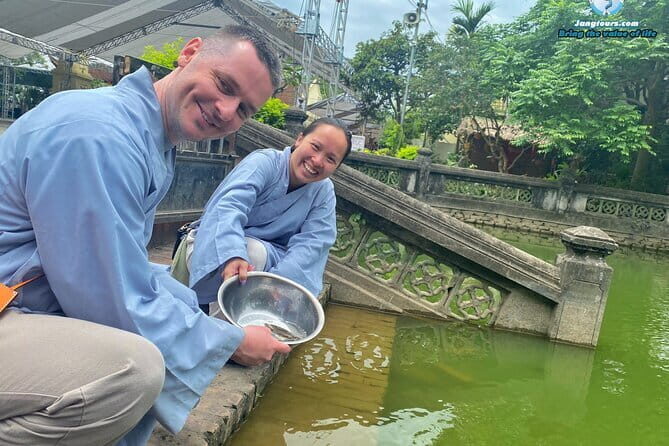
Releasing animals is presented as compassion in action, tied to Buddhist values. You’re not just doing it as a photo op or a spectacle. You do it as a solemn practice connected to the idea that care for living beings is part of ethics, not a side quest.
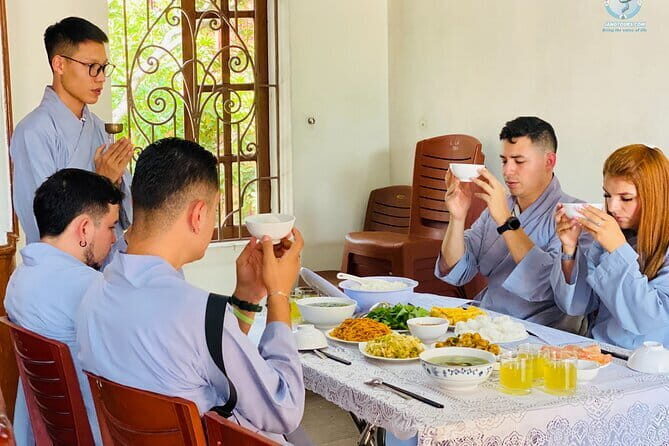
Then comes the vegetarian lunch included in the price. Eating after ritual participation keeps the tone consistent. It also gives you a chance to reflect while you’re still in the mindset the retreat tried to build—gratitude is easier when the day’s activities are still fresh.
Small practical note: since lunch is included, don’t plan a heavy meal before. You’ll enjoy the food more, and you’ll avoid feeling stuffed during meditation parts earlier.
Price, timing, and what your $60 really buys

At $60 per person for about 4 hours, this retreat is in the “short but structured” category. You’re paying for guided instruction, ritual participation, and time with monks—plus a vegetarian lunch.
What makes the value feel real is the sequencing. You get rituals first (chanting and doctrinal framing), then skills (qigong, mindful breathing, walking meditation), then meaning through conversation. If you tried to DIY all of this, you’d spend time hunting for the right setting, asking the right questions, and figuring out how to participate properly.
Two timing notes based on the details you’re given:
- The retreat runs about half a day, so it’s a good option when you want depth without losing a full day to travel or fatigue.
- It’s often booked around 47 days in advance, so plan ahead if you don’t want to gamble on availability.
Finally, about logistics: an air-conditioned vehicle isn’t included. That doesn’t make it “bad,” but it changes how you plan comfort. Wear breathable clothes, expect some walking, and be ready for parts of the day without AC.
Who this retreat suits best
This retreat is a strong fit if you want:
- Guided meditation with clear methods, not just quiet time
- Buddhist rituals explained in a way that connects to ethics and daily life
- A respectful, structured experience where you’re taught how to participate
- A monk conversation that adds context beyond the meditation cushion
It may feel less ideal if you’re mainly seeking a long, silent retreat. This is shorter, and the flow includes active elements—chanting, breathing, walking meditation, and conversation—so it’s more of a whole practice day in miniature than a full monastic-style retreat.
Should you book this half-day meditation retreat in Hanoi?
I think you should book if you want real instruction in meditation methods, and you like the idea of learning through ritual, not just theory. The monk conversation and the compassion practices (including releasing animals) give the day emotional weight, while the vegetarian lunch helps keep everything grounded.
Skip it only if you strongly need AC-controlled comfort all day or you’re expecting a mostly silent, long sit. With a half-day schedule, you’ll be moving through multiple stages—and that’s the point.
FAQ
FAQ
How long is the half-day mindfulness meditation retreat in Hanoi?
It runs for about 4 hours.
Where does the retreat take place?
It takes place in Hanoi, Vietnam, and you begin at a pagoda.
What activities are included during the retreat?
You can expect sutra chanting, learning Buddhist doctrines for daily life, qigong and mindful breathing, a meditation session, walking meditation, conversation with monks, releasing animals, and a grateful vegetarian meal.
Is lunch included?
Yes. Lunch is vegetarian.
What ticket format do I need?
You get a mobile ticket.
Is an air-conditioned vehicle included?
No. An air-conditioned vehicle is not included.
How far in advance is this retreat commonly booked?
On average, it’s booked about 47 days in advance.