REVIEW · HANOI
Ha Noi – Half-day Mindfulness meditation retreat
Book on GetYourGuide →Operated by JANGTOURS · Bookable on GetYourGuide
A pagoda morning can change your rhythm fast. This half-day mindfulness retreat in Dong Bac is built like a mini lesson plan: you learn the basics of meditation, get taught Buddhist practice through rituals, and then move your body (walking and breathing) so the calm feels physical, not just theoretical. Guides Hieu and Hung keep the tone gentle and practical, which matters when you’re new to sitting still.
I like that it doesn’t treat meditation as a mystery. You’re walked through the method—walking meditation, mindful breathing, and guidance on how to work with your mind—and you also get cultural basics like how to greet monks and nuns properly while you’re inside the pagoda.
One thing to consider: the setting has clear behavior rules. You’ll want long-sleeved clothing and long pants, and you should be ready for a quiet, respectful format with no smoking and no loud talking.
In This Review
- Key highlights you’ll feel in the moment
- Entering the pagoda: etiquette that makes mindfulness easier
- The first practices: sutras, rituals, and learning the structure
- Walking meditation and mindful breathing you can actually use later
- The philosophy pieces: touching peace and soul purification
- Mindful talking with the monk: karma explained through questions
- Blessings and compassionate practice: Arhat ritual and releasing beings
- The grateful meal: mindfulness after meditation, not just during it
- Price and value: what $65 buys you in Dong Bac
- Timing, duration, and program flow (so you can plan your day)
- Practical etiquette and rules that affect comfort
- Who should book this retreat (and who might skip it)
- Should you book this Ha Noi mindfulness retreat?
- FAQ
- How long is the Ha Noi half-day mindfulness meditation retreat?
- What language is the instructor teaching in?
- What should I bring to the retreat?
- What is included in the price?
- Is transportation included?
- Is there vegetarian lunch provided?
- Are there any restrictions on what I can wear or bring?
- What is the cancellation policy?
Key highlights you’ll feel in the moment
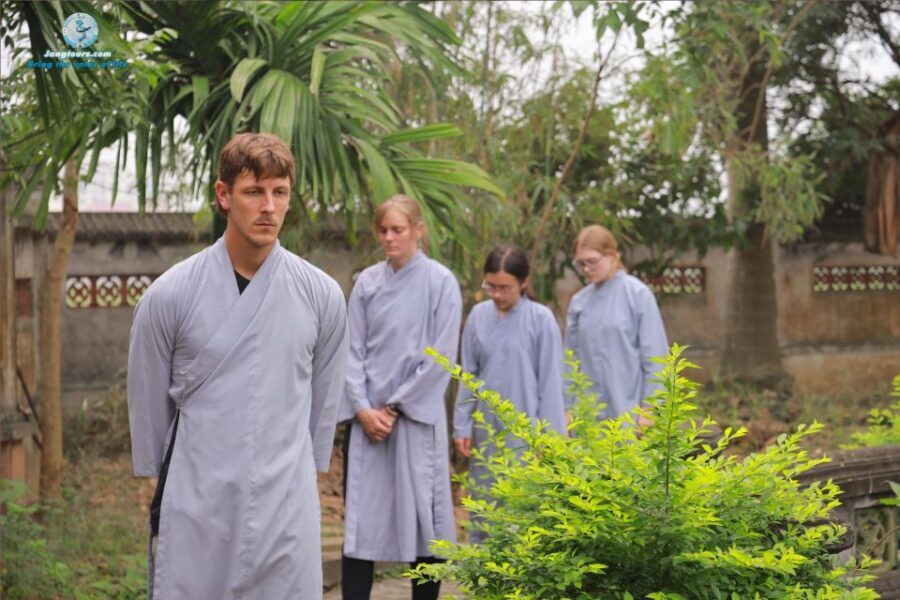
- Pagoda etiquette first, so you know how to act before you begin sitting practice
- Multiple meditation modes (sitting, walking, mindful breathing, chanting-style practice) so you don’t get stuck
- Monk Q&A focus that turns questions into actual technique and understanding
- Buddhist teachings tied to daily life, including sutras and karma concepts
- Compassion ritual with releasing beings, paired with lessons on loving-kindness
- Vegetarian meal with gratitude practice, so the session lands in real habits
Entering the pagoda: etiquette that makes mindfulness easier
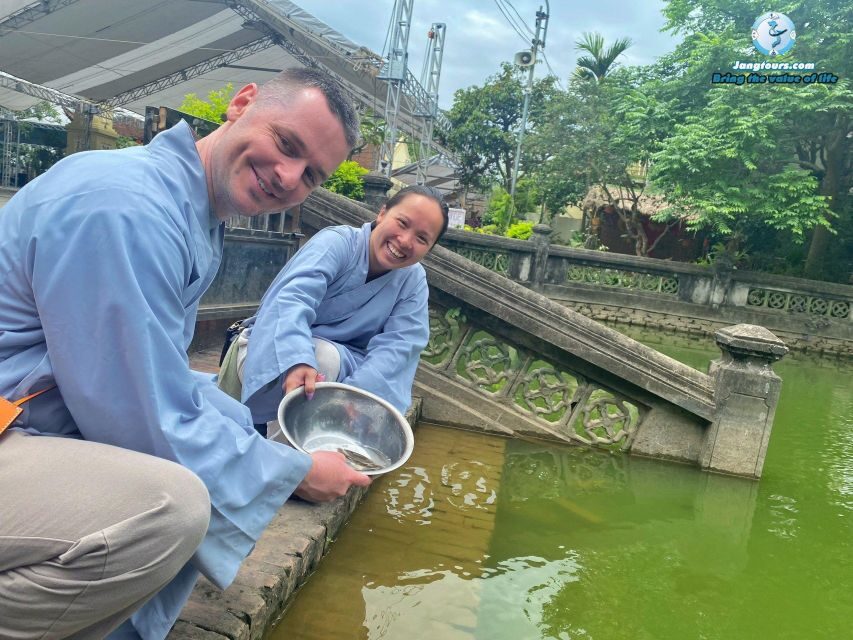
The retreat starts where a lot of people get nervous: at a pagoda. Before anyone tells you to relax, you learn the basics of how to behave in a religious space—rules while staying in the pagoda, and the right way to greet monks and nuns when you meet them.
That first segment (about 45 minutes) matters more than it sounds. When you feel unsure about etiquette, your mind stays busy. Once you know what to do, you can finally stop scanning the room and start paying attention to your breath and body.
It’s also worth knowing that pagodas can have local obligations. If the site needs to shift at the last minute, the organizer says they’ll move you to an equivalent pagoda without changing the planned content. Still, I’d keep transportation flexible on your side.
You can also read our reviews of more tours and experiences in Hanoi

The first practices: sutras, rituals, and learning the structure
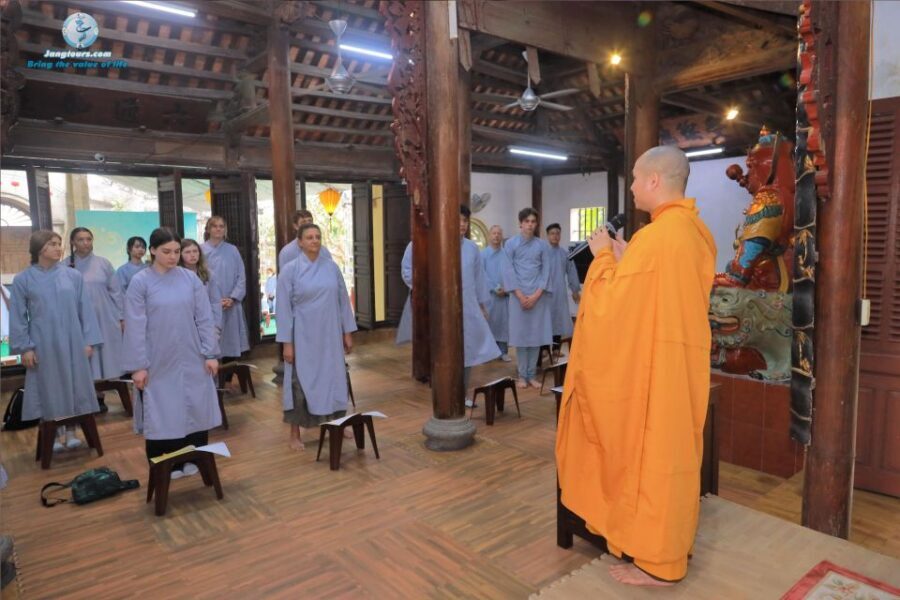
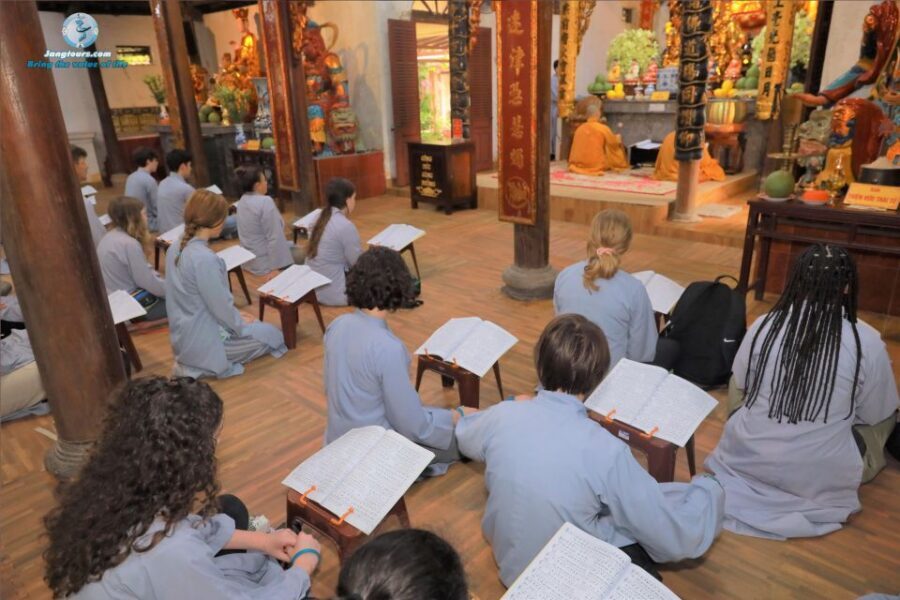
Next comes a Buddhist-ritual segment (roughly 25 minutes) centered on sutras, described as the Buddha’s teachings. The takeaway here isn’t just memorizing text. You learn how the teachings are meant to be brought into daily life and practice, so the spiritual side feels grounded instead of abstract.
Then you move into the part that helps beginners the most: clear pacing. The schedule doesn’t throw everything at once. You get short blocks—ritual, then movement, then breathing, then more meditation—so you can reset your focus without getting mentally exhausted.
This pacing is a quiet benefit for anyone who tends to overthink. Instead of forcing a long silent sit immediately, you build attention step by step.
Walking meditation and mindful breathing you can actually use later
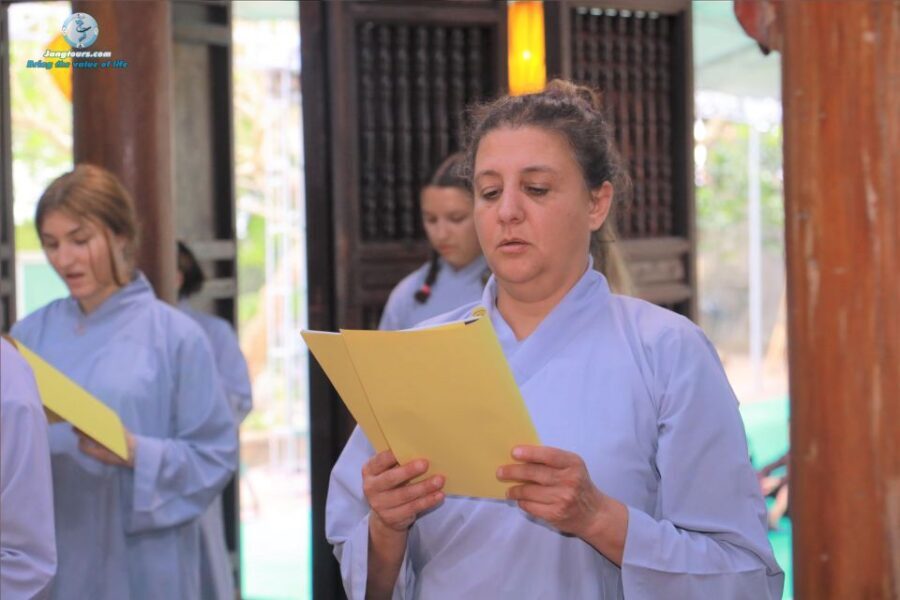
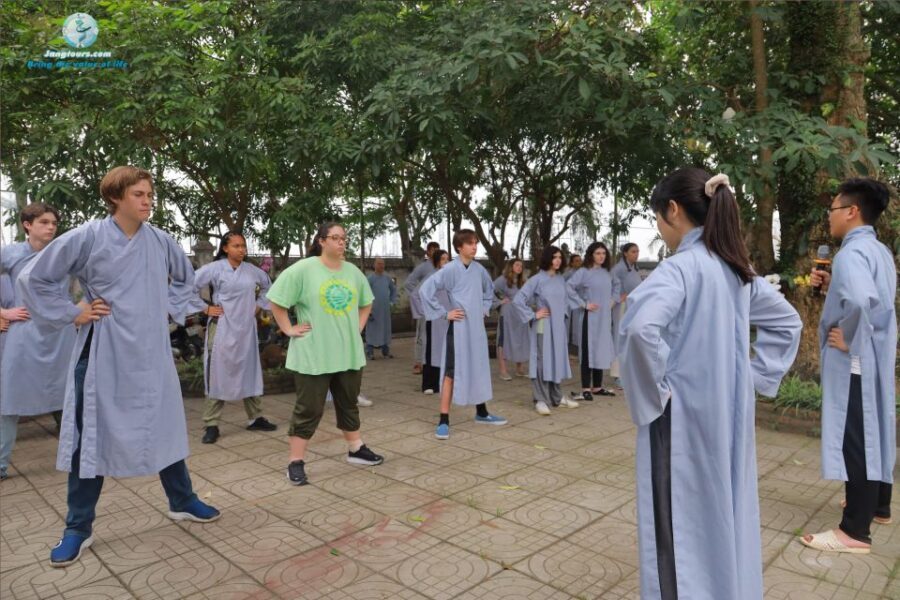
Walking meditation starts early (around 9:15–9:30). The idea is simple: be fully present in each moment, including breath and steps. You’re essentially training attention in a way that doesn’t require you to freeze your whole body.
If you’ve tried meditation before and felt restless, walking practice is often the bridge. It gives your mind something steady to anchor to: the motion of feet and the rhythm of breathing.
After that, you’ll work with mindful breathing and inner energy movements. The retreat frames it as building a healthy body and mind—strengthening your ability to meditate. Even if you don’t consider yourself physically “into” meditation, these breathing-and-movement elements help reduce the feeling that sitting is the only way to practice.
Tip for you: wear what you brought for a reason. Long sleeves and long pants help you stay comfortable while you’re sitting, walking, and moving slowly.
The philosophy pieces: touching peace and soul purification
Around 9:35–10:10, you’ll get a philosophy and meditation-instructions block. One segment is called the art of touching peace, linking meditation to happiness because inner peace matters more than worldly pleasures.
Then comes meditation as soul purification, which emphasizes leading the mind to peace and insight, and keeping it away from thought and sentiment. The session also mentions breaking self-ignorance to reach enlightenment.
Now, here’s the practical angle: don’t worry about “understanding everything.” Your goal as a first-timer is to learn how the instructions feel in real time. If the concepts sound intense, treat them as direction—what your practice is trying to soften and what it’s trying to free.
This is also where a monk-guided setting can help, because you’re not just hearing doctrine. You can ask questions later and get help translating it into practice.
Mindful talking with the monk: karma explained through questions
From about 10:15–10:30 you shift into mindful talking. The retreat includes learning about karma law through photos, and then there’s a segment where you can talk with the monk and ask questions related to spiritual practice.
For me, this is one of the most valuable parts of a retreat like this. Meditation can feel like a closed system—sit, breathe, wait. But when you’re taught the meaning behind the routine, your mind stops treating practice as random homework.
Also, the guidance is in English (instructor language is listed as English). That matters for both beginners and experienced meditators who still want accurate translation of Buddhist terms.
If you’re worried about what questions to ask, start simple: what’s the correct method of meditation for beginners, and what should you notice when the mind wanders?






Blessings and compassionate practice: Arhat ritual and releasing beings
The schedule includes a ritual of asking for the Arhat (around 10:35–10:45). Worshiping Arhats is presented as a proper way to receive blessings and plant seeds for enlightenment in next lives.
You don’t have to treat this like a magic spell. Think of it as part of the retreat’s structure: it trains respect, intention, and a mindset of practice rather than consumption.
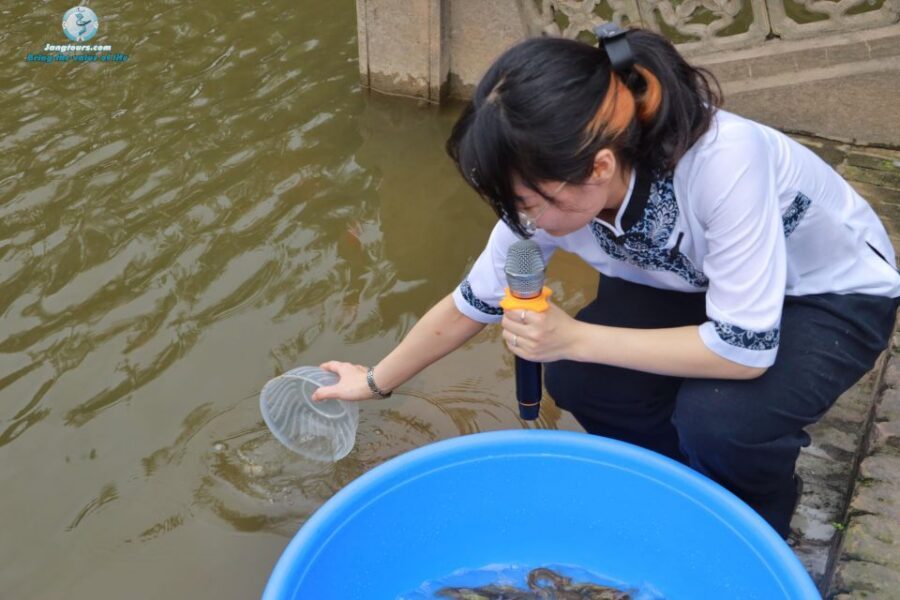
Then comes a compassion practice segment (about 10:50–11:00) described as releasing beings to nurture loving kindness and compassion, and as part of good deeds for a long life.
This is also where you should pause and think about your own comfort level. The retreat highlights releasing animals/being as part of the compassion ritual. If that concept feels emotionally complicated for you, ask the guide before the ritual how it’s handled and what the expectations are for participants.
Either way, the point within the retreat is clear: compassion isn’t just a feeling. It’s framed as action connected to mindfulness and kindness.
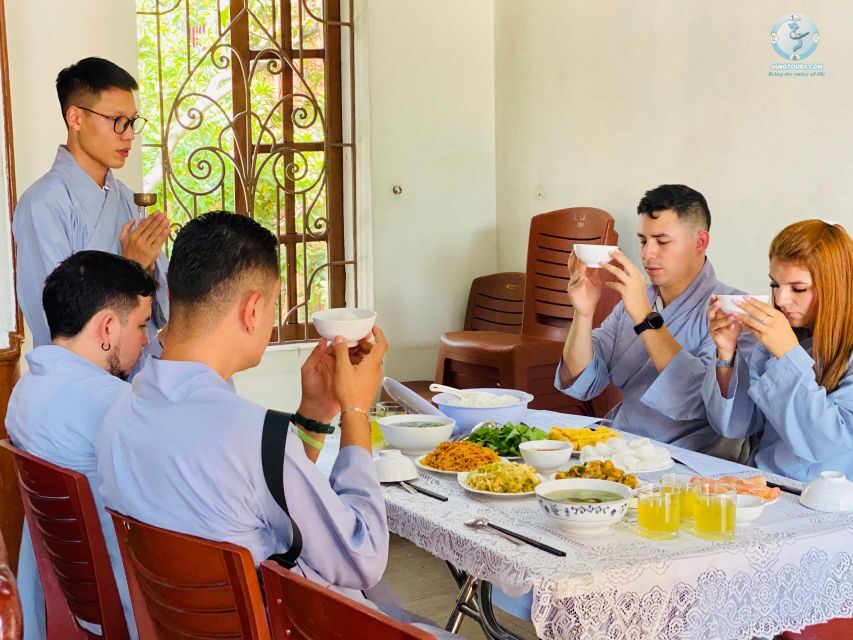
The grateful meal: mindfulness after meditation, not just during it
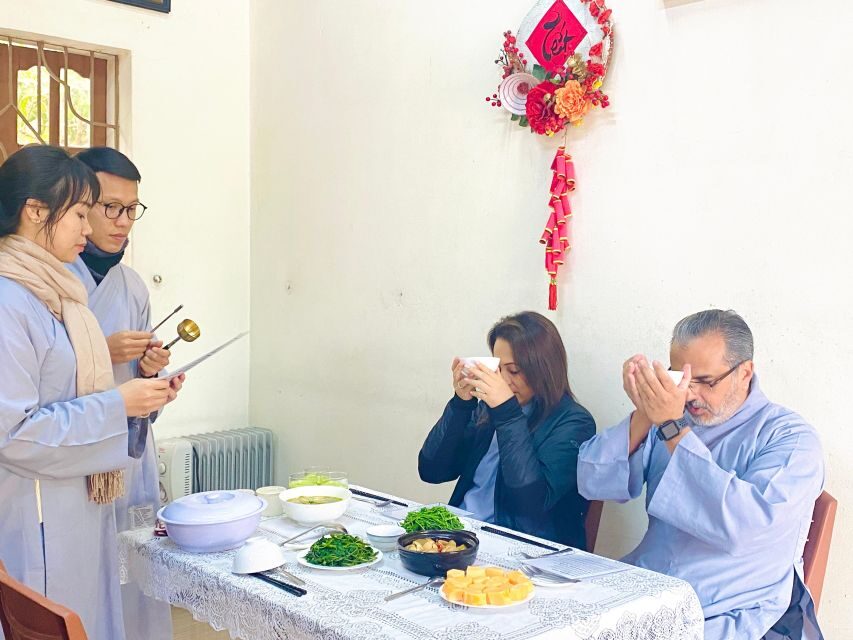
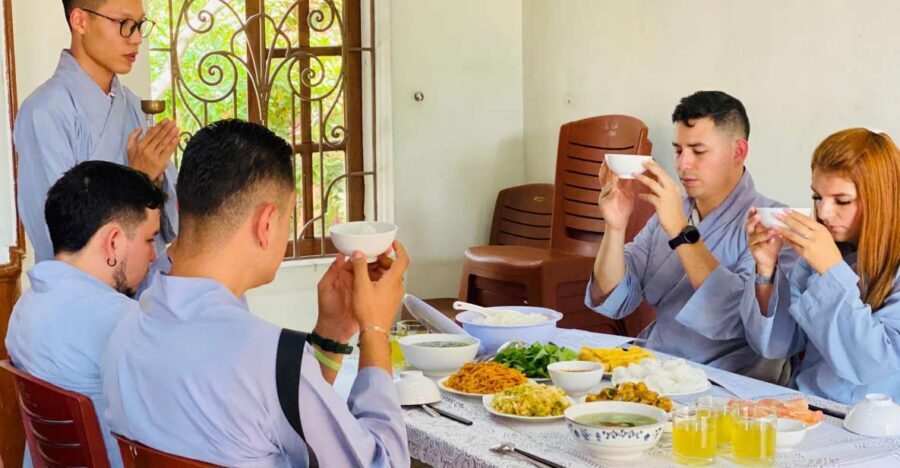
Lunch time isn’t just a break here. Between 11:00–12:00 you’ll have a grateful meal, with a practice of expressing gratitude before and after eating.
This is one of those details that makes the retreat feel complete. Meditation can stay on the cushion. A grateful eating ritual tries to bring the same awareness into something you normally do on autopilot.
You’re served a vegetarian lunch, plus mineral water. And since “making noise” is listed as not allowed, the meal time likely keeps a respectful tone—quiet enough that you can actually focus.
If you want to carry something home, this is the best place to start. Pick one habit: before you eat, do a quick pause and notice your body’s readiness for food.
The retreat also ends with a gift for visitors at 12:00, and then you return to the meeting point.
Price and value: what $65 buys you in Dong Bac
At $65 per person for a 4-hour retreat, you’re paying for structure, guidance, and a religious setting you don’t need to figure out on your own.
That price includes:
- a local guide on the spot
- entrance fees
- spiritual rituals
- vegetarian lunch
- mineral water
Transportation isn’t included, so you’ll need to handle getting to and from the pagoda area yourself. That can be the deciding factor if you’re not already based nearby.
But if you want an organized, beginner-friendly introduction with English instruction and a guided flow of sitting, walking, breathing, and rituals, this is solid value. You’re not just buying a ticket to sit quietly. You’re buying coaching plus cultural instruction plus a closing practice.
Timing, duration, and program flow (so you can plan your day)
This is a half-day experience listed at 4 hours, with starting times shown by availability. The schedule is packed but broken into short segments, which helps beginners stay comfortable.
Also remember: the retreat begins and ends back at the meeting point. That makes planning easier—you’re not dealing with a long loop across the city unless you choose to.
The biggest planning “gotcha” is not the meditation. It’s what you wear and how you manage transport. Bring the long sleeves and long pants, and plan to arrive a little early so you can settle without rushing.
Practical etiquette and rules that affect comfort
The retreat has clear do-not list items:
- no smoking
- no short skirts
- no red wine, alcohol, or drugs
- no ripped clothing
- no making noise
It’s not trying to be strict for the sake of strictness. These rules keep the atmosphere respectful and help everyone focus. If you’re hoping for a casual, chatty class, this isn’t that kind of session.
It’s also not suitable for wheelchair users, and it’s not for babies under 1 year. So if you’re traveling with accessibility needs, plan accordingly.
Who should book this retreat (and who might skip it)
I’d especially recommend it if you:
- are new to meditation and want the correct method explained
- want Buddhist practice tied to rituals, not just breathing exercises
- like a structured schedule that moves your attention through sitting and walking
- want English guidance and a chance to ask the monk questions
You might skip it if:
- you can’t follow a quiet, respectful environment
- you’re uncomfortable with the compassion ritual described as releasing beings
- you need accessibility options for wheelchair use
If you’re in Hanoi for only a short time and want something meaningful without spending a full day traveling, the half-day format is a real advantage.
Should you book this Ha Noi mindfulness retreat?
If you want a beginner-friendly meditation experience that includes Buddhist teachings, monk guidance, and hands-on practice through walking and breathing, then yes—this is a strong booking. The structure helps you learn the method, and the grateful vegetarian meal helps you take mindfulness beyond the cushion.
I’d only hesitate if the releasing-being compassion ritual and the clothing/behavior rules don’t fit your comfort level. If those parts sound okay, you’re likely to leave with practical tools—plus a calmer way to handle your mind when life gets noisy.
FAQ
How long is the Ha Noi half-day mindfulness meditation retreat?
It lasts about 4 hours, though starting times depend on availability.
What language is the instructor teaching in?
The instruction is in English.
What should I bring to the retreat?
Bring a long-sleeved shirt and long pants.
What is included in the price?
The experience includes a local guide on the spot, entrance fees, spiritual rituals, vegetarian lunch, and mineral water.
Is transportation included?
No. Transportation is not included.
Is there vegetarian lunch provided?
Yes. A vegetarian lunch is included.
Are there any restrictions on what I can wear or bring?
Smoking is not allowed, short skirts are not allowed, red wine and alcohol are not allowed, and you should also avoid drugs. Ripped clothing is not allowed, and making noise is not allowed.
What is the cancellation policy?
You can cancel up to 24 hours in advance for a full refund.