REVIEW · HANOI
Full-day Guided Meditation Experience in Ha Noi
Book on Viator →Operated by The Bodhi Journey · Bookable on Viator
Quiet in Hanoi can feel close.
This full-day guided meditation experience takes place at a Buddhist pagoda and focuses on practical spiritual tools: Buddha’s life lessons, a guided meditation method, and spiritual practices meant to slow you down and build inner steadiness. I like that it is structured like a day with purpose, not a vague “sit and see” plan, with licensed guidance and a calm pagoda setting.
Two things I especially like: first, you get a guided walk that helps you understand what you’re looking at, including the pagoda’s architecture and history before you sit down. Second, you’re taught the meditation method and then you get real practice time—plus room to ask questions—so the day moves from learning to doing, not just listening.
One consideration: the price is $85 per person, and lunch and dinner aren’t included. If you’re hungry halfway through a focused meditation day, plan ahead so the experience stays peaceful instead of turning into a snack hunt.
In This Review
- Key things I’d circle before you go
- A Hanoi meditation day that feels guided, not random
- Price and value: is $85 fair for what you get?
- Meeting point and timing: the 8:00am reality check
- First stop: getting oriented at the pagoda
- Inside the main hall: Buddha’s life and doctrine for real life
- The meditation method: instruction, then quiet practice time
- Loving-kindness and compassion rituals, plus qigong for the body
- What the “full-day” rhythm feels like in practice
- Food, breaks, and what to plan for
- Language, teaching style, and the guides who power the day
- Who should book this Hanoi pagoda meditation experience
- Should you book this guided meditation day in Hanoi?
- FAQ
- How long is the full-day guided meditation experience?
- What does the $85 price include?
- Are lunch or dinner included?
- Where do I meet, and what time does it start?
- How do I get the ticket?
- What is the cancellation policy?
Key things I’d circle before you go
- Pagoda orientation first: architecture and history before the main teachings
- Buddha lessons you can apply: life of Buddha and core doctrines framed for everyday living
- Guided meditation with practice time: instruction, then quiet focus to train the mind
- Loving-kindness and compassion rituals: plus qigong movements for health and wellbeing
- Question-friendly teaching vibe: praised guides such as Naya, Hung, and Hieu are known for clear English and patience
- Full-day reset (about 8 hours): one location, a slow pace, and a thoughtful rhythm
A Hanoi meditation day that feels guided, not random
Hanoi can be loud. Traffic, scooters, and constant motion are the default setting. This experience changes the pace on purpose: you spend the day at a Buddhist pagoda with a guide who leads you step-by-step through teachings, then helps you practice meditation in a structured way.
What I find most appealing is the balance between learning and repetition. You’re not only shown ideas about gratitude, loving-kindness, and compassion—you also get tools to work with your attention. That means you leave with something you can try again later, even if you don’t suddenly become a monk.
The day is also pitched for real life, not just spirituality-as-a-concept. The description specifically targets people who might be facing challenges, feeling spiritually “wounded” despite material comfort, searching for enlightenment, or wanting to teach their children a moral life. Whether you’re coming from curiosity, grief, burnout, or simply wanting calm, the approach stays practical: it’s about how to live.
You can also read our reviews of more tours and experiences in Hanoi.



Price and value: is $85 fair for what you get?
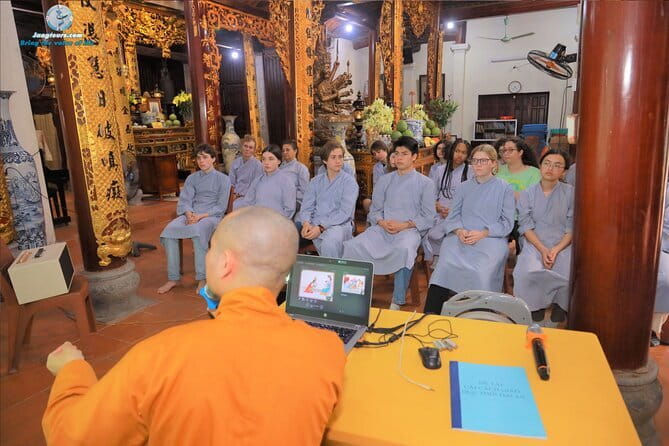
At $85 per person for about 8 hours, this isn’t a budget add-on. It’s closer to a guided retreat-style lesson with a real teacher and a licensed guide. What makes the price feel more justified is the amount of guidance you receive across the day: you’re led around the pagoda, you get doctrinal teaching in the main hall, and you get meditation instruction followed by practice time.
Another value point: you’re not just getting “a place to sit.” You’re learning a specific meditation method aligned with Buddhist teachings. That matters, because a lot of first-time meditation experiences are either too vague (you’re told to breathe, good luck) or too performance-y (long speeches, minimal practice). Here, the structure is meant to help you focus.
The main thing that can change the perceived value is food. Lunch and dinner aren’t included, even though some guides manage the day so it still feels cared for. If you want a fully handled day from start to finish, you’ll need to plan around meals yourself or confirm what is provided on your date.
Meeting point and timing: the 8:00am reality check
You start at 8:00am at Ngõ 68 Phố Quan Nhân, Ng. 68 P. Quan Nhân, Trung Hoà, Cầu Giấy, Hà Nội, Vietnam. The activity ends back at the meeting point, so you’re not hopping across town all day.
Two practical notes to keep in mind:
- The meeting point is in a dense area, so plan to arrive a bit early and confirm you have the right entrance.
- The tour says it’s near public transportation, which is helpful if you don’t want to fight traffic on a scooter.
Also, the group size is capped at 100 travelers. That cap is big enough that some days can feel lively, but several guides are described as making the day feel relaxed and question-friendly. If you’re the type who likes private attention, aim for a weekday if possible, and be ready to ask questions early—your guide will often set the tone fast.
First stop: getting oriented at the pagoda

After meeting your guide, the day begins with an intro to the itinerary. Then you do something I wish more “mindfulness days” would do: you walk the pagoda grounds with your guide before you enter the main teaching space.
This orientation includes information about the pagoda’s history and architecture. For first-time visitors, that’s a big deal. When you understand what you’re looking at—materials, layout, and what the spaces represent—you tend to pay attention better when you sit later. It’s easier to connect emotionally when the setting has meaning beyond “pretty temple photos.”
There’s also a subtle benefit: walking slows your mind down. Even if you’re restless at first, the guided pacing and explanations help you settle. You get into the rhythm of the day before meditation begins.
Inside the main hall: Buddha’s life and doctrine for real life

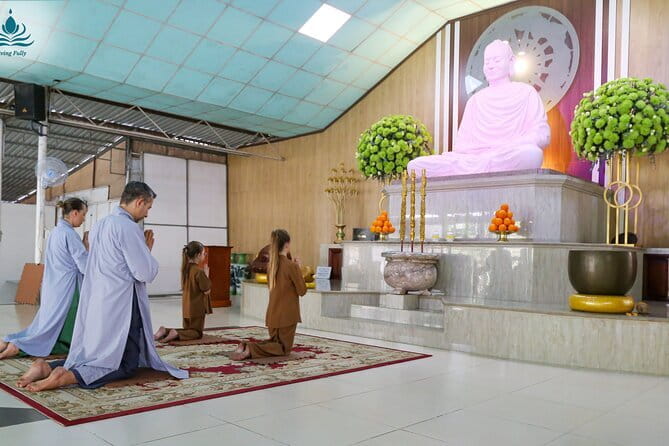
Next, you head to the main hall to learn about the life of Buddha and the profound Buddhist doctrines. The way the experience frames this is important: these are described as “golden lessons” meant to guide how you live, not just what you believe.
This portion is the “teach” part of the day. Expect a structured explanation and time for understanding rather than a fast lecture. The guides who lead these sessions—such as Naya, Hung, and Hieu—are repeatedly described as patient, friendly, and able to make ideas accessible in English. That’s not a small detail. If you’ve ever tried to learn Buddhism on your own, you know how easy it is to get lost in terms.
In this setting, you’re learning the foundations: what Buddhist teaching points toward, why meditation is part of the practice, and how compassion and loving-kindness fit into the mental training. Even if you don’t become a scholar, you’ll likely walk out with clearer questions and better mental hooks for what to practice.



The meditation method: instruction, then quiet practice time
Now for the part most people come for: meditation.
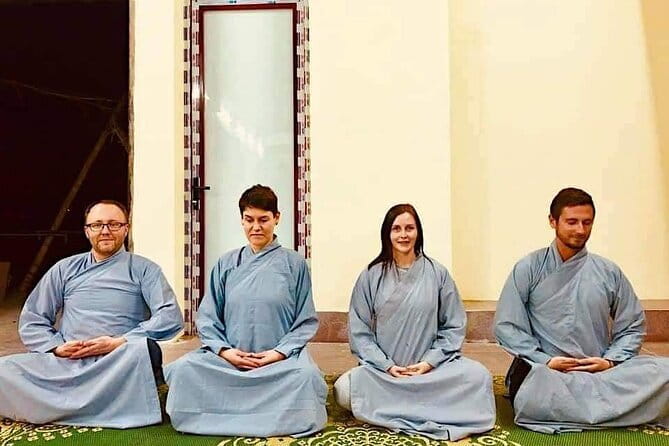
Your guide shares the method of meditation based on Buddhist teachings. You then get time to practice meditation and focus your mind in tranquility. I like that the day doesn’t stop at explanation. There is an expectation of practice, which helps you actually feel what the technique is doing.
Also, the meditation sessions are described as part of the day’s flow rather than a single dramatic moment. One review mentions activities like fish releasing and exercise meditation along the way, so the schedule seems designed to keep your body and mind engaged without rushing.
A helpful mindset for your first meditation day: treat it like training, not testing. You’re not trying to “win” silence. You’re practicing attention on purpose. If your mind wanders (it will), that’s the point. Each moment you notice distraction and return is the skill.
If you’re a beginner, the structured instruction is exactly what you need. If you’re more experienced, the chance to learn a method aligned with Buddhist teachings can still be valuable, especially if you want to understand the “why” behind the technique.
Loving-kindness and compassion rituals, plus qigong for the body

Meditation can be very mental. This experience intentionally adds heart and body elements too.
You’ll cultivate loving-kindness and compassion through rituals. That matters because compassion training isn’t only about calm vibes—it’s about changing how you relate to others (and to your own inner voice). These rituals give the day an emotional direction, so the practice isn’t just breath-counting.
Then there are qigong movements included to enhance health. Qigong is a practical bridge between sitting and living. It reminds you that calm is not only a feeling you “find,” it’s something you can gently support through body awareness and movement.
If you worry that meditation days are too sedentary, this mix helps. You get a rhythm: teach, sit, move, practice heart, then sit again. It can feel like a full reset for both mind and body.
What the “full-day” rhythm feels like in practice
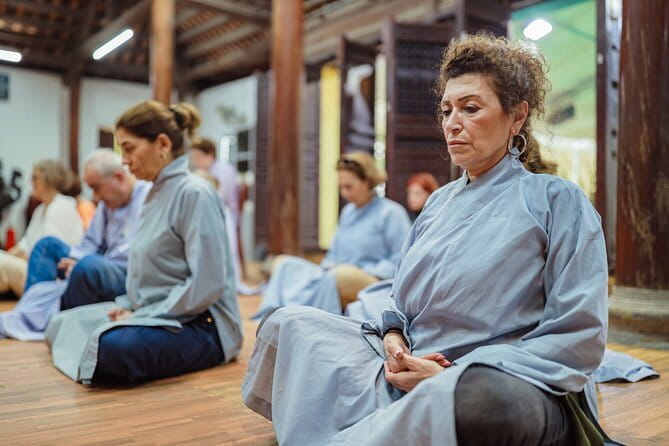
This is an 8-hour experience, starting early and staying in one main area. That makes it easier to stay focused. You’re not constantly traveling across Hanoi’s traffic. The pace is meant to slow you down.
From the descriptions of the day, it looks like a sequence of meaningful segments:
- introduction and pagoda orientation
- main hall teachings
- meditation instruction
- guided meditation practice
- compassion-focused rituals
- qigong movements
- a calm closing back at the meeting point
In some cases, the day can feel intimate. One review notes that being the only participant made the pagoda time feel close and personal. With a group cap of 100, days can vary, but you can still request more time for questions as the guide sets the tone.
If you get antsy in long structured activities, bring patience. This is not a quick sightseeing stop. It’s a day to work on attention and attitude.
Food, breaks, and what to plan for
Here’s the one part you must handle thoughtfully: lunch and dinner aren’t included. That’s stated clearly, so don’t assume you’ll be fed.
Some reviews describe delicious food and an amazing meal, though. That mismatch is exactly why you should confirm what happens on your booking date. Ask what meal arrangements are made and whether any food is included beyond what’s listed. It’s a simple question, and it prevents the most common problem: a meditation day turning stressful because you’re hungry.
Also plan for small breaks. Even if the schedule is calm, sitting and quiet focus can make you feel sleepy or restless. Move slowly during transitions. Hydrate when you can.
For your own comfort, dress for a day of walking and sitting. Keep layers in mind. Hanoi mornings can feel cool, and pagodas are often cooler inside.
Language, teaching style, and the guides who power the day
The quality of a meditation teacher can make or break your experience. The standout theme here is that guides are described as friendly, patient, and able to explain clearly in great English. Names that come up include Naya, Hung, and Hieu.
That matters for two reasons:
- Meditation can be hard to learn if the instructions are vague. Clear English helps you follow the method step-by-step.
- Buddhist concepts can be culturally distant. A patient guide helps you translate meaning into something you can practice.
There’s also a practical teaching style described: guides answer many questions thoughtfully, even when the questions stack up. If you’re the kind of person who likes to understand the “why,” this can feel like a conversation rather than a classroom.
Who should book this Hanoi pagoda meditation experience
This experience is a great fit if you want:
- a guided meditation method with practice time
- Buddhist teaching in a way you can apply to everyday living
- calm, question-friendly instruction (especially if you’re a beginner)
- a heart-and-body approach that includes compassion rituals and qigong
You might consider skipping if you want a pure sightseeing tour, or if you’re only interested in a short mindfulness break. This is a full day built for learning and practice. It won’t feel efficient if your goal is quick photos and fast facts.
If you’re going through a tough season—grief, stress, burnout, or spiritual searching—this kind of structured day can be exactly the reset you need.
Should you book this guided meditation day in Hanoi?
I’d book it if you like the idea of a full-day pagoda experience where you learn, practice, and leave with something you can repeat at home. The high recommendation rate—97%—and the strong rating—4.9 across 33 reviews—suggest this is a day many people find meaningful and well run.
But I’d only book if you’re comfortable planning around meals, since lunch and dinner aren’t included. If you confirm what food looks like on your date and you’re ready for an 8-hour slow pace, you’re likely to leave calmer and with clearer meditation steps.
If you’re still on the fence, treat this like a guided training session for your mind, not like entertainment. If that’s your goal, this day fits.
FAQ
How long is the full-day guided meditation experience?
It runs for about 8 hours.
What does the $85 price include?
The listing states parking fees and a licensed guide are included.
Are lunch or dinner included?
No. Lunch and dinner are not included.
Where do I meet, and what time does it start?
You meet at Ngõ 68 Phố Quan Nhân, Trung Hoà, Cầu Giấy, Hà Nội at 8:00am. The activity ends back at the meeting point.
How do I get the ticket?
You receive a mobile ticket, and you get confirmation at the time of booking.
What is the cancellation policy?
You can cancel for a full refund if you cancel at least 24 hours before the experience starts. Cancellation within 24 hours is not refunded. Free cancellation is available.