REVIEW · HANOI
DIY: Vietnamese Cooking Class
Book on Viator →Operated by Ha Food Tours · Bookable on Viator
A market stop that leads to real cooking skills. This Hanoi class pairs a local market walk with a hands-on lesson on Vietnamese favorites like pho, bun cha, and nem. The best part is how much you do: you shop, prep, cook, and then sit down to eat what you made.
I especially like two things: the door-to-door pickup that keeps logistics painless, and the fact you learn the dishes in a way that a cookbook never can. You get an English-speaking tour guide and an experienced instructor, and one name that came up clearly is Bon, who helps make the whole thing feel practical, not showy. A possible drawback is that the class involves cooking familiar Vietnamese ingredients, so if you avoid pork or fish sauce for strict reasons, tell them ahead and use the vegetarian route.
In This Review
- Key Things That Make This Hanoi Cooking Class Worth It
- Your Hanoi Market Walk: Where the Flavors Start
- How the Class Works (Morning or Afternoon Sessions)
- Cooking Pho, Bun Cha, and Nem: What You’ll Actually Make
- Option 1: Pork and Spring Rolls + a Salad
- Option 2: Pho + Seafood-Forward and Grilled Fish
- Vegetarian Option: Plant-Based Dishes Plus Dessert
- The key value: learning the whole process
- Market-to-Kitchen Skills You Can Use Back Home
- Drinks and Dessert: The Meal Isn’t an Afterthought
- Vegetarian and Allergy Requests: Plan Ahead for Smooth Cooking
- Price and Value: Is $50 a Fair Deal in Hanoi?
- Who Should Book This Cooking Class in Hanoi
- Should You Book It? My Take
- FAQ
- How long is the DIY Vietnamese Cooking Class?
- What are the class times in Hanoi?
- How much does it cost?
- Is hotel pickup included?
- What dishes can I learn to cook?
- Do they offer vegetarian options?
- Can they accommodate allergies or food preferences?
- What’s included with the class?
- How big is the group?
- What is the cancellation policy?
Key Things That Make This Hanoi Cooking Class Worth It
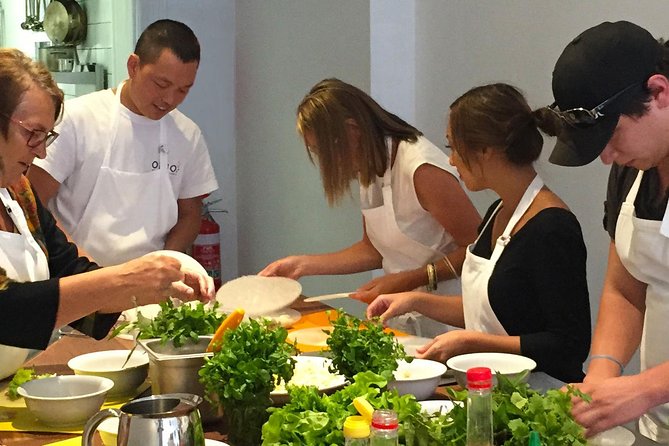
- Hands-on cooking of classic dishes, not just watching
- Market tour with an English-speaking guide so you learn what you’re buying and why
- Small group size (max 8) for more instruction time
- Round-trip hotel transfer that saves you from Hanoi traffic stress
- Includes lunch and/or dinner plus local wines to match your meal with Vietnamese flavors
Your Hanoi Market Walk: Where the Flavors Start
The experience starts before you ever light a stove. You head out with your guide to an authentic local market, where the goal is simple: understand the ingredients behind Vietnamese comfort food. This is where the smells and the choices matter. You’re not just passing stalls. You’re learning what to look for and how the ingredients work together once you’re cooking.
What I like about this part is how it changes your cooking brain. You start noticing things you normally skip over in a supermarket: the shape and texture of herbs, the kinds of vegetables used in salads, and how aromatics get used to build flavor. The market walk also makes the later dishes feel more connected to daily life in Hanoi, not like restaurant copies.
There’s also a small but real comfort factor: you’re doing this on a guided schedule with a tight group. You’re more likely to ask questions, and you’re less likely to feel lost. You get a welcome drink and a snack along the way, so the market isn’t just a lesson. It’s also an enjoyable way to pace the morning or afternoon.
One thing to keep in mind: markets are active. Even with guidance, you’ll want comfortable shoes and a willingness to stand, walk, and move with the group. If you dislike crowds or loud street energy, you might feel it here, though the group stays small.
You can also read our reviews of more tours and experiences in Hanoi.



How the Class Works (Morning or Afternoon Sessions)
Timing is pretty straightforward. The morning class runs 9:00 to 13:30, and the afternoon class runs 15:30 to 20:00. Either way, the full experience is about 5 hours.
That structure matters for value. You’re not signing up for a short demo where you do a few bites at the end. You get enough time to learn steps, do prep, and cook multiple dishes. When the session is long enough, instruction can go beyond basics like chopping and boiling. You can actually practice the flow of Vietnamese cooking: prep, seasoning, tasting, adjusting, and plating.
You’ll also appreciate that this is designed for real travelers. There’s round-trip transport from your hotel, and your hotel is the meeting point. The pickup has a boundary: it needs to be in the in-city central area. If your hotel is outside that zone, you should inform the provider so pickup can be arranged or confirmed.
Finally, you get a cold towel and bottled water. These little touches sound minor, but in Hanoi heat they help you stay focused, not sweaty and distracted.
Cooking Pho, Bun Cha, and Nem: What You’ll Actually Make
The class focuses on Vietnamese classics, and you’ll typically cook a set that matches one of their course options. The dishes are the heart of the program: pho (noodle soup), bun cha (barbecue pork with noodles and fish sauce), and nem (fried spring rolls). These are not random “Vietnam highlights.” They’re dishes people cook and eat as everyday comfort food.
Option 1: Pork and Spring Rolls + a Salad
If you choose the pork route, you’ll work with:
- Bun cha (BQ pork with noodles and fish sauce)
- Nem (fried spring roll)
- A banana flowers salad with chicken, or green papaya salad with dried beef
This mix is smart. You’re not only cooking hot food. You’re also learning how salads fit into the meal. Vietnamese salads often balance crunch, acid, and herbs, which helps explain why the flavors in soups and grilled dishes taste so alive.
Option 2: Pho + Seafood-Forward and Grilled Fish
If you choose the other option, you’ll work with:
- Chicken soup (pho)
- Green mango salad with seafood
- Grilled fish
This option leans toward fresh and bright flavors. Green mango salad is the kind of dish where your ingredient choices matter, and you learn how sweetness and sourness are balanced. Then you finish with grilled fish, which helps tie the meal together.


Vegetarian Option: Plant-Based Dishes Plus Dessert
You can also go vegetarian with:
- Spring roll (fresh or fried)
- Tofu with tomato sauce
- Eggplant with ginger sauce
- Che (Vietnamese traditional dessert) or egg coffee
This is useful if you want the full experience without pork or meat broths. It also shows you something important: Vietnamese cooking still has depth even when you skip meat. You’ll see how sauce and texture do a lot of the work.
The key value: learning the whole process
The class is fully hands-on. You’re part of the preparation, not just an observer. At the end, you eat what you cooked alongside other dishes from the instructor’s cooking. So even if one step is tricky, you’re still leaving with a satisfying meal.
Market-to-Kitchen Skills You Can Use Back Home
Here’s the practical part: you’re not just learning recipes. You’re learning how to make decisions while cooking.
When you shop in a Vietnamese market with an instructor, you pick up the logic behind ingredient choices. Then in the kitchen, you apply that logic. If you’re the kind of person who has tried a cookbook pho recipe at home and felt it tasted flat, this is how you avoid that frustration. You learn the flavor building blocks in context: the herbs, the sour and salty elements, and how seasoning changes during cooking.
Another thing I like is how the class includes other dishes made by the professional cook. That means you get variety on your plate, and you can compare flavors between what you made and what the instructor made. It’s not just satisfaction. It’s learning by contrast.
Also, the small group helps. With a maximum of 8 travelers, you’re more likely to get real help when your spring roll filling or noodle portion isn’t behaving. The vibe is friendly and instructive, not rushed.
Drinks and Dessert: The Meal Isn’t an Afterthought
One reason this class feels like more than a cooking lesson is how it handles the meal. You’re not just eating snacks. You get a proper lunch or dinner setup, depending on the session.
What’s included:
- Snack, tea, coffee
- Local wines
- Welcome drink
- Lunch and dinner (the program includes both in the overall package)
- Coffee and/or tea
- Bottled water
Local wines may sound like a bonus you don’t need, but it fits the experience. Vietnamese meals often flow with drinks, and you get to try something you might not pick at on your own. Even if you skip alcohol, the tea and coffee are there to keep you comfortable during the last stretch.
Dessert also shows up in the vegetarian option as either che or egg coffee. If you’ve never tried che before, it’s a nice “different from the usual” ending, and egg coffee is a Hanoi classic people often travel for.
Vegetarian and Allergy Requests: Plan Ahead for Smooth Cooking
If you have dietary needs, this is one of those tours where planning matters, and they give you a path to do it. There’s a note that special food requests are available. They can cater for food allergies or preferences if you let them know in advance so they can confirm substitutions.
What I’d do if you’re managing allergies or strict avoidance:
- Tell them when booking that you need specific substitutions
- Choose the vegetarian option if your needs are broader than a simple ingredient swap
- Expect that the instructor will adjust dishes so you still get a full meal with the group
The tour offers clear vegetarian dish sets, so you’re not left with plain noodles and polite disappointment.
Price and Value: Is $50 a Fair Deal in Hanoi?
At $50 per person for roughly 5 hours, you’re paying for more than ingredients. You’re paying for three big chunks of value:
- Guided market time
You get an English-speaking guide and a structured market tour, not random wandering.
- Hands-on instruction
This isn’t a spectator event. You cook multiple items, get feedback, and finish with a full meal.
- Transport and included food/drinks
Round-trip transfer from your hotel in central Hanoi plus bottled water, tea, coffee, snacks, lunch/dinner, and local wines adds real cost back into the math.
For me, the best “value check” is this: you leave with skill, not just photos. If you’re the type who likes making Vietnamese dishes at home, this price starts to feel like a bargain compared to paying for multiple restaurant meals and then still guessing on ingredients.
The small group size also supports value. When you’re max 8, instruction feels more personal, and you’re less likely to get lost in a bigger crowd.
Who Should Book This Cooking Class in Hanoi
This tour fits best if you want more than sightseeing. It’s ideal for:
- Food lovers who want a practical souvenir: cooking skills
- People who enjoy markets and want to learn what they’re looking at
- Couples or solo travelers who like small groups and personal attention
- Home cooks who want to understand flavor balance, not just follow steps
It’s also good if you’re on a business trip spouse mission or you want something cultural that isn’t only museum time. The market walk and cooking lesson connect culture to daily life, in a way that’s easier to remember than a list of attractions.
If you hate hands-on cooking, this is still worth considering only if you like watching and eating your way through. But the format is designed for participation, so you’ll get more if you’re willing to chop, prep, and cook.
Should You Book It? My Take
If you want Hanoi in a way you can use later, I’d book this. The market-to-kitchen flow is exactly where cooking classes often fail, and here it’s a core part of the design. You get market context, hands-on learning, and a meal that feels like the point, not the cleanup.
Book it especially if you care about pho, bun cha, or nem, or if you want a vegetarian option that doesn’t feel like an afterthought. Also, the pickup and small group size make it feel manageable, even if Hanoi traffic would normally make you postpone something like this.
If you’re mainly looking for a light activity and you dislike cooking, you might find the hands-on format less relaxing than a pure food tour. But if you’re game for getting your hands dirty and leaving with real know-how, this is a strong pick.
FAQ
How long is the DIY Vietnamese Cooking Class?
The experience is about 5 hours.
What are the class times in Hanoi?
There are two sessions: 9:00 to 13:30 for the morning class, and 15:30 to 20:00 for the afternoon class.
How much does it cost?
It costs $50.00 per person.
Is hotel pickup included?
Yes. Round-trip transfer is included, and your hotel is the meeting point. Pickup is in the in-city central area.
What dishes can I learn to cook?
The class includes Vietnamese classics such as pho, bun cha, and nem. The exact menu depends on the option you choose.
Do they offer vegetarian options?
Yes. The vegetarian option includes spring roll (fresh or fried), tofu with tomato sauce, eggplant with ginger sauce, and che or egg coffee.
Can they accommodate allergies or food preferences?
Yes. Special food requests are available if you inform them in advance so they can confirm substitutions.
What’s included with the class?
You get a fully hands-on experience, local market tour, welcome drink, cold towel, snack, tea, coffee, local wines, lunch and dinner, bottled water, and an English-speaking guide and experienced instructor.
How big is the group?
The tour has a maximum of 8 travelers.
What is the cancellation policy?
You can cancel for a full refund up to 24 hours in advance of the experience’s start time. If you cancel less than 24 hours before, the amount paid is not refunded.


![[HOT] Hanoi Old Quarter Walking Street Food - Small Group Tour - Start times, pickup, and how the logistics feel](https://c.thehanoiguide.com/wp-content/uploads/hot-hanoi-old-quarter-walking-street-food-small-group-tour.jpg)