
REVIEW · NORTHERN VIETNAM
Discover Hanoi Through Wood: Hands-On Carving Experience
Book on GetYourGuide →Operated by Mộc Thôn · Bookable on GetYourGuide
Carving wood in Hanoi feels surprisingly personal. At Mộc Thôn, you work with reclaimed flood-fallen wood that carries its own grain and scent, and you carve something you can actually use when you get home. I also love how the artisans slow things down just enough for you to learn real Vietnamese technique instead of just copying a sample. The one thing to consider is that this is mostly a focused workshop, not a walk-through sightseeing tour.
You’ll be guided in English, and the vibe depends on who’s steering the day. In recent sessions, names like Simon and Maxie show up as supportive guides, with a patient lead carver like Kai helping you get the cut lines clean. Expect tea, soft music, and a mini art gallery around you as you work.
In This Review
- Key things you’ll notice at Mộc Thôn
- A Workshop in a Real Hanoi Neighborhood
- The Flood-Fallen Wood Choice: Where the Craft Starts
- Stories That Actually Support the Technique
- Tools, Tea, and Guided Hands-On Learning
- What You’ll Make in 3 Hours
- Rooftop Garden Space and a Mini Art Gallery
- Value Check: Why $14 Feels Fair
- Tips So You Get the Best Result
- Who Should Book This Workshop
- Should You Book Mộc Thôn Wood Carving?
- FAQ
- What is the duration of the Mộc Thôn wood carving experience?
- How much does it cost?
- Is the workshop guided in English?
- What’s included in the price?
- What should I expect to make?
- Do I need to bring anything?
- Can I cancel or change plans?
Key things you’ll notice at Mộc Thôn
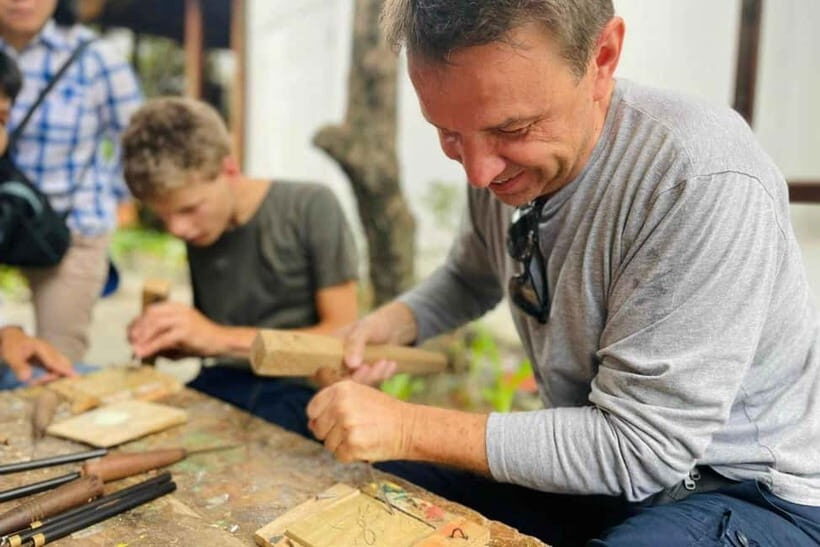
- Reclaimed flood-timber with a backstory: each block has origin details and a reason it was saved
- Hands-on instruction that starts fast: you’re shaping wood early, not sitting through a lecture
- Craft villages in the mix: stories connected to Đồng Kỵ and Chàng Sơn help the technique make sense
- Tools that feel approachable: carving knives, chisels, sandpaper, and paint, all provided
- A take-home piece plus a take-home ritual: your item arrives in a cloth bag with a written note option
- Art around you while you work: a mini gallery spotlights emerging local artists
A Workshop in a Real Hanoi Neighborhood
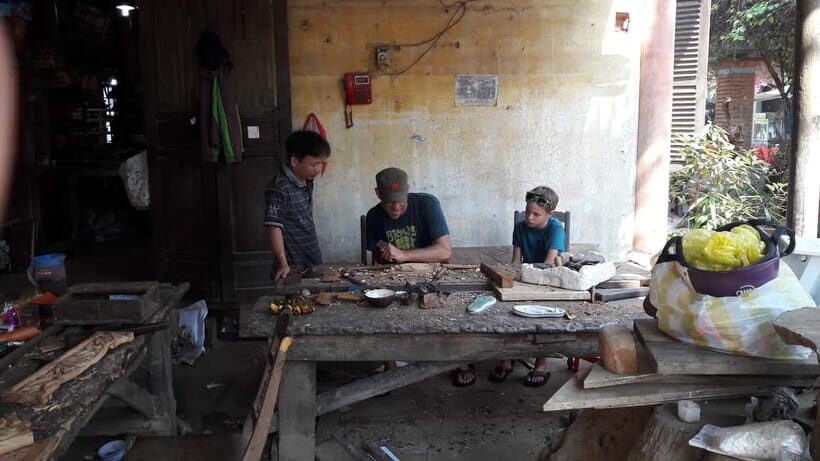
Most Hanoi tours pick one of two modes: frantic streets or polished highlights. This one drops you into a quieter, local neighborhood feel first, with narrow alleys, banana trees, and the visual noise you’d actually see day-to-day, like tangled power lines and parked scooters. You’re not sent off to a “craft village” outside the city. You start in the city’s everyday texture.
Then you reach Mộc Thôn, and the tone changes. Inside, it’s warm and creative, with space to work comfortably. The session has a gentle rhythm: welcome, choose your wood, then you get moving. Soft instrumental music stays in the background, which helps you slow your hands down and focus on the small decisions that make carving look intentional.
If you’re the kind of traveler who likes doing one meaningful thing with your time instead of stacking five quick stops, you’ll probably feel at home here.
You can also read our reviews of more tours and experiences in Northern Vietnam

The Flood-Fallen Wood Choice: Where the Craft Starts
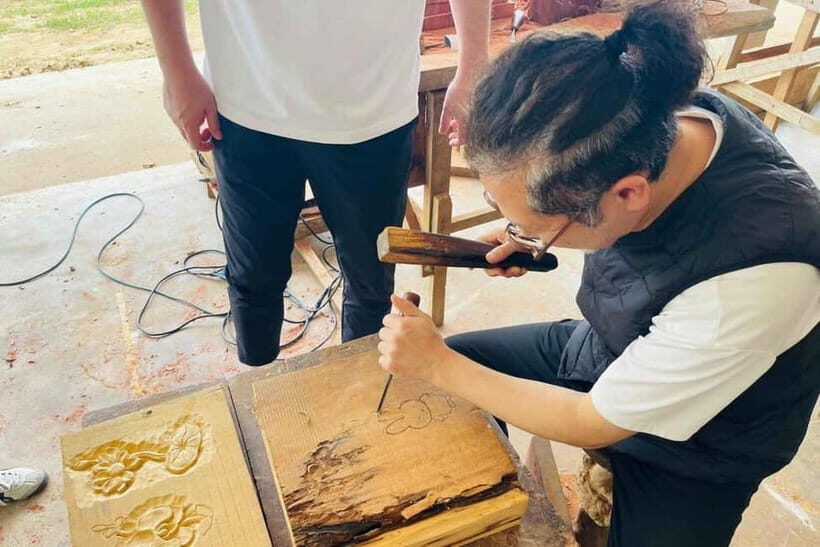
The best part of this experience is the starting point. You don’t just grab any board from a pile. You choose a piece of wood that’s described as reclaimed flood-fallen timber, including reclaimed wood that once sat through storms before it was carefully brought back to life.
That matters because it changes your relationship to the material. You’re not carving from something anonymous and interchangeable. You’re carving from something with grain direction, color variation, and natural marks that can guide (or challenge) your design. The workshop explains the origin and meaning, and that context adds weight to what could otherwise feel like a simple souvenir-making class.
And here’s the sneaky part: when your brain understands that the wood survived a disaster and was saved, you tend to treat it with more patience. Your cuts feel slower. Your sanding feels more careful. It’s the difference between making an object and honoring a material.
Stories That Actually Support the Technique
This is not just craft history as trivia. You hear about traditional Vietnamese woodcraft heritage through stories tied to craft villages like Đồng Kỵ and Chàng Sơn. The idea is that technique didn’t appear out of nowhere. It grew through generations of people who worked with wood every day, learned by repeating small tasks, and refined methods until they looked effortless.
In practical terms, those stories help you understand why you’re holding a tool a certain way, or why the guide nudges you to carve with the grain instead of fighting it. When you know the “why,” the “how” sticks better.
Also, the guides bring the tone down to earth. If you’re worried you’ll feel behind, the approach aims to make it easy to start. In past sessions, people appreciated that you could get practicing fairly quickly, without a long stretch of talking before the tools came out.
Tools, Tea, and Guided Hands-On Learning
You’re provided with the essentials: carving knives, chisels, sandpaper, and paint. You’re not expected to be a woodworker before you arrive. The process is guided with supportive instruction, with artisans close enough to help you correct angles and avoid common mistakes.
One repeated theme from excellent sessions is patience. Lead carvers step in when needed, and guides encourage you without rushing you into a finish that looks good only from far away. That’s a big deal for beginners. Carving has a learning curve, but a supportive setup can turn that curve into confidence.
You’ll also be offered tea, and the atmosphere stays calm enough that you can actually hear yourself think. On some days, lemon tea shows up, which feels like a small but memorable touch in a workshop like this. The point isn’t the beverage. It’s the pace: you get time to settle in and make something properly.
If you want photos, you can request them during the session. It’s a nice way to remember the steps, not just the final product.
What You’ll Make in 3 Hours
The workshop gives you structure, but it doesn’t box you into one rigid design. You typically create a personalized piece selected from options like a multipurpose board, a coaster, or a small creature. In other words, you’re not leaving with a generic block of carved nothingness.
In three hours, your design needs to stay realistic. The guides help you choose a style that fits the time and tool set. That’s why the experience feels more successful than the “make a masterpiece quickly” classes that leave people frustrated.
Here’s what this is really training you to do:
- Find the grain direction and work with it
- Start with simple shaping before you add details
- Sand in a way that cleans edges without erasing your design
- Use paint thoughtfully so it enhances carving instead of covering it
When it goes well, you end up with an item that feels personal and useful, not just decorative.
And when you finish, you pack your creation into a handmade cloth bag to take home. You can also write a small note for yourself, for someone you miss, or for someone you hope to become. That moment turns the class into more than a craft. It becomes a small reflection you carry out of the room.






Rooftop Garden Space and a Mini Art Gallery
While you carve, you’re not working in a bare workshop box. You have access to a cozy rooftop garden space for relaxing and creating. That’s a practical win: carving makes you lean in. A quick shift to a brighter outdoor space helps your focus reset.
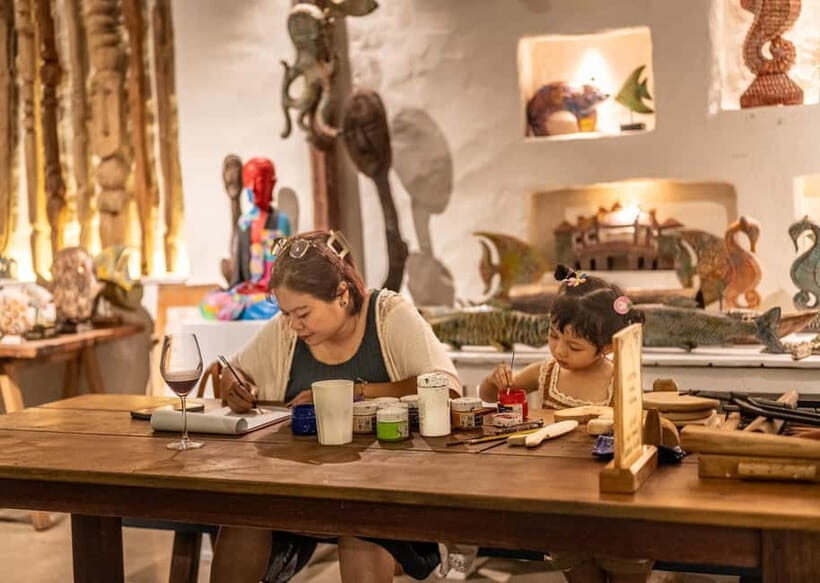
Around you, there’s also a mini art gallery with works by emerging local artists. You’re not just making in silence. You’re surrounded by other people’s art, which helps you see your project as part of a larger creative scene. It also gives you ideas for what to look for in Hanoi beyond this workshop.
If you like the feeling of supporting local artists while you learn a craft, you’ll probably appreciate this layout. It doesn’t distract you from making your own piece, but it gives the room a soul.
Value Check: Why $14 Feels Fair
At $14 per person for a three-hour hands-on workshop, this sits in the “strong value” category in Hanoi. You’re paying for more than time at a table. The price supports:
- Guided instruction from local artisans
- Choice of reclaimed flood-timber with explanations
- All tools and materials
- Tea and a comfortable workspace
- A take-home item plus the cloth bag
- Optional photos if you request them
- Ongoing value via a follow-up gift voucher sent digitally later
If you’ve ever done a “cheap class” where you leave with a half-finished souvenir and no real guidance, this is different. The wood choice and the teaching approach raise the experience from just activity to actual craft learning.
Also, the English-speaking guide matters. It makes the stories about Đồng Kỵ and Chàng Sơn, plus the tool guidance, much more usable. You’re not just mimicking hand movements. You’re understanding what you’re doing.
Tips So You Get the Best Result
You don’t need to arrive with artistic talent. You do want to arrive with the right mindset.
- Pick a design that fits carving basics. If you choose something too intricate, you’ll spend the full three hours chasing perfection instead of finishing.
- Take the guide’s advice on grain direction seriously. Your results improve fast when you follow it.
- Don’t overthink the painting stage. Use it to enhance what you already carved, not to cover everything.
- Wear clothes you don’t mind getting a little dusty. Even with sandpaper and tools handled carefully, carving has a way of leaving traces.
One more practical note: directions are handled through messages after booking. You’ll connect via WhatsApp or other chat apps for more detailed directions, which makes it easier to find the workshop without guessing.
Who Should Book This Workshop
This is a great fit for you if:
- You like hands-on activities more than long sightseeing
- You want a meaningful Hanoi experience that connects craft and local life
- You’re a beginner and want clear support
- You care about reclaimed materials and the stories behind them
It’s also a nice choice if your trip tempo is loose. One visitor enjoyed it because they had extra time in Hanoi and wanted something productive without a big commitment.
If you’re craving big temple panoramas, this won’t replace a guided Old Quarter walk. Think of it as quality time spent learning a craft and leaving with a real object, not a quick story stop.
Should You Book Mộc Thôn Wood Carving?
I’d book it if you want one memorable, low-stress activity that feels authentic and skill-based. The reclaimed flood-fallen wood angle adds depth. The way the guides support beginners keeps the experience from turning into frustration. And when you include the rooftop space, the mini art gallery, and the take-home ritual of a note in a cloth bag, it becomes more than a souvenir purchase.
The main reason not to book is simple: if you want a sightseeing-heavy itinerary, you might find the workshop focus too concentrated. But if you’re happy to slow down for a few hours and let your hands learn something new, this is a strong bet for Hanoi.
FAQ
What is the duration of the Mộc Thôn wood carving experience?
It lasts 3 hours.
How much does it cost?
The price is $14 per person.
Is the workshop guided in English?
Yes. There is a live tour guide in English.
What’s included in the price?
You get one guided woodcarving workshop with local artisans, a choice of wood with origin and meaning explanations, all tools and materials (carving knives, sandpaper, chisels), welcome tea, access to a cozy rooftop garden space, a bag to take your item home, and a follow-up gift voucher sent digitally later. Optional beverage orders are available, and photos can be taken during the session upon request.
What should I expect to make?
You’ll create a personalized piece, with options such as a multipurpose board, a coaster, or a small creature, depending on your choice and the guidance provided.
Do I need to bring anything?
The workshop provides the tools and materials. You may want to wear clothes you don’t mind getting a bit dusty, but no extra materials are listed as required.
Can I cancel or change plans?
Free cancellation is available up to 24 hours in advance for a full refund. There is also a reserve now & pay later option so you can book without paying immediately.