REVIEW · HANOI
3 Dishes cooking + Egg Coffee bonus & Local Market Tour
Book on Viator →Operated by Hong Hoai Cooking Class · Bookable on Viator
Hanoi food lessons start with shopping. At Hong Hoai Cooking Class, you join Hoang for a guided walk through Dong Xuan Market, then cook Vietnamese classics in a small group so you can actually understand what makes each dish work. You also get recipes after class, which is the rare detail that turns a fun morning into something you can repeat later.
I really like the hands-on pacing: you’re shown the cooking procedure step by step, then you eat what you just made with everyone in the group. The possible drawback: you’ll choose 3 dishes together as a group, so if you have one very specific dish on your wishlist, you may need a little flexibility.
In This Review
- Key Highlights You’ll Feel Right Away
- Where This Hanoi Cooking Class Really Starts: Hoang’s and Dong Xuan Market
- The 3.5-Hour Plan: A Tight Schedule That Still Lets You Eat Well
- Choosing Your 3 Dishes: Small Group Cooking With Real Decisions
- Dong Xuan Market: How to Shop Like You Mean It
- In the Kitchen With Hoang: Procedure, Seasoning, and Knife Skills
- The Meal Moment: Eating Together Isn’t an Afterthought
- Egg Coffee Bonus: A Simple Hanoi Finish
- Price and Value: What $45 Buys You in Real Learning
- Who This Cooking Class Is Best For (and Who Might Skip It)
- Quick FAQ for Planning Your Hanoi Cooking Morning
- Should You Book This Cooking Class in Hanoi?
- FAQ
- How long is the Hanoi cooking class experience?
- Where does the tour start and what’s the meeting point?
- What is the first stop during the tour?
- How many people can join the class?
- What can I expect to do during the cooking class?
- Can I choose which dishes to cook?
- Are recipes provided after the class?
- Is food included in the price?
- Is an egg coffee bonus included?
- What is the cancellation and weather rule?
Key Highlights You’ll Feel Right Away
- Dong Xuan Market shopping for ingredients you’ll cook that same day
- Choose 3 dishes as a group, then cook them with clear coaching
- Small group size (max 10), which keeps questions from getting lost
- Lunch and dinner included from the dishes you prepare
- Egg coffee bonus to finish with a Hanoi flavor
- Recipes sent after class, so you can recreate the dishes at home
Where This Hanoi Cooking Class Really Starts: Hoang’s and Dong Xuan Market
This class is set up like a real food workflow, not just a performance. It begins at Hoang’s Restaurant – Vietnamese Restaurant & Vegan Food, right in the Old Quarter area (54 P. Hàng Buồm). It’s also described as near public transportation, so you’re not dependent on taxis to start your morning on time.
From there, the highlight early on is the Dong Xuan Market ingredient run. About 45 minutes goes to market shopping, with your guide helping you select ingredients and understand what matters. If you’ve ever tasted Vietnamese food and wondered why it tastes so layered even when it looks simple, this is where the answers start: the choice of herbs, aromatics, and the right balance of seasonings.
Why this matters for you: you’re not just learning recipes. You’re learning a method for choosing ingredients in Vietnam. That’s the kind of knowledge that helps you shop smarter back home, even if the exact brands and produce aren’t the same.
You can also read our reviews of more tours and experiences in Hanoi.



The 3.5-Hour Plan: A Tight Schedule That Still Lets You Eat Well
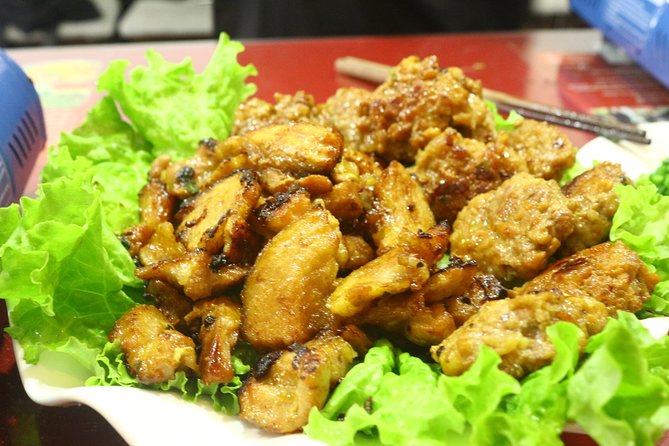
The whole experience runs about 3 hours 30 minutes and uses a mobile ticket. Expect a clear sequence: shop, prep, cook, eat. The structure is simple, and that’s a good thing when you’re in a new city and trying to follow everything in a second language.
Here’s how the timeline typically feels:
1) Market time (about 45 minutes) at Dong Xuan Market
2) Back to the meeting point for a short reset and prep support
3) Another explanation from the guide about ingredients and seasoning
4) Cooking together, then enjoying the meal as a group
After the market, you’ll get a rest while staff help with practical steps like preparing and washing the ingredients you bring back. That little break is smart. It keeps the energy up for the actual cooking, instead of turning the day into constant chopping and cleanup.
Then the guide gives a general recap so nothing gets lost. You’ll also follow the procedure during the cooking session, and after everything is done, you eat what you cooked together. For a short class, that “cook and eat” loop is the most satisfying format.
Choosing Your 3 Dishes: Small Group Cooking With Real Decisions
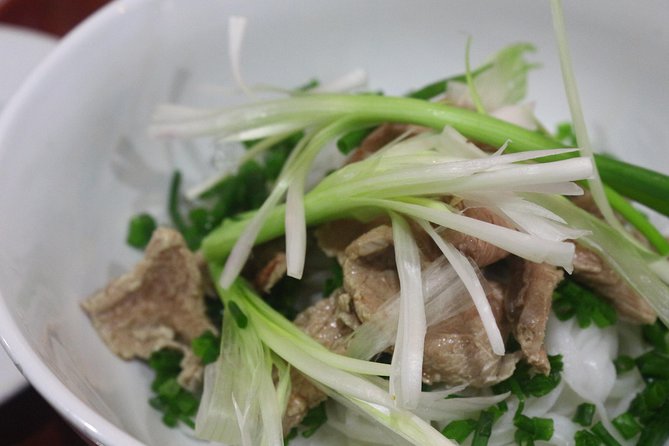
One of the most important details here is how dishes are chosen. You can pick 3 dishes for the class, and you’ll do that with the other people in your group. The idea is teamwork: you’re sharing a cooking station and coordinating ingredients, so the class stays manageable for everyone.
For you, this means two things:
- You’ll learn more by focusing on fewer dishes than a mega-class with many components.
- You might not get your top pick if the group’s 3-dish plan goes a different direction.
From what’s been cooked in the past, you may see classic options like phở and bún chả, along with dishes such as chicken and pork rolls. The menus aren’t listed here, so you should view this as potential choices rather than a guarantee. Still, the overall promise is consistent: you’ll cook Vietnamese traditional dishes, guided through procedure and technique.
Dong Xuan Market: How to Shop Like You Mean It
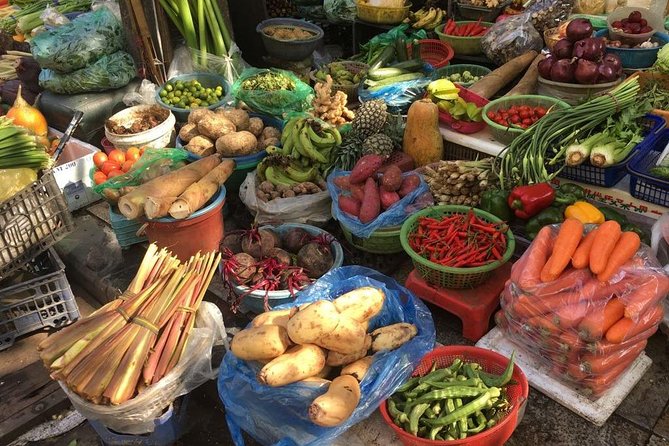
The market stop is about 45 minutes, and it’s guided. You’ll visit local stores and buy ingredients on-site, so what you learn stays grounded in real choices, not just theory. This is where you start noticing patterns in Vietnamese cooking: aromatic herbs matter, balance matters, and fresh ingredients matter.
Your guide’s role is practical. Based on the way the class is described and what guests highlight, you should expect help with how to choose good produce and how ingredients connect to the seasoning plan later in the kitchen. Even if you’re not carrying notes, you’ll come away understanding the logic behind the flavors.
A good way to use this time: watch what your guide points to, and ask simple questions. Things like what’s used for fresh aroma versus what’s used for body in a broth, or why certain herbs are added at specific times. You don’t need a quiz mindset; you just need curiosity. That’s usually enough to make the market stop memorable.
In the Kitchen With Hoang: Procedure, Seasoning, and Knife Skills
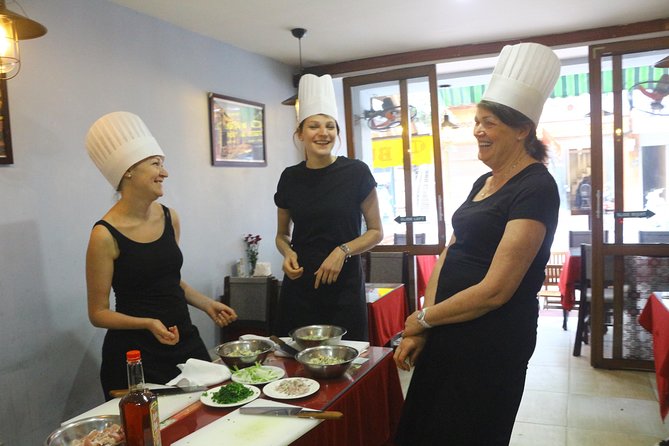
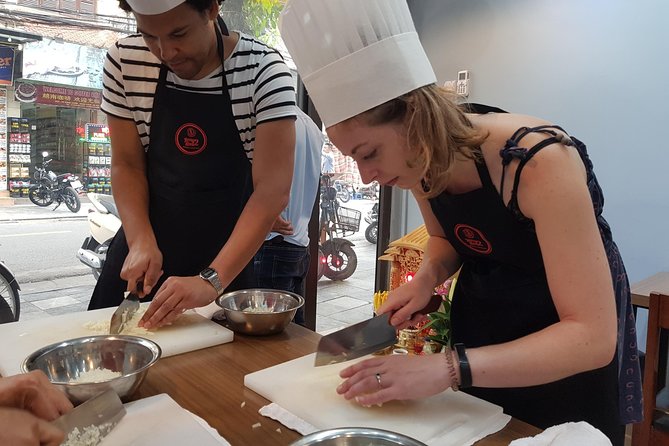
Once you return from the market, the class shifts from shopping to cooking. You’ll be guided through the cooking steps clearly, with explanations of procedures and how ingredients come together. The tour description says the guide will explain and show you in the class how to cook, and that recipes are sent after the class.
If you want a class that feels teachable (not just watch-and-copy), this part is the payoff. Guests have praised the teaching style, including instruction on knife skills and the step-by-step process for preparing ingredients. That’s practical learning you can use later, even when you’re not cooking the exact same dishes.
You’ll also get a general walk-through of the ingredients and seasoning you’ll use. This is key in Vietnamese cooking because flavor isn’t random. It’s structured. Even when dishes are simple-looking, they’re usually built from aromatics, balanced sweetness, salty depth, and sour brightness, often with herbs added for freshness.
So what do you actually do in the class?
- You cook the dishes with guidance, not just follow a script.
- You prepare ingredients as directed, with staff help for some of the heavy-lift tasks like washing and prep management.
- You learn how the cooking procedure connects to the final taste.
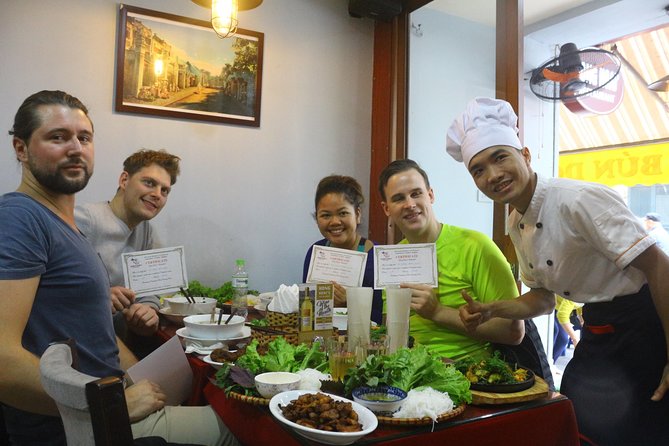
And then comes the part that’s easy to underestimate: you eat what you cooked. The meal is included (both lunch and dinner are listed), and bottled water is provided. It’s not a tiny snack. The class is meant to be a full experience, not just a demonstration.


The Meal Moment: Eating Together Isn’t an Afterthought
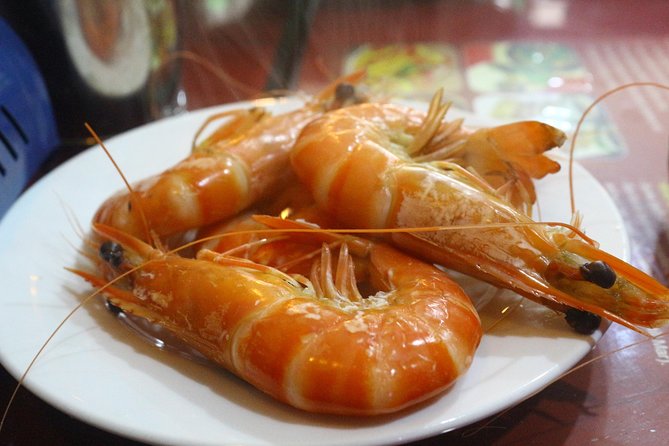
After cooking, you’ll enjoy the dishes you made with everyone in the class. This matters because it completes the learning loop. Food that tastes correct is the final test. If something tasted off, you can often connect it to an ingredient choice or a step you did earlier.
This is also where the small group size (max 10 travelers) helps. You’re more likely to have a conversation, ask a question without feeling rushed, and actually see what others are doing. When you’re learning technique, that peer context can be surprisingly useful.
Another practical note: alcoholic beverages are not included. So if you want wine or beer with dinner, you’ll need to arrange it separately. For most people, the water included is a helpful baseline, especially after time in the market.
Egg Coffee Bonus: A Simple Hanoi Finish
The tour name includes an egg coffee bonus, and that’s a fun add-on for two reasons. First, egg coffee is one of those Hanoi flavors that feels local rather than generic café culture. Second, it’s an easy way to end the experience with something sweet and memorable without needing another stop.
Expect it to be part of the overall experience rhythm, coming after the main cooking and eating portion. It’s a nice contrast to savory Vietnamese dishes—creamy, rich, and comforting.
If you’re curious, this is the kind of bonus that makes a short cooking class feel like more than just a ticket for food education. It’s a tiny taste of Hanoi beyond the kitchen.
Price and Value: What $45 Buys You in Real Learning
At $45 per person, this isn’t a bargain in the way a street-food stroll is cheap. But it is good value for what you get: market shopping support, hands-on cooking coaching, and a full meal made from your work.
Think of the cost as covering:
- A guided ingredient run (about 45 minutes in Dong Xuan Market)
- The instruction for 3 Vietnamese dishes
- The included meal(s) from what you cook, plus bottled water
- Recipes sent after class, which gives your learning longer life than one evening in your memory
Also, the group size matters. With a maximum of 10 travelers, you’re less likely to feel like a passive observer. More attention and better pacing can make the difference between learning something useful and just having a fun blur.
One consideration: because you choose dishes as a group, the final menu is partly social logistics. That doesn’t make it worse, but it does mean your value experience depends on the dish lineup your group lands on. If you’re flexible, you’ll likely feel like you got your money’s worth.
Who This Cooking Class Is Best For (and Who Might Skip It)
This experience fits you best if you want:
- A structured way to learn Vietnamese cooking basics, not just watch someone cook
- A hands-on class where you cook three dishes and then eat them
- A market connection that helps you understand ingredients, especially in a place like Dong Xuan where the produce choices can feel unfamiliar
You might want to skip it if:
- You’re only interested in one specific dish and would be disappointed if your group picks something else
- You hate spending time in markets, even briefly, since Dong Xuan Market is a core part of the flow
- You’re short on time and can’t spare about 3.5 hours (including cooking and eating)
A great match is a visitor who loves food and wants practical learning. It’s also ideal if you’re traveling with friends and can coordinate choices. Smaller groups make it more comfortable for questions and hands-on participation.
Quick FAQ for Planning Your Hanoi Cooking Morning
You’ll be glad to know there’s nothing overly complicated here, and the class format is pretty straightforward.
Should You Book This Cooking Class in Hanoi?
I think you should book it if you want a genuine taste of Hanoi with real technique, not just a meal. The combination of Dong Xuan Market sourcing, cooking three dishes with step-by-step instruction, and eating what you made creates a satisfying, full-circle experience.
It’s also a smart choice for travelers who like to go beyond the highlights. Hanoi food isn’t one flavor; it’s balance, herbs, seasoning timing, and ingredient quality. This class teaches those connections in a way you can actually reuse.
If you’re very set on a specific dish, check in about the dish options before you commit. Otherwise, this is the kind of tour that gives you a skill you can carry home, plus a sweet egg coffee bonus to close out the day.
FAQ
How long is the Hanoi cooking class experience?
The experience is approximately 3 hours 30 minutes.
Where does the tour start and what’s the meeting point?
It starts at Hoang’s Restaurant – Vietnamese Restaurant & Vegan Food, 54 P. Hàng Buồm, Hàng Buồm, Hoàn Kiếm, Hà Nội 100000, Vietnam.
What is the first stop during the tour?
The first stop is Dong Xuan Market.
How many people can join the class?
The tour/activity has a maximum of 10 travelers.
What can I expect to do during the cooking class?
You’ll visit the local market to buy ingredients (about 45 minutes), then you’ll cook 3 Vietnamese traditional dishes with the guide. After cooking, you’ll enjoy the food together.
Can I choose which dishes to cook?
Yes. You can choose 3 dishes for the class with other people in the group.
Are recipes provided after the class?
Yes. The guide explains the cooking process and sends recipes after the class.
Is food included in the price?
Yes. The price includes the food you cook, listed as lunch and dinner, plus bottled water.
Is an egg coffee bonus included?
The experience title includes an egg coffee bonus, so it’s part of what you can expect with this tour.
What is the cancellation and weather rule?
You can cancel for a full refund up to 24 hours in advance. The experience requires good weather, and if it’s canceled due to poor weather you’ll be offered another date or a full refund.