REVIEW · HANOI
Vietnam War: Uncovering Hanoi’s Untold Stories
Book on Viator →Operated by OneTrip With Local · Bookable on Viator
Some neighborhoods in Hanoi hold stories no monument explains.
This 2.5-hour walk connects the Vietnam War to daily life—planned-economy struggles, the split between North and South, and what unification meant on the ground. I like that it’s framed as a conversation (not a lecture), with a relaxed pace and a short taxi hop halfway so the route stays doable. You’ll also be looking at places that sit far from the usual tourist circuit.
I also really like the route itself: Chợ Giời (the historic black market) and the Kham Thiên B52 Memorial aren’t treated like quick photo stops. Instead, you get context for why people adapted—through trade, rationing pressures, and changing daily routines—long after the fighting moved on. And the guides I’ve seen lead this tour—people like Dung, Kien, and Thomas—bring personal, street-level detail that makes the war feel connected to real blocks, real jobs, and real decisions.
One consideration: this is history tied to trauma, including the legacy of Agent Orange/Dioxin. You should expect the tone to get serious in parts, and you’ll want to go in ready to listen respectfully rather than “power through” it.
In This Review
- Key things that make this walk worth your time
- War Monuments With a Street-Level Lens
- Coffee Context: Starting at Phố Huế and Getting Oriented
- Duờng Tau: Listening to Veterans and Local Lives
- Kham Thiên B52 Memorial: A Place for Lessons, Not Only Remembrance
- Chợ Giời Black Market: The Economy of Survival
- 24 P. Chùa Vua: The Story Starts Before You Walk
- Hanoi Train Street Community: Past Impact in a Present-Day Place
- Group Size, Timing, and What It Feels Like in Real Life
- Price and Value: Why $37 Works Here
- Who Should Book This Walk, and Who Might Want to Skip It
- Quick FAQ Before You Go
- FAQ
- How long is the Vietnam War: Uncovering Hanoi’s Untold Stories tour?
- How much does the tour cost?
- What’s included in the price?
- Where does the tour start and end?
- Which stops are part of the experience?
- Is admission required for the sites?
- How big is the group?
- Can I cancel for a refund?
- Is the tour ticket digital?
- Should You Book It?
Key things that make this walk worth your time
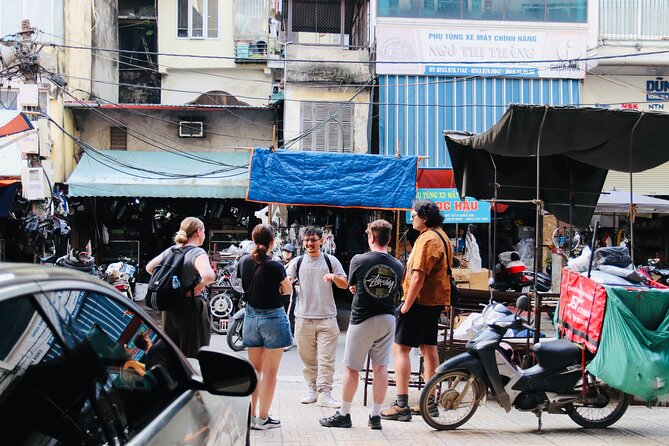
- Small group (max 10) keeps the chat going, especially during the pre-walk context session
- Private transportation + taxi ride halfway makes the route practical for a 2.5-hour window
- Chợ Giời black market is framed as an economy of survival, not a curiosity
- Kham Thiên B52 Memorial is treated as a lesson, not only remembrance
- Hanoi Train Street community is included as a living, present-day reality shaped by the past
- 20% of profit supports Vietnam Association for Victims of Agen Orange/Dioxin and Blue Dragon’s Children Foundation
War Monuments With a Street-Level Lens
Hanoi has plenty of famous sights, but this experience fixes the missing piece: how the war changed everyday life, not just politics. The idea is simple. You start with the heavy backstory—North and South, unification, Cold War pressure—and then you test it against what the city looks like at street level.
What I like is how the tour refuses to keep the Vietnam War sealed inside museums. The route connects war impact to neighborhoods that still function today. That’s why the pacing matters: you don’t rush through the sites. You pause often enough to ask questions and process what you’re seeing.
And yes, you’ll walk and you’ll look closely, but it’s not a grind. There’s a short taxi ride halfway through, and the overall time stays around 2 hours 30 minutes. If you’re the type who likes to understand how a place works, not only what happened there, this tour hits that sweet spot.
Coffee Context: Starting at Phố Huế and Getting Oriented
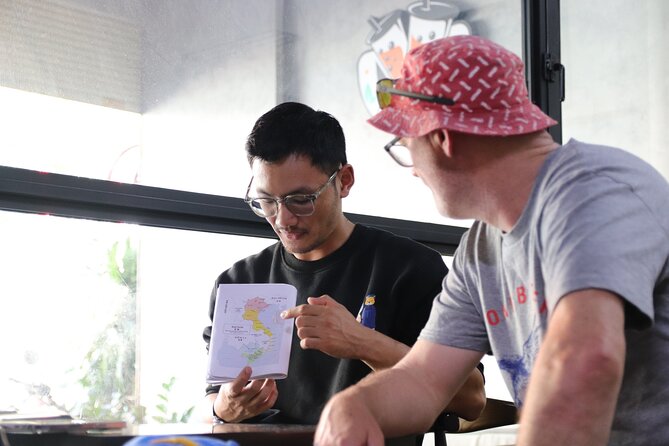
The walk begins at 24B P. Chùa Vua, Phố Huế, Hai Bà Trưng. Even before you start moving, you get a sit-down conversation with your local expert. This matters more than you might think, because it gives you the mental map before the streets do their usual thing—fast motorbikes, tight sidewalks, and buildings that all look like they’ve always been there.
You’ll also get coffee and/or tea as part of the experience. In practice, that first stop is where you learn the “why” behind what you’ll see later: what a planned economy did to daily routines, why people on different sides experienced the conflict differently, and how the unification story still echoes in the city’s layout and social memory.
This is one reason the tour works even for history buffs. It also works if you’re not a history buff. You’re given enough context to follow the rest without feeling like you’re sitting through a textbook.
Duờng Tau: Listening to Veterans and Local Lives
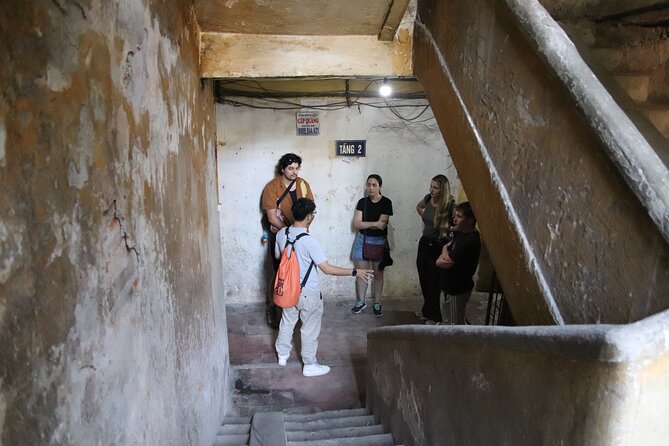
One of the first stops is Duờng Tau, where you hear stories from veterans and focus on the lives of local people. The best way I can describe the value here: this isn’t just about major events. It’s about how ordinary existence continued—how people adapted, how neighborhoods reorganized, and how the war shaped choices that had to be made day after day.
You spend about 30 minutes here, and the stop includes an admission ticket. That’s a fair trade in both time and cost because it’s tied directly to the lived stories you’re hearing. I’d plan to slow down at this point. The information lands better when you’re not rushing.
Also, take note of the tone. The tour is guided as a conversation, which means you can ask what you genuinely want explained—rather than being fed a rigid timeline you don’t care about. If you’re visiting with teens or family, this kind of pacing helps. It turns history into something you can talk about, not just something you observe.
Kham Thiên B52 Memorial: A Place for Lessons, Not Only Remembrance
Next comes Kham Thien and the B52 Memorial. You’ll spend about 15 minutes there, and this part is free in terms of admission.
What’s important is how the memorial is presented. It isn’t only framed as a spot to remember tragedy. The guide pushes you to understand what the event taught, how it changed safety, and how the city processed the aftermath over time. Memorials can be emotionally heavy, but this approach keeps you from treating it as a checkmark.
If you like your history grounded in consequences, you’ll appreciate this. The memorial becomes a starting point for thinking about the distance between what war intends and what war delivers. And because you’ve already had the coffee context session, you’re better prepared to connect the memorial to the broader story of how Vietnam moved into unification and then into a Cold War-shaped world.
Chợ Giời Black Market: The Economy of Survival
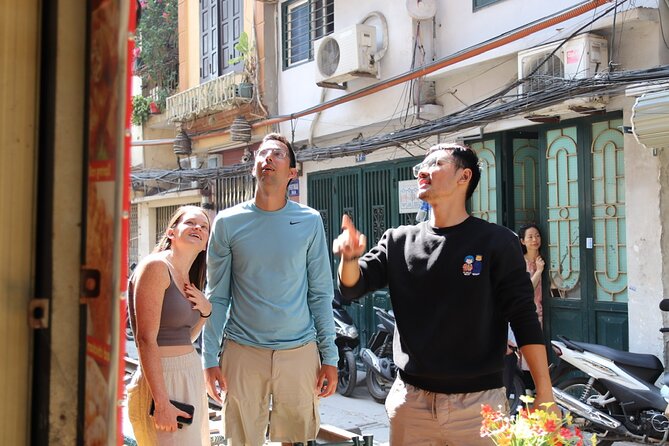
Then you hit Chợ Giời, described as a historic black market. You’ll spend about 1 hour here, and admission is free.
This is where the tour’s “untold stories” idea becomes real. You don’t just hear that a black market existed. You learn why it emerged and how local ingenuity turned shortages and restrictions into a secret economy. In a planned economy, movement of goods and money can become the difference between coping and collapse. So what you see and hear at Chợ Giời is essentially a lesson in human problem-solving under pressure.
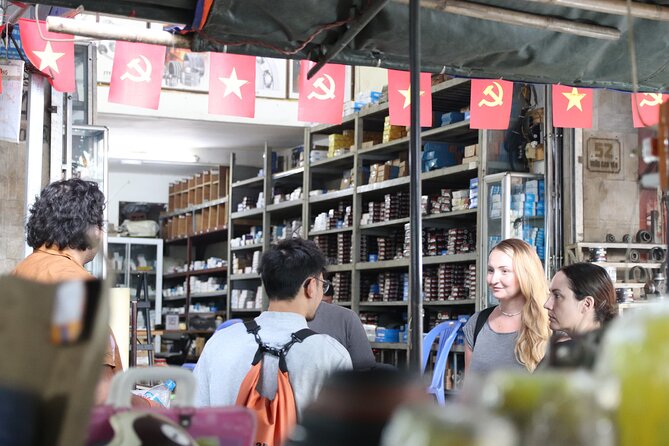
If you’re used to Old Quarter shopping streets, this feels different. It’s more focused on systems—how people traded, how networks formed, how risk worked in daily life. And because it’s still a living area, you get a sense of continuity: the city carries memories while still functioning.
One practical tip: don’t treat the walk like a museum sprint. At Chợ Giời, the guide’s stories matter as much as what’s visually in front of you. Give the guide a chance to explain the logic behind what you’re seeing, and you’ll leave with a much stronger understanding than photos alone can offer.
24 P. Chùa Vua: The Story Starts Before You Walk
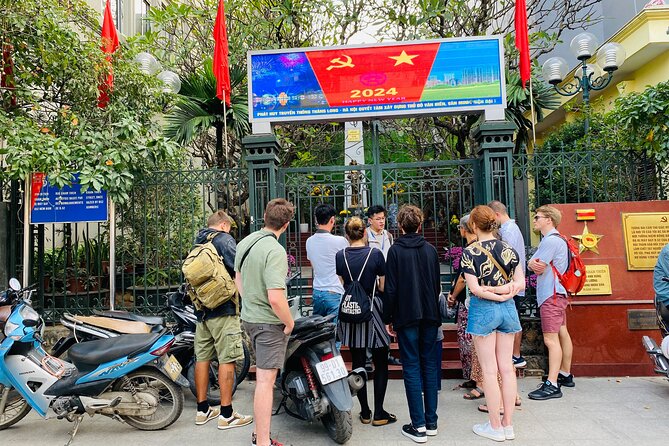
The experience also includes a moment at 24 P. Chùa Vua with the explicit goal of getting you ready to understand what comes next. This is about pacing your thinking. You’re not just dumped into streets and monuments. You’re primed to read the city.
You spend about 30 minutes here, and admission for this stop is listed as free. The helpful part is that the guide takes time to set the stage. That includes explaining the lived impact of planning policies and the different fates local people faced depending on where they stood in the story of North and South.
I like experiences that do this well. They reduce the mental friction that happens when you’re surrounded by history-shaped locations but you lack the context to connect them.
Hanoi Train Street Community: Past Impact in a Present-Day Place
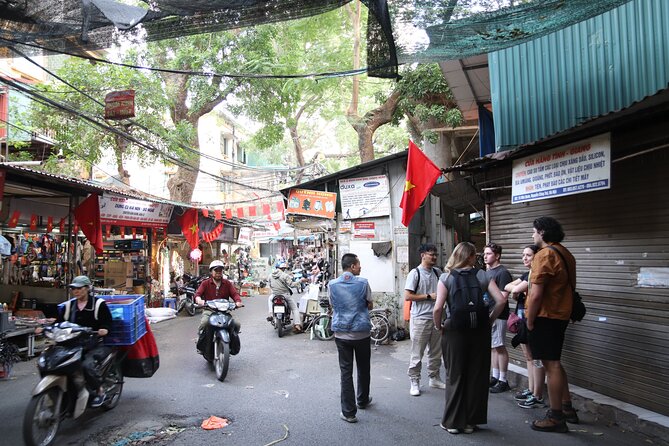
The tour also includes the Hanoi Train Street community. This is the part that reminds you history doesn’t freeze. It keeps shaping housing patterns, daily routines, and how communities survive and adapt.
Even though the tour is framed around the Vietnam War era, this stop brings the conversation back to the present. It shows you a Hanoi that is not only a museum of the past. Instead, you see people living in the city’s real geography—learning how to function around infrastructure and long-term consequences.
I’d think of it like a visual link. You’ve heard about conflict and systems. Now you’re watching those legacies echo in the way a neighborhood operates today. It’s a strong final impression for anyone who wants their travel to feel connected, not compartmentalized.
Group Size, Timing, and What It Feels Like in Real Life
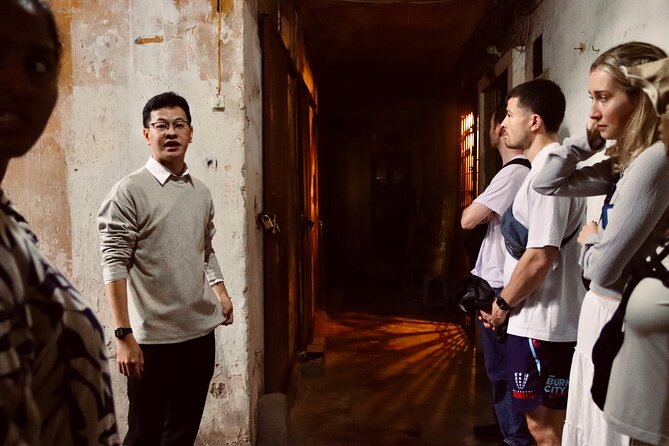
This experience caps at 10 travelers, and that’s not just a number. Smaller groups make it easier to ask questions and get answers that actually fit what you’re curious about. You also tend to get better pacing because the guide can adjust the route and explanations.
The total time is about 2 hours 30 minutes, with a short taxi ride halfway. That ride matters if you’re planning this alongside other Hanoi activities. It keeps the day from turning into a long, tiring endurance test.
And you’ll receive a mobile ticket, which is a small convenience, but it does help keep things smooth. The tour also includes coffee and/or tea, so you’re not starting cold or running on pure willpower.
Price and Value: Why $37 Works Here
At $37 per person, the price may feel modest for what you get—especially if you break it down by the actual ingredients of the experience.
You’re paying for:
- a guided, context-heavy walk (about 2.5 hours)
- coffee/tea included
- private transportation (including a taxi ride halfway)
- admission covered for Duờng Tau
That admission point is key. Some tours pack together free stops and charge anyway. Here, at least one stop includes an admission ticket as part of the experience. And because the tour is built around conversation and interpretation—not just entry-level sightseeing—the guide time is where the value sits.
Then there’s the impact angle: 20% of profit goes to the Vietnam Association for Victims of Agen Orange/Dioxin and the Blue Dragon’s Children Foundation. Even if you don’t focus on this while you’re walking, it’s a meaningful reason to feel good about the money you spend.
Who Should Book This Walk, and Who Might Want to Skip It
I think this is a great fit if you want history that connects to daily life. It’s especially good for:
- people who like neighborhoods, not just monuments
- history-minded visitors who enjoy asking questions
- families with teens and adults who can handle serious topics
You might want to skip it if you prefer purely light sightseeing or if sensitive war topics feel too intense for your current mood. Also, while the physical requirement is listed as moderate, it’s still a walk through urban areas with street crossing and some waiting. Comfortable shoes help.
Quick FAQ Before You Go
FAQ
How long is the Vietnam War: Uncovering Hanoi’s Untold Stories tour?
It lasts about 2 hours 30 minutes.
How much does the tour cost?
The price is listed as $37.00 per person.
What’s included in the price?
Coffee and/or tea are included, along with private transportation.
Where does the tour start and end?
It starts at 24B P. Chùa Vua, Phố Huế, Hai Bà Trưng, Hà Nội and ends on Phố Khâm Thiên. You can easily walk back to the Old Quarter.
Which stops are part of the experience?
You’ll visit Duờng Tau, Kham Thien (B52 Memorial), Chợ Giời, and 24 P. Chùa Vua.
Is admission required for the sites?
Duờng Tau includes an admission ticket. The Kham Thien B52 Memorial and the other included stops are listed as free for admission.
How big is the group?
The tour has a maximum of 10 travelers.
Can I cancel for a refund?
Free cancellation is available if you cancel at least 24 hours in advance for a full refund.
Is the tour ticket digital?
Yes, it’s listed as having a mobile ticket.
Should You Book It?
If you want Hanoi that goes beyond the postcard version, I’d book this. The strongest pull is the way it links the Vietnam War to how people lived afterward—through planned-economy pressure, survival economies like Chợ Giời, and the meaning of memorials in a city that still has to keep going.
I’d especially recommend it if you enjoy a good guide-led conversation and you like seeing neighborhoods that don’t show up on every standard walking route. Just go in ready for some serious subject matter, wear comfortable shoes, and be prepared to ask questions. That’s when this tour really pays off.