REVIEW · HANOI
Hanoi Vespa Tours Led By Women: Hanoi City Vespa Tours
Book on Viator →Operated by Asia Motorbike Adventures · Bookable on Viator
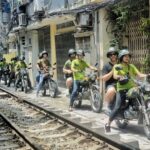
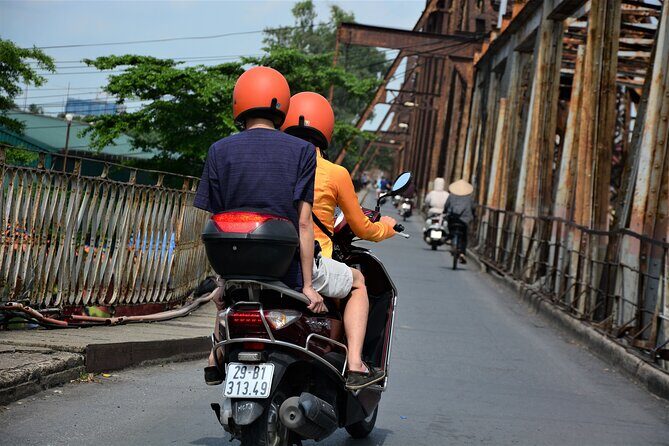
A Vespa ride through Hanoi is fast, loud, and oddly comforting. This women-led Hanoi city tour threads big landmarks with back-street shortcuts, then finishes with the stuff people actually talk about: the Legendary Train Street walk and a proper Hanoi food stop.
I like two things a lot here. First, the tour keeps the group small (maximum 15), so your English-speaking guides like Hoa, Sunny, Anh, and Lily can actually look after you. Second, you don’t just see postcard sights; you pass places tied to everyday life, from Dong Xuan’s market area to lakeside neighborhoods.
One thing to consider: this is real riding time plus a short walk along old rails. If you get motion sick, hate crowds, or struggle with hot weather, the schedule may feel like a lot.
In This Review
- Key highlights you’ll actually remember
- Why a women-led Vespa tour makes sense in Hanoi
- Hanoi Opera House start: your orientation point
- Ho Chi Minh Mausoleum, Ba Đinh Square, and the political core
- Long Bien Bridge and the old-quarter street rhythm
- Huu Tiep Lake and the downed B-52
- Dường Tau (Train Street): walking rails with the neighborhood close
- Hanoi lakes loop: West Lake, Trúc Bạch, Trúc Bạch area moments
- Eating your way through Hanoi after the riding
- Group size, timing, and how not to hate the heat
- The real value of $59 for a 4.5-hour Vespa day
- Should you book this Hanoi Vespa City Tour Led By Women?
- FAQ
- How long is the Hanoi City Vespa Tour?
- What does the tour cost?
- Is pickup included?
- What places does the tour include?
- How many people are in the group?
- Is there food included?
- Can I cancel for a refund?
Key highlights you’ll actually remember
- Women-led guides including Hoa, Sunny, Anh, and Lily, with clear safety guidance
- A tight 4.5-hour loop that mixes major landmarks and tight alley riding
- Long Bien Bridge plus old-quarter streets that vehicles can’t easily reach
- Huu Tiep Lake with the downed B-52 and a chat with a local war-veteran family
- Dường Tau (Train Street) walking the rails with the neighborhood inches away
- Hanoi cuisine stop at local eateries after hours of sightseeing
Why a women-led Vespa tour makes sense in Hanoi
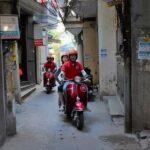
Hanoi by scooter feels like you’re seeing the city the way locals move through it—quick turns, constant motion, and that special sort of street theater. This tour is led by women, and the on-the-ground vibe is all about keeping things calm and clear while Hanoi does its thing around you.
What I appreciate is the way the tour sets you up before you go. You meet at the start point at Hanoi Opera House, then you get a safety briefing and a detailed outline of the day. That’s not just a formality here; it matters because you’re going through narrow lanes where you’re close to walls, motorbikes, pedestrians, and the general swirl of city life.
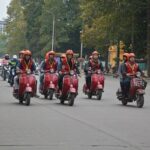
Small group size helps too. With a maximum of 15, you’re not just a number. Your guide can help with pacing, watching for stragglers, and steering you toward the right side of the street when lanes get tight.
And yes, English support is part of the package. The guides on this route are known for friendly communication and for making you feel comfortable—even if you start the day a little unsure about riding.
You can also read our reviews of more city tours in Hanoi



Hanoi Opera House start: your orientation point

The tour’s meeting point is right at Hanoi Opera House (1 Tràng Tiền, Phan Chu Trinh, Hoàn Kiếm, Hà Nội). It’s a smart start because the area gives you an immediate sense of Hanoi’s mix: grand buildings, busy streets, and the quieter back ways you’ll reach shortly after.
If pickup is offered for your booking, you’ll be collected from your hotel and routed to the group start. Either way, you begin with the same key moment: the pre-ride briefing. I’d treat that briefing as your real “how to survive Hanoi traffic” lesson. Pay attention, because it affects how confidently you’ll handle stops and moving through alleys.
You’ll also get that early rhythm. After the briefing, you don’t wait around for the day to start. You ride.
Ho Chi Minh Mausoleum, Ba Đinh Square, and the political core

One of the strengths of this tour is that it doesn’t only aim for cute streets. You also pass through central landmarks that anchor modern Vietnamese identity.
Along the way you’ll see the Ho Chi Minh Mausoleum area, the Presidential Palace, and Ba Đinh Square. Even though you’re not spending hours inside every landmark, the ride does something valuable: it helps you understand how these locations sit in relation to the rest of the city. Hanoi can feel like a puzzle at first. This kind of route gives you a framework fast.
You’ll also pass Literature Temple and Tran Quoc Temple. These stops work well from the saddle because they highlight how Hanoi’s spiritual and educational sites are woven into the wider city—not cut off from it. The temples and surrounding areas are calmer zones compared to the road noise, even when you’re only glimpsing them from nearby streets.
If you’re visiting for a short time, this part is a practical shortcut. It also helps you pick better priorities later, since you’ll come away with a clearer mental map.
Long Bien Bridge and the old-quarter street rhythm
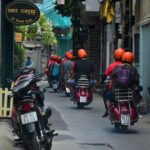
Your second stage brings you toward one of the city’s most recognizable structures: Long Bien Bridge. This isn’t just a photo moment. You ride through tight back streets that don’t really fit car or bus routes, so you see the neighborhood texture more than the tourist belt.
On the way, you pass through Đồng Xuân, the largest market area in the old quarter. Markets in Hanoi are busy in a way that’s hard to understand from standing still. From a motorbike, you catch the flow: goods moving, people weaving through, and the constant practical motion of daily life.
Long Bien Bridge itself is a key story. It was built over 100 years ago during colonial times, and it still functions as a symbol of the city’s staying power. From the ride, you get that sense of continuity—Hanoi layers new life on top of old infrastructure.
This stage also tends to be a good confidence builder. Once you’ve handled the earlier roads, the shift into these older lanes feels like you’ve gotten your bearings.
Huu Tiep Lake and the downed B-52
This is one of the most striking stops on the tour route: Hữu Tiệp Lake and the aircraft downed in 1972. The plane remains in the lake, making the site feel immediate rather than abstract.
You’ll spend time here, and the tour includes entry. I like stops like this for two reasons. First, they’re not packaged as a long museum session. Second, the presence of the aircraft in its setting turns the story into something you can see and understand right where it happened.
What makes it even more human is the chance to visit a local family. The homeowner is a war veteran, and you’ll have a chance to chat and hear firsthand experiences of growing up in Vietnam. It’s the kind of conversation that changes how you see the city. You’re not just reading facts—you’re getting a person’s perspective on what those facts meant day to day.
It’s also a moment where the tour slows down in a good way. After riding, it gives you a breather and a clearer emotional context for what you’ve been seeing.
You can also read our reviews of more tours and experiences in Hanoi


Dường Tau (Train Street): walking rails with the neighborhood close
If there’s one stop that people remember, it’s Dường Tau, often called the Legendary Train Street. This tour includes a walk along the 150-year-old train tracks, where daily life continues just beside the rails.
Here’s the part you should mentally prepare for: you’re not far away for a quick photo. You’re walking where people live with a very small buffer from the tracks—about a meter to the side according to the experience description. Children are playing. Laundry is strung. Locals are going about routines with the train passing nearby.
You’re also walking long rails, not strolling on a paved sidewalk, so wear shoes that work for uneven ground and short walking stretches. It’s only about 15 minutes, but it’s still a physical change from riding.
Is it weird? Yes. Is it unforgettable? Also yes. And it’s not just spectacle. You get a real sense of resilience—how people adapt their lives to infrastructure they can’t move and trains that still run.
Hanoi lakes loop: West Lake, Trúc Bạch, Trúc Bạch area moments
One of Hanoi’s quiet superpowers is how often the city finds room for water. This tour threads through several major lakes: West Lake, Trúc Bạch Lake, and Hoàn Kiếm Lake, plus nearby temple views like Trấn Quốc Temple.
It helps to think of this as contrast. You’ll spend earlier time in dense lanes and landmark zones, then you’ll shift toward calmer scenery. Lakeside streets can feel more open and cooler, and that matters on a warm day.
You may also notice details like islands within the city, including Banana Island. These types of spots remind you that Hanoi isn’t only a grid of streets and monuments. It’s also water, leisure, and pockets of slower life inside a major capital.
The tour’s timing naturally supports this. After the heavier sights like the mausoleum area and the downed aircraft site, the lakes feel like you’re resetting your senses.
Eating your way through Hanoi after the riding
The tour wraps with a dedicated chance to taste Vietnamese cuisine at authentic local restaurants and eateries. You’ll have about 45 minutes for food stops, which is a real chunk of time after hours on the scooter.
This is one of the most practical parts of the day. Hanoi food can be intimidating if you only know a few dishes and you’re tired. Here, the guide handles where you go and you focus on eating, asking questions, and trying what sounds good.
One clue to watch for: the tour is designed so you sample multiple flavors rather than just one fast meal. If you’re ordering for the first time in Hanoi, you might want to ask the guide what’s safest for your tastes—spicy level, broth preferences, and whether there’s a vegetarian-friendly option if that matters to you.
If you’re a phở person, you’ll likely be in luck. A standout in the food stop on this route has included a superb phở lunch for at least one couple, and the setting makes that kind of comfort food feel right after a sightseeing ride.
Either way, the food segment is also a reset for your whole day. By the time you finish eating, you’ve pieced together how the city looks, how it moves, and what it tastes like.
Group size, timing, and how not to hate the heat
This tour runs about 4 hours 30 minutes. That’s long enough to see real variety, but short enough that you’re not stuck all day. The schedule also includes several short stops and riding segments, which keeps energy from collapsing into monotony.
A small group (max 15) is a big deal here. It keeps the ride from turning into a traffic jam of scooters. It also helps you feel safer, since guides can keep closer track of the group.
Weather matters. The route goes through street-level neighborhoods and outdoor walking along the tracks, so plan for sun and heat. Bring water if you can, wear light layers, and consider sunglasses and a hat. Your comfort affects your enjoyment more than you’d think.
Also, the tour includes both motorbike time and walking time. If your legs or balance aren’t great, it’s still only short, but you should be honest with yourself before committing.
The real value of $59 for a 4.5-hour Vespa day
At $59 per person, you’re paying for more than a ride. You’re paying for four things that add up quickly on your own:
You get a guided route that strings together major landmarks, off-road back streets, and special sites like the downed B-52 and Train Street. You get time-saving logistics and a structured plan that’s hard to assemble yourself, especially if you want to cover Hanoi efficiently. You get interpretation through a local guide rather than just looking at signs. And you get food stops built into the timing.
Could you do some of this on your own? Sure. But you’d spend time figuring out which roads to take, when to walk, and where to eat without wasting hunger on trial and error. Here, the pacing is designed so the big sights and the everyday scenes stay in the same day.
In other words, you’re buying momentum. For many first-timers, that’s worth the price.
Should you book this Hanoi Vespa City Tour Led By Women?
Book it if you want a fast, street-level way to see Hanoi beyond the main viewpoints. This tour is especially strong for you if you like a mix of big landmarks and lived-in neighborhoods, and if you’re curious about places like Dường Tau and Hữu Tiệp Lake that many visitors only hear about.
Skip it (or think twice) if you don’t like motorbike riding, have strong motion sickness, or prefer slow, quiet sightseeing. The day includes active moments, not just sitting in a vehicle.
FAQ
How long is the Hanoi City Vespa Tour?
It lasts about 4 hours 30 minutes.
What does the tour cost?
The price is $59.00 per person.
Is pickup included?
Pickup is offered.
What places does the tour include?
You’ll pass by major Hanoi landmarks such as Ho Chi Minh Mausoleum, Presidential Palace, Ba Đinh Square, Literature Temple, Trần Quốc Temple, West Lake, Trúc Bạch Lake, Hoàn Kiếm Lake, and the Opera House area. The route also includes Long Bien Bridge, Hữu Tiệp Lake with the downed B-52, and Dường Tau (Train Street).
How many people are in the group?
The tour has a maximum of 15 travelers.
Is there food included?
Yes. The tour includes stops at local restaurants and eateries to sample Vietnamese cuisine.
Can I cancel for a refund?
Yes. You can cancel for free up to 24 hours in advance for a full refund.


More City Tours in Hanoi



More Tours in Hanoi
- Ninh Binh Full-Day Tour from Hanoi to Hoa Lu, Tam Coc & Mua Cave Via Boat & Bike
★ 5.0 · 4,384 reviews