REVIEW · MOTORBIKE & SCOOTER RENTALS
Hanoi Vespa Tours: Hanoi Vintage Vespa Tours Countryside
Book on Viator →Operated by Asia Motorbike Adventures · Bookable on Viator
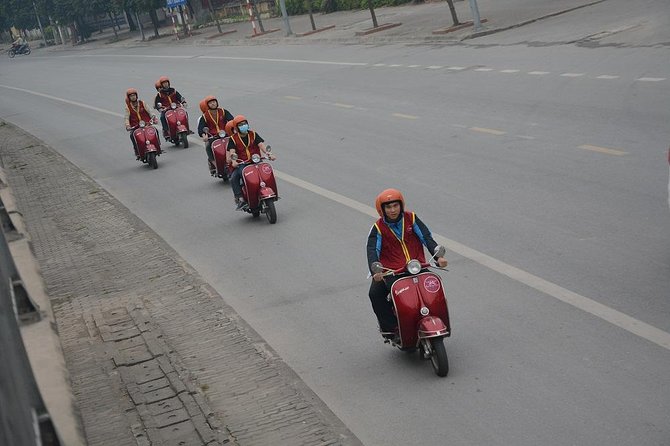
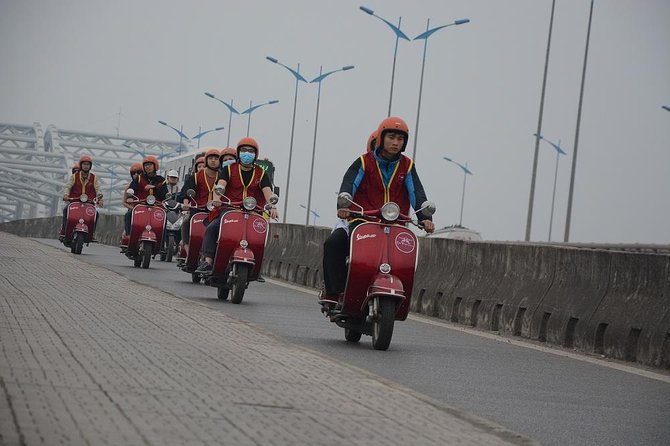
Vespa out of Hanoi feels like time travel. You start at the Hanoi Opera House area and head out on a vintage Vespa, crossing the historic Long Bien Bridge before you reach Red River Delta villages where daily life looks a lot slower and more human than the city.
What I love most is the mix of sights and real conversations. You get a chance for a tea chat during a visit to a traditional 200-year-old house, including privately owned bonsai gardens connected to a war veteran, plus time around a local wet market and farming-focused stops that explain what people actually do each day.
One consideration: you’re on the back of a scooter for a good chunk of the tour, and weather can change. If you get uncomfortable with traffic noise or mid-day rain, plan for a tighter schedule and bring a light rain layer.
In This Review
- Key highlights to know before you go
- First taste of the countryside: meeting at Hanoi Opera House
- Long Bien Bridge on a Vespa: the quick switch from city to villages
- Co Loa Citadel and the farming reality of the Red River Delta
- Hồ Trúc Bạch: when the ride ends and the meal starts
- Lại Đà’s ancient temple, pagoda, and the 200-year-old house with tea
- Hoi Phụ broomstick craft: a small skill with big local value
- Food, drinks, and those souvenir photos
- Price and value for $59 in about four hours
- Who should book this and who might skip it
- Should you book this Hanoi Vintage Vespa Countryside Tour?
- FAQ
- Where does the tour start?
- What time length should I expect?
- How much does the Hanoi Vintage Vespa Countryside Tour cost?
- Is pickup included?
- Do I get a mobile ticket?
- How large is the group?
- What are the main stops on the route?
- Are meals and drinks included?
- Is there a visit to temples and pagodas?
- What if I need to cancel?
Key highlights to know before you go

- Vintage Vespa ride out over Long Bien Bridge for that quick shift from city to village life
- Co Loa Citadel stop plus a farming/practice moment that keeps the day from feeling like a drive-through
- A restaurant finish around Hồ Trúc Bạch with Vietnamese food and time to reset
- Lại Đà’s ancient temple and pagoda visit paired with tea and a 200-year-old home
- Bonsai gardens with a war veteran connection that turns a stop into a meaningful talk
- Hoi Phụ broomstick-making craft time focused on a small skill that keeps the Red River Delta economy going
First taste of the countryside: meeting at Hanoi Opera House
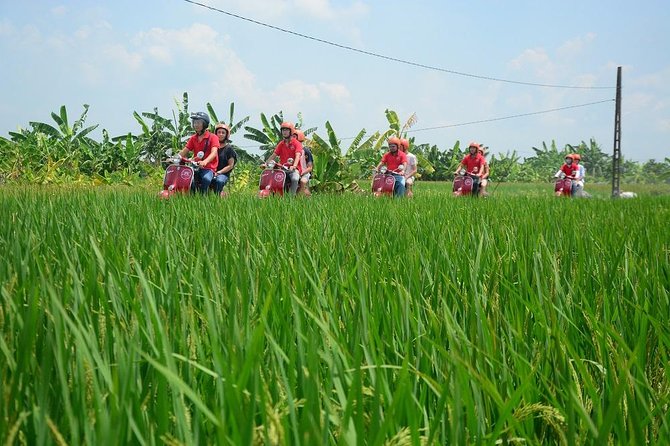
This tour is built for people who want to get outside the usual Hanoi lanes without spending a full day traveling. The meeting point is at Hanoi Opera House (1 Tràng Tiền, Phan Chu Trinh, Hoàn Kiếm), which is a practical choice: it’s central, easy to find, and it sets you up for an efficient start before traffic and heat build up.
You’ll ride with a small group (up to 15), which matters more than it sounds. Smaller groups usually mean less waiting, less crowding at stops, and smoother photo time when you want it. This is also one of those tours where the format itself helps: when everyone is traveling by Vespa, you naturally move like locals around streets and lanes that cars can’t handle as easily.
Also, you’re traveling with a serious safety-and-comfort focus. In past runs, the drivers were praised by name—people like Shang, Bao, Perry, Anh, and Crist show up in the guide team—so you’re not just handing people over to a random ride. If you’re a first-timer on a scooter, that human factor is a big deal: calm driving, clear guidance, and patience make the difference between fun and stressful.
Long Bien Bridge on a Vespa: the quick switch from city to villages
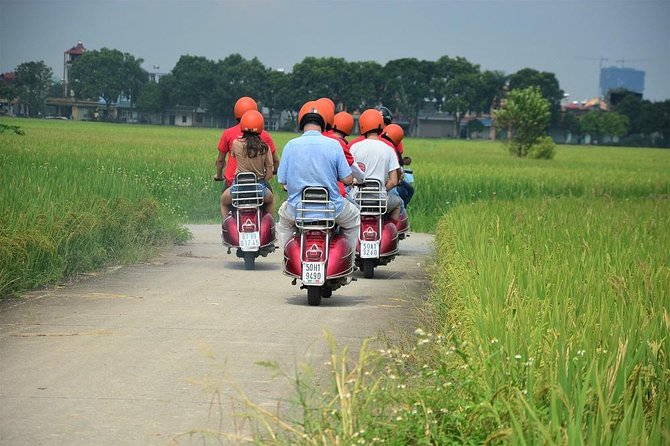
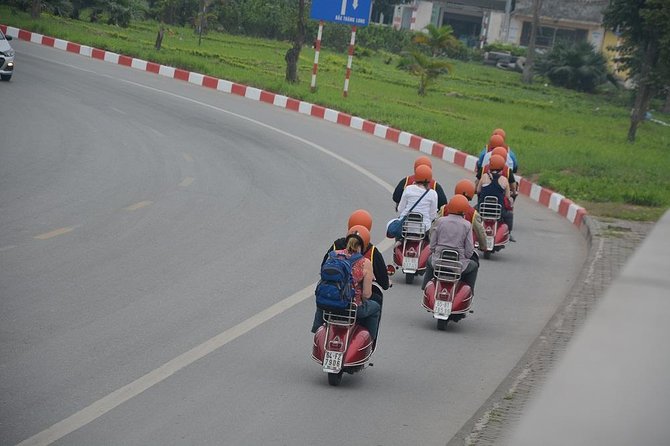
The day’s first big movement is the ride across Long Bien Bridge. You’ll get about 30 minutes here, enough time to feel the bridge’s historic role while still keeping momentum toward the countryside.
Why this matters for your experience: Long Bien isn’t just a photo spot. It’s a mental switch. Once you cross, the pace and the view change fast. You start seeing village edges, open areas, and everyday scenes that don’t exist inside the Old Quarter grid.
Practical tip: give yourself a few minutes before the bridge stop to settle your gear and position. Once you’re rolling, small adjustments become harder. If rain starts, this early stretch is when you’ll feel it first, so keep your rain layer handy and don’t wait until you’re already soaked.
Co Loa Citadel and the farming reality of the Red River Delta
After Long Bien, the tour continues with a longer stretch—about 2 hours focused around Co Loa Citadel. Co Loa is where the day shifts from scenery to something you can actually connect to Vietnam’s past and present at the same time.
What I like about this segment is the balance. You’re not only seeing a historic site. You also get a stop at a local farm where you can see traditional agricultural practices. That pairing helps you understand the region as a living place, not just a set of ruins.
You’ll also run into the kind of everyday environment that’s easy to miss if you’re traveling only by taxi. The tour includes time around a local wet market, which is one of the best ways to understand daily life in Vietnam because it’s where people shop, trade, and talk about what’s in season.
One drawback to keep in mind: Co Loa is time-heavy. You’ll likely get a more focused look at a few key moments rather than full, wandering time at every corner. If you’re the type who wants hours to roam slowly at each site, you might wish you had a bit more flexibility here. The tradeoff is you’ll get more variety over the full half-day.
Hồ Trúc Bạch: when the ride ends and the meal starts
The tour’s next turning point is around Hồ Trúc Bạch, where the experience winds down with food. Expect about 45 minutes at a local restaurant, and you’ll be dropped back afterward (back at the meeting point area or hotel, depending on the exact flow).
Why I think this stop is good value: it’s not just a generic lunch stop. It’s scheduled as your transition point from “riding and seeing” to “sitting and tasting.” After hours of scooter movement, a real meal helps you process what you just saw, and it’s also the moment where you can talk with your guide about what you noticed—Temples? Markets? Farming?
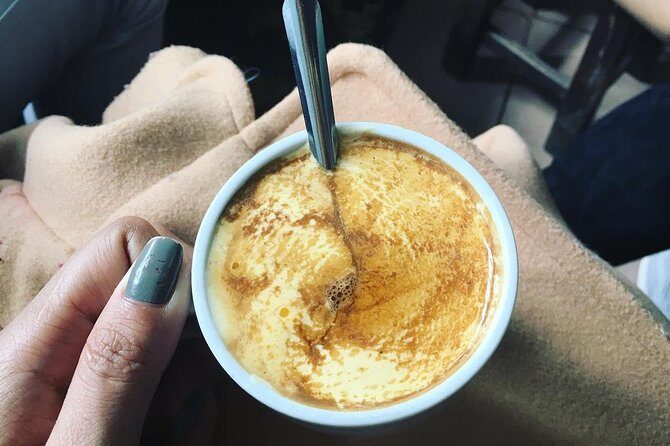
In a few past experiences, people also mentioned finishing with egg coffee in town, which fits the mood of this part of Hanoi—warm drink, sweet pause, and one last look at city life after the countryside.
Practical tip: if you’re sensitive to motion or heat, this is your reset window. Drink water, slow down your breathing, and let the day settle before you head back out.
Lại Đà’s ancient temple, pagoda, and the 200-year-old house with tea
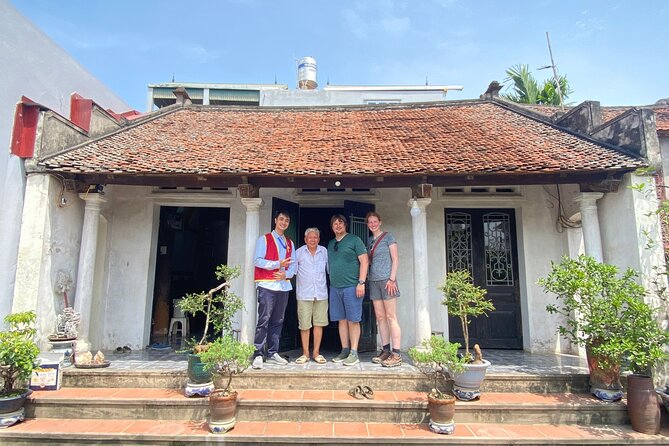
This is one of the most personal parts of the tour: Lại Đà. You’ll spend about 25 minutes here, and it’s free entry.
You’ll visit an ancient temple and pagoda, then you move into a traditional 200-year-old house. The standout detail is that you can also see privately owned bonsai gardens tied to a war veteran, and you’ll have a chat over a cup of tea.
This is the kind of stop that works for cultural learning without turning into a lecture. A temple and pagoda give you the visual and spiritual context, but the home visit gives you something practical: what daily life looks like in an older Vietnamese house, how traditions get kept inside a private space, and why bonsai (for someone who lived through major history) can be more than decoration.
One thing to be ready for: the time is short. That’s not a flaw—it’s just the reality of a half-day tour. The goal is respectful introduction and conversation, not a long, detailed museum-style walkthrough.
Hoi Phụ broomstick craft: a small skill with big local value
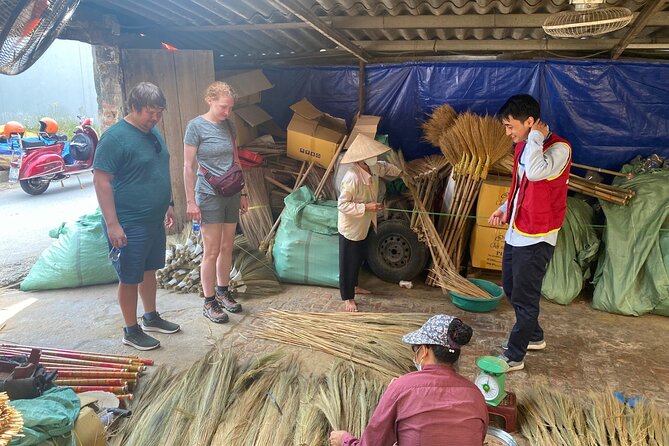
After Lại Đà, the tour finishes with a craft stop at Hội Phụ, where you can see broomstick making. This is about 15 minutes and listed as free.
I like this kind of ending because it’s tangible. Instead of one more temple photo, you get to watch a local craft that connects directly to the everyday needs of homes and businesses. It’s also a reminder that countryside Vietnam isn’t just “scenery”—it’s work, production, and skills passed down.
If you want to get more out of the moment, keep your attention on the process: how materials are prepared, how the broom shape takes form, and the small details your guide explains. You don’t need to know Vietnamese to ask simple questions, either—often a calm smile and a few basic phrases go a long way.
Food, drinks, and those souvenir photos
A good scooter tour lives or dies by the details that make the day feel complete. Here, the tour includes local Vietnamese cuisine and refreshing drinks during the restaurant portion, plus tea during the Lại Đà home visit.
Another practical perk: photo support. Multiple people thanked the team for pictures and souvenirs, which suggests the guides and drivers are used to taking photos for you and sharing them afterward. If you care about getting solid travel memories beyond shaky phone shots, this is a real advantage.
Packing note: bring sunglasses and something light for your face (dust or sun can happen around roads outside the center). For rain, bring a small packable layer. When one person mentioned rain coming partway through the ride, the takeaway was clear: the team tries to keep things smooth, but your comfort still depends on what you bring.
Price and value for $59 in about four hours
At $59 per person, you’re buying more than a scooter ride. You’re paying for a structured route that includes:
- transport out of central Hanoi on a vintage Vespa
- stops with admission tickets included at key points (like Long Bien Bridge and Co Loa, plus the restaurant section)
- a local meal and refreshing drinks
- a tea visit at Lại Đà with the house and bonsai garden experience
- small free stops (Lại Đà and Hội Phụ are listed as free)
Is it a bargain? For what you get—sites, ride time, and at least one substantial meal—it’s positioned as good value for a half-day. You also get the benefit of a small group (max 15), which reduces the chance of the day feeling like a queue.
Where the value can vary is your personal comfort level with scooters and your tolerance for short stop times. You’re not getting an all-day slow travel experience. You’re getting a well-paced “see a lot, taste local food, learn a few meaningful things” format.
Who should book this and who might skip it
Book this if:
- you’re new to Hanoi and want the countryside without planning transport yourself
- you want a vintage Vespa experience that still includes cultural stops, not only views
- you like markets, temples, and conversation-based moments like tea at a home visit
- you’d rather do a half-day with variety than commit to a full-day countryside plan
Consider skipping or choosing a different style if:
- you strongly dislike being on a scooter for several hours
- you need long quiet breaks between sites
- you prefer self-paced wandering over a tight route
The best part is how the day tells a story: bridge to villages, citadel to farming, home and tea to bonsai and craft. It’s not trying to do everything; it’s doing a few things well in the time you have.
Should you book this Hanoi Vintage Vespa Countryside Tour?
Yes, if you want a smart, efficient countryside experience from Hanoi with real culture stops built in. The combination of Long Bien Bridge, Co Loa, a market setting, and the Lại Đà home/tea + bonsai moment makes the tour feel more personal than a typical half-day checklist. Add the small group size and the focus on safety and friendliness, and it’s easy to see why it scores highly.
Just pack for the ride: comfortable clothes, sun protection, and a rain layer. If you do that, you’re set up to enjoy the day without fuss.
FAQ
Where does the tour start?
The meeting point is the Hanoi Opera House area at 1 Tràng Tiền, Phan Chu Trinh, Hoàn Kiếm, Hà Nội, Vietnam.
What time length should I expect?
The tour duration is about 4 hours.
How much does the Hanoi Vintage Vespa Countryside Tour cost?
It costs $59.00 per person.
Is pickup included?
Pickup is offered.
Do I get a mobile ticket?
Yes, the tour includes a mobile ticket.
How large is the group?
The maximum group size is 15 travelers.
What are the main stops on the route?
You’ll ride out to Long Bien Bridge, visit Co Loa Citadel, spend time around Hồ Truc Bạch for a restaurant meal, and also visit Lại Đà and Hội Phụ.
Are meals and drinks included?
Yes. The tour includes local dishes and refreshing drinks, with a restaurant stop in town.
Is there a visit to temples and pagodas?
Yes. At Lại Đà, you visit an ancient temple and pagoda.
What if I need to cancel?
You can cancel for free up to 24 hours in advance for a full refund. If you cancel less than 24 hours before the start time, the amount paid is not refunded.