REVIEW · HANOI
Hanoi Nhan Hien Sculpture Village or Hat and Incense Village
Book on GetYourGuide →Operated by GREEN VIETNAM TRAVEL · Bookable on GetYourGuide
Red incense and stone saints, in one hour. I like how you can watch Nhan Hien stone sculptors turn blocks into Buddha statues and worship pieces, then smell the air change at Quang Phu Cau incense village. The only drawback: it’s a craft-and-photo run, so you’ll want comfy shoes and a little patience for tight workshop corners.
If you book the shorter option, you’re mostly walking between village areas with a professional local guide, plus entrance fees handled. If you choose the longer half-day version, you’ll add Chuong conical hat village before heading back toward Hoàn Kiếm.
Guides work in many languages, and you’ll get small hands-on extras like painting a hat you can take home and making a few incense sticks yourself. Just note that personal expenses (and tipping) aren’t included, so keep a little cash aside.
In This Review
- Key things to know before you go
- Stone sculpting at Nhan Hien: where workshops turn rock into faith
- Quang Phu Cau incense village: the red sticks, dye, drying, and that unmistakable smell
- Chuong conical hat village (Non La): bamboo, palms, silk, and 40 years with Thao
- What you actually get to do: painting a hat and making incense
- Photo game plan: how to get close and still be respectful
- Time it right: a true 1-hour stop versus a half-day craft combo
- Price and value: what about $2.80 actually covers
- Practical logistics: how to make it smooth in Hanoi Old Quarter
- Should you book the Hanoi Nhan Hien and Hat and Incense Village tour?
- FAQ
- How long is the Hanoi Nhan Hien and Incense Village experience?
- Which villages are included?
- What hands-on activities are included?
- What’s included in the price?
- What’s not included?
- Where will I be dropped off in Hanoi?
- What languages are available for the guide?
Key things to know before you go
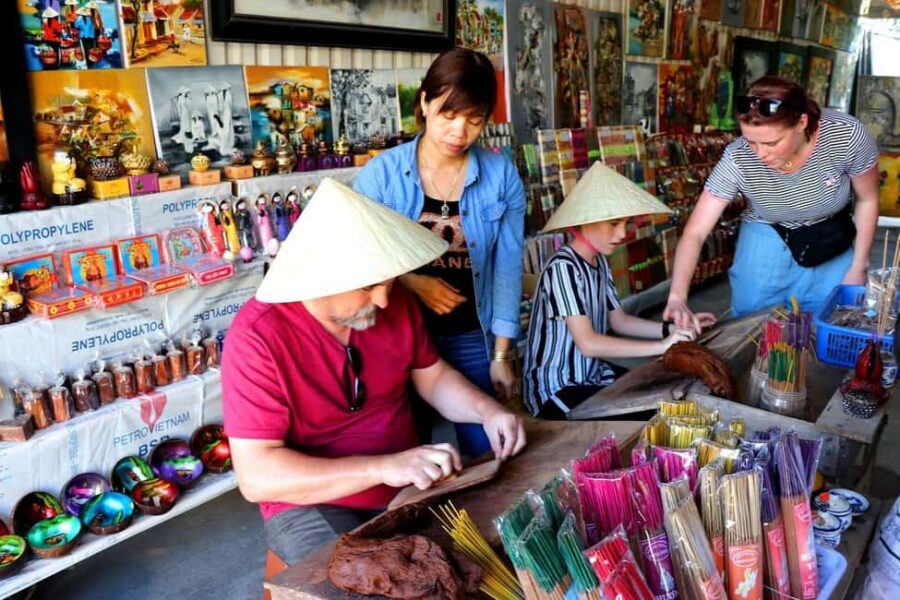
- You’ll watch the real process: stone carving, then incense-making, then (in the half-day) hat crafting
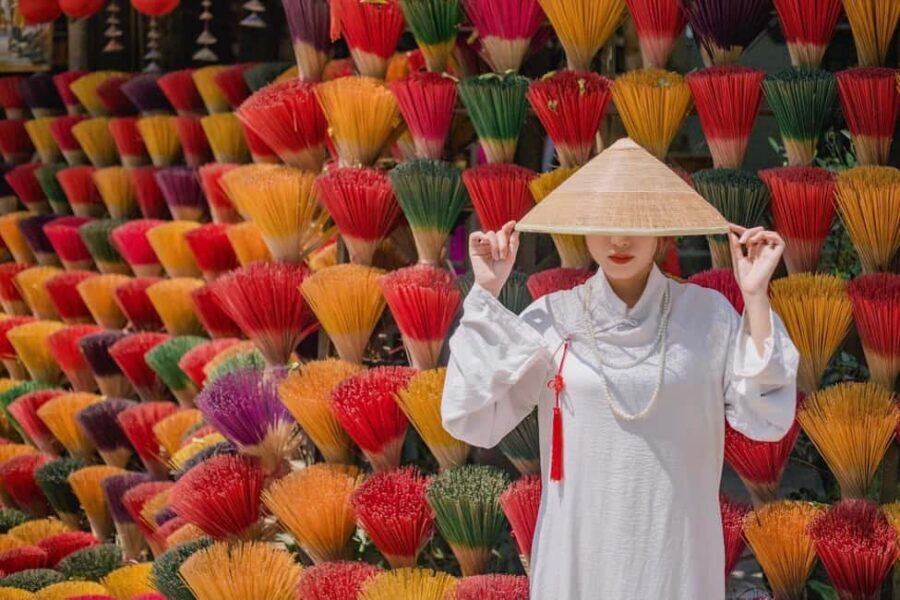
- Red incense bundles are photo-ready: drying sticks form colorful, flower-like clusters
- The hat village is hands-on: bamboo prep, palm leaf drying, and silk decoration
- You may meet Thao at her home across from Chuong Pagoda, with 40 years in the trade
- Take-home souvenirs are built in: a painted conical hat plus some incense sticks you make
- Drop-offs are flexible in the Old Quarter: including a chance to finish near Hanoi Train Street
Stone sculpting at Nhan Hien: where workshops turn rock into faith
Nhan Hien Sculpture Village is one of those places where you stop thinking of art as finished. You start thinking of it as work-in-progress—hands moving, tools clicking, and the stone slowly becoming something recognizable.
Expect to see stone sculpting workshops where artisans craft detailed pieces with a traditional purpose. You’ll commonly spot sacred animals, worship items, and Buddha statues taking shape. Even if your own background is modern and secular, the way the craft is explained tends to make the objects feel more personal and less like souvenirs.
What I like most is the variety in what you see. Nhan Hien isn’t only repeating one “pretty statue” style. You’re watching people build forms that relate to religious practice and daily devotion—so it feels grounded, not staged. And since the visit includes time with a guide, you’re not left guessing what each object is meant to represent.
Small note: workshops can be active. If someone is working on a piece, you’ll want to keep your camera respectful—no leaning over, no blocking the work area, and no lingering in the exact spot artisans need to pass.
You can also read our reviews of more tours and experiences in Hanoi.



Quang Phu Cau incense village: the red sticks, dye, drying, and that unmistakable smell
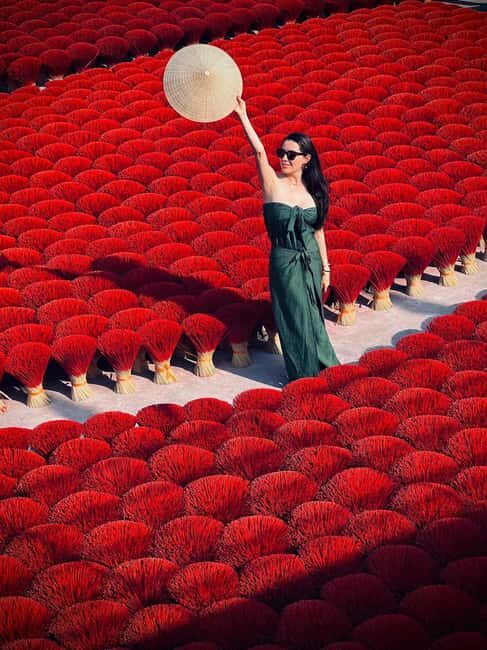
Quang Phu Cau is all about incense, but it’s not just the final bundles on sale. You get to see how incense becomes incense—step by step—at a family scale that still feels old-school.
The signature look here is those red incense sticks drying in the sun. They’re bundled into large clusters that can look almost floral at a distance, which is why this stop is so strong for photos. Up close, you’ll notice the texture, the bundle shapes, and the way color shows up from the dyeing process.
The guide-led part matters because incense-making involves choices you won’t guess from the final product. You’ll learn about tradition and technique, and you’ll also get practical context on why the sticks are prepared and dried in specific ways. There’s even time to meet a family specializing in dyeing incense sticks, which is where the colorful bundles really start to make sense.
Hands-on is part of the payoff. After you make incense sticks yourself, you’ll receive some free incense sticks from the experience. It’s a small thing, but it changes how you remember the visit—you’re not only seeing craft, you’re participating in it.
Best time tip: dress for warmth and plan for lingering smell. Even if you don’t buy incense (or you already packed your fragrance limits), the air will be incense-scented for a while after.
Chuong conical hat village (Non La): bamboo, palms, silk, and 40 years with Thao

If you pick the half-day option, Chuong Village is where you’ll slow down a bit and learn the build-your-own layers behind Non La, Vietnam’s iconic conical hat.
Here’s what you’ll see in plain, real process terms:
- Bamboo is split into long, skinny parts, then soaked and dried
- Green palm leaves are processed and dried during the dry season
- Handcraft men add red or pink silks into the hat
- Some hats are decorated with embroidery like flowers or birds
You’ll also get a real human connection. Thao—who crafts conical hats from her house opposite Chuong Pagoda—shares how long she has worked in the craft. She’s been making hats for 40 years, and her point is simple: in this village, hats aren’t a novelty. They’re part of growing up, and families keep the work going across generations.
I like this stop because it gives you more than “look at hats.” You understand why the materials matter and why the decoration isn’t just for looks. The hat’s function also changes over time, from traditional headwear used for sun and rain to a cultural fashion accessory for Vietnamese women today.
And yes, you should expect the hat-making steps to be meticulous. This isn’t a quick demo. It’s careful handiwork, and it rewards your patience.
What you actually get to do: painting a hat and making incense
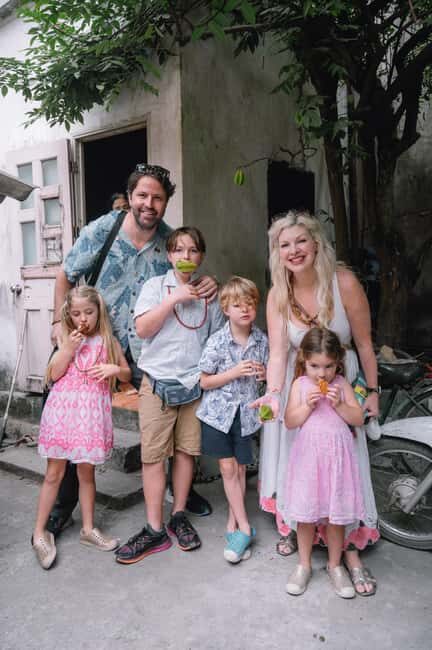
This tour isn’t only watch-and-take-photos. It includes take-home elements that make the experience feel like you did something with your hands.
In the hat village, you get a free conical hat to paint, then take it home as a personalized souvenir. That means your memories aren’t locked inside your camera roll. You’ll leave with an object you helped make.
On the incense side, you’ll make incense sticks yourself and then get some free incense sticks afterward. Again, it’s not a huge workshop class, but it turns the craft from a visual topic into a personal one.
If you’re traveling light, these are still manageable items. The bigger concern is packing your take-home hat safely, so plan for a bit of space in your bag or in a small box if offered at the end.
Photo game plan: how to get close and still be respectful

This experience is built for photos, especially because both incense and hat-making create color and texture that look good in daylight.
For Quang Phu Cau, aim for your shots where the red incense bundles look densest in the frame. You’ll often get the best results by shooting from slightly off to the side, not right in the middle of walkways. Workshops are busy, and you’ll get better angles when you’re not blocking the flow.
At Nhan Hien, your best shots tend to be those showing hands and process rather than only the final objects. Look for moments where artisans are shaping or finishing details on a piece. Those “in-the-middle” shots often look more authentic than posed statues.
For Chuong, pay attention to the materials: bamboo strands, palm leaf drying, and the red/pink silk accents. These details are small, so use your camera’s close-focus mode if you have one, and don’t crank brightness so high that the silk decoration loses color.
One more practical tip: bring a camera strap and keep your device steady. Workshop lighting can be mixed, and you’ll be tempted to move fast. Slow down and take fewer, better photos.



Time it right: a true 1-hour stop versus a half-day craft combo

The experience can be short or longer, depending on the option you choose.
For the shorter format, the visit is around 1 hour. That’s great if you want the core vibe—stone sculpting at Nhan Hien and incense at Quang Phu Cau—without turning it into a half-day commitment. The downside is simple: you won’t have time for deep lingering in every corner, so you’ll need to decide what you want most—stone detail, incense bundles, or both.
The half-day small group version adds Chuong conical hat village. The plan on the ground includes about 2 hours at Chuong for the conical hat stop and about 2 hours at Quang Phu Cau afterward. That longer schedule is better if you enjoy process and you like watching materials go from raw to finished.
If you’re the type of traveler who likes “one neighborhood, one theme, one craft,” the shorter option fits perfectly. If you want variety across crafts—stone, incense, and hats—go half-day.
Price and value: what about $2.80 actually covers

The headline price is about $2.80 per person, which is strikingly low for a tour that typically includes more than sightseeing.
What you get value-wise is the combination of:
- Visits to both Nhan Hien and Quang Phu Cau (and Chuong in the longer option)
- Entrance fees handled
- A professional local guide
- Bottled water
- Photo opportunities in the workshops and around the colorful incense areas
- Hands-on extras: painting a conical hat and making incense sticks
Also, you get access to skip ticket lines, which matters when you’re moving through busy village entrances and want the time to go to the craft itself.
What to keep in mind: the local guide option (if you choose to go without the car transfer) is structured differently. In that case, you pay for car transfer and entrance fees yourself. The low price only really matches your expectations if you pick the included-transfer package.
Seasonal cost note: there’s a Lunar New Year surcharge listed for a specific date range. If your dates fall within that window, budget for it.
Practical logistics: how to make it smooth in Hanoi Old Quarter
You’ll do best if you treat this as a walking experience with workshop stops. Wear comfortable shoes, because you’ll be moving through village areas and around artisans’ working spaces.
Hotel pickup and drop-off is included if you’re staying in the Hanoi Old Quarter area, depending on the option. If you don’t have pickup, you’ll still need to plan your arrival point and timing with your guide.
Drop-off can include Hanoi Train Street as a first stop. If you prefer not to be dropped there, you can wait in the car.
Languages are a strong point. The guide support list includes English plus many others such as Vietnamese, Chinese, French, German, Italian, Japanese, Spanish, Thai, Portuguese, Russian, Indonesian, and Korean. That means you can usually find a communication level that helps you understand what you’re watching.
One more practical thing: tipping and personal expenses aren’t included. Workshop visits can involve staff who help you take photos and navigate small spaces, so it’s worth bringing a few coins or small bills even if tipping isn’t required.
Should you book the Hanoi Nhan Hien and Hat and Incense Village tour?

I’d book this if you want crafts with real process, not just finished products on shelves. It’s especially worth it when you care about hands-on souvenirs—painting your own conical hat and making some incense sticks—because those small tasks turn the whole visit into something you’ll actually remember.
Skip it (or shorten your expectations) if you want a big museum-style experience with long explanations or lots of downtime. This is short-stop craft viewing. It’s a walk-and-watch day, and the best results come from being ready to move and pay attention to details.
If you love photography, incense color, stone texture, or the way materials work (bamboo, palm leaves, silk), this is an easy “yes.” Just go with comfy shoes, an open mind, and a willingness to be near real working artisans.
FAQ
How long is the Hanoi Nhan Hien and Incense Village experience?
The activity is listed as 1 hour for the options that focus on Nhan Hien and/or the incense village. The half-day small group option for Chuong plus incense includes about 2 hours at Chuong and about 2 hours at Quang Phu Cau.
Which villages are included?
Nhan Hien Sculpture Village and Quang Phu Cau incense village are included. The half-day small group option also includes Chuong Conical Hat Crafting Village.
What hands-on activities are included?
You can paint a free conical hat in the hat village and take it home. You also make incense sticks yourself and receive some free incense sticks after.
What’s included in the price?
Entrance fees, bottled water, and a professional local tour guide are included. You also get opportunities for photo stops with colorful backgrounds, plus hotel pickup and drop-off in the Hanoi Old Quarter area for most options.
What’s not included?
Personal expenses and tipping are not included. There is also a Lunar New Year surcharge listed for specific dates.
Where will I be dropped off in Hanoi?
The tour includes 3 drop-off locations, and Hanoi Train Street is listed as a first drop-off point. If you do not want to be dropped there, you can wait in the car.
What languages are available for the guide?
English and many other languages are available, including Vietnamese, Chinese, French, German, Italian, Japanese, Spanish, Thai, Portuguese, Russian, Indonesian, and Korean.