REVIEW · HANOI
Hanoi: Master the Art of 4-6 Signature Vietnameses Coffees
Book on GetYourGuide →Operated by PhotheSoul · Bookable on GetYourGuide
Coffee gets personal fast. This Hanoi workshop isn’t a stiff tasting at a café counter. You step into a lived-in local home vibe and learn how to actually enjoy Vietnamese coffee, not just how to brew it. I love that you make 4–6 signature drinks hands-on (grinding, brewing, whisking, tasting, adjusting). I also love the clear ingredient explanations with home-friendly substitutes. One possible drawback: you’ll drink a lot of coffee in a short window, so if you’re sensitive to caffeine, plan for it.
I went in expecting a simple class. I left thinking about Vietnamese coffee culture the way your guide does, with stories flowing alongside each cup, often with hosts such as Jade or Eddie explaining why the drinks taste the way they do. The setup is relaxed and small-group (up to 10), so nothing feels distant. Just know it’s a hands-on session, so you’ll be doing the work at each station, not only watching.
In This Review
- Key highlights you should care about
- Coffee in Hanoi’s Old Quarter: walking into a real home
- What you make: 4–6 Vietnamese coffees with real personality
- The hands-on brewing flow: grind, brew, whisk, adjust, repeat
- The guide’s role: stories that connect taste to Hanoi life
- Ingredients and “real substitutions” you can use at home
- Tools, space, and the not-too-polished charm
- Is $22 for 1–2 hours good value? Here’s what you actually get
- Where this fits best (and who should skip it)
- Should you book this Vietnamese coffee workshop in Hanoi?
- FAQ
- How long is the coffee workshop in Hanoi?
- What does the $22 price include?
- How many Vietnamese coffees will I make?
- Is it a small group?
- Who teaches the class?
- Where does the workshop start?
- Is it wheelchair accessible?
- Can I cancel or pay later?
Key highlights you should care about
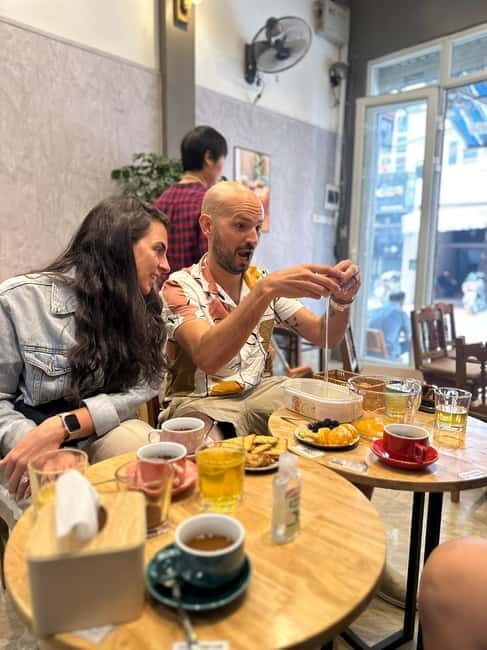
- Small groups (max 10) that keep things unrushed and personal
- Hands-on brewing for 4–6 coffees with grinding, brewing, whisking, and tasting
- Classic Vietnamese styles like egg coffee, coconut, and salted coffee, plus black and brown
- Ingredient-led lessons with practical substitutes you can use at home
- Ceramic tools and fresh prep in a real home space, not a staged showroom
- Extra local value such as coffee-food recommendations and take-home recipes
Coffee in Hanoi’s Old Quarter: walking into a real home
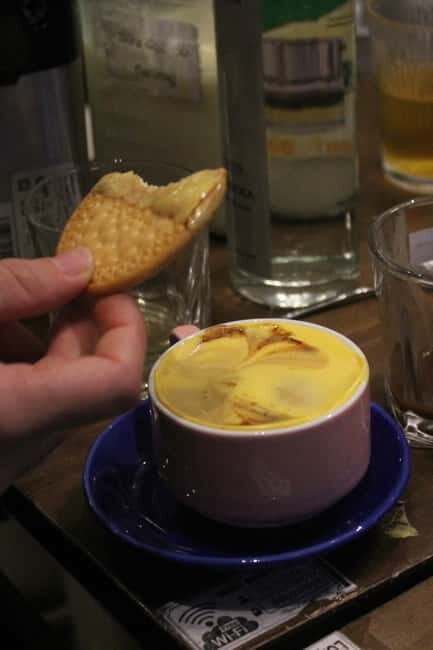
This experience starts in Hanoi’s Old Quarter, at a cozy local café tucked into a quieter corner. The location is convenient for sightseeing, roughly near the Hanoi Opera House, the Red River, Vinh Tuy Bridge, and the French Quarter side of town. The best part is the transition: you don’t stay on the sidewalk looking in. You walk off the street and into a space where people live.
You’ll get that slowly-wake-up feeling the moment you arrive. Voices from outside drift in. Hands pause mid-brew. Coffee warms the room before it even lands in a cup. That matters more than it sounds. Vietnamese coffee is built for everyday life, and this class keeps it that way.
Also, the group size cap (10 people) changes the tone. You’re not one face in a crowd. You get time to ask questions and to adjust your coffee to your taste.
You can also read our reviews of more tours and experiences in Hanoi.



What you make: 4–6 Vietnamese coffees with real personality
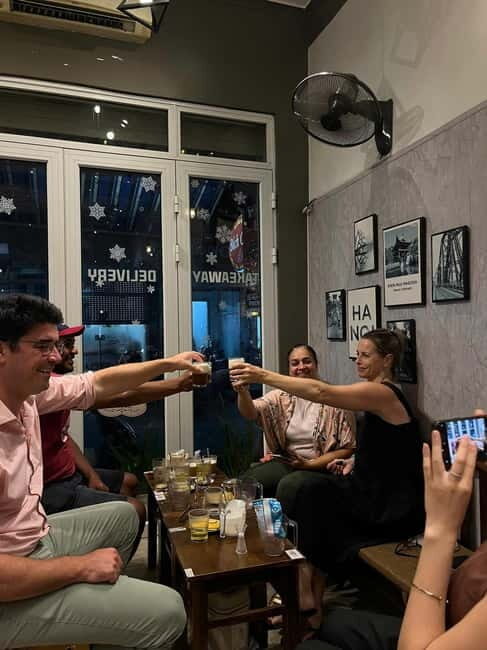
The workshop centers on 4–6 signature Vietnamese coffees. You’ll go through multiple styles, usually including:
- Black coffee
- Brown coffee
- Egg coffee
- White coffee (silver)
- Coconut coffee
- Salted coffee
These names can sound like gimmicks until you understand the point: each one shifts texture, sweetness, and bitterness in a way locals are used to tasting and tuning.
What I like is that you’re not trapped in a fixed recipe. You learn the baseline for each drink, then you practice control: sweeter or stronger, more balanced or bolder. The guide isn’t just teaching steps. They’re teaching judgment, like when to stop, what to adjust, and how to taste so the drink feels right to you.
You’ll probably recognize some of these cups from Hanoi cafés and street stands, but here you build the “why” behind them. You learn how each version fits the local palate and the daily rhythm of the city.
The hands-on brewing flow: grind, brew, whisk, adjust, repeat
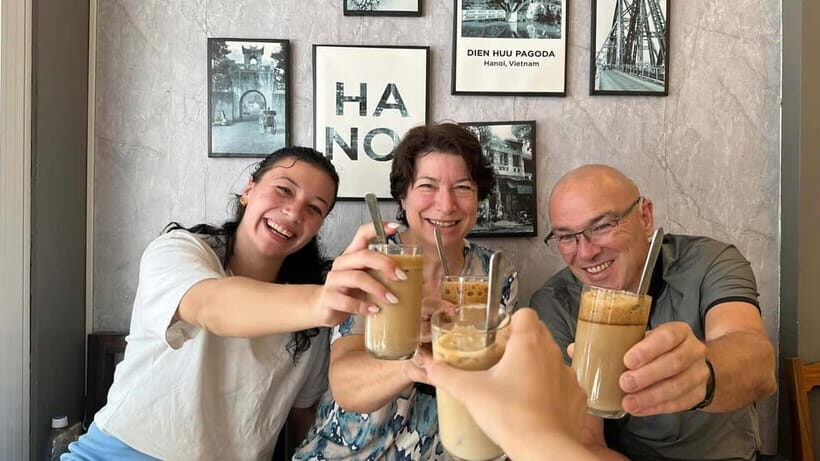
Expect full participation. Every cup is hands-on, with guidance as you work through the process. The rhythm goes like this:
- You grind (so you can feel the difference in how brewing starts).
- You brew using Vietnamese methods and the tools in the home space.
- You whisk where the drink calls for it, especially egg and milk-based styles.
- You taste before the final adjustment.
- You adjust strength and sweetness until the cup matches your preference.
That order is part of the lesson. Vietnamese coffee isn’t treated like one final product. It’s treated like something you can steer.
A detail worth noting: even when you’re making classic drinks, the goal is not “perfect” coffee. The goal is coffee that tastes good to you while still respecting the original style. That’s how locals enjoy it day after day.
One more practical touch: your instructor also helps translate technique into something you can reproduce. So when you go home, you’re not starting from a mystery. You know what to change if your cup tastes too bitter or too flat.
The guide’s role: stories that connect taste to Hanoi life
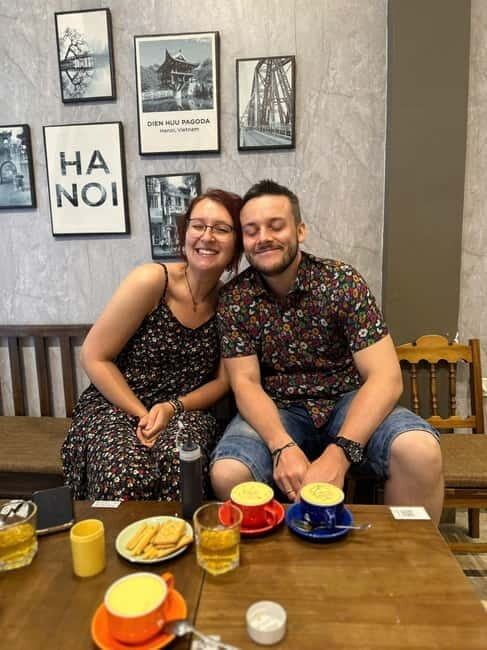
What turns this from a “coffee class” into a cultural experience is how the teaching is framed. Your hosts were born and raised in Hanoi’s Old Quarter, grew up around coffee, and learned through grandparents, street cafés, chefs, and years of tasting and tinkering.
That story delivery isn’t random. Each coffee style comes with context: what locals notice, how the drink fits morning habits, and how Vietnamese coffee became what it is today. You also learn the practical side of tasting—how people adjust so the bitterness feels controlled, not harsh, and the strength feels satisfying.
If you like conversation that stays grounded in food and technique, this is a good match. In multiple instances from guides listed (including Jade, Eddie, Daisy, Jessica, Zoey, Ngoc, Mint, and Tyler), the common thread is clear step-by-step instruction plus friendly energy.
And yes, you might even get extra warmth in the room. One participant mentioned a cat hanging around during the workshop. Small moments like that help the whole thing feel like a real visit, not a scripted show.
Ingredients and “real substitutions” you can use at home
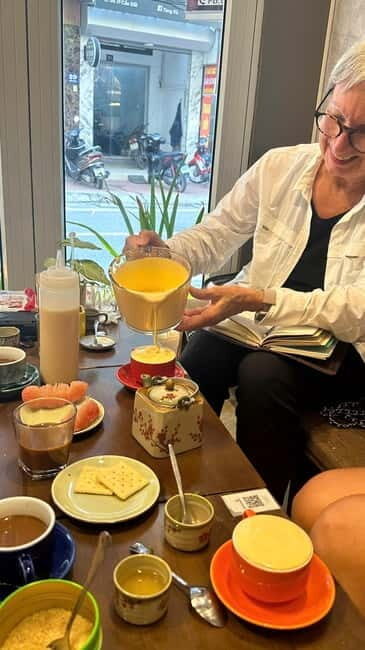
Vietnamese coffee here uses specialty Vietnamese coffee sourced from Vietnam’s Central Highlands. The workshop emphasizes seasonal harvest changes, which matters because coffee tastes shift through the year. They choose beans after careful tasting across Vietnam, sharing only what’s good.
The ingredients are prepared fresh daily. That includes eggs, milk, and coconut. Nothing is described as pre-made or artificial. That freshness shows up in the texture and flavor balance, especially in egg coffee and the coconut-based drinks where creaminess is part of the appeal.
What you’ll appreciate as a home brewer: the instructor explains ingredients clearly and suggests easy substitutes if you can’t match Vietnamese products exactly. You won’t leave thinking you need fancy gear or rare supplies. You’ll leave with a method and a taste target.
A practical mindset runs through the class: don’t get hung up on perfect sourcing. Get your balance right—strength, sweetness, and bitterness—then refine.


Tools, space, and the not-too-polished charm
This is not a commercial kitchen with identical tools for every group. You’ll touch ceramic tools from local pottery villages and work in a space that feels lived-in. You can feel coffee grounds and foam, taste bold Vietnamese flavors, and hear everyday sounds from outside.
There’s also comfort where it counts. The space includes air conditioning, clean restrooms, and utensils handled with sterilized cleaning practices. You’ll also have access to a dishwasher, which matters for hygiene and for keeping things running smoothly between cups.
And if you’re traveling with family, you’ll be glad to know there’s pet-friendly garden space and childcare service available. That’s not always offered on small food workshops, and it changes who can comfortably join.
Is $22 for 1–2 hours good value? Here’s what you actually get
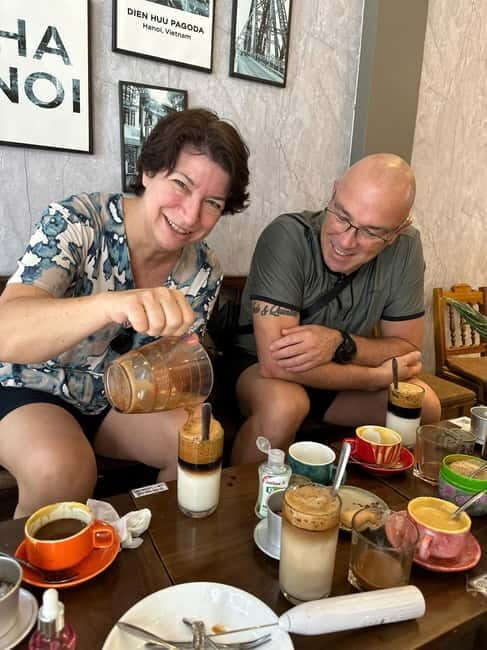
At $22 per person, this sits in the “serious value” category for Hanoi experiences, mostly because of what’s included.
You get:
- Coffees and teas (with multiple drinks made and tasted)
- Full recipes
- A passionate local instructor guiding technique and tasting
- A photographer component tied to your instructor
- Warm-hearted local elders ready to welcome your curiosity
- Air conditioning, clean restrooms, and sterilized utensils
- Pet-friendly garden space and childcare service available
The recipes matter more than people expect. A class that only gives you memories is nice, but you forget the details fast. Here you get enough structure to recreate the drinks at home. Several participants also mention take-home recipe PDFs and local recommendation sheets or maps for where to eat and drink in Hanoi.
Time-wise, it’s built for short attention spans. Duration is 1–2 hours, and it’s small-group, so you’re not stuck waiting while others finish. The pace is active, which is exactly what makes the lesson stick.
One more cost-related detail: you’re not just paying for coffee. You’re paying for control skills. If you’ve ever made Vietnamese coffee at home and wondered why it tastes “off,” that’s the gap this experience is designed to close.
Where this fits best (and who should skip it)
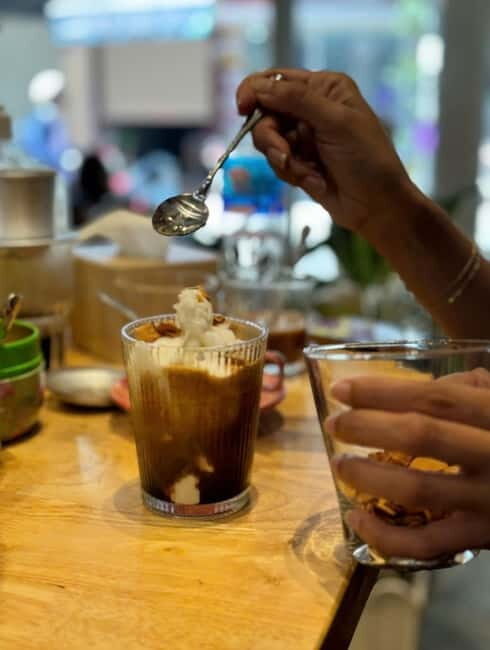
This workshop is a great match for:
- Coffee lovers who want to learn Vietnamese styles step by step
- People who love hands-on cooking or food technique classes
- Travelers who want Old Quarter context without a museum vibe
- Anyone planning to bring Vietnamese coffee skills home
It’s especially good if you’re curious about egg coffee, coconut coffee, or salted coffee. You’ll learn how they’re built, how they’re tasted, and how to adjust for your own sweetness and strength preferences.
If you’re the type who dislikes drinking coffee back-to-back, go earlier in the day and sip mindfully. The session is designed around multiple cups, so it’s not ideal for caffeine-avoidant plans.
Also, the activity isn’t suitable for babies under 1 year, and it has an upper age limit listed for people over 95 years.
Should you book this Vietnamese coffee workshop in Hanoi?
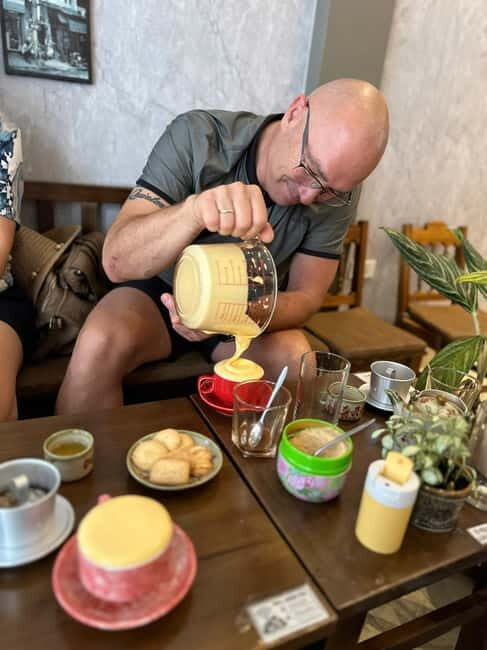
Yes, book it if you want more than sampling. This is about learning how to taste and adjust, so you leave with usable skills and recipes, not just a photo and a sweet memory.
I’d especially recommend it when you value small-group teaching and a real local home atmosphere. The Old Quarter meeting point makes it easy to combine with your walk later, but the workshop itself is the point. You’re there to make the drinks, feel the tools, and hear the reasoning behind the flavor.
Hold off only if caffeine sensitivity is a real issue for you. Otherwise, for the price and time, you’re getting a concentrated course in Vietnamese coffee culture with hands-on practice that you can actually repeat at home.
FAQ
How long is the coffee workshop in Hanoi?
The duration is listed as 1 to 2 hours. You can check starting times based on availability.
What does the $22 price include?
It includes coffees and teas, full recipes, a passionate local instructor, air conditioning, clean restrooms, and sterilized utensils. It also includes support like a photographer (your instructor), warm-hearted local elders, plus pet-friendly garden space and childcare service available.
How many Vietnamese coffees will I make?
You’ll make 4 to 6 signature Vietnamese coffees during the workshop, including options such as black, brown, egg, white (silver), coconut, and salted coffee.
Is it a small group?
Yes. The group is limited to 10 participants for a small-group experience.
Who teaches the class?
The instructor speaks Vietnamese and English, and the experience includes a local instructor who guides you through brewing and tasting.
Where does the workshop start?
The meeting point is at a cozy local café in Hanoi’s Old Quarter, near areas including Hanoi Opera House, the Red River, Vinh Tuy Bridge, and the French Quarter.
Is it wheelchair accessible?
Wheelchair accessibility is listed as available.
Can I cancel or pay later?
Free cancellation is available up to 24 hours in advance for a full refund. There is also a reserve now & pay later option.