REVIEW · HANOI
Hanoi Local Tours: Villages/Art Excursion
Book on GetYourGuide →Operated by Culture Pham Travel & Transport · Bookable on GetYourGuide
A craft day north of Hanoi. It strings together two maker villages and two culture stops, with Bat Trang pottery, Dong Ky woodwork, But Thap pagoda, and Dong Ho folk paintings in one 8-hour sweep. I like that it feels local and practical, not a grand museum marathon, and you get time to move at a human pace between workshops and temples.
I especially like the way this tour blends making and meaning. You’ll have a shot to create a ceramic item at Bat Trang, then you’ll slow down at But Thap, where the main sculpture is the thousand-handed and thousand-eyed Guanyin. One thing to keep in mind: some stops can lean more toward shopfronts than deep workshop viewing, so go in with open eyes and ask what’s actually being made right there.
In This Review
- Key highlights you’ll care about
- How this full-day villages route works from Hanoi
- Pickup, timing, and what to pack so the day stays pleasant
- Bat Trang Ceramic Village: make something, then shop with a checklist
- Dong Ky Wooden Handicraft Village in Bac Ninh: where furniture craftsmanship takes center stage
- But Thap pagoda: 10 buildings, 50+ statues, and a thousand-eyed Guanyin
- Dong Ho painting village (Mai village): why small matters
- Hanoi local food break: order the classics you can’t replicate at home
- Price and value: what $122 per private group really buys
- Is this the right type of craft tour for you?
- Should you book this Hanoi Villages/Art Excursion?
- FAQ
- How long is the Hanoi Villages/Art Excursion?
- Where do I get picked up and dropped off?
- How much does it cost and how many people can be in a group?
- What stops are included during the day?
- What food can I try during the tour?
- What should I bring and what’s not allowed?
Key highlights you’ll care about
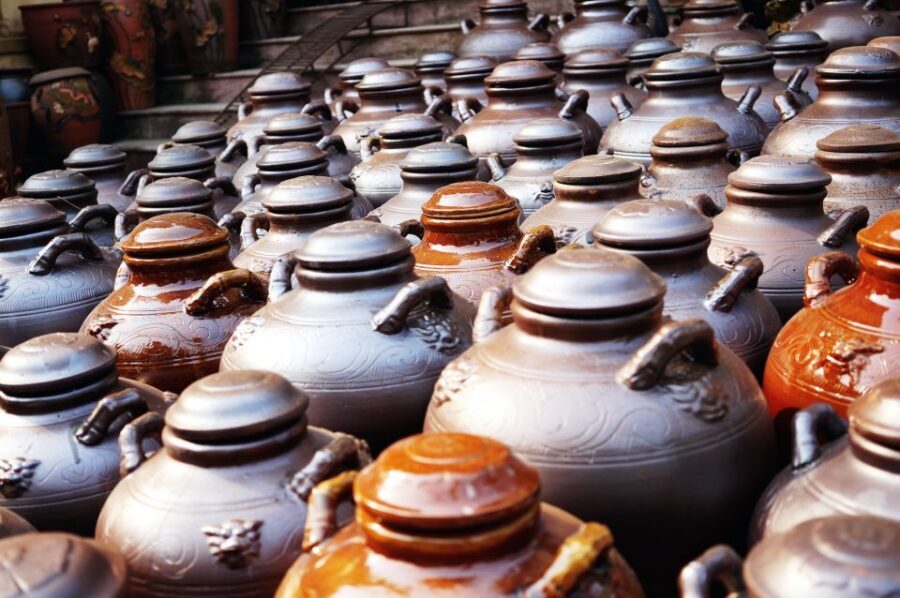
- Hands-on pottery at Bat Trang with shopkeepers guiding you through creating your own ceramic piece
- Dong Ky woodcraft focus on traditional carving and high-quality furniture (bring a close-eye mindset for details)
- But Thap pagoda’s scale and detail, including 10 buildings across about 100 meters and more than 50 statues
- A standout statue theme: the thousand-handed and thousand-eyed Guanyin
- Small, specific Dong Ho painting village (called Mai village) with paintings tied to countryside life and festivals
- Food time built into the day with a local restaurant break where you can try classics like banh cuon and bun thang
How this full-day villages route works from Hanoi
This is a true day-trip layout: hotel pickup in the morning, a private A/C ride out of the city, then a string of craft sites and one major temple stop. It’s designed for people who want to see how Vietnamese art and everyday goods are made, not just browse through souvenir racks.
The tour is priced per private group (up to 3 people), which matters in Hanoi. At $122 per group, it’s worth it when you split the cost with friends or family, and it can still feel fair if you care about having a driver lined up so you don’t fight traffic and timing on your own.
You’re looking at an 8-hour outing with an estimated 80 km overall distance. The ride includes about 2 hours of travel time, so plan to use your commute time to rest your feet and save your energy for the walking stops.
You can also read our reviews of more tours and experiences in Hanoi.



Pickup, timing, and what to pack so the day stays pleasant
Pickup happens at 8:00 a.m. from your hotel lobby, and you return for a drop-off around 5:00 p.m. The exact timing can flex a bit depending on roads and how long each stop takes, but the structure is consistent: craft village, pagoda, painting village, then back to Hanoi.
Bring comfortable shoes. You’ll be walking through village lanes and around indoor/outdoor displays, and you don’t want your feet to get cranky by mid-afternoon. Also pack sunglasses, a sun hat, and sunscreen—these areas are bright and daylight does not negotiate.
You’ll also have bottled water included (0.5 liter per person per day). That sounds small, but with a long day and open-air village routes, it’s a nice buffer.
Bat Trang Ceramic Village: make something, then shop with a checklist
Bat Trang is the first stop, and it’s built for you to both look and participate. You’ll get about 1 hour for a guided visit and sightseeing, with an option where shopkeepers help you create your own ceramic product. Even if you’re not a crafty person, this is one of the best parts of the tour because it turns “watching” into “doing.”
Here’s how to get the most value from that short time:
- Think ahead about what you want to try making. If you’re traveling with friends, decide early so you don’t lose minutes.
- Ask simple questions while you’re there, like what the item is made for and how it’s used or finished.
- In the shop area, don’t buy instantly. Compare a few pieces first, then choose.
A practical consideration: Bat Trang can feel touristic and commercial on some days, and you may see groups moving through at the same time. That doesn’t ruin the day, but it does mean the atmosphere can be loud and the “workshop” feel may vary. If your ideal day is quiet artisan observation, you’ll want to stay flexible and focus on what you can control—your pace, what you ask, and what you choose to make.
Dong Ky Wooden Handicraft Village in Bac Ninh: where furniture craftsmanship takes center stage
Next comes Dong Ky, in Dong Quang commune, Tien Son district, Bac Ninh province. This stop is longer—about 2 hours—and it’s where the tour leans into woodcraft and furniture.
The tour description frames Dong Ky as a place where skilled craftsmen—often called golden hands—create furniture with beauty, quality, and sophistication. In the real world, that often shows up as a lot of display pieces, different shop setups, and varying degrees of what’s actively being worked on at the moment you arrive.
What I’d do in your shoes:
- Look for craftsmanship details that are harder to fake. Pay attention to join lines, edge finishing, and how pieces fit.
- Ask what the wood is and how the piece is constructed. Even basic answers give you better buying instincts.
- If you’re hunting for truly traditional work, spend a few minutes checking whether you’re seeing ongoing carving and assembly, not just finished goods on shelves.
Because the stop is village-based, it’s also normal that shops operate on their own rhythm. So even with a guide, expect some flexibility in what you see at opening hours.
But Thap pagoda: 10 buildings, 50+ statues, and a thousand-eyed Guanyin
If you only care about one cultural stop on this tour, make it But Thap pagoda.
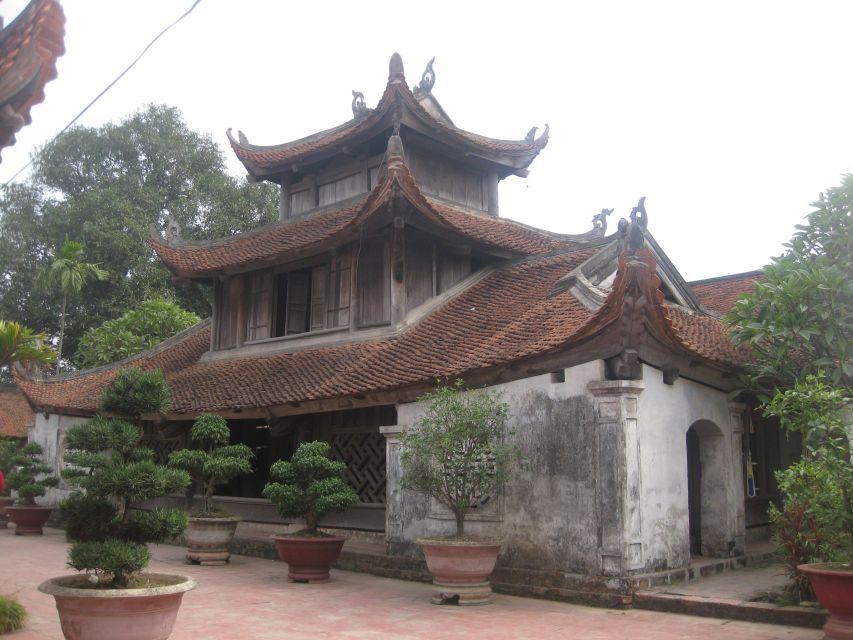
You’ll spend about 1 hour here, but it’s a dense hour. But Thap is described as housing priceless ancient objects and statues, including masterworks of 17th-century Vietnamese wood carving. The pagoda covers 100 meters with 10 buildings, from the three-entrance gate to the bell tower and back house.
That layout matters because it gives you multiple viewpoints rather than one single courtyard. You can wander, pause, and take in different groupings of statues and carvings as you move along the route.
The star, at least by the tour’s description, is the thousand-handed and thousand-eyed Guanyin. It’s the kind of sculpture that makes you slow down, not because it’s huge, but because it’s complex—lots of small details tied to devotion and artistic skill.
Is it automatically a “wow” for everyone? Not necessarily. If you’re visiting only for the visual shock value, this could feel more meaningful to people who already connect with Vietnamese Buddhist art. But if you enjoy carvings, iconography, and the feel of older religious craftsmanship, But Thap is one of the clearest reasons to choose this tour.



Dong Ho painting village (Mai village): why small matters
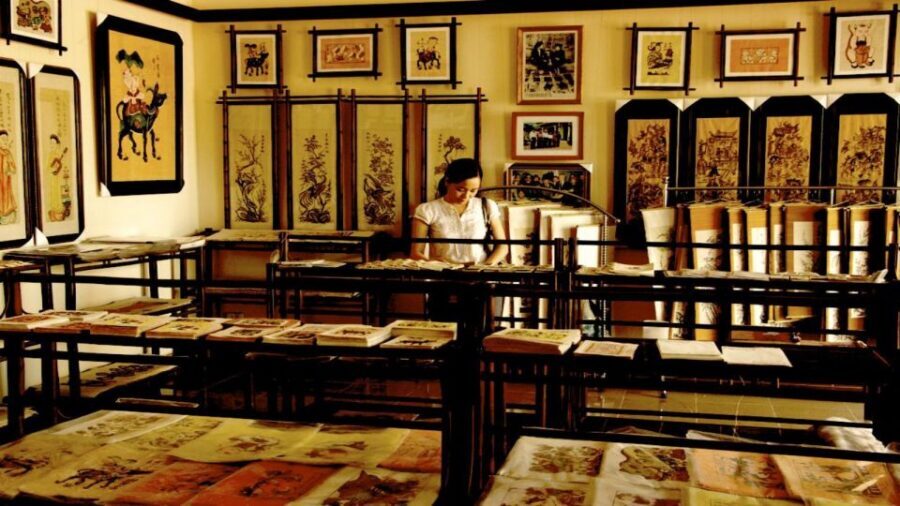
Dong Ho painting village is also known as Mai village, and it’s tiny—no more than 200 households. That small size changes the experience. You’re not getting a huge theme park of crafts; you’re moving through a compact place where the art is tied to local life.
You’ll have around 1 hour for guided sightseeing here. Dong Ho paintings are described as lively scenes of the beauty of the countryside and traditional customs and festivals. That’s a key clue about what to look for: don’t treat the paintings like random color postcards. Instead, focus on the repeated themes—everyday customs, festival moments, and village character.
If you buy something, consider choosing a print that matches what you actually liked seeing. The easiest way to regret a purchase is to buy based on image brightness rather than story. Here, the “story” is the point.
Also, because the village is small, it can be easy to overestimate how much there is. Give yourself time to slow down, ask questions, and let one or two pieces really land with you.
Hanoi local food break: order the classics you can’t replicate at home
Between stops, you get a meal break at a local restaurant with about 1 hour free time. The tour highlights several Hanoi favorites you can try, including xoi xeo, noodle soup, bun thang, bun dau mam tom, and banh cuon.
A quick practical tip: if you’re unsure what to choose, lean on bun thang or banh cuon because they’re widely recognized as Hanoi signatures. If you want to try something more adventurous, bun dau mam tom is bold, and xoi xeo has a more distinct flavor profile.
Because your food time is limited, don’t plan to “sample everything.” Pick one warm dish, one plate you’re curious about, and something simple to drink. You’ll thank yourself when you’re walking again.
Price and value: what $122 per private group really buys
Let’s break down the money in a way that helps you decide.
The price is $122 per group up to 3 people. That means:
- 1 person: $122 total
- 2 people: about $61 each
- 3 people: about $41 each
What’s included is a big part of the value story: a private A/C car, hotel pickup and drop-off, English-speaking driver, transfers, bottled water, and coverage for petrol, tolls, and parking fees.
So you’re paying for the ride time and coordination as much as you’re paying for the sightseeing. If you tried to DIY this day on your own, you’d spend time figuring out routes, timing, and transport costs that add up fast.
One balanced caution: the tour lists an English-speaking driver, but the real experience can depend on the person. If clear communication matters a lot to you, message the provider with your language needs before you go, so you’re not stuck with a silent ride and vague explanations.
Is this the right type of craft tour for you?
I think this tour fits best if:
- You want a single-day sampler of Northern Vietnam crafts (ceramics, woodcraft, folk painting) plus one meaningful temple stop.
- You like having a guide for context, especially at places like But Thap with its 17th-century wood carving and statue details.
- You’re traveling with up to 2 friends or family and want the economics of a private group.
You might want to skip it if:
- You hate shopping environments. This route can have a showroom feel, especially around pottery and craft displays.
- You’re only happy when you see large amounts of active production. Some stops may show what’s being sold more than what’s currently being made.
- You’d rather spend your day in one single place instead of moving between four different villages and a pagoda.
Should you book this Hanoi Villages/Art Excursion?
Book it if you want an easy, guided day that connects Hanoi to Bat Trang pottery, Dong Ky woodcraft, But Thap pagoda, and Dong Ho folk paintings—with a built-in food stop so the day doesn’t feel like a nonstop snackless sprint.
Skip it if your dream craft trip is all quiet artisan work and zero shop energy. In that case, you might be happier planning a slower route with fewer stops, so you can wait for workshops to be active and keep the day more focused.
If you do book, go in with the right mindset: this is a structured craft-and-culture day. With comfortable shoes, a little patience for tour-style crowds, and a willingness to ask questions, you’ll come away with both objects and stories you can actually remember.
FAQ
How long is the Hanoi Villages/Art Excursion?
The tour is scheduled for 8 hours. You should check availability to see the starting times offered on the day you want to go.
Where do I get picked up and dropped off?
Hotel pickup and drop-off are included. You’ll need to share your hotel information so the driver can meet you at your hotel lobby.
How much does it cost and how many people can be in a group?
It costs $122 per group for up to 3 people. The tour is set up as a private group.
What stops are included during the day?
You’ll visit Bat Trang Ceramic Village, Dong Ky wooden handicraft village, But Thap pagoda, and Dong Ho painting village, plus a local restaurant break.
What food can I try during the tour?
During the local restaurant break, you can savor popular Hanoi dishes such as xoi xeo, noodle soup, bun thang, bun dau mam tom, and banh cuon.
What should I bring and what’s not allowed?
Bring comfortable shoes, sunglasses, a sun hat, and sunscreen. Oversize luggage isn’t allowed, and the tour prohibits smoking and alcohol or drugs.



More Tours in Hanoi
- Ninh Binh Full-Day Tour from Hanoi to Hoa Lu, Tam Coc & Mua Cave Via Boat & Bike
★ 5.0 · 4,384 reviews