REVIEW · HANOI
Hanoi: Incense Village, Hat Village or Weave Mat SMALL GROUP
Book on GetYourGuide →Operated by CRAFT VILLAGE HANOI TOUR · Bookable on GetYourGuide
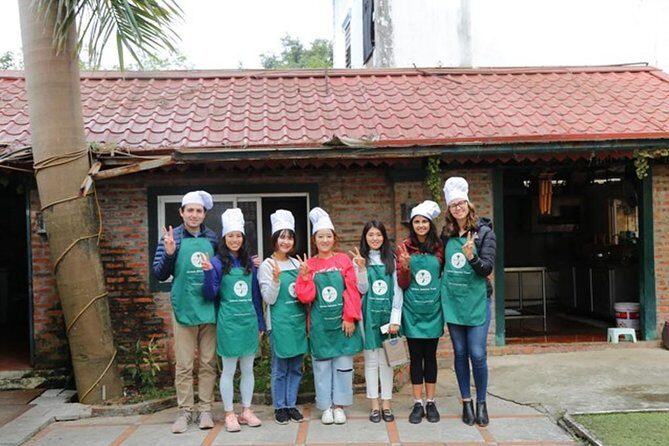
If you like hands-on culture, this tour delivers. This is a smart half-day way to see two of northern Vietnam’s most recognizable crafts, from conical hat painting to Quang Phu Cau incense workshops. You’ll also get real time with a local guide (often upbeat and picture-happy), plus small-group attention that makes it easier to ask questions and learn what’s actually going on.
What I like most is the mix of “make it yourself” and “see the real process,” especially the incense work and the chance to take your own hat home. My second favorite part is the local-to-factory angle—family-scale incense steps, then a nearby production site—so you understand how tradition turns into everyday work. One drawback to plan for: there’s no lunch included, and the schedule can put you in the heat without much downtime, so snacks are a good idea.
In This Review
- Key things worth knowing before you go
- A Half-Day Crafts Hit in Hanoi’s Old Quarter
- Chuong Conical Hat Village: Paint Your Way Into a Centuries-Old Craft
- Quang Phu Cau Incense Village: Family Workshops, Real Hands, and a Factory View
- Train Street Drop-Off: Use It or Skip It Without Stress
- Mat Weaving Option at Hoi Village: Sedge, Jute, and the Long Way to a Mat
- Incense Village with a Local Guide (No Car Needed): A Short, Focused Choice
- Price and Value: Why $14 Can Make Sense Here
- What the Guides Do (and Why It Matters)
- Comfort, Timing, and Photo Tips That Save Your Day
- Who This Tour Fits Best
- Should You Book This Craft-Village Small-Group Tour?
- FAQ
- What villages does the main half-day tour include?
- How long is the tour?
- Do I need to pay for entrance tickets?
- Is lunch included?
- What souvenirs are included?
- Where do you pick up and drop off?
- Can I choose a private or smaller group?
- What languages does the guide speak?
- Is there a surcharge for Lunar New Year?
- Is the tour wheelchair accessible?
Key things worth knowing before you go

- Paint-your-own conical hat in Chuong, a craft village known for centuries of hat making
- Quang Phu Cau incense village shows incense production from family workshops to a factory level
- Small-group or private options mean your guide can spend more time with you
- Train Street drop-off is optional, so you can decide whether to linger or head back
- Hoi Village mat weaving is a strong alternate if your heart is set on textile crafts
- A free souvenir rhythm: hat for painting plus a small amount of incense you make
A Half-Day Crafts Hit in Hanoi’s Old Quarter
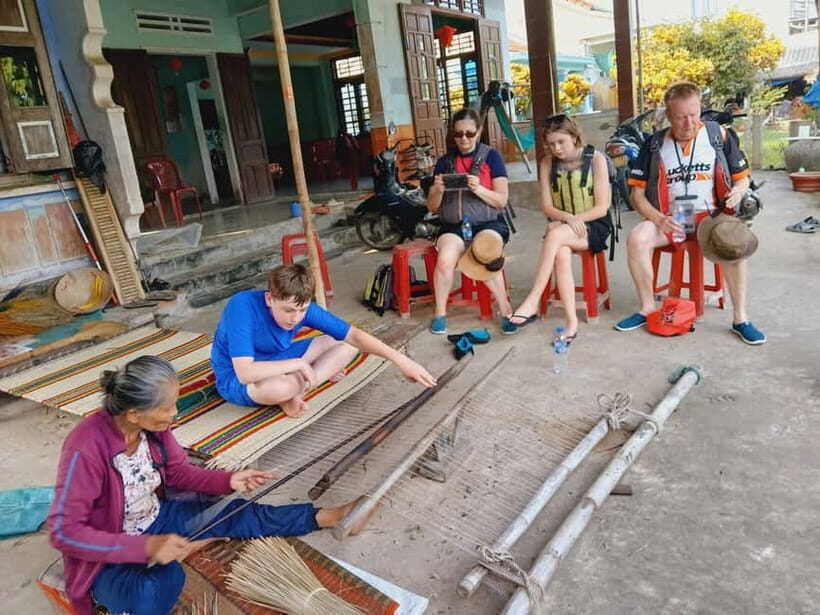
This tour is built for visitors who want more than photos. You’ll start with pickup around Hanoi’s Old Quarter, then spend the day moving through working craft villages—places where people don’t just demonstrate, they produce. The schedule is tight but focused, with short stops and guided time at each site.
There are two main ways to do it. The classic small-group option is a ~6-hour half-day route that focuses on two villages: Chuong conical hats and Quang Phu Cau incense (with an optional stop at Hanoi Train Street at the end). If you’d rather go textile-first, there’s a mat weaving village option to Hoi Village (also designed as a small-group experience).
Timing matters here. The half-day format runs in either the morning (about 7:45 to 13:30) or the afternoon (about 11:45 to 17:30). If you pick the afternoon departure, you may find it feels longer because you’re still thinking about dinner after craft work—plan your next meal accordingly.
You can also read our reviews of more tours and experiences in Hanoi.



Chuong Conical Hat Village: Paint Your Way Into a Centuries-Old Craft
Chuong is where Vietnam’s conical hat story becomes hands-on. The village is famous for conical hat making for over 300 years, and you’ll get to see the process while the guide explains what’s happening at each step. This is the kind of craft where the details matter: how materials are prepared, how the shape is formed, and how the surface is made ready for decoration.
Here’s the practical part you’ll care about: you’ll do a souvenir activity instead of just watching. You get a free conical hat that you can paint, then take it home as a personalized keepsake. This is especially good if you’re traveling with family or you simply want something tangible that isn’t another magnet.
The learning style tends to be very direct. Expect photo stops plus guided time, and you’ll likely have time to ask your guide questions as you paint. If you’re the sort of traveler who likes to understand what you’re holding, this stop feels satisfying rather than rushed.
Consider one small drawback: painting takes energy. If you tend to get overheated, dress light and bring a water habit—this tour includes bottled water, but you’ll still want to stay comfortable so you can enjoy the making part.
Quang Phu Cau Incense Village: Family Workshops, Real Hands, and a Factory View
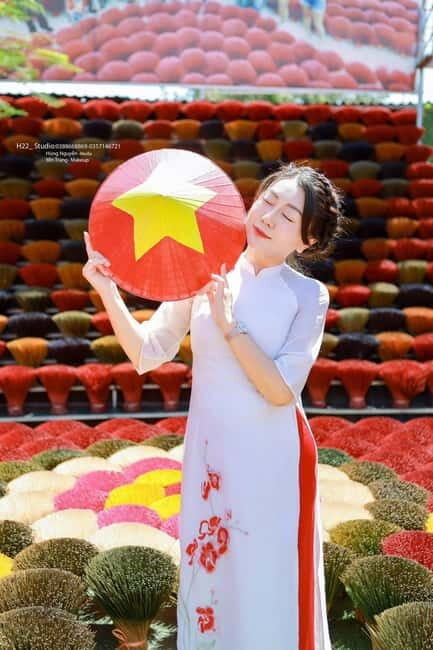
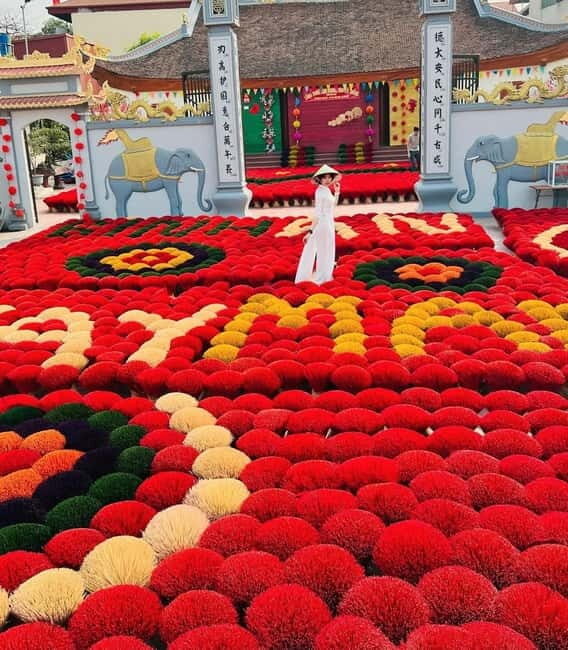
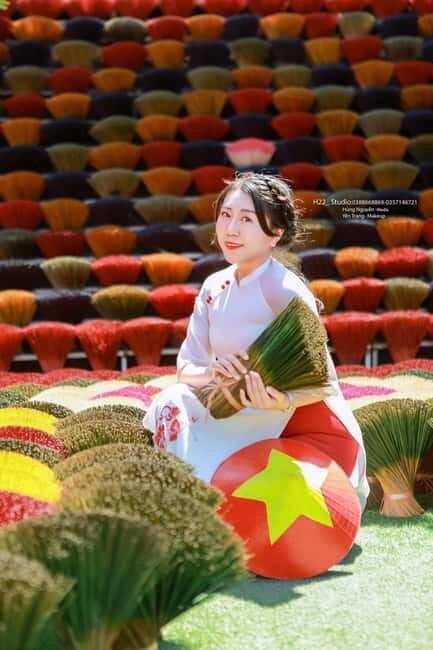
If you’re only going to remember one craft, incense is the one. Quang Phu Cau has been producing incense for more than 100 years, and it’s known as the heart of Vietnam’s incense tradition. You’ll start with a walk through the village center, which helps you get oriented before you watch the production steps up close.
The best part here is seeing how incense is made at a manual, family-scale level. You can expect a guided tour of the village process, including time to meet a family specializing in dyeing incense sticks. Watching the colorful bundles and learning how the dyeing connects to the final stick is the kind of detail that makes the whole craft click.
Then the tour brings you a step further. You’ll visit a nearby factory to see the next level of incense production, including how incense is made from scratch and how manual workers fit into the workflow. That factory visit matters because it explains the jump from tradition to supply. You don’t just see incense as a smell; you see it as a working system.
You’ll also get to make something. The tour includes some free incense sticks after you make incense sticks yourself, so you leave with a memory you created, not just a memory you watched.
Practical tip: incense activities can be fragrant and a little intense, especially if you’re sensitive to smoke or strong smells. If that’s you, tell your guide when you start so they can help you position yourself during the busier moments.
Train Street Drop-Off: Use It or Skip It Without Stress
At the end of the half-day route, you’ll return toward the city center. The first drop-off point can be Hanoi Train Street. If you want to keep your time flexible, you can also simply wait on the bus and get back to your hotel area instead.
This is a nice setup because Train Street is one of those places where you either love the novelty or you’d rather not spend too much time in the middle of the attention. If you do stop, plan it as a quick add-on: see it, take a few photos, then move on.
If you prefer a calmer end to the day, the better move is to ride the bus onward and let your energy save itself for dinner and sleep. Either way, you’re still getting the core craft experience without having to gamble your whole afternoon.
Mat Weaving Option at Hoi Village: Sedge, Jute, and the Long Way to a Mat

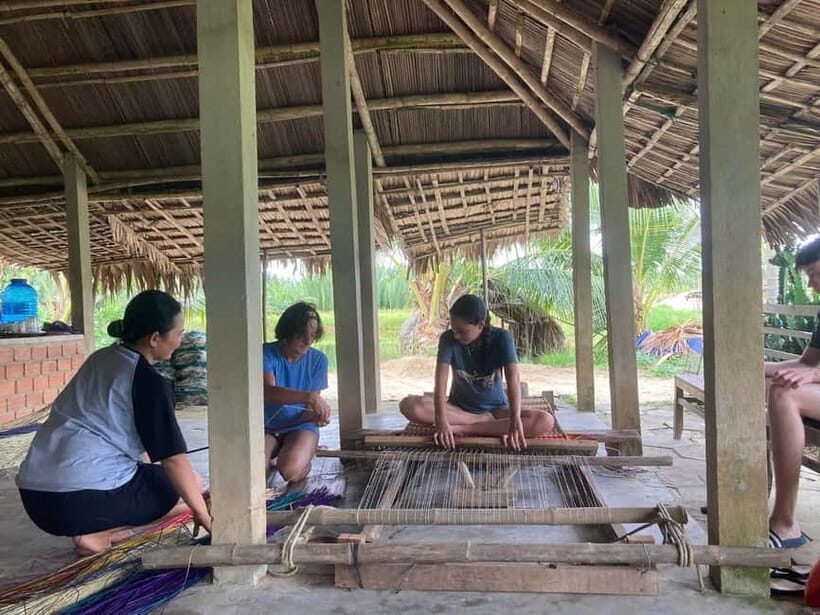
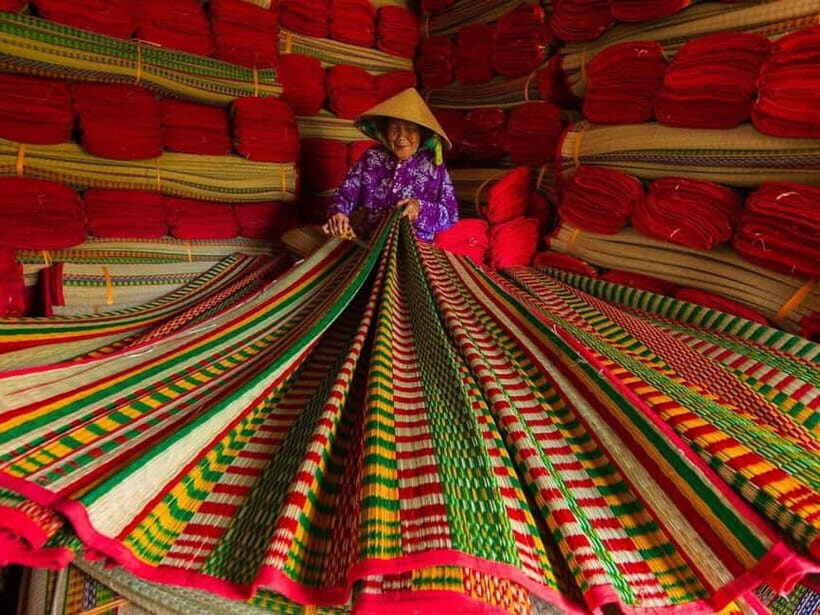
Not everyone wants hats and incense—and that’s where the mat weaving option shines. This alternative takes you to Hoi Village in Tan Le commune, Hung Ha district, about 40km from the central city of Thai Binh province. Instead of focusing on smell and art painting, you’re looking at a textile craft shaped by local plants and generations of technique.
Hoi Village weaving dates back to the 10th-11th centuries, linked to the Early Le-Ly dynasties. There’s also a specific storyline that the guide can explain: in the 15th century, Pham Don Le (a young scholar) brought special mat-weaving techniques from China. That detail helps you see the craft as living knowledge, not just a static tradition.
You’ll also get the “why these materials” lesson. The village sits between the Red River and the Luoc River, which provides ideal conditions for growing sedge and jute, the main raw materials. Watching artisans select, dye, and weave these threads is where the craft becomes more than a product—it becomes an entire chain of work.
Another useful point: you’ll see both traditional and modern methods. Mechanical looms are now used alongside older techniques, so you’re not stuck in a museum mindset. You see how the craft survives and adapts.
Choose this option if you enjoy textiles, natural fibers, and the idea of craftsmanship that’s less about decoration and more about structure.



Incense Village with a Local Guide (No Car Needed): A Short, Focused Choice
If you already have a car and you want incense only, there’s a simple local guide option. It’s about 1 hour, and it’s designed for visitors who just want the incense village visit without extra transport logistics.
This can be great if you’ve already scheduled other activities around Hanoi and you want a quick cultural stop that’s still guided. It also works if you’re traveling with someone who doesn’t want the full half-day drive to two villages.
Price and Value: Why $14 Can Make Sense Here

At around $14 per person for the ~6-hour experience, this tour is priced like a “value culture day,” not a luxury excursion. The value comes from three things that are hard to replicate on your own without time: real guided access, hands-on activities, and transportation.
You also get several items that reduce hidden costs:
- hotel pickup and drop-off in Hanoi’s Old Quarter area
- all entrance fees
- bottled water
- a professional local guide
- an included souvenir activity (hat painting) and a small incense takeaway after making incense sticks
The one thing you must budget for is food, because lunch isn’t included. If you forget that part, you’ll feel it—especially during the afternoon slot.
For some travelers, there’s also a seasonal note. There’s a Lunar New Year surcharge listed for specific dates in 2026, so check if your trip overlaps those days.
What the Guides Do (and Why It Matters)
A craft tour succeeds or fails based on the guide. I’m glad this one explicitly focuses on a live guide, and the languages offered are practical: English plus Vietnamese, Chinese, French, Italian, and Spanish.
And the best sign is the human style behind it. The experiences with guides like Huy stand out for being kind and for keeping the mood up—even in heat. In practical terms, that means you’re more likely to get clear answers, better photo guidance, and a smooth flow through the busy parts of the villages.
It’s also worth noting that small-group or private settings can change everything. One of the strongest advantages of choosing a smaller format is attention: fewer people means more chances to ask questions and actually participate in the making steps.
Comfort, Timing, and Photo Tips That Save Your Day
This tour moves from place to place, and the schedule doesn’t give you much extra padding. Here’s how I’d plan it so you feel good the whole way:
- Wear light clothes you can paint in, and shoes that handle village foot traffic
- Bring snacks if you’re doing the half-day route, since there’s no included lunch
- Stay hydrated (bottled water is included, but you’ll likely want more than one bottle)
- If you’re sensitive to incense smells, position yourself carefully during the active crafting parts
- For Train Street, decide early. If you want it, build it into your plan. If not, tell the team you prefer to wait on the bus
The guides usually help with photos, which is handy because some craft scenes are in tighter spots. You’ll get better results when you’re not rushing and when someone shows you where to stand.
Who This Tour Fits Best
This is a strong fit if you want:
- hands-on souvenirs that aren’t mass-produced
- craft village context (not just a photo stop)
- a half-day schedule that still feels like a real learning experience
- the ability to choose between incense-and-hat or mat weaving
It’s especially good for couples and small groups who enjoy interactive activities. If you’re traveling with kids, the included hat painting and incense making are the kinds of tasks kids actually get excited about.
It’s also a good option if you’re short on time in Hanoi. You get two major craft themes without spending a full day shuttling.
Should You Book This Craft-Village Small-Group Tour?
Book it if you want a practical way to understand Vietnamese crafts through doing. The combination of conical hat painting, Quang Phu Cau incense steps, and a guide who helps keep things upbeat is a reliable recipe for a memorable day. The train street add-on is there if you want it, and easy to skip if you don’t.
Skip it if you’re looking for a slow, relaxed day with lots of free time, because the structure is fairly tight and lunch isn’t included. Also skip the incense focus if smells strongly bother you, unless you’re comfortable stepping back during the most active moments.
If you’re deciding between the incense+hat route and the mat weaving option, follow your curiosity: hats and incense are more visual and hands-on in an artsy way; mat weaving is more material, process, and technique focused.
FAQ
What villages does the main half-day tour include?
The half-day small-group option visits Chuong conical hat craft village and Quang Phu Cau incense village. Train Street is offered as an optional stop near the end.
How long is the tour?
The half-day experience runs for about 6 hours, with morning (around 7:45–13:30) and afternoon (around 11:45–17:30) start times.
Do I need to pay for entrance tickets?
No. Entrance fees are included in the tour price.
Is lunch included?
No, lunch is not included. Eating beforehand or bringing snacks is recommended.
What souvenirs are included?
You’ll receive a free conical hat that you can paint in the hat village, and you’ll also get some free incense sticks after you make incense sticks yourself.
Where do you pick up and drop off?
Pickup and drop-off are provided for hotels in Hanoi’s Old Quarter area. The first drop-off option can be Hanoi Train Street, with the choice to wait on the bus if you prefer.
Can I choose a private or smaller group?
Yes. Private or small-group options are available.
What languages does the guide speak?
The tour lists guides available in English and several other languages: Vietnamese, Chinese, French, Italian, and Spanish.
Is there a surcharge for Lunar New Year?
Yes. There is a Lunar New Year surcharge listed as 250,000 VND per person for specific dates (16/02/2026–19/02/2026).
Is the tour wheelchair accessible?
Yes, wheelchair accessibility is listed as available.
If you want, tell me which option you’re considering (incense+hat, mat weaving, or incense-only guide), and I’ll help you pick the best time slot based on your schedule.