REVIEW · HANOI
Hanoi Eco Tour: Ba Vi National Park Wonders & Tea Plantation
Book on GetYourGuide →Operated by Vietnamtravelers · Bookable on GetYourGuide
Mist, ruins, and tea in one day. This Hanoi Eco Tour pairs a Ba Vi National Park morning with colonial French leftovers and a real conversation about tea with Vietnam War veteran Mr. Duoc. I love how the French church ruins sit in a pine-forest haze, and I love the personal tone of the tea experience.
You’ll also get a satisfying mix of outdoors and viewpoints: a historical hike, time at a temple called Đền Thượng (Temple in the Clouds), and a slow lunch break in the park. The English-speaking guide keeps the story moving without drowning you in facts.
One possible drawback: if you’re looking for very technical, hands-on tea-farming instruction, the tea portion may feel more story-driven than classroom-deep.
In This Review
- Key Things I’d Watch For
- Ba Vi From Hanoi: Why This Day Trip Works
- Getting There and What the Morning Feels Like
- French Church Ruins: A Pine-Forest Story With Misty Atmosphere
- French Prison Remnants: When History Meets Nature
- Lunch With Mountain Flavors: Fuel Without Fuss
- Đền Thượng Temple: High Air, Spiritual Views
- Tea With Mr. Duoc: More Than a Lecture
- Traditional Mountain Specialties: How the Day Gets Its Flavor
- Price and Value: Is $80 Fair for a Full 9-Hour Loop?
- Time on the Clock: What a 9-Hour Tour Means for You
- What to Pack and How to Be Comfortable
- Who Should Book This Tour (and Who Might Skip It)
- Should You Book the Hanoi Eco Tour to Ba Vi and the Tea Plantation?
- FAQ
- How long is the Hanoi Eco Tour to Ba Vi National Park?
- Where does the tour start and end?
- Is hotel pickup included?
- What is included in the price?
- What is not included?
- Is the tour in English?
- What should I bring?
- Are alcohol and drugs allowed?
- What is the cancellation policy?
Key Things I’d Watch For
- Ba Vi pine-forest hike to French church ruins with misty, moody atmosphere
- Colonial prison remnants reclaimed by nature, great for curious photo walks
- Lunch at a park food zone to keep the day feeling easy, not rushed
- Đền Thượng Temple in the Clouds for spiritual views and high-air perspective
- Tea lesson with Mr. Duoc that centers on life, picking, and tea-making basics
- A long day (about 9 hours) with walking and a climb to reach the temple
Ba Vi From Hanoi: Why This Day Trip Works
If Hanoi feels loud and busy, this is a good antidote. You trade traffic for a forest drive, then swap city time for an all-in-one countryside loop. The value here is that you don’t just ride into Ba Vi and back—you get stops that connect nature with human stories.
Ba Vi National Park is a rare type of day trip: outdoorsy, but with built-in context. You’ll hear why certain ruins matter, why worship exists where it does, and how tea is tied to a person’s life. That mix is what makes this tour feel more meaningful than a typical countryside outing.
Also, the group style matters. You travel with a private or small group and an English-speaking guide, which usually makes questions easier and pacing more comfortable.
You can also read our reviews of more tours and experiences in Hanoi.



Getting There and What the Morning Feels Like
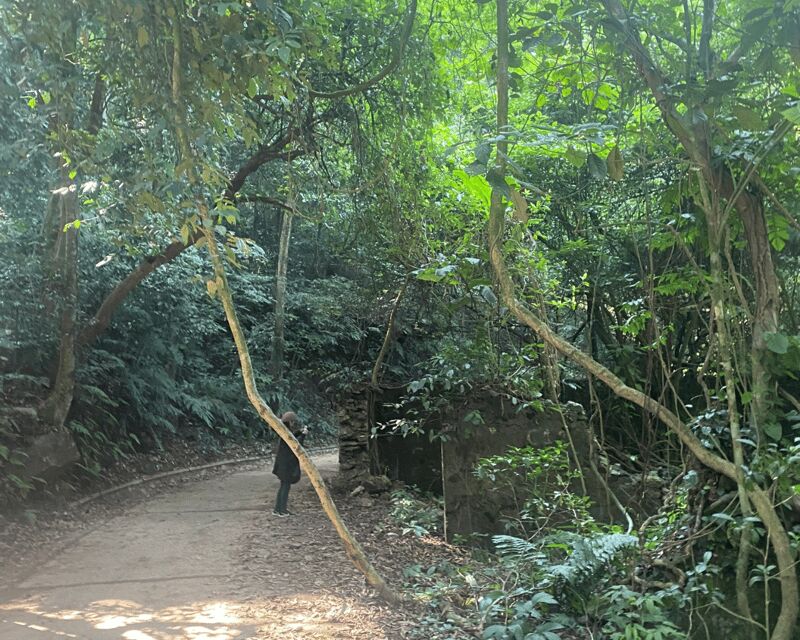
The day starts with a convenient Hanoi hotel pick-up. You’ll wait in the lobby, then climb into private transportation and head out toward Ba Vi. This is a big deal because it means you don’t have to solve your own logistics when you’re tired or short on time.
Once you’re outside the city, the pace shifts fast. The road time gives you breathing room. Then the tour turns active: you’ll trek through a pine forest before you even reach the ruins. It’s not described as a long backcountry trek, but it is clearly a walking portion. So bring a camera and wear shoes you’re comfortable hiking in.
French Church Ruins: A Pine-Forest Story With Misty Atmosphere
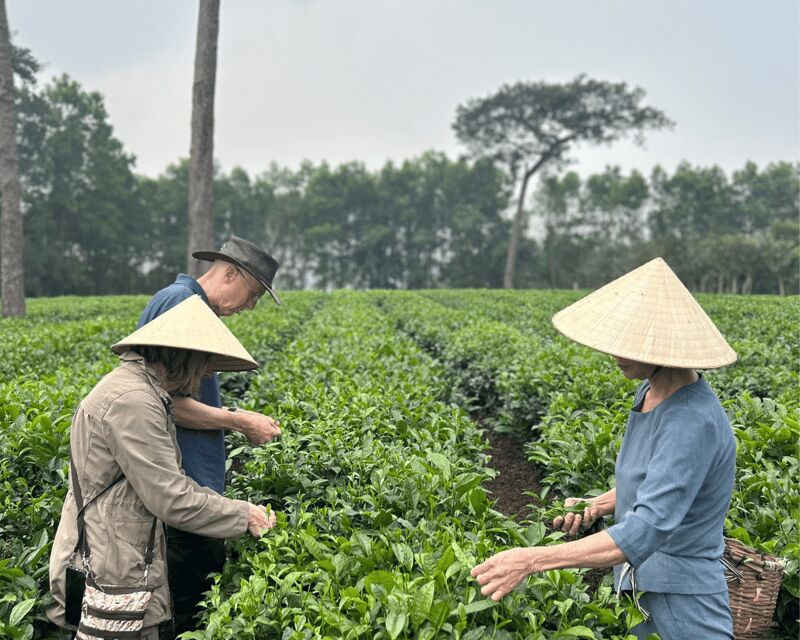
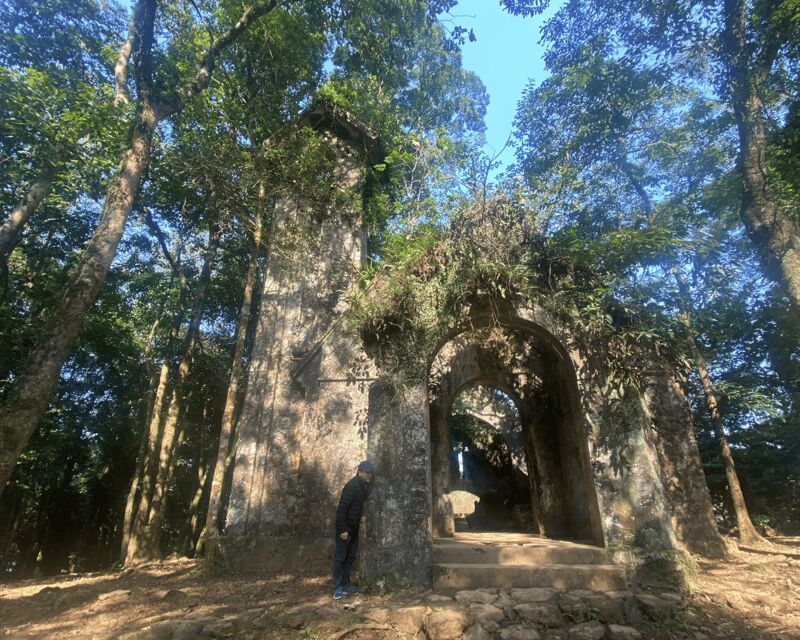
This is the most atmospheric stop of the day. You’ll hike through the pine forest to the remnants of an ancient French church. The setting is described as misty and mysterious, and that’s exactly the point. Even if you don’t know the colonial timeline cold, the place makes you want to slow down and look closely.
What I like about this part is the mood. The ruins aren’t just a photo spot; they feel like a place where nature has taken over. You’re wandering among stone remnants while the forest wraps around you. It’s the kind of stop where your guide’s narrative helps your brain connect the dots: who built it, why it’s there, and why it’s now reclaimed by the park.
Potential drawback? If you only want minimal walking, this first historical hike might feel like a lot before you’ve had lunch. But the payoff is real. You get to start the day with something that feels different from every other countryside stop.
French Prison Remnants: When History Meets Nature
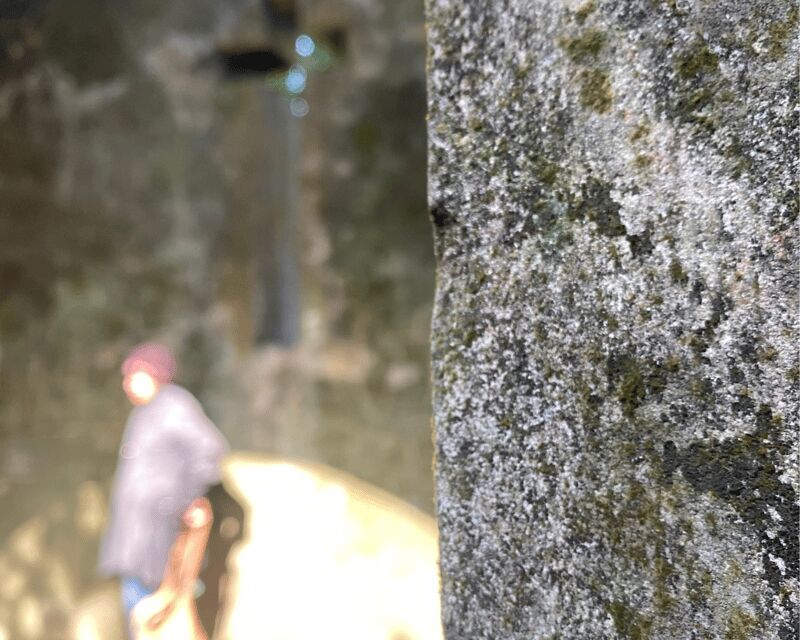
After the church ruins, you continue into another set of remnants: colonial-era prison leftovers. This stop is described as being reclaimed by nature, which changes how you experience it. Instead of a building you can imagine fully functioning, you get fragments—less about scale, more about texture and time.
This is a good place for patient looking. If you’re the type who enjoys ruins (even when they’re incomplete), you’ll likely appreciate this second stop more than you expect. The guide’s explanation of how the site fits into the broader story makes the ruins feel less random.
If you’re not a ruins person, you might feel like the day is leaning heavily historical. But the tour balances this with a temple stop and then tea with a Vietnam War veteran, so it never stays stuck in one tone.
Lunch With Mountain Flavors: Fuel Without Fuss
Lunch is planned inside the park area at a food zone. You’re meant to refuel with local delicacies and keep moving. The important detail is what’s included and what’s not: the tour includes entrance fees and transportation, but lunch food and drinks are not included.
That’s a practical choice. It lets you customize your meal and keep your day flexible. If you like trying local flavors, this is your window. If you prefer something simpler, you can usually pick what feels easiest.
My advice: use lunch as a reset. The morning is walking and ruins. The afternoon has another climb. Eat enough that you don’t feel sluggish later, but don’t overdo it. You’ll thank yourself when you’re heading toward Đền Thượng.



Đền Thượng Temple: High Air, Spiritual Views
After lunch, the tour shifts into a different kind of movement: ascending to Đền Thượng, a sacred temple perched high above the clouds. The “in the clouds” idea isn’t just poetic. High viewpoints tend to bring cooler air and wider sightlines, and the temple location gives that sense of being above the noise.
This stop connects spirituality with environment. You’re not just viewing a structure; you’re arriving at a place that feels intentionally set apart. The guide explains the story and religious significance, and you’ll likely come away with more respect for how geography and worship intertwine.
What I appreciate here is variety. If the morning’s ruins are about past structures fading into time, the temple stop is about present meaning. It changes the emotional texture of the day.
A small consideration: you’re doing a further ascent after lunch. If your legs feel tired easily, pace yourself and take short breaks when you need them. The goal is to enjoy the place, not sprint through it.
Tea With Mr. Duoc: More Than a Lecture
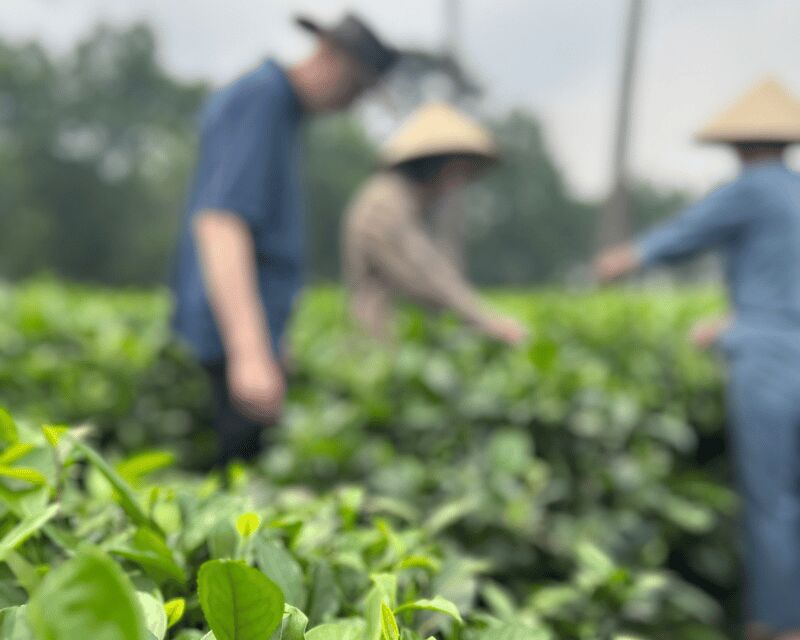
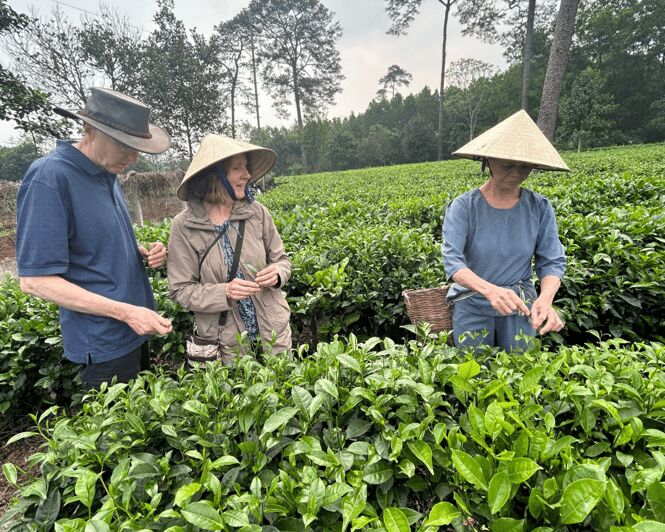
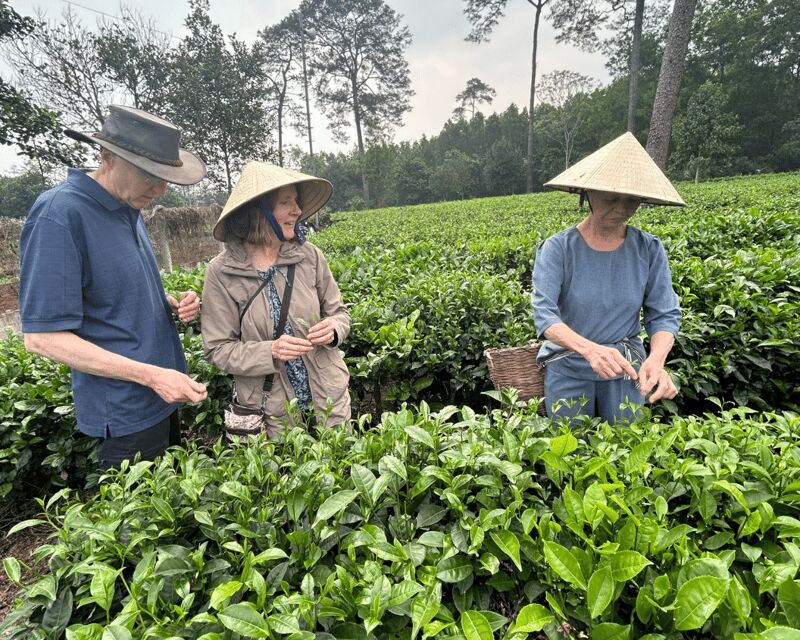
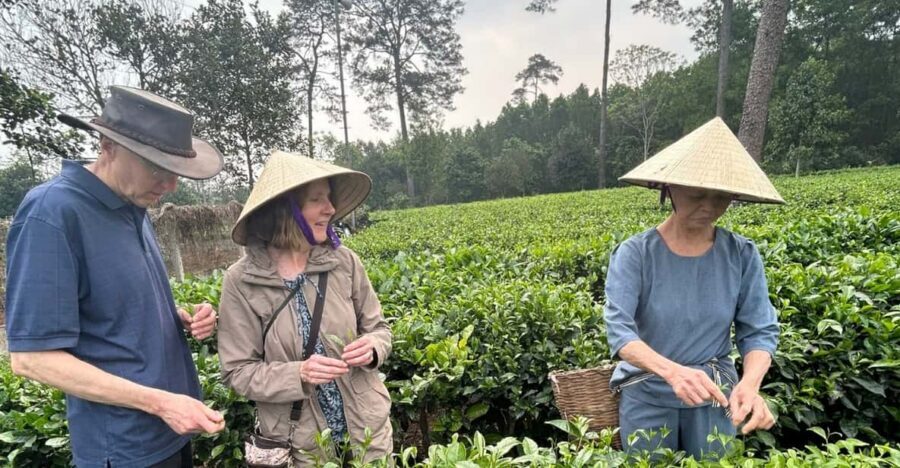
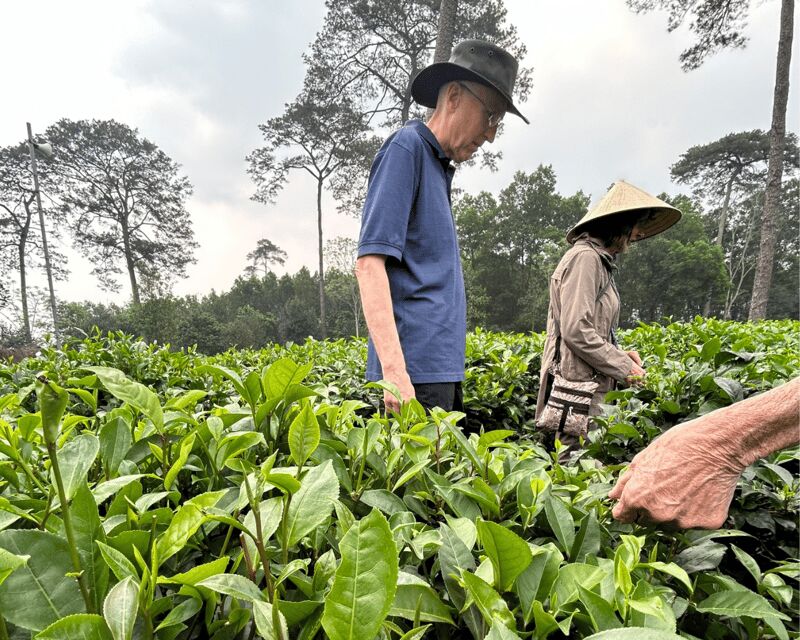
This is the heart of the cultural connection. After lunch and the temple visit, you meet Mr. Duoc, a Vietnam War veteran and tea connoisseur. He shares life stories and also teaches you about tea picking and production on his tea plantation.
What makes this part especially strong is that the tea lesson isn’t only about steps. It’s also about a person. You’re hearing how tea fits into a life shaped by major history, then learning what matters in picking and making tea. That human angle tends to stick longer than a purely technical lesson.
You’ll learn the process of tea production at a practical, traveler-friendly level. And you’ll likely walk away with an easier appreciation for why certain teas taste the way they do—because you’ve heard the care and timing behind them.
The one caution I’d give: tea cultivation can mean a lot of things (soil, plant care, long seasonal timing). The tour emphasizes the veteran’s story and the tea-making basics. Some people may finish wanting more detailed, farming-method instruction. If you’re after advanced agronomy or deep hands-on farm work, you might need a more specialized tea tour. If you want a meaningful tea introduction with a real life guide, this fits well.
Traditional Mountain Specialties: How the Day Gets Its Flavor
You’ll see “mountain specialties” mentioned as part of the experience, and you’ll feel it most at two points: lunch and the tea conversation. Lunch is where you taste local dishes in a park setting. Later, the tea meeting adds another layer of tradition by connecting food and tea culture to local lives.
Even without a long list of specific dishes, the effect is the same: the day doesn’t stay in the realm of ruins and views. You get at least one full taste-based break that makes the countryside feel real.
Price and Value: Is $80 Fair for a Full 9-Hour Loop?
At $80 per person for an approximately 9-hour day, the real question is what you’re buying beyond “getting to Ba Vi.” Here’s what’s included: private transportation, all entrance fees, and a friendly English-speaking guide. That’s a lot of the hassle removed.
If you tried to DIY this route, you’d likely spend time coordinating transport, paying entrance costs, and finding someone to explain the ruins and religious sites. This tour solves those friction points.
Where your money’s most clearly at work:
- Transportation + guided stops across multiple sites in a single day
- Entrance fees that you don’t have to track
- Language support so you understand what you’re seeing, not just where you’re going
The “value trade” is that food and drinks during lunch aren’t included. So plan on an extra expense for lunch if you haven’t already budgeted for it. That’s common on tours like this, and it can actually be a good thing because it gives you control over what you eat.
Time on the Clock: What a 9-Hour Tour Means for You
Nine hours is a longish day trip. You’ll be active in multiple segments: a morning trek through pine forest, ruins time, lunch, a climb to the temple, and then the tea plantation visit.
That timing matters if you’re the type who hates feeling “always on.” If you like structured days with clear goals, you’ll probably love the flow. If you’d rather wander without a schedule, this tour may feel a bit fixed.
Also, the day includes return transfer to your Hanoi accommodation, which helps. It means you can treat the whole trip as a single package and keep your evening plans simple.
What to Pack and How to Be Comfortable
The tour explicitly asks you to bring a camera, which is a hint: the ruins and temple views are the kind of places you’ll want to remember. Beyond that, practical comfort helps.
Bring:
- Comfortable walking shoes for forest paths and the temple ascent
- A camera (and consider a phone backup for storage)
Also note the rules: alcohol and drugs are not allowed. You’ll want to show up ready to enjoy the sites and the guide’s explanations.
Who Should Book This Tour (and Who Might Skip It)
This is a great match if you want:
- A day outside Hanoi that includes both history and nature
- A guided explanation at ruins and a temple, not just sightseeing
- A tea experience that includes stories from a Vietnam War veteran
You might consider skipping (or looking for an alternative) if:
- You mainly want intensive, technical tea farming instruction
- You dislike historical ruins and would prefer a park-focused nature walk
Age-wise, it’s not suitable for children under 2 and not suitable for people over 95. If you’re in a high-mobility group, plan for a long day with walking and a climb after lunch.
Should You Book the Hanoi Eco Tour to Ba Vi and the Tea Plantation?
I think you should book this tour if you want a balanced day: ruins with atmosphere, a high temple viewpoint, and a tea meeting with Mr. Duoc that feels personal rather than scripted.
The strong points are hard to miss:
- The French church and prison remnants create a distinct historical mood in the park
- Đền Thượng adds a spiritual, high-air contrast
- The tea lesson with Mr. Duoc is a standout because it’s tied to lived experience, not just procedure
The main reason to hesitate is the tea content depth. If you’re looking for deep cultivation training, the tea segment may not fully satisfy. But if you’re after an introduction you can use immediately—how tea is picked and produced, and why it matters culturally—this is a very good way to spend a day.
FAQ
How long is the Hanoi Eco Tour to Ba Vi National Park?
The tour runs for 9 hours.
Where does the tour start and end?
It includes pickup from your hotel in Hanoi and returns you back to Hanoi.
Is hotel pickup included?
Yes. Pickup is included, and you should wait in the hotel lobby.
What is included in the price?
Private transportation, all entrance fees, and a friendly English-speaking guide are included.
What is not included?
Lunch food and drinks are not included.
Is the tour in English?
Yes, the live tour guide is English speaking.
What should I bring?
Bring a camera.
Are alcohol and drugs allowed?
No. Alcohol and drugs are not allowed.
What is the cancellation policy?
You can cancel up to 24 hours in advance for a full refund.


More Tours in Hanoi
- Ninh Binh Full-Day Tour from Hanoi to Hoa Lu, Tam Coc & Mua Cave Via Boat & Bike
★ 5.0 · 4,384 reviews