REVIEW · HANOI
Hanoi: Conical Hat Village & Incense Village SMALL GROUP
Book on GetYourGuide →Operated by GREEN VIETNAM TRAVEL · Bookable on GetYourGuide
If you like crafts with real stories, go here. This Hanoi small-group experience takes you to Chuong Village for Non La (conical hats) and then to Quang Phu Cau for incense making. I like the hands-on parts the most: you get to paint a conical hat you take home, and you’ll try making incense sticks too. I also love the focus on process, from lá lụi palm leaves and sun-dried materials to silk details and embroidery. One thing to consider: the incense stop may feel more like a small working area than what you picture as a full village, so adjust expectations and keep your camera ready.
You start with hotel pickup in Hanoi’s Old Quarter area, then head out of the city with a professional local guide (English among other languages). Guides such as Henry and Hue have been praised for clear explanations and for helping the group with photos during the craft steps. Timing can include a longer ride, and one group noted it didn’t get a toilet stop quickly enough, so plan ahead and don’t wait until you feel stuck.
In This Review
- Key highlights you’ll actually care about
- Chuong Village and the Non La in Plain Terms
- Meeting Thao: watching hands and materials do the talking
- From bamboo and lá lụi palms to a hat you can recognize
- Chuong Pagoda area: market energy and lunar-date surprises
- What to do with the market time
- Quang Phu Cau incense village: dyeing, sticks, and a factory step
- A realistic expectation about the incense stop
- The hands-on parts: painting a hat and making incense sticks
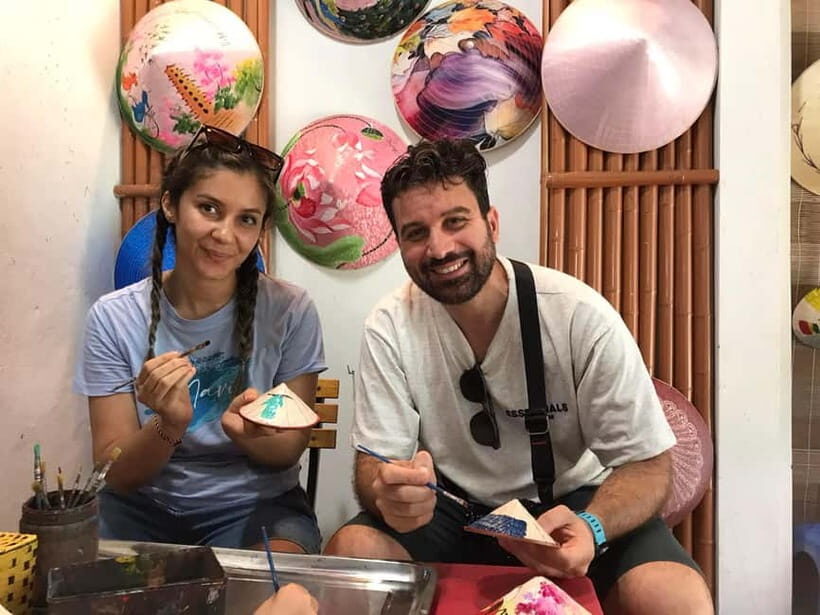
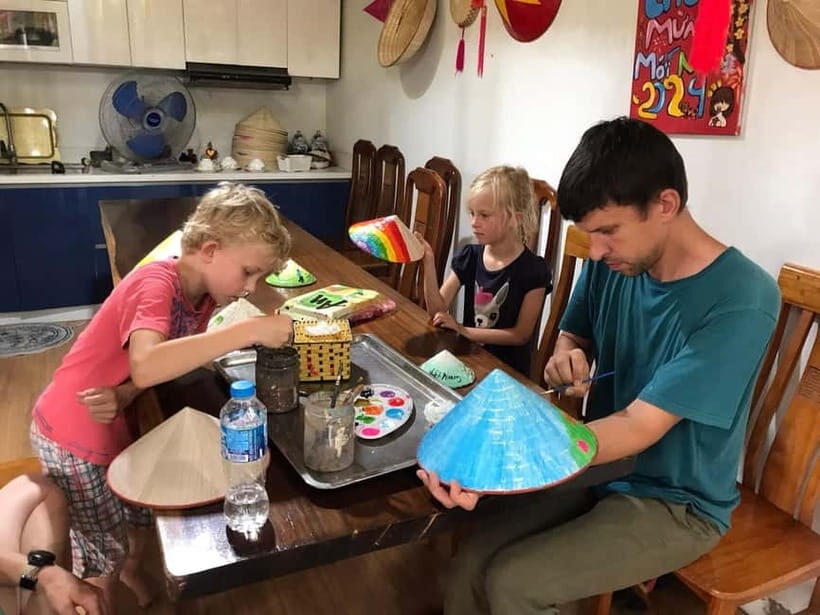
- Paint your own conical hat souvenir
- Make incense sticks and take them home
- Water and basic comfort
- Price and value: is $15 a smart craft-day bargain?
- Timing, transport, and the Hanoi Train Street drop-off
- Plan for the ride
- Who this small-group tour is for
- Should you book this Hanoi Conical Hat Village & Incense Village tour?
- FAQ
- How long is the Hanoi conical hat and incense village tour?
- Is lunch included?
- Do I get to take anything home?
- Does the tour include both Chuong Village and Quang Phu Cau incense village?
- Do the market and festival happen every day?
- Where will you be dropped off in Hanoi?
- What language will the guide speak?
- What should I bring for the day?
Key highlights you’ll actually care about
- Conical-hat making, step by step: bamboo prep, leaf drying, silk insertion, and optional embroidery details
- Meet Thao of Chuong Village: a multi-generations craft household opposite Chuong Pagoda
- Chuong Market + a lunar festival: visit happens on specific lunar dates, including the 10th of the third lunar month
- Quang Phu Cau incense process: see family-scale incense dyeing, then a nearby factory level of production
- Take-home souvenirs: one free conical hat for painting plus some incense sticks you make yourself
Chuong Village and the Non La in Plain Terms
Chuong Village is where the conical hat stops being a tourist symbol and becomes a real piece of work. You’ll learn why these hats matter in Vietnam: they were practical headwear for sunlight and rain, and today they’re also a fashion item for Vietnamese women.
What makes this stop worth your time is the cause-and-effect behind the craft. The guide talks about materials first, then you see how those materials become shape. That’s the difference between watching a demo and understanding why the hat looks the way it does.
You can also read our reviews of more tours and experiences in Hanoi.



Meeting Thao: watching hands and materials do the talking
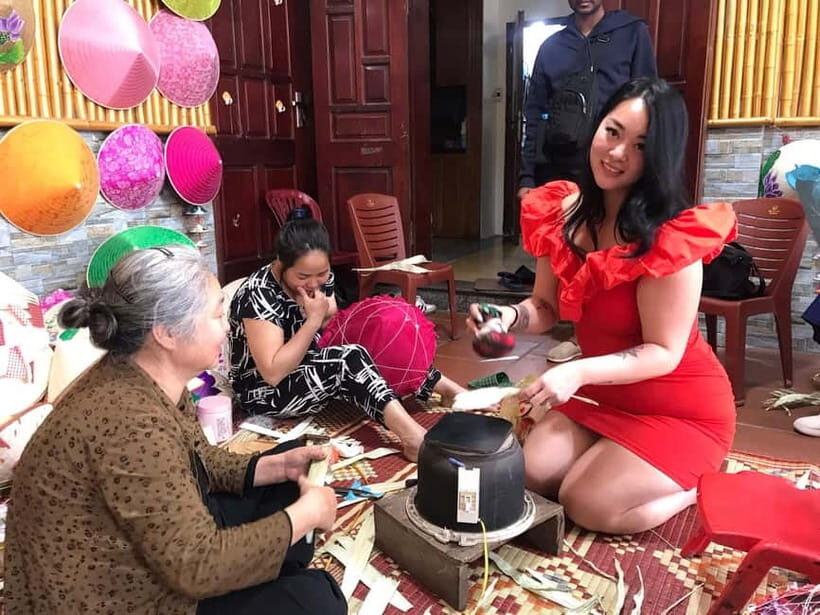
One of the best moments is meeting Thao at her house, located opposite Chuong Pagoda. She’s been crafting conical hats for 40 years, and the point isn’t just longevity—it’s how many skills you learn over a lifetime in the same village.
You’ll hear how the process is meticulous and patience-heavy. A conical hat has two main parts: the leaves and the frame. The “frame” isn’t just a support—it affects how the hat holds its form, while the leaves determine the final look and durability.
From bamboo and lá lụi palms to a hat you can recognize
Here’s what you’ll likely see explained during your visit:
- Bamboo is split into thin strips, soaked, and dried in the sun
- Green palm leaves are processed and dried during the dry season
- Silks (red or pink) may be added, and some hats get decorated with embroidery like flowers or birds
The guide also points out that the leaves used for the hats come from lá lụi, sourced from forests in Quang Binh and Thanh Hoa. That sourcing detail matters, because it’s a reminder that quality starts before anyone sits down to craft.
Chuong Pagoda area: market energy and lunar-date surprises

Chuong Village isn’t only about making. On specific lunar dates, you also get the chance to visit the Chuong Village market, where conical hats show up as products in daily life, not just artifacts.
There’s also a festival that can be part of your schedule: the special festival on the 10th of the third lunar month. Since the market and festival only happen on certain dates, your experience can be slightly different depending on when you travel. If you’re flexible, that’s a real advantage—you’re not just buying a standard tour, you’re syncing with village timing.
What to do with the market time
When the market is active, I’d treat it like a photo + people-watching window. Look at:
- how hats are priced and grouped
- what styles are being pushed at that time
- how artisans and sellers present their work
Even if you’re not shopping, it helps you understand what locals actually want to make, sell, and wear.



Quang Phu Cau incense village: dyeing, sticks, and a factory step

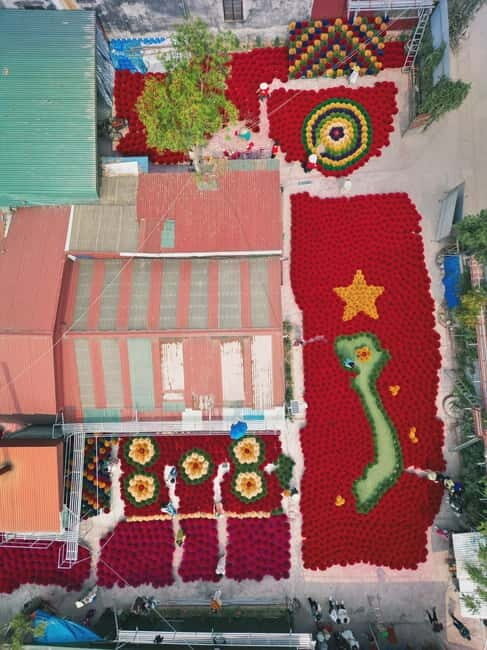
After the hat village, you’ll head to Quang Phu Cau Incense Village, known for producing incense for more than 100 years. This part is more about production flow—how you go from raw ingredients to the recognizable incense sticks you see across Vietnam.
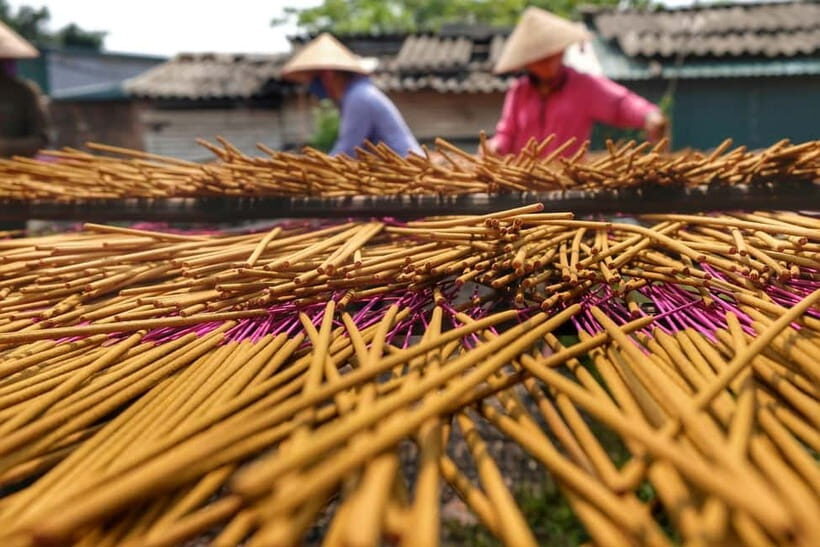
You’ll start with a walk through the village center and observe locals working at a family scale. You’ll meet a family that specializes in dyeing incense sticks, and you’ll see the colorful bundles.
Then you’ll go a level up with a tour of a nearby factory. The guide explains how incense is made from scratch and you’ll see how manual workers fit into the process. One helpful tip here: bring your camera for the color stages, because that’s where the work looks most visual.
A realistic expectation about the incense stop
I’d set expectations carefully. One of the fair criticisms of this portion is that the incense area can feel like a smaller, artificial-feeling setting (more “work zone” than “whole village atmosphere”). The upside is that you still get production context and you see steps you can’t easily get on your own without local guidance.
The hands-on parts: painting a hat and making incense sticks
This tour is good value partly because it gives you something to do, not just something to watch.
Paint your own conical hat souvenir
You’ll receive 01 free conical hat for painting in the hat village. This is the kind of souvenir that actually makes sense—you’re not just buying a mass-made item, you’re personalizing something created through a long process.
Even if your art skills are “stick figure” level, take it as a memory-maker. The fun is in choosing colors and seeing how your hat looks after you finish.
Make incense sticks and take them home
On the incense side, you’ll try making incense sticks yourself. After you make them, you get some free incense sticks as part of the experience.
This is also a good “sensory” moment in a city tour day. You’ll learn how the craft works, and you’ll leave with a product you understand better than the store version.
Water and basic comfort
You’ll get bottled water, which matters in the sun. With a tour like this, heat management is not optional—wear shoes you can stand in and expect bright daylight.
Price and value: is $15 a smart craft-day bargain?

At $15 per person, the math is strong if you want two culture-and-craft stops in one half-day style outing. You’re paying for:
- hotel pickup and drop-off in Hanoi’s Old Quarter area
- a professional local guide
- entrance fees
- hands-on activities (hat painting + incense making)
- take-home items
That combination is where the value really shows. You’d spend similar money on a single craft shop visit, and you usually wouldn’t get the process explanation or the personalized hat.
A small note on planning: there’s no lunch included in the half-day version. If you’re booking the smaller-time option, eat beforehand or bring a snack so you don’t fade mid-afternoon.
Timing, transport, and the Hanoi Train Street drop-off
Logistics can make or break a day like this, and this one has a very clear ending point. The tour returns to Hanoi and your first drop-off option is Hanoi Train Street.
If Train Street is your vibe, you can take your time there and then return to your hotel by taxi or Grab on your own. If you’d rather not stop there, you can wait on the bus so you’re not forced to linger.
Plan for the ride
Depending on traffic and your exact pickup timing, expect road time to feel long enough that bathroom planning becomes important. One group reported they needed a toilet stop after about two hours of driving, and the driver didn’t communicate well in English. That doesn’t mean it’ll happen to you, but it’s a good reminder: use bathroom opportunities early when they’re offered, and mention your needs clearly to the guide.
Who this small-group tour is for

This works best if you enjoy practical culture—how everyday Vietnamese crafts are made and why. You’ll get more from it if you like:
- watching skilled handwork
- learning the story behind materials
- turning a visit into a take-home memory
It’s also a good fit for people who want a small group. The experience is described as small group, with private options available too, which can make questions easier and photos smoother.
If you’re traveling with kids, this is generally more interesting than a sit-and-watch history stop, because you’ll have hands-on steps. Just bring a sun hat and keep an eye on standing time.
Should you book this Hanoi Conical Hat Village & Incense Village tour?
I’d book it if you want a craft-focused morning/afternoon that includes real instruction and take-home items. The conical hat portion is the strongest part, especially with the chance to meet Thao and learn the process details about leaves, frames, bamboo prep, and silk decoration.
I’d book it with eyes open about the incense stop. If you’re expecting a huge “incense village” set like a film location, you might find the setting less dramatic than the craft itself. Still, the dyeing steps, sticks-making practice, and the factory visit give you enough substance to feel like you learned something.
If your schedule lines up with the lunar calendar—especially the 10th of the third lunar month—even better.
FAQ
How long is the Hanoi conical hat and incense village tour?
It runs about 6 hours (listed as 6 hours to 1 day). Exact starting times depend on availability.
Is lunch included?
For the half-day option, lunch is not included. A full-day trip includes lunch, but the half-day version you’re considering does not.
Do I get to take anything home?
Yes. You get one free conical hat to paint in the hat village, and you also receive some incense sticks after you make incense sticks yourself.
Does the tour include both Chuong Village and Quang Phu Cau incense village?
Yes. It includes Chuong Village and the observation of artisans crafting conical hats, plus a visit to Quang Phu Cau incense village.
Do the market and festival happen every day?
No. The market and festival only happen on specific lunar dates, including a special festival on the 10th of the third lunar month.
Where will you be dropped off in Hanoi?
The first drop-off listed is Hanoi Train Street. If you prefer not to get out there, you can wait on the bus.
What language will the guide speak?
The tour guide is available in English, Vietnamese, Chinese, French, Italian, Japanese, Portuguese, and Spanish.
What should I bring for the day?
Bring comfortable shoes, a sun hat, and a camera.