REVIEW · HANOI
Hanoi city tour
Book on Viator →Operated by TOUR GUIDE IN HANOI - NGUYEN · Bookable on Viator
Hanoi turns into one guided story. This 8-hour Hanoi city tour is interesting because it doesn’t just stack famous sights. It links West Lake’s ancient temples, the Old Quarter’s street-life energy, and key political and cultural landmarks into one workable day.
I especially like the thoughtful pairing of Hoan Kiem-area West Lake time and deep museum stops. You’ll start with Tran Quoc Pagoda, then move through places like Hoa Lo Prison Museum, where the story shifts from French colonial political prisons to US POWs nicknamed the Hanoi Hilton. One drawback to plan around: Ho Chi Minh Mausoleum is closed on Mondays and Fridays, so your visit depends on the day you pick.
Key highlights to watch for
- Tran Quoc Pagoda on Golden Fish Island: built in the 6th century and described as the oldest pagoda in Ha Noi
- Old Quarter time with guide Nguyen: English-speaking, and one recent group also noted Mandarin ability
- Ho Chi Minh complex garden and historic houses: includes the chance to see the embalmed body and homes from 1954 to 1969
- Temple of Literature (11th century): Vietnam’s first university
- Hoa Lo Prison Museum (Hanoi Hilton era): French and later US POW history in one stop
- One Pillar Pagoda: tied to worship of the Goddess of Mercy and known as a uniquely shaped pagoda
In This Review
- Start at Opera House Suites for a day that actually runs on time
- Tran Quoc Pagoda on Golden Fish Island: the 6th-century anchor
- Old Quarter walking: food breaks, street clues, and local pace
- Ho Chi Minh Mausoleum and complex: what you’ll see, and when it changes
- Temple of Literature and National University: education as a living story
- Ethnic culture museum swap: Ethnology Museum or Women Museum
- Hoa Lo Prison Museum: the Hanoi Hilton story in full view
- One Pillar Pagoda: a tiny structure with big meaning
- Price, included lunch, and how the day feels in practice
- Who should book this Hanoi city tour
- Should you book it
- FAQ
- How long is the Hanoi city tour?
- How much does the tour cost?
- What is included in the price?
- Which main places does the tour visit?
- Is Ho Chi Minh Mausoleum open every day?
- Do you visit the Ethnology Museum?
- Where does the tour start and end?
Start at Opera House Suites for a day that actually runs on time
Your day starts at Opera House Suites on Tràng Tiền Street in Hoàn Kiếm. It’s a practical meeting point: easy to find, and it puts you close to the area most people base themselves in when they want to walk around Hanoi.
The tour is designed around a tight loop, with an air-conditioned vehicle helping you move between sights. The group cap is 15 travelers, which matters in Hanoi, where crowds can turn even short walks into slow-motion lines. A smaller group also makes it easier to keep things organized, especially when you’re switching between outdoor streets and indoor museums.
Price-wise, this is one of those Hanoi deals where the value is in what’s included. You’re not just buying guide time—you’re getting entrance/admission fees, lunch, bottled water, and an English-speaking local guide. At $30 per person, that’s the difference between a cheap ticket and a day that still feels complete.
Tran Quoc Pagoda on Golden Fish Island: the 6th-century anchor
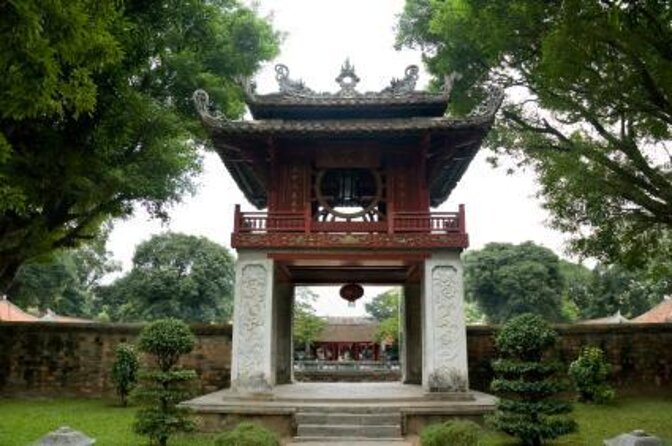
Stop one is Chùa Trần Quốc (Tran Quoc Pagoda) on Golden Fish Island in West Lake. This pagoda is famous for age: it’s described as the oldest pagoda in Ha Noi and built in the 6th century.
Why this first stop works: it sets the tone. Before you jump into plazas and museums tied to modern politics, you get a calm, historic anchor on the water. Even if you’re not a dedicated temple person, it helps you understand Hanoi’s slower rhythm—where religion and city life sit side by side.
What to watch for here is atmosphere. West Lake is not just a view; it’s part of the pagoda’s identity. If you’re the type who likes photographing details—carvings, incense smoke, and the way locals move through the space—you’ll have an easier time doing it when you’re fresh at the start of the day.
Practical tip: wear shoes you don’t mind walking in. Pagoda areas can involve uneven pavement and short steps, and Hanoi days add up fast.
You can also read our reviews of more city tours in Hanoi



Old Quarter walking: food breaks, street clues, and local pace
Next you head to the Old Quarter. This is where you get to feel Hanoi as a living place, not a checklist. Expect plenty of street-level variety: shop-houses, narrow lanes, and the kind of everyday movement that guide-led pacing helps you interpret.
This is also where guide skills really show. The guide for this tour is Nguyen, and at least one group specifically noted Nguyen’s ability to speak both English and Mandarin. That kind of language flexibility isn’t just a bonus—it helps you ask better questions and understand what you’re seeing instead of only following along.
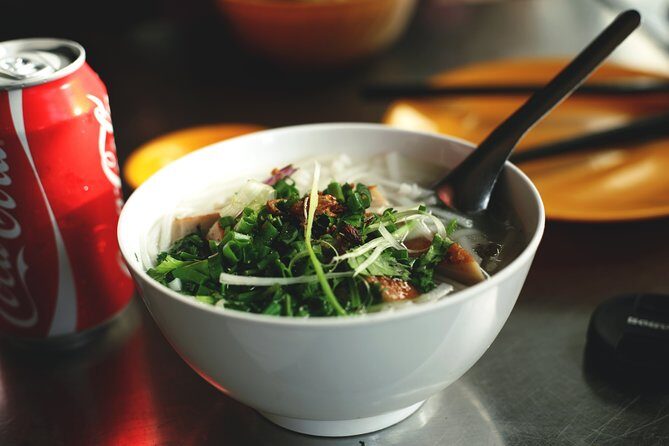
Food is part of the Old Quarter feel. Even though the tour includes lunch at a local restaurant (not a random food stop), Nguyen has a knack for pointing you toward good, local choices. One recent Old Quarter outing included a stop for beef pho, plus a stroll and introductions to the places around them. If you’re hoping your day includes at least one moment where you eat like a local, this tour is set up for it.
The main consideration for Old Quarter time: you’re walking. It’s not a sit-down sightseeing drive. Plan for comfortable footwear and a realistic pace, especially if the weather turns humid.
Ho Chi Minh Mausoleum and complex: what you’ll see, and when it changes
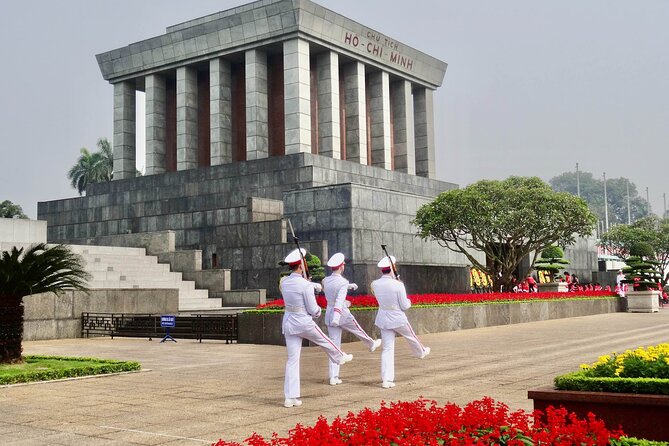
Then comes the political heart of the day: the Ho Chi Minh Mausoleum complex. You get the chance to see the embalmed body of Ho Chi Minh, then walk around the garden and see two houses where he lived and worked from 1954 to 1969.
This stop matters for perspective. Hanoi isn’t only about ancient pagodas and old-world streets. It also plays a central role in Vietnam’s modern history, and the complex is one of the most direct ways to grasp how that history is remembered and displayed.
Here’s the key scheduling detail: the Mausoleum is closed on Mondays and Fridays. So if you’re choosing travel dates, it’s worth planning around the open days if seeing the Mausoleum itself is a priority. If your trip falls on a closed day, you may still proceed with the surrounding complex elements, but the standout viewing point may not be available.
If you prefer museums and historical sites that feel structured and clearly explained, this is a strong match. A good guide helps you connect the names, dates, and layout so it doesn’t turn into a quick photo sweep.
Temple of Literature and National University: education as a living story

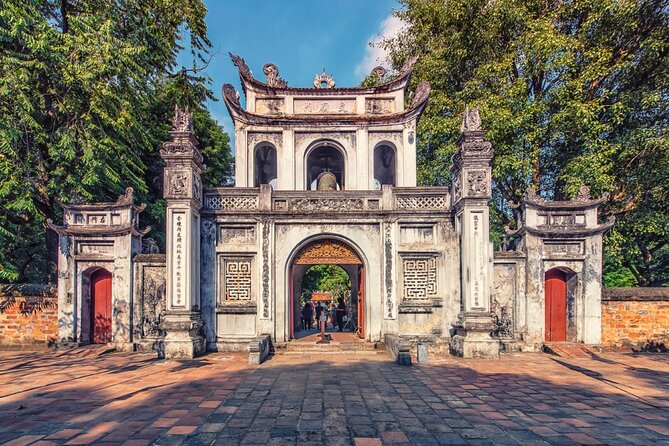
After the Mausoleum area, you move to Temple of Literature (Văn Miếu) and the National University. This is the first university of Vietnam, established in the 11th century.
What makes this stop more than a pretty courtyard is the theme: learning. Hanoi has plenty of sites tied to rulers and battles, but Temple of Literature is about scholars and formal education. You’ll see how Vietnam’s intellectual traditions are framed and preserved through architecture and ritual space.
This stop is also a good balance against Hoa Lo Prison later. One place is built around study and recognition of learning. The other place forces you to face imprisonment and war history. Together, they give you a more complete picture of how Hanoi holds different kinds of memory.
One practical note: this is still a major walking day. Don’t plan to pair it with another heavy activity right after unless you like being tired.
Ethnic culture museum swap: Ethnology Museum or Women Museum
The tour also includes time at a Vietnamese culture museum. The plan is Vietnam Ethnology Museum to learn about the 54 ethnic groups living across Vietnam. There’s an important exception: if the Ethnology Museum is closed on Mondays, the tour visits Women Museum instead.
This is one of those details that can change your expectation, so it’s worth knowing before you go. If ethnic diversity learning is your main goal, consider choosing a day when the Ethnology Museum is open. If you’re flexible and open to a different museum focus, the Women Museum replacement keeps the day moving without dropping the cultural stop.
Either way, this is a good contrast point in the itinerary. It breaks up the heavy political and prison history with something more human-scaled: identity, traditions, and everyday culture.






Hoa Lo Prison Museum: the Hanoi Hilton story in full view

Next is Hoa Lo Prison Museum. This is one of the most intense stops on the tour, and it earns that place on the schedule.
Originally, it was used by the French colonists in Indochina for political prisoners. Later, it became known to American POWs during the Vietnam War, and many people refer to it as the Hanoi Hilton.
Why this stop is valuable: it makes the war-era narrative concrete. Instead of only reading dates or watching documentaries, you walk through the kind of space where those stories were lived. It’s also not one-note. The timeline shift—from French colonial incarceration to US POW imprisonment—helps you see how the same site can be repurposed across eras.
Balance matters here. If you’re the kind of visitor who gets overwhelmed easily, pace yourself and take breaks. Hoa Lo Prison is emotionally heavy by nature, and rushing it turns it into a blur.
A good guide helps you interpret. With someone like Nguyen, you can ask questions and get context that makes the place easier to process.
One Pillar Pagoda: a tiny structure with big meaning
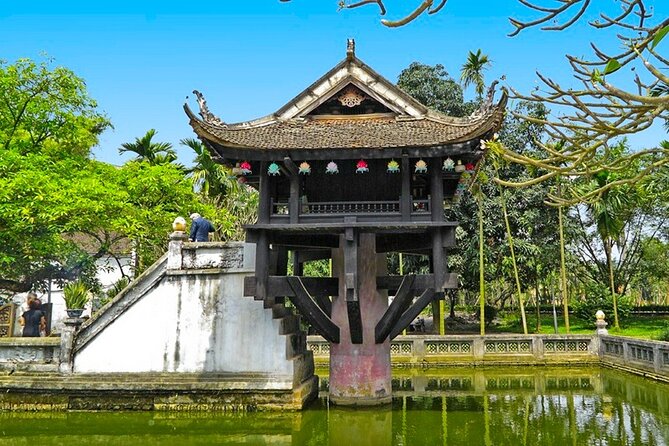
Finally, you reach One Pillar Pagoda. You’re visiting as part of a religious and cultural stop, tied to worship of the Goddess of Mercy. This pagoda is also described as the most unique padoga in the world, largely because of its striking structure.
The best way to enjoy this stop is to treat it as a breather after Hoa Lo. The prison museum asks for mental focus. The One Pillar Pagoda invites you to notice craftsmanship and symbolism in a smaller space.
It’s also a reminder that Hanoi isn’t only about hard history. Even on a day packed with major historical sites, this pagoda brings the spiritual side back into view—brief, memorable, and easy to photograph if you move patiently.
Price, included lunch, and how the day feels in practice
At $30 per person, the biggest value isn’t the guide. It’s what you’re not paying for separately.
This tour includes:
- Entrance fees / admission fees
- Lunch at a local restaurant
- Bottled water
- An English-speaking local tour guide
- Air-conditioned vehicle
That package is especially important in Hanoi, where entrance fees and museum tickets can add up quickly if you’re building the day on your own. Here, the day is planned as a connected route, so you spend time seeing instead of negotiating tickets.
Group size also shapes the experience. With up to 15 travelers, you’ll generally get more attention than you would on a larger bus tour. It’s still a group day, so you’ll move together, but it usually won’t feel like cattle transport.
One more “real life” note: the tour says it requires good weather. If the day is rainy, you might be offered a different date or a full refund. In Hanoi, weather changes fast, so it’s worth having flexibility in your plans.
Who should book this Hanoi city tour
This tour is a strong match if you want:
- A full, organized Hanoi overview in one day
- A mix of ancient religious sites, education history, and war history
- A guide who can explain things clearly, and who for at least some groups has English and Mandarin ability (with Nguyen)
- Included meals and tickets so you’re not budgeting every individual stop
It’s also a good fit for families or mixed-age groups. One highlight from a recent experience was how the guide worked with kids and still kept the day enjoyable.
If you’re the type who wants to roam completely on your own with no schedule at all, this might feel too structured. But if you want a reliable route that covers the big names—without spending half your day guessing routes—this is the kind of plan that makes travel easier.
Should you book it
I’d book this tour if you want a day that checks the major historic boxes and still leaves room to breathe. The price feels fair because tickets and lunch are included, and the itinerary covers the themes that make Hanoi make sense: old temples, street life, education, revolutionary history, and the hard reality of war-era imprisonment.
If your trip dates land on a Monday or Friday, consider whether seeing Ho Chi Minh Mausoleum is a must for you. If it is, you may want to adjust your travel day so the highlight isn’t closed.
FAQ
How long is the Hanoi city tour?
The tour runs about 8 hours.
How much does the tour cost?
It costs $30.00 per person.
What is included in the price?
The price includes entrance fees, admission fees, bottled water, lunch, an English-speaking local tour guide, and an air-conditioned vehicle.
Which main places does the tour visit?
The tour includes Tran Quoc Pagoda, the Old Quarter, the Ho Chi Minh Mausoleum complex, Temple of Literature, Hoa Lo Prison Museum, and One Pillar Pagoda. It also includes a museum visit that may be Vietnam Ethnology Museum or Women Museum depending on the day.
Is Ho Chi Minh Mausoleum open every day?
No. The Ho Chi Minh Mausoleum is closed on Mondays and Fridays.
Do you visit the Ethnology Museum?
Yes, the plan is to visit the Vietnam Ethnology Museum, but if it’s closed on Mondays, the tour visits Women Museum instead.
Where does the tour start and end?
It starts at Opera House Suites (2 Ng. Tràng Tiền, Tràng Tiền, Hoàn Kiếm, Hà Nội, Vietnam) and ends back at the same meeting point.



More City Tours in Hanoi



More Tours in Hanoi
- Ninh Binh Full-Day Tour from Hanoi to Hoa Lu, Tam Coc & Mua Cave Via Boat & Bike
★ 5.0 · 4,384 reviews