
Hanoi packs a lot into a half day. This private tour mixes major landmarks with smaller local texture—pagodas, the Temple of Literature, Dong Xuan Market, Long Bien Bridge, then the headline moment at Train Street. I like that you get an English-speaking guide who tells you what you’re actually looking at (not just where to stand), and I also like the pace: 4 to 5 hours is enough to see a lot without turning the day into a blur. One thing to plan around: Ho Chi Minh Mausoleum is morning-only and can be closed on certain days, so depending on your schedule you may see the exterior instead of going in.
What makes this tour feel practical is the setup. You get hassle-free round-trip transfers from your hotel in Hanoi’s Old Quarter, entrance fees are included, and there’s even tea (or egg-coffee) during the Train Street stop. I think you’ll also enjoy the way guides can adjust in real time—when something is closed, they’ll re-balance the time so you still come away feeling you learned Hanoi, not just collected photos.
In This Review
- Key things I’d focus on before you go
- How a 4–5 hour private Hanoi plan really feels
- Ho Chi Minh Mausoleum: the one stop you must schedule correctly
- One Pillar Pagoda: a tiny stop with a big legend
- Temple of Literature and National University: where education met politics
- Dong Xuan Market and Long Bien Bridge: real Hanoi between big sights
- Dong Xuan Market
- Long Bien Bridge
- Train Street: the main event, with tea and timing you can manage
- Hanoi Opera House: French colonial style from the outside
- What’s the value of $52 for all this?
- Who should book this tour (and who should not)
- Quick tips to get the most out of your half day
- Should you book it?
- FAQ
- How long is the Hanoi City Half Day Private Tour
- What does the tour price include
- Do you offer pickup from hotels in Hanoi
- Where is the meeting point
- Is Ho Chi Minh Mausoleum included for everyone
- What should I wear to visit Ho Chi Minh Mausoleum
- What’s included at Train Street
- What if the weather is bad
- Can I cancel for free
Key things I’d focus on before you go

- Train Street time + a tea/egg-coffee pause: it’s built into the flow, so you’re not scrambling for a sit-down break.
- Mausoleum timing matters: Ho Chi Minh Mausoleum opens only in the morning (and not on some weekdays), so your chosen start time affects what’s possible.
- A “many styles of Hanoi” route: pagodas, Confucian-era scholarship, a big market, then French-era architecture.
- Private car comfort, Old Quarter pickup: you’re not wrestling with public transport on a tight schedule.
- Outside visits where needed: the Opera House and, sometimes, the mausoleum are about seeing the context and architecture from the right vantage.
- Guides who tell stories in plain language: the most praised part of the day is usually the person holding the thread together—guides like Linh, Lan, Ken, Sam, and Andy Nguyen are named often.
How a 4–5 hour private Hanoi plan really feels

This is the kind of tour that works best on Day 1 (to get your bearings fast) or on a “we only have one shot” day. The route is designed to cover major East-meets-West points of view in a tight circle, and the private car helps a lot in Hanoi traffic.
You can choose a morning or afternoon start time. Just remember that the day isn’t equally flexible. Ho Chi Minh Mausoleum has the biggest schedule constraints, and the tour notes say it opens only from 8:00 AM to 11:30 AM, with a weekly closure on Monday and Friday. If your timing falls outside that window, you’ll visit the site outside rather than the interior.
Also, this is not an “everyone follows the same tape” experience. It’s private, limited to your group, so the guide can slow down if you’re curious—or speed things up if your schedule is tight. In the feedback, guides like Linh, Lan, and Ken are repeatedly credited with making the tour feel organized but not robotic.
You can also read our reviews of more city tours in Hanoi



Ho Chi Minh Mausoleum: the one stop you must schedule correctly
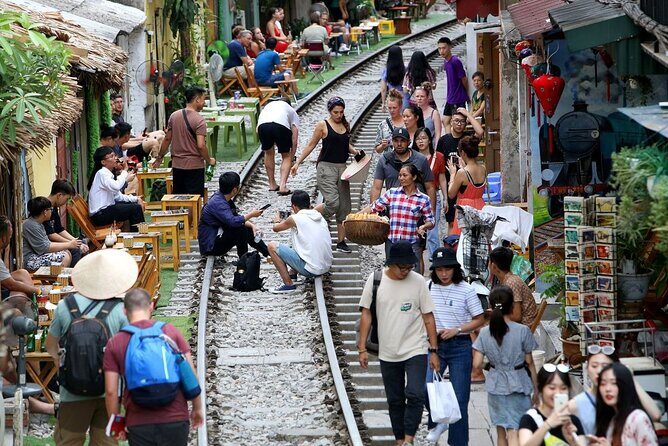
Ho Chi Minh Mausoleum is the first “anchor” on the itinerary, and it sets the tone: formal, symbolic, and very much a site with rules. The tour includes an admission ticket, but access depends on timing and operating days.
Here’s what you should plan around:
- Morning access only: open until 11:30 AM.
- Weekly closure: closed Monday and Friday.
- Seasonal closure: closed June 10 to August 12 for maintenance.
- Dress code: shoulders covered and shorts/knees-length requirements for men and women.
If you’re traveling in the summer maintenance window, or you’re booked on a weekday it’s closed, don’t treat it as a “miss.” The tour information makes it clear that you’ll visit outside in those cases. That still gives you a meaningful sense of the site’s presence—just without the interior experience.
Practical tip: pack a light layer for shoulders, just in case. Hanoi heat is real, but the mausoleum dress rules don’t bend.
One Pillar Pagoda: a tiny stop with a big legend
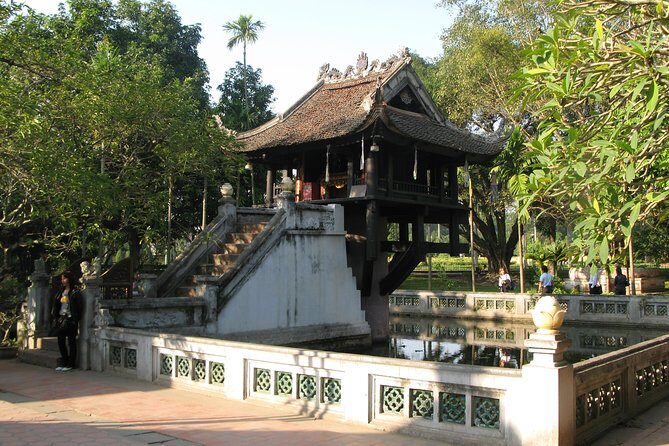
Next is One Pillar Pagoda, a short visit (about 30 minutes) that’s built on a famous legend. The tour describes the story of Emperor Ly Thai Tong dreaming of the enlightened being Avalokiteshvara, followed by a baby resting on a lotus flower—an origin tale that still shapes how people see the pagoda today.
This stop is valuable because it’s not just a photo stop. It’s a quick entry into how Hanoi’s spiritual life connects myth, symbolism, and everyday devotion. And because it’s short, it doesn’t hijack your schedule.
If you’re the kind of person who enjoys small details—how places are named, what stories people repeat—this one fits well inside a half day.
Temple of Literature and National University: where education met politics
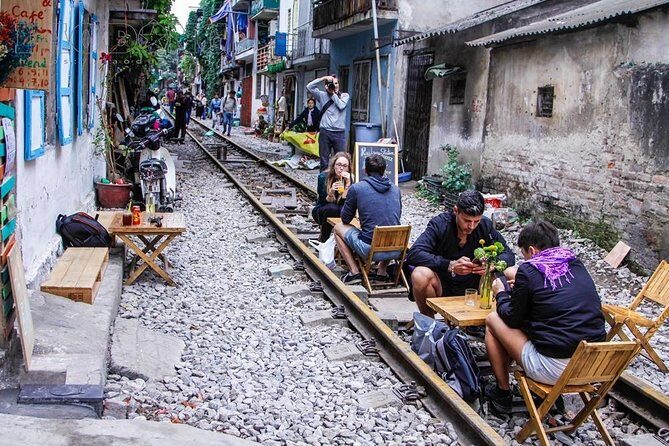
The Temple of Literature stop is about 1 hour, and it’s a strong choice if you want a break from pure landmark sightseeing. The tour frames it as originally built in 1070 as a university dedicated to Confucius, which is exactly the kind of historical “why” that makes the place feel alive.
What you’ll likely notice is how the design supports the message: learning as something formal, public, and respected. The setting also helps you understand why this site matters beyond tourism. It’s not a random temple; it’s tied to an education system that helped shape Vietnam’s intellectual life for centuries.
In the feedback, this is one of the stops that repeatedly earns high praise, especially from people who want history that’s explained in a way that actually sticks.
Dong Xuan Market and Long Bien Bridge: real Hanoi between big sights
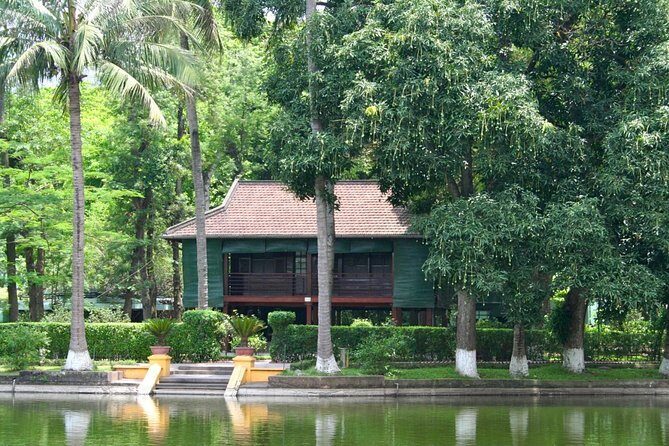
After the academic and spiritual anchors, the tour shifts into city-life mode.
You can also read our reviews of more private tours in Hanoi
- Doris Cruise 5 star cruise 2 days visiting Halong Bay Lan Ha Bay private balcony
★ 5.0 · 2,338 reviews






Dong Xuan Market
Dong Xuan Market is described as the largest wholesale market in Hanoi, built in 1889, and the itinerary gives it a 20-minute slot. Even if you’re not shopping, this stop is useful because it shows how Hanoi feeds itself and trades day to day.
One practical bonus: the market is a good place to try to read a city by its rhythm. Colors, movement, and what’s for sale all tell you something about local priorities. In the feedback, one example mentioned that a guide even bought fruit to try while walking through the market. That’s the kind of small, human detail that turns “we passed a market” into “we understood a market.”
Long Bien Bridge
Long Bien Bridge is brief (about 20 minutes) but it adds a different kind of history. The tour explains it was constructed after the French period of conflict—starting from the time French forces conquered Hanoi—and notes a timeline for construction and completion (1899 to 1902). It’s also described as a symbol of Hanoian resilience and later bombed during wartime.
Even if you don’t stand there for long, it’s a smart contrast piece after the more ceremonial sites. You see infrastructure, survival, and the layers of the city in one photo spot.
Train Street: the main event, with tea and timing you can manage
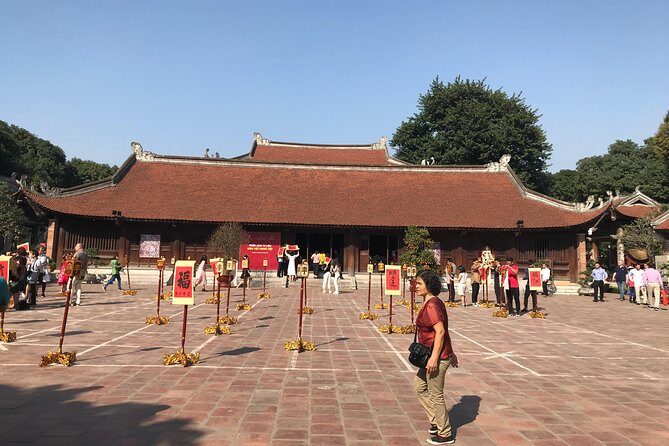
Now for the headline: Train Street. The tour sets aside about 40 minutes at the Train Street entrance, with admission included. You’re there for the thrill of seeing a real street built around active railway lines.
What I like about this stop on a half-day tour is that it’s not just a frantic walk for photos. The package includes tea (or egg-coffee) while visiting Train Street, which means you get a pause built into the experience. That matters because the street can feel chaotic depending on the crowd level and weather.
A few practical thoughts so you don’t waste the time:
- Wear comfortable shoes. The area is walk-heavy.
- Bring a phone camera, but expect a lot of people trying to do the same thing.
- Follow the guide’s rhythm. They’ll tell you where to position for the best views without wasting minutes.
In feedback, guides like Sam are even mentioned for arranging a place to sit, which helps you enjoy the tea stop instead of standing the whole time. Not every guide may have the exact same setup, but it’s a sign that the best versions of this tour treat Train Street as an experience, not a photo pin.
Hanoi Opera House: French colonial style from the outside

The final “major landmark” stop is the Hanoi Opera House, with a short outside-only visit (about 10 minutes). The tour info is clear that the building is closed to the public except for ceremonies and special events, so the point here is visual and contextual: French colonial-era architecture and what that tells you about Hanoi’s past.
This stop works well because it gives you a clean ending. You can connect it back to earlier layers—Confucian-era learning, pagoda spirituality, market life—and then see how French colonial influence shaped the cityscape.
If you’re a detail person, look at the building’s proportions and facade lines. From the outside, you can “read” the style even without going inside.
What’s the value of $52 for all this?
At $52 per person for a private half-day, the value comes from what’s included, not just the sightseeing list.
You’re getting:
- English-speaking guide
- Entrance fees
- Private transfers for the whole tour (with hotel pickup in Hanoi’s Old Quarter)
- Tea or egg-coffee during Train Street
- A plan that covers several major areas in 4–5 hours
That’s why it tends to feel worth it for most people: you’re paying for time efficiency and for someone to explain what you’re seeing while you move from site to site. If you tried to DIY this route, you’d spend time figuring out transit, line up for tickets, and lose the “why does this place matter” explanations that guides like Linh or Lan are repeatedly praised for.
One more value angle: private tours reduce friction. Hanoi’s Old Quarter can be a lot of lanes, scooters, and sudden turns. Having a driver and a guide reduces stress and keeps the day smooth.
Who should book this tour (and who should not)
You’ll likely be happy with this tour if:
- You want a first taste of Hanoi without planning every minute.
- You like your sightseeing explained, especially history tied to actual places.
- You’re visiting for only a short window and want to hit key zones efficiently.
- You appreciate structure, but still want a little room for questions.
You might want to skip or switch to a different option if:
- You’re set on only going inside Ho Chi Minh Mausoleum. Your schedule must fit the morning access rules.
- You dislike group-like crowd situations around Train Street. It’s popular, so expect busy moments.
Quick tips to get the most out of your half day
- Plan your morning or afternoon choice around Ho Chi Minh Mausoleum hours.
- Dress for mausoleum rules even if you hope to do it inside—shoulders covered, shorts to the knee.
- Keep your phone battery up. You’ll be moving between very photo-friendly spots.
- Ask your guide about timing during weather changes. Hanoi conditions can shift fast.
Should you book it?
If your goal is a smooth, organized half-day that mixes big-name Hanoi with a real-life street experience, this tour is a strong pick. The biggest reasons to book are the included entrances and transfers, plus the way top guides like Linh, Lan, Ken, and Sam bring the day to life with clear explanations. It’s also a smart way to experience Train Street without turning it into a stressful sprint.
Just don’t ignore the mausoleum timing rules. Choose your start time carefully, and you’ll get a version of the day that feels complete.
FAQ
How long is the Hanoi City Half Day Private Tour
It runs about 4 to 5 hours.
What does the tour price include
The price includes an English speaking guide, entrance fees, private transfers for the whole tour, and tea (or egg-coffee) while visiting Train Street.
Do you offer pickup from hotels in Hanoi
Yes, pickup is offered from hotels in Hanoi’s Old Quarter, and the tour includes round-trip transfers. If your hotel is near Noi Bai airport, you’ll need to go to the meeting point or contact the operator for details.
Where is the meeting point
The tour starts at Thang Long Water Puppet Theatre, 57B Đinh Tiên Hoàng, Hàng Bạc, Hoàn Kiếm, Hà Nội, Vietnam, and ends back at the same meeting point.
Is Ho Chi Minh Mausoleum included for everyone
Ho Chi Minh Mausoleum is only open in the morning (until 11:30 AM) and it’s closed weekly on Monday and Friday. If the timing doesn’t work, you’ll visit outside.
What should I wear to visit Ho Chi Minh Mausoleum
You need to dress modestly: shoulders must be covered and shorts must be to knee length.
What’s included at Train Street
Train Street includes admission and about 40 minutes on site. Tea (or egg-coffee) is included during the Train Street visit.
What if the weather is bad
This experience requires good weather. If it’s canceled due to poor weather, you’ll be offered a different date or a full refund.
Can I cancel for free
Yes. You can cancel up to 24 hours in advance for a full refund. If you cancel less than 24 hours before the start time, it isn’t refunded.




More City Tours in Hanoi


More Tours in Hanoi
- Ninh Binh Full-Day Tour from Hanoi to Hoa Lu, Tam Coc & Mua Cave Via Boat & Bike
★ 5.0 · 4,384 reviews