REVIEW · HANOI
Half-Day Ha Noi City Sightseeing Private Tour With Student
Book on Viator →Operated by Vietnam - Hanoi Package Tours · Bookable on Viator
Four hours, and Hanoi hits every note. This private half-day tour is a smart mix of major landmarks and real street life, from the solemn Ho Chi Minh Mausoleum to the chaotic-cute Hanoi Train Street photo moment. I like that it includes paid entrance tickets and hotel pickup, so you spend less time figuring things out. I also like how the route ties eras together, showing French-colonial Hanoi and dynastic Hanoi in the same day. The one thing to plan around is timing: the mausoleum has strict hours and closes on certain days, so your day can feel rushed if you’re not ready.
You’ll also see the city from multiple angles: temples, markets, lakeside stroll time, and Old Quarter wandering. If your guide is someone like Le, James, or Minh, you’re likely to get clear explanations that make the stops click instead of feeling like checkboxes. The main drawback to keep in mind is that it’s a lot to pack into about 4 hours—great if you like variety, less great if you want a slow, calm pace.
In This Review
- Key Highlights You’ll Feel Fast
- One Pillar Pagoda and Tran Quoc Pagoda: Hanoi’s Sacred Symbols
- Ho Chi Minh Mausoleum: A Serious Stop With Real Rules
- Imperial Citadel of Thang Long: UNESCO Layers You Can Actually See
- Long Bien Bridge and Hanoi Opera House: French-Era Hanoi in Motion
- Dong Xuan Market: A Huge Hanoi Hub for Cloth, Handicrafts, and Street Food
- Hanoi Train Street: The Photo Stop That Feels Like Living in the Frame
- Hoan Kiem Lake, Walking Street, and Ta Hien: Where the Day Breathes
- Old Quarter Wandering: Small Streets, Big Signposts
- Price and Value: Is $31.52 a Good Deal?
- Who This Tour Fits Best
- Should You Book This Hanoi Private Half-Day Tour?
- FAQ
- How long is the Hanoi city sightseeing private tour?
- How much does the tour cost per person?
- Is this a private tour?
- What’s included in the tour price?
- Are entrance tickets included for the stops?
- Which major places are included in the half-day?
- What should I know before visiting the Ho Chi Minh Mausoleum?
- Can I cancel for free?
Key Highlights You’ll Feel Fast
- Private, hotel pickup style that saves time and keeps the route efficient
- Ticketed sights included, not just look-but-don’t-enter stops
- Ho Chi Minh Mausoleum rules (dress code and security) that shape the flow
- Long Bien Bridge with its train-and-moped mix and current reconstruction context
- Train Street access without added ticket costs, plus nearby café culture like egg coffee
- Old Quarter + Dong Xuan Market for everyday Hanoi sights, sounds, and street food
One Pillar Pagoda and Tran Quoc Pagoda: Hanoi’s Sacred Symbols

The tour starts by leaning into Hanoi’s spiritual side. The One Pillar Pagoda is famous for one image: a tiny pagoda sitting on a single stone pillar, tied to legend. The story goes that a fatherless emperor dreamed of an enlightened being, which led to a lotus-themed design—lotus as a symbol of enlightenment and devotion. Inside, you’ll find the gilded focus on Quan Am (the Goddess of Mercy). A small detail adds extra weight here: the current concrete pillar is a replacement, because the original structure was destroyed by the departing French.
Then you move on to Chua Tran Quoc, often described as one of Hanoi’s most well-known pagodas. Even though the time at each temple is limited, this stop is a good contrast. One Pillar shows the legendary icon; Tran Quoc helps you see a different face of Buddhist Hanoi, without turning the experience into a checklist of “more pagodas.”
Practical note: temple stops tend to mean more walking on uneven ground and crowds at peak times. Wear something comfortable and keep your camera ready, but follow site rules.
You can also read our reviews of more city tours in Hanoi



Ho Chi Minh Mausoleum: A Serious Stop With Real Rules
This is the most “formal” moment on the route, and it sets the tone. You’ll visit Ho Chi Minh Mausoleum, the resting place of Vietnam’s beloved leader, known to many as Uncle Ho. His body is displayed in a glass case, and the mausoleum is modeled on Lenin’s mausoleum in Russia (construction began in 1973 and it opened to the public in 1975).
But here’s what matters for your day: the mausoleum is open only in the morning, from 8:00 AM to 11:30 AM, and it closes on Monday and Friday. It also closes every year from June 10 to August 12 for maintenance. Security is tight. You’ll need to deposit bags and cameras before entering, and you should dress with respect—no shorts, sleeveless shirts, or miniskirts.
This stop is worth it if you want to understand how Hanoi remembers leaders and how public spaces operate under strict rules. The tradeoff is timing stress: if you’re even slightly late, you can lose the visit.
Imperial Citadel of Thang Long: UNESCO Layers You Can Actually See
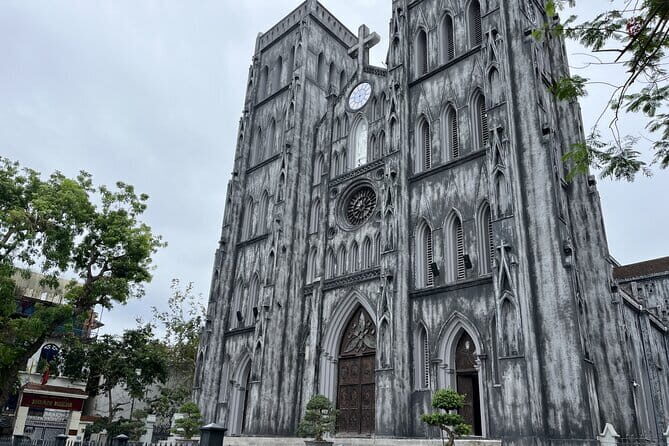
After you’ve processed the solemnity of the mausoleum, the tour shifts back in time. Imperial Citadel of Thang Long is a UNESCO World Heritage site and once served as the heart of Vietnam’s dynastic rulers and a major military base. Even with a shorter visit window, it’s the kind of place where a guide makes a difference—standing in the right spot and hearing what used to happen there helps you connect “ruins and walls” to real people and real power.
This stop also breaks up the day nicely. You’ll go from a highly controlled, rule-heavy site (the mausoleum) to a broader historical area where you can slow your pace a bit and look at the layers of what’s still present.
Pro tip: bring a hat if it’s sunny. You might find yourself wanting to linger, and outdoor time can add up quickly.
Long Bien Bridge and Hanoi Opera House: French-Era Hanoi in Motion

Long Bien Bridge is one of the best “watch life happen” stops in the route. Historically, it began after the French conquered Hanoi, and construction took place from 1899 to completion in 1902. Today it’s a living corridor: trains, mopeds, and pedestrians all share the space. It also carries the scars of war—bombed multiple times during the American War, then quickly repaired each time.
Right now, the bridge is under reconstruction to restore its original appearance. That means your photo moment might include temporary elements, but it also gives you context for why the bridge looks the way it does today. If you catch it later in the day, the bridge is described as colorfully illuminated at night, though this tour is half-day, so you’re more likely to see it in daylight.
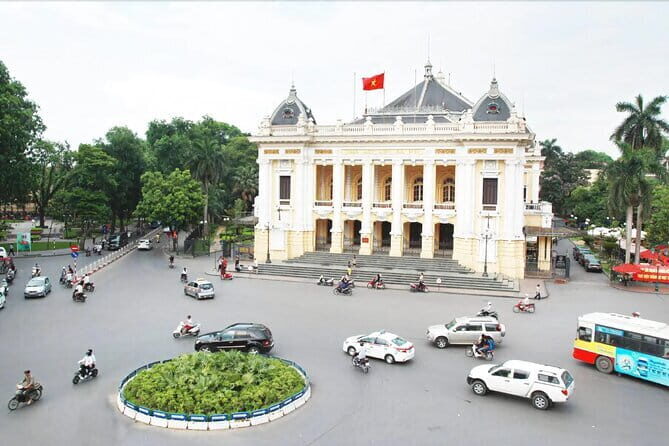
Then you pass by Hanoi Opera House. You’re not going inside for performances here; you can visit the exterior. Built by French colonial administration between 1901 and 1911, it’s a Neoclassical landmark modeled on Paris’s Palais Garnier. After the French departed, the building became part of political events and street fighting during the fight for Hanoi.
For me, this pairing works because it’s two different flavors of “colonial-era leftovers”:
- the bridge that still runs trains
- the opera house that still shows the architectural idea
Dong Xuan Market: A Huge Hanoi Hub for Cloth, Handicrafts, and Street Food

Next comes a place that feels like the city’s stomach—Dong Xuan Market. It’s described as Hanoi’s largest wholesale market, built in 1889, and it’s long been a tourist draw for both its location and architecture. The market covers everything from fabric and clothing to local handicrafts and souvenirs. And yes, there’s street food in the mix.
What makes Dong Xuan Market more than just shopping is the historical layer. During the war in 1946, the area witnessed fierce battles between Vietnamese resistance fighters and French soldiers, including the deciding-to-die soldiers (Quyết Tử Quân) in February 1947 as they fought to prevent the French attack on Inter-resistance Zone 1.
In other words: it’s not just a busy bazaar. It’s a place where modern commerce overlaps with national memory.
Smart shopping tip: if you want souvenirs, don’t assume the first price you hear is final. Also, keep your valuables secure—markets are crowded and fast-moving.
You can also read our reviews of more private tours in Hanoi
- Doris Cruise 5 star cruise 2 days visiting Halong Bay Lan Ha Bay private balcony
★ 5.0 · 2,338 reviews





Hanoi Train Street: The Photo Stop That Feels Like Living in the Frame
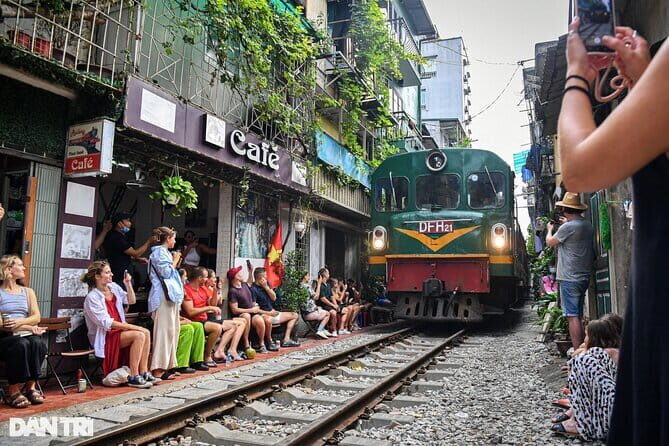
If you’ve seen Hanoi Train Street photos online, you know the premise: real railway tracks run through a narrow residential alley in the Old Quarter. The thrill is practical, not fake—when the train comes, it passes through the neighborhood right in front of you.
The good news is that it’s an included stop with admission ticket free time. You can snap photos and watch the flow. The alley also has café culture that fits the scene. Some locals have turned parts of their homes into small cafés where you can sip egg coffee while you wait.
This stop is one of the reasons the tour feels modern. It’s not only history in stone—it’s today’s Hanoi with rail lines cutting straight through daily life.
Consideration: come with patience. You’re waiting in a narrow space, and it’s easy to feel packed in. Comfortable shoes matter.
Hoan Kiem Lake, Walking Street, and Ta Hien: Where the Day Breathes
Between the “big landmarks,” the tour gives you time around Hoan Kiem Lake. There’s also time for the area known for its street energy—Walking Street and Ta Hien Street, famous for its lively atmosphere and street food.
This part is valuable because it’s where you catch Hanoi’s tempo. After temples, a mausoleum, and historical structures, you get a chance to watch daily life: people moving, food sizzling, and the city feeling like it’s on a schedule you can join.
If you’d rather not spend time hunting for food, this is a good segment to let the guide steer you toward what’s around.
Old Quarter Wandering: Small Streets, Big Signposts

The tour ends with a close-up view of the Old Quarter. You’ll stroll streets lined with traditional shops and the kind of colonial-era buildings that make the neighborhood instantly recognizable. The Old Quarter part is about orientation: seeing how the city is organized, how neighborhoods feel, and how quickly the atmosphere changes block to block.
This stop also pairs well with the rest of the day. You’ve already seen train rails and a huge market—now you see the everyday street pattern that connects it all.
What to watch for: Old Quarter walking can mean lots of short turns and uneven sidewalks. Take it slow in traffic-dense areas.
Price and Value: Is $31.52 a Good Deal?
At $31.52 per person for about 4 hours, this tour looks like strong value when you compare what you’d pay on your own:
- hotel pickup and drop-off
- an English-speaking guide
- transportation during the route
- entrance tickets included
- a private format (so it’s just your group)
That ticket inclusion matters in Vietnam. Entrance fees add up fast when you’re stacking multiple sites in one half-day. And private guides can save you time and confusion—especially for places with rules, like the mausoleum.
The catch is that you’re paying for efficiency, not slow travel. If you want only one or two major sites and lots of downtime, this may feel like speed-walking.
Who This Tour Fits Best
This tour is a good match if you:
- want a concentrated overview of Hanoi in about 4 hours
- like a mix of temples, museums-like spaces, and real street life
- appreciate an English-speaking guide who explains what you’re looking at
It’s also a solid first-day option if you want to orient yourself fast. If you’re someone who hates tight schedules and heavy crowds, you may prefer a longer pacing tour instead—especially because the mausoleum schedule can be unforgiving.
Should You Book This Hanoi Private Half-Day Tour?
I’d book it if you want maximum Hanoi variety in one clean package, and especially if you like the idea of seeing both landmark Hanoi and everyday Hanoi without paying extra for every entry fee. The value is best when you’re planning to go to multiple ticketed sites and you want pickup and transport to handle the connections.
I’d think twice if the mausoleum timing is a dealbreaker for your travel days (closed Monday/Friday and during June 10 to August 12), or if you hate rule-heavy entries and narrow-space photo stops like Train Street.
If your dates line up and you’re okay with a fast but well-organized day, this is a practical way to get a lot of Hanoi without feeling lost.
FAQ
How long is the Hanoi city sightseeing private tour?
It’s about 4 hours.
How much does the tour cost per person?
The price is $31.52 per person.
Is this a private tour?
Yes. It’s a private tour/activity, so only your group participates.
What’s included in the tour price?
Entrance tickets, an English-speaking tour guide, transportation, hotel pickup and drop-off, and a mobile ticket. Private customization is also available if you want.
Are entrance tickets included for the stops?
Yes, entrance tickets are included for the tour’s paid sites.
Which major places are included in the half-day?
You’ll visit key sights such as One Pillar Pagoda, Chua Tran Quoc, Ho Chi Minh Mausoleum, Long Bien Bridge, Hanoi Opera House (outside visit), Dong Xuan Market, Hanoi Train Street, Imperial Citadel of Thang Long, and the Old Quarter area.
What should I know before visiting the Ho Chi Minh Mausoleum?
It’s open in the morning from 8:00 AM to 11:30 AM, closed on Monday and Friday, and closed annually from June 10 to August 12 for maintenance. You’ll also need to dress respectfully (no shorts, sleeveless shirts, or miniskirts) and you must deposit bags and cameras before entering.
Can I cancel for free?
Yes. Free cancellation is available. You can cancel up to 24 hours in advance for a full refund. If you cancel less than 24 hours before, you won’t get a refund.


More City Tours in Hanoi


More Tours in Hanoi
- Ninh Binh Full-Day Tour from Hanoi to Hoa Lu, Tam Coc & Mua Cave Via Boat & Bike
★ 5.0 · 4,384 reviews