REVIEW · MEO VAC
Ha Giang Loop Car 3 Days 2 Nights by OHC Travel
Book on GetYourGuide →Operated by Ha Giang Open Tour Travel Company Limited · Bookable on GetYourGuide
Ha Giang by car feels like road magic. I love how Mr Tân turns each stop into something you can actually use for photos and context, from Tay villages to big-pass viewpoints. I also like the tight scheduling that keeps you moving without feeling rushed. One thing to consider: driver quality can vary when agencies subcontract drivers, so it’s smart to ask about safety and consistency before you go.
This 3-day, 2-night Ha Giang Loop is built for comfort over chaos. You get live guidance in English or Vietnamese, plus a route packed with famous names like Ma Pi Leng, Nho Que, and Lung Cu. If you prefer a plan where you don’t have to navigate, bargain, or stress out on winding roads, this format fits.
You’ll still have moments that need some legs and patience. There are short walking parts (waterfall and village visits), and the road trip days are long—Hanoi to Ha Giang alone is a big distance. Plan for a bit of “road day” energy, not a relaxed spa vacation.
In This Review
- Key Points Worth Knowing About This Ha Giang Loop Car Tour
- Ha Giang Loop by Car: Why This Style of Touring Feels Easier
- Day 1: Hanoi Pickup, Tuyen Quang Break, and Ha Giang City on Arrival
- Day 2: Heaven’s Gate, Tham Ma Pass, and the Big-Name Views That Define the Loop
- Day 2 Afternoon: Nho Que Boat Ride, Meo Vac, and Dong Van Night
- Day 3: Lung Cu Flagpole, Lo Lo Chai, and the Hmong King’s Palace
- Road Time, Distances, and the Meaning of the Happiness Route
- Food, Lodging, and How the Schedule Helps You Enjoy It
- Price and Value: Is $303 a Smart Deal for a 3-Day Loop?
- The Big Concern: Driver Consistency and Safety on Winding Passes
- Who Should Book This Ha Giang Loop Car Tour (and Who Might Prefer Another Style)
- Should You Book Ha Giang Loop Car 3 Days 2 Nights with OHC Travel?
- FAQ
- Where does this Ha Giang Loop tour start in Hanoi?
- How long is the tour?
- Is this tour private or shared?
- What languages are available for the live tour guide?
- Is it wheelchair accessible?
- What are the main highlights on the loop route?
- Do you include a boat ride on the river?
- Are meals included, and what about dinner?
- Will I get to see a market during the tour?
- What should I bring for the trip?
Key Points Worth Knowing About This Ha Giang Loop Car Tour
- Small private group for 2 means you’re not lost in a big crowd line at viewpoints.
- Live guide in English/Vietnamese helps you connect dots at places like Heaven’s Gate and the Hmong King’s palace.
- Car-based route is easier for many people than riding motorbikes for 3 straight days.
- Ma Pi Leng + Nho Que boat ride gives you both high views and time on the river.
- Dong Van old quarter nights add a simple evening stroll option after check-in.
- Safety and driver consistency are the main variable to confirm before departure.
Ha Giang Loop by Car: Why This Style of Touring Feels Easier

A Ha Giang Loop can be done a few ways, but the car version is often the best match when you want the sights without the constant focus it takes to ride. You’re still on the road for serious stretches, but you’re not doing the steering and braking through every curve.
This itinerary also has a practical rhythm: mornings for passes and viewpoint stops, midday for lunch in towns, and afternoons that keep the momentum going. You can think of it like three connected “chapters” instead of a scatter of random pull-offs.
Because it’s a private group from 2 people, the plan tends to stay flexible around your pace. If you need a slower walk at a village stop or want a few extra minutes at a viewpoint, that’s easier than in a big bus crowd.
You can also read our reviews of more tours and experiences in Meo Vac

Day 1: Hanoi Pickup, Tuyen Quang Break, and Ha Giang City on Arrival
The day starts early: the bus picks you up from your hotel in Hanoi Old Quarter at 06h30. Expect a long drive day—this leg is listed at 350km with lunch and dinner scheduled—so it helps to pack water and keep your snacks simple.
About 11h00, you stop in Tuyen Quang city for a rest. That’s not just for comfort; it also breaks up the road so you arrive in Ha Giang with enough energy to explore instead of collapsing.
You reach Ha Giang City around 13h00, eat lunch at the included restaurant, then check into your room. The afternoon is city-focused so you get bearings fast: your guide picks you up at 15h00 and starts with Km0 square and a Nui Cam mountain view stop.
Then you head to border-area and Tay-region flavor. You visit Thanh Thuy at the Chinese border, which is a quick way to understand why this province has always felt more connected to the wider region than to just one Vietnamese corridor. After that, you go to Thon Tha and Ha Thanh Village, about 6km from Ha Giang City.
This village stop is one of the more charming parts of day one because it’s not just a viewpoint. You get old-style houses on stilts, terraced rice fields, and a waterfall walk time slot built in. It’s the kind of place where the scenery isn’t the only attraction—there’s also a sense of daily life.
Dinner is 19h00 and then it’s back to the hotel for free time. That evening window matters because it sets you up for day two’s bigger pass and river moments.
Day 2: Heaven’s Gate, Tham Ma Pass, and the Big-Name Views That Define the Loop
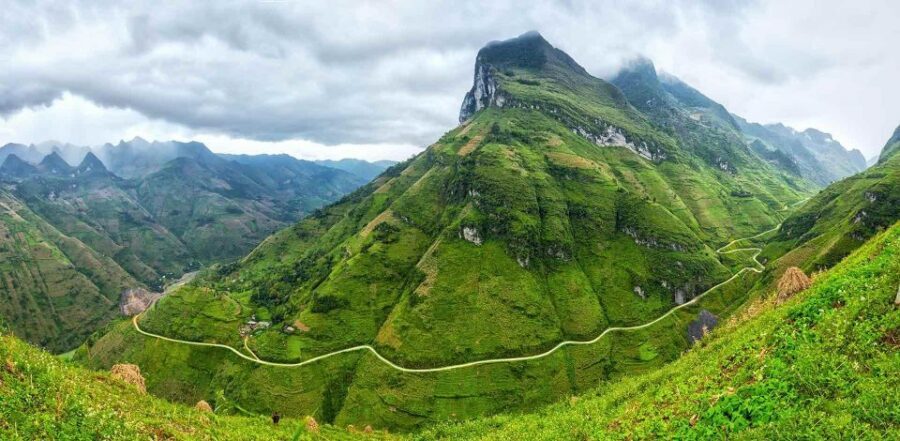
Day two is the Ha Giang Loop day you’ll remember. You’re up at 07h00 for breakfast at the hotel, then meet your guide at 07h30. The drive section is listed at 175km, but the day doesn’t feel short because there are many scenic stops along the route.
You start again at Km0 square, which keeps the loop feeling like a real route rather than random sightseeing. Next is Heaven’s Gate (Quan Ba), where you can stop for pictures with Nui Doi twin mountains in view. If you want “classic Ha Giang” photos, this is one of the cleanest places to do it in daylight.
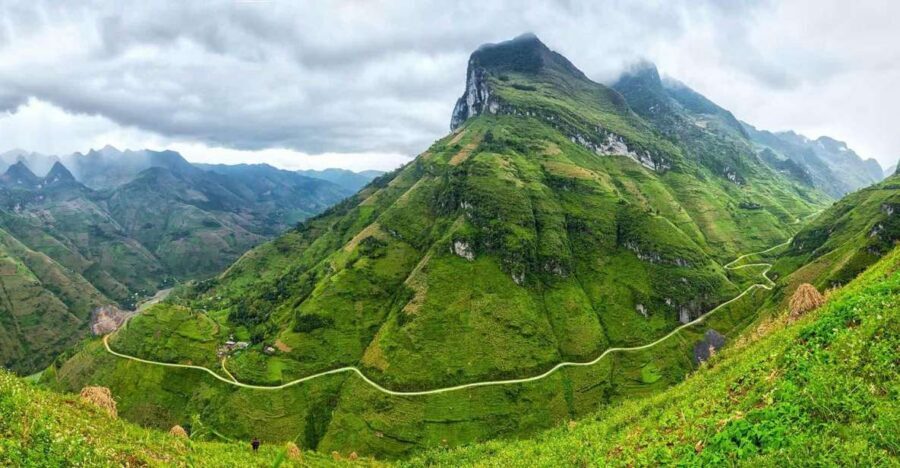
Then you go to Can Ty Pass, listed around 1,000 to 1,200 meters altitude. Higher elevation here usually means wider sightlines, and that’s exactly what you’re looking for: big scale views that make the winding road feel worth it.
After that comes Tham Ma Pass, and the itinerary calls out something specific: you pass through 9 interesting passages before stopping to enjoy the slope. That detail matters because it signals a more scenic drive segment, not just one look-and-go stop.
You also get a more cultural valley stop: Sung La valley and Lung Cam, a small Hmong village with classic houses. The plan even mentions a house named after Pao’s house, which gives you a more grounded way to connect what you’re seeing to local heritage.
Lunch is in Dong Van around 12h30, then the afternoon shifts to the famous stretch called the Happiness road.
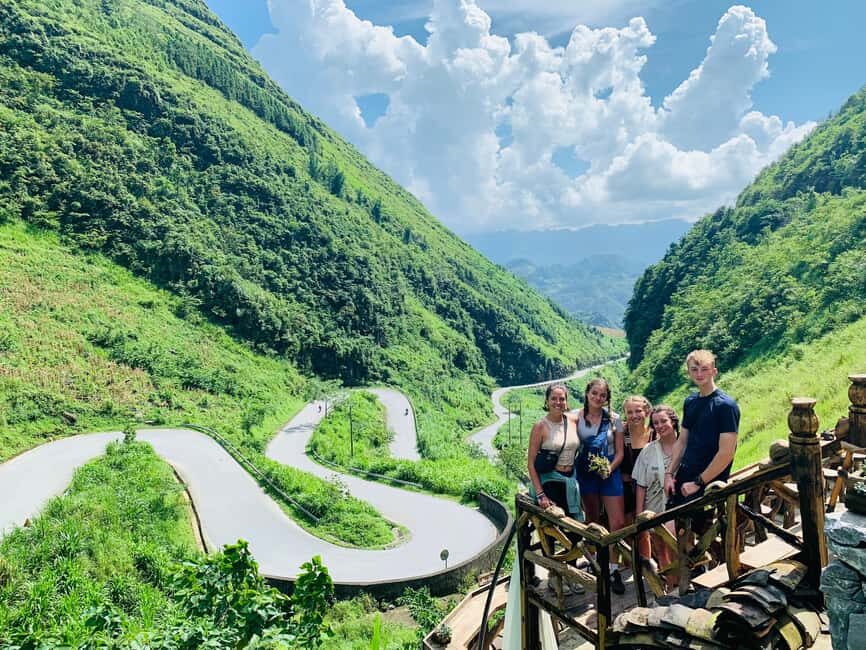
Now you hit one of the headline moments: Ma Pi Leng Pass. The itinerary lists it at over 1,200 meters and describes the view between Vietnam and China with the Nho Que river far below. This is where you’ll want your best patience—roadside viewpoints can be windy, and crowd flow can change fast—but the payoff is that high vantage feeling.
There’s also a built-in break at Panorama Coffee for tea or coffee (paid by yourself, about 60,000 VND). Even if you skip the drink, this stop is useful as a rest point and a photo anchor.
Day 2 Afternoon: Nho Que Boat Ride, Meo Vac, and Dong Van Night
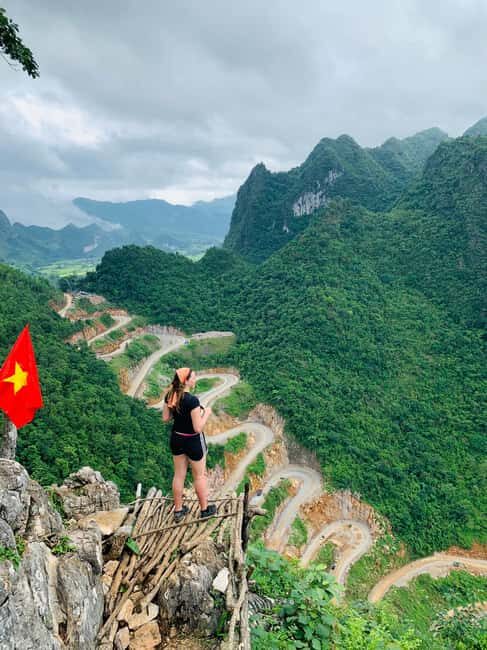
After Ma Pi Leng, you switch from high views to river time with a boat ride on the Nho Que river. This part is valuable because it changes the pace and gives you a different angle of the same dramatic geography—high up it looks sharp and wide, on the water it feels more grounded.
Then you reach Meo Vac town and continue to check in at Dong Van town around 17h30. Your overnight is either a hotel or a homestay, depending on what’s arranged for your group. The plan doesn’t overpromise a specific style, but the point is simple: you sleep in the same base area you’ll explore at night.
Dinner is at 19h00 in the old quarter. After that, you can walk around on your own. This free time is a smart design choice. Day two is visually heavy—this evening window lets you absorb it at a slower speed and take casual photos without a full schedule running you.
Day 3: Lung Cu Flagpole, Lo Lo Chai, and the Hmong King’s Palace
Day three starts at 07h00 with breakfast at a local market. There’s also a timing note that’s genuinely useful: on Sunday mornings, you can attend the local market of ethnic people in Dong Van town. If you care about seeing daily life—how people trade, cook, and move—this is the one day where the itinerary gives you a built-in chance to catch it.
Next comes the route’s symbolic highlights. Your first major stop is Lung Cu flag pole, with the itinerary pointing out nearby Lo Lo Chai village at the foot of Long Son mountain. The visit is described as happening on foot, so if you’re hoping for fully seated viewing, this is where you should plan for a short walk portion.
Then you visit Hmong King’s palace, described as the residence of the most powerful Hmong people, and called Chinese-style in its architecture. Even if you don’t have a deep background in Hmong history, the value here is that you’re shown a physical place that explains status, community life, and regional cultural exchange.
Lunch is in Yen Minh town at 13h00, and then you drive back toward Ha Giang City. The plan has you arriving in Ha Giang City at 15h00, then waiting for the return transport at the office.
From 16h00, you’re picked up by a Limousine bus and headed back to Hanoi. You stop in Tuyen Quang for a scheduled dinner, but it’s listed as by yourself, so budget that meal accordingly. You arrive in Hanoi around 22h00, finishing the full loop experience.
Road Time, Distances, and the Meaning of the Happiness Route
This tour works because it treats the Ha Giang roads like the main attraction, not an inconvenience. You cover about 350km on day one, 175km on day two, and 490km on day three. Those numbers matter because they explain why the itinerary is structured around scheduled stops rather than pure wandering.
The plan repeatedly uses the idea of a named stretch, calling the main scenic route Happiness road. In real terms, that’s just a way of telling you what to expect: long viewpoint stretches, frequent pull-offs, and a driving rhythm where you’ll stop often enough to keep the day from blurring.
You’ll also feel the height and weather shifts. Pass areas include Can Ty Pass and Ma Pi Leng Pass with altitudes around 1,200 meters and above, so it can be cooler and windier than lower valleys.
Food, Lodging, and How the Schedule Helps You Enjoy It
Food is built into the plan in a practical way. Day one and day two include lunch and dinner, and day three includes breakfast and lunch with a dinner stop that’s on you in Tuyen Quang. That balance matters because it prevents the common problem on multi-day road trips: arriving hungry, hunting food, and losing the best part of the afternoon.
Lodging is split between a night in Ha Giang City (day one) and a night in Dong Van town (day two). The Dong Van stay is described as either hotel or homestay, depending on arrangements. If you care about the vibe, you can ask what your specific option is, because homestays often feel more local, while hotels can be more predictable.
One more small but real comfort factor: the itinerary calls out a rest stop in Tuyen Quang city on the way out. That’s not flashy, but it makes the whole day feel more manageable.
Price and Value: Is $303 a Smart Deal for a 3-Day Loop?
At $303 per person for 3 days, this is priced like a full-service package: private group from 2 people, live guiding, transport by car, and meals on most main parts of the day. The value logic is pretty straightforward—Ha Giang Loop self-planning can turn into a lot of coordination work, especially if you want a tight route with set stops.
You also get a big chunk of “known sights” without needing to piece together the passes and villages. Stops like Heaven’s Gate (Quan Ba), Tham Ma Pass, Sung La valley, Ma Pi Leng Pass, and the Nho Que boat ride are all included in the plan flow.
The one place where you should think like a budget traveler is in small extras. The itinerary flags Panorama Coffee as paid by yourself and also lists dinner on your own in Tuyen Quang on the final day. Those aren’t dealbreakers, but they’re real costs that should be in your mental math.
Overall, $303 looks like good value if:
- you want a guided route with minimal planning,
- you’d rather pay for structure than spend time building it,
- and you’re fine with a car-based format on long road days.
The Big Concern: Driver Consistency and Safety on Winding Passes
Here’s the honest part. The Ha Giang Loop is famous for scenic roads, but it’s also known for how demanding driving can be. The main risk factor in this kind of tour isn’t the itinerary—it’s the driver assignment.
In customer feedback I’m taking seriously, there was a case where a driver was described as reckless on days one and two, including dangerous overtakes and lots of horn use, followed by a car issue and a crash. The trip reportedly became smoother after a driver change on day three. That’s not meant to scare you—just to sharpen your decision-making.
Before you book or at least before you depart, ask the operator for clarity:
- Will you have the same driver for the full loop?
- What’s their approach to safety on overtakes and passes?
- If you’re traveling with strong language needs, who will be your main guide and how fluent are they in English?
If they respond clearly and confidently, you can relax. If they answer vaguely, that’s your cue to treat driver consistency as a deciding factor.
Who Should Book This Ha Giang Loop Car Tour (and Who Might Prefer Another Style)
This tour is a strong match if you want:
- a small private group from 2 people,
- a car format instead of riding motorbikes,
- a route that includes both famous viewpoints and village stops,
- and an English-friendly guide experience (English or Vietnamese).
You might want to choose a different style if you:
- hate long road days and want a shorter itinerary,
- strongly prefer fully off-the-road, walk-only exploring (because this is a car plan with scheduled stops),
- or you know you have specific accessibility needs beyond what a car can support.
Wheelchair accessibility is listed, which is a big plus. Still, note that some stops involve walking segments, like the Thon Tha waterfall time and visiting Lo Lo Chai village on foot. You’ll want to coordinate what level of walking is realistic for you.
Should You Book Ha Giang Loop Car 3 Days 2 Nights with OHC Travel?
Yes, with one clear condition: confirm driver quality and safety consistency. If you’re traveling as a duo and you want a guided Ha Giang Loop that hits the headline passes, includes the Nho Que boat ride, and ends with time to enjoy Dong Van’s old quarter, this is a solid value choice at $303.
Book it if you want comfort and direction more than spontaneity. Skip it or ask extra questions if you’re worried about operational inconsistency on day one and two, because those are the parts most exposed to fast-moving pass road conditions.
If your priority is a smooth, structured 3-day loop with a guide who can explain what you’re seeing, this plan is built for exactly that.
FAQ
Where does this Ha Giang Loop tour start in Hanoi?
You’re picked up from your hotel in the Hanoi Old Quarter at 06h30.
How long is the tour?
It’s 3 days, with 2 nights on the route.
Is this tour private or shared?
It’s a private group, and the tour is designed for a small group starting from 2 people.
What languages are available for the live tour guide?
The guide is available in English and Vietnamese.
Is it wheelchair accessible?
Wheelchair accessibility is listed for this experience.
What are the main highlights on the loop route?
Key stops include Heaven’s Gate (Quan Ba), Can Ty Pass, Tham Ma Pass, Sung La valley and Lung Cam, Ma Pi Leng Pass, the Nho Que river boat ride, Lung Cu flag pole, Lo Lo Chai village, and the Hmong King’s palace.
Do you include a boat ride on the river?
Yes, the itinerary includes a boat ride to visit the Nho Que river.
Are meals included, and what about dinner?
Lunch and dinner are scheduled on day one, breakfast plus lunch plus dinner are scheduled on day two, and day three includes breakfast and lunch. Dinner in Tuyen Quang is listed as by yourself.
Will I get to see a market during the tour?
Breakfast is at a local market on day three, and if you travel on Sunday mornings you can attend the ethnic market in Dong Van town.
What should I bring for the trip?
The tour advises bringing a change of clothes.