REVIEW · HANOI
From SaPa: 4 Day Ha Giang Loop Motorbike Tour With Rider
Book on GetYourGuide →Operated by TripBestie · Bookable on GetYourGuide
Four days, three big passes, and real village life. This Ha Giang Loop motorbike tour is built around the key sights—Ma Pi Leng Pass and the Nho Que River canyon boat—and it spends time in ethnic minority areas instead of rushing by. I also like the small-group feel (max 11) and the careful setup with a local rider for safety. The tradeoff: you’ll still ride a lot, so expect sore muscles and basic, simple meals along the way.
You start the trip the night before in Sapa, catch a sleeper bus to Ha Giang, then begin riding in the morning. The company includes real riding gear (helmet, protectors, warm coat, raincoat, seat cushion), plus a guide in English or Vietnamese, which makes the long days feel manageable.
In This Review
- Key things I’d mark on your map
- Ha Giang Loop, with Passes, Boats, and Village Life
- Getting There From Sapa: Night Pickup and Early Riding Starts
- Day 1 Night: Sapa to Ha Giang, Then a Real Rest Break
- Day 2 Riding: Ha Giang to Dong Van via Passes and Hmong Royal History
- Day 3 Riding: Ma Pi Leng Pass and the Tu San Canyon Boat Break
- Day 4 Riding: Du Gia Waterfall Pool and the Nam Dam Homestay Culture
- Day 5 Morning: Lung Khuy Cave and Lung Tam Weaving Before You Return
- The Motorbike Setup: 110cc Bikes, Pro Rider, and Real Safety Gear
- Guide and Rider Team: Support on the Curves
- Meals and Water: Simple Food, Enough Fuel, and Corn Wine
- Where You’ll Sleep: Dorms, Hotels, and Earthy Village Stays
- Value for $258: What You’re Actually Buying
- Who This Tour Fits (and Who Should Rethink It)
- Should You Book This Ha Giang Loop Tour?
- FAQ
- How long is the Ha Giang Loop tour?
- What does the tour cost?
- What kind of motorbike do I ride?
- Are meals included?
- Is the Nho Que boat trip included?
- What’s included for comfort and safety while riding?
- What kind of accommodations will I have?
- How big is the group?
Key things I’d mark on your map
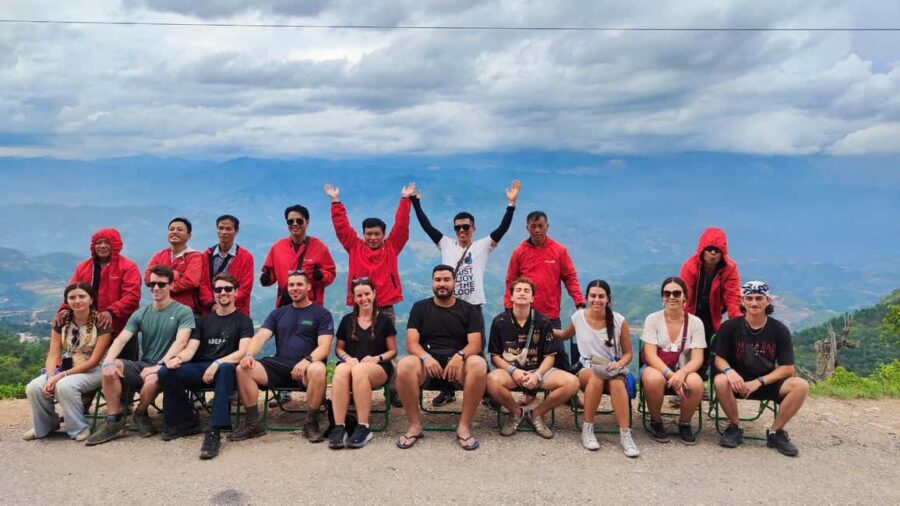
- Ma Pi Leng Pass views with the kind of curves you remember after your hands cool down
- Tu San Canyon by boat on the Nho Que River (a nice break from the motorbike grind)
- Du Gia Waterfall natural pool time, so you can actually cool off
- Lung Khuy Cave + Lung Tam weaving village, for a slower cultural stop
- Small group (max 11) with a safety-first local rider behind the scenes
Ha Giang Loop, with Passes, Boats, and Village Life
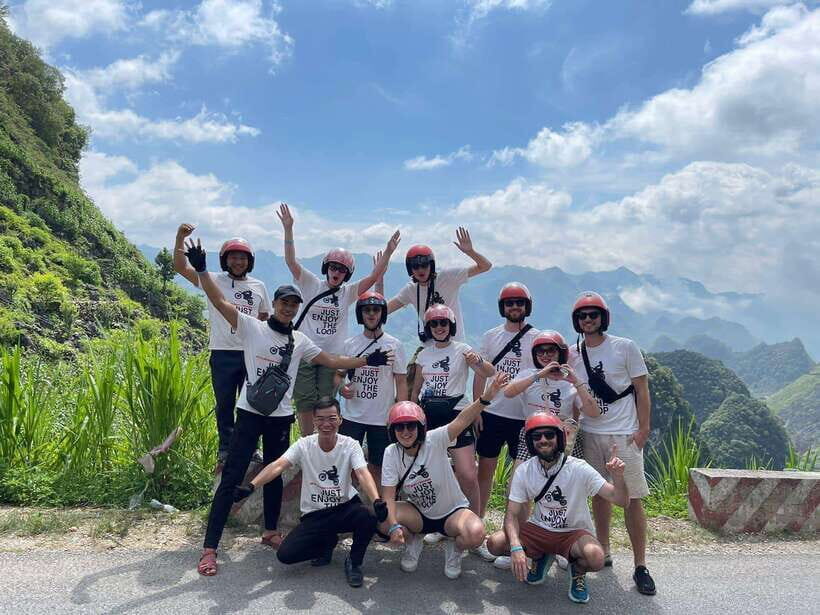
The Ha Giang Loop can turn into a pure road-trip blur if the itinerary is too rushed. This one mixes the famous driving days with stops that feel more like meeting people and seeing daily life, especially around ethnic minority villages.
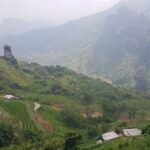
What makes it interesting is the balance. You get the big-name roads—Bac Sum Pass, Tham Ma Slope, and the headline Ma Pi Leng Pass—then you also get breaks that matter: a boat ride through Tu San Canyon and time at the Du Gia Waterfall pool. That rhythm is why this feels more complete than the shorter loops.
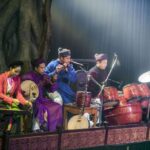
It’s also a more chill style of travel. The plan includes time to explore town centers in Dong Van and Du Gia areas, plus evenings with live music and group energy (there’s even room for light games with your guides).
You can also read our reviews of more tours and experiences in Hanoi



Getting There From Sapa: Night Pickup and Early Riding Starts
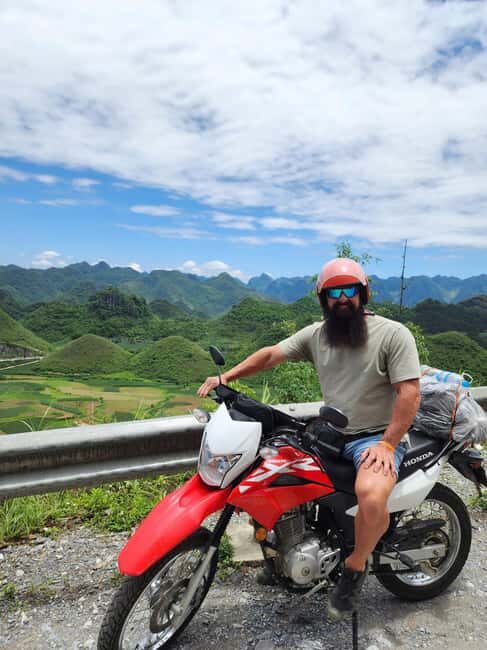
Your trip kicks off the evening in Sapa. Depending on where you’re staying and the day’s traffic, you’ll either be picked up from your hotel on the main road (or near it) around 7pm, or you’ll go to the bus office and board a VIP sleeper bus at 8pm.
Either way, the goal is simple: you sleep on the move, arrive in Ha Giang around 2am, then rest in a hostel bed for a few hours. After that, you’re briefed and set up to start riding around 9:30am the next day.
For me, the practical value here is time. You don’t waste the first daylight hours on logistics, and you get on the road while the mountain air is cooler.
Day 1 Night: Sapa to Ha Giang, Then a Real Rest Break
On the night transfer, you’re on a sleeper bus from Sapa to Ha Giang (and later, Ha Giang to your chosen drop-off). In other words, your “travel days” are built in, not added on top.
Once you arrive about 2am, you sleep in a hostel dorm bed for a few hours. That’s not luxury, but it’s functional and gets you ready for the first loop day.
One smart detail: you get luggage storage support. There’s a secured storage locker option, so you’re not hauling bags around constantly.
Day 2 Riding: Ha Giang to Dong Van via Passes and Hmong Royal History
Day 2 is where the loop energy starts. After breakfast around 8am and a group briefing, you begin riding around 9:30am.
The route takes you over and through several well-known spots:
- Bac Sum Pass
- Quan Ba Heaven Gate
- Twin Mountains
- Can Ty Pass
A big chunk of the day is about views and rhythm. Your guide covers what you’re seeing as you go, and your local rider handles the driving for you—so you can focus on being present, not white-knuckling every switchback.
Lunch is in Yen Minh. Then the day adds a historical stop: you conquer Tham Ma Slope and visit the Hmong King’s Palace. This is one of those stops that turns a scenic ride into a “why this place matters” day.
By late afternoon you reach Dong Van ancient town, check into a cozy hotel, then have dinner and time to wander around the town center. If you’re lucky with timing, there can be live music to catch in the evening.
Day 3 Riding: Ma Pi Leng Pass and the Tu San Canyon Boat Break
Day 3 is the “this is why I came” day for most people. Before 8am breakfast, you can have free time to visit Dong Van market if it’s Sunday. That’s a nice way to see local life before the long ride.
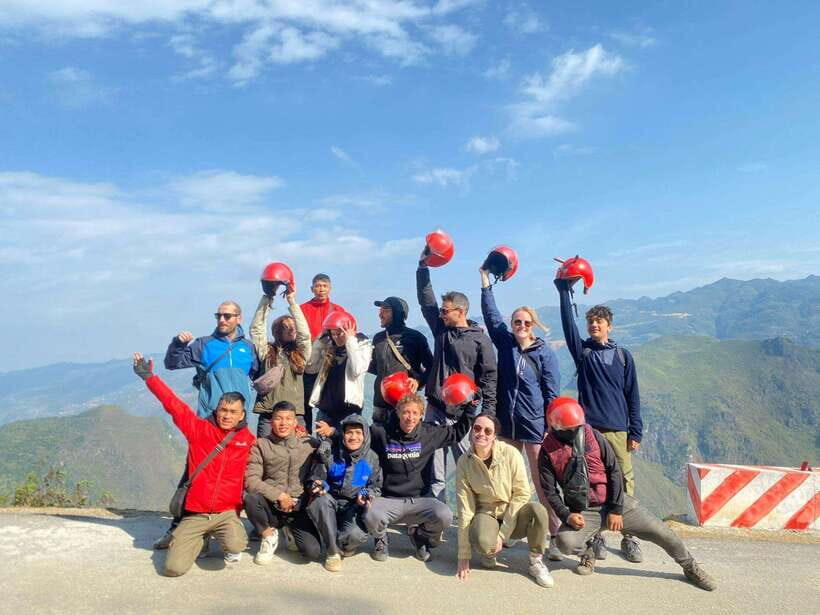
Then you head for Ma Pi Leng Pass—often considered the big one on the loop. The payoff here is the combination of altitude, roads, and sheer drop-off drama (even if you’re not the one braking). You get the famous views, and your rider keeps it steady.
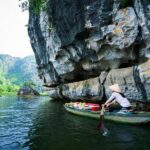
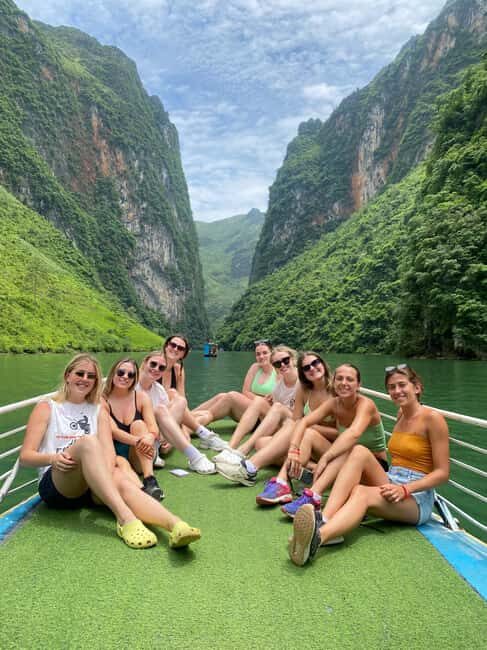
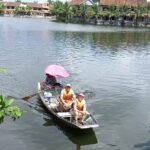
After that comes one of the best pacing choices on the whole plan: the Tu San Canyon boat trip on the Nho Que River. It’s a real reset. You’re off the bike, sitting in the boat, and the canyon walls do the talking.
Lunch is in Meo Vac, followed by stops around viewpoints:
- M-curve
- Mau Due
- Lung Ho viewpoints
You finish the day in the Du Gia area, with dinner and live music. It’s the kind of evening that helps your legs recover.



Day 4 Riding: Du Gia Waterfall Pool and the Nam Dam Homestay Culture

Day 4 starts with a market option: Du Gia weekly market is available on Saturday, if your timing matches.
Breakfast is at 8am, then you cool off at Du Gia Waterfall. The plan specifically includes time to dip in the natural pool beneath the waterfall, which is exactly what your body wants after days of riding.
From there you head to viewpoints like Duong Thuong and Lung Tam, then go to lunch in Thai An.
The main cultural shift happens with your homestay in Nam Dam village. Here you’ll spend two nights (one of them is this first night), and the plan is built around hands-on village experiences:
- you’ll discover local culture
- you can cycle around the village
- you’ll see rammed-earth houses
- you’ll witness traditional architecture of Dao ethnic group clay houses
I like how this doesn’t feel like a performance stop. It’s framed as learning what daily life looks like in Nam Dam, with time to move slowly and take in details at your pace.
Evenings usually include dinner plus fun activities with your homestay hosts and your group.
Day 5 Morning: Lung Khuy Cave and Lung Tam Weaving Before You Return

The final day is shorter and more grounded. Before heading back to Ha Giang, you do a 2-kilometer hike to explore Lung Khuy Cave. If you like stalactites and stalagmites, this is the kind of stop that makes the early mornings worth it.
Then you visit Lung Tam village for centuries-old linen weaving tradition. This is where you get to slow down again and see a craft that’s less about photos and more about process.
After lunch in Thai An, you refresh again beneath a waterfall, then return to your hostel in Ha Giang around 3:30pm.
If you chose a drop-off option, your sleeper bus picks you up between 6:00-8:30pm for Hanoi, Ninh Binh, Ha Long, or Cat Ba. If you selected drop-off in Ha Giang, the tour ends after your return to the hostel.
The Motorbike Setup: 110cc Bikes, Pro Rider, and Real Safety Gear
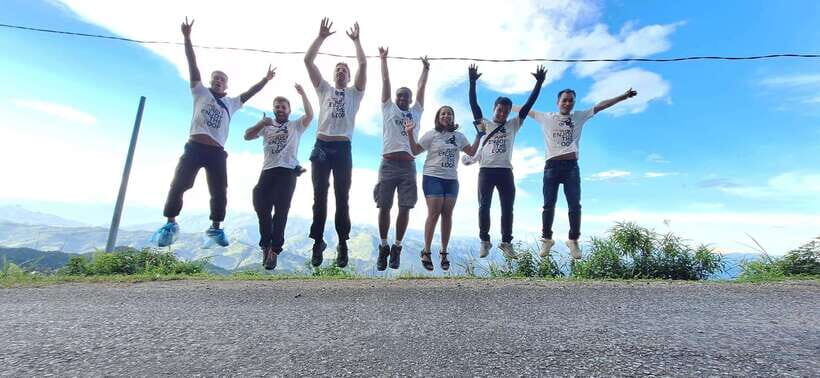
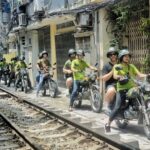
This tour doesn’t just hand you a helmet and hope for the best. It includes a local professional rider and an 110cc motorbike with fuel, plus a full set of safety items.
You’ll receive:
- high-quality helmet
- warm coat
- knee and elbow protectors
- raincoat
- small backpack and seat cushion
- bottled water included
- plus a guided setup for the long ride days
That gear list matters because the loop can feel physically harder than it looks on YouTube. Warm coats help when temperatures drop at elevation. Protectors help when you ride through long stretches. Seat cushions help your body survive the next day.
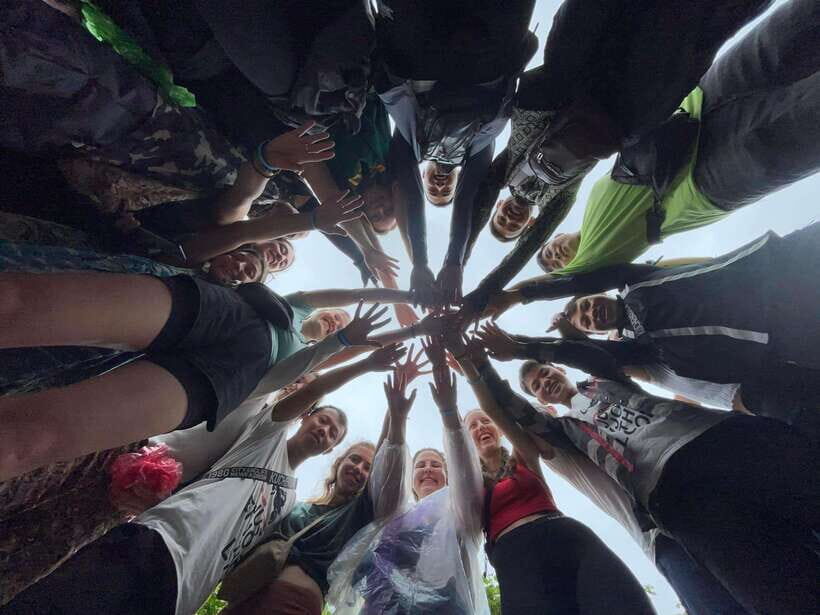
Also, the group size is capped at 11. Smaller groups typically mean fewer gaps, smoother coordination, and a better chance that your guide can keep things calm when roads get tricky.
One note from experience style, not hype: you will still feel sore. You might get frequent breaks, but you should expect long stretches in the saddle.
Guide and Rider Team: Support on the Curves

The human part is a big deal on the Ha Giang Loop. You’ll have an experienced English-speaking tour guide, with Vietnamese support available too.
Communication is a strong point. Before pickup, the team reaches you on WhatsApp to confirm details and help with questions. During the ride, your guide keeps the group together and explains what you’re passing so you don’t feel like you’re just collecting bends.
In at least one case, the guide name mentioned was Thanh, and the rider was described as very experienced and safe. Even if your guide is someone else, the key pattern you should look for is the same: a team that knows how to run the day without rushing, and how to ride predictably.
Meals and Water: Simple Food, Enough Fuel, and Corn Wine
Meals are included—4 breakfasts, 4 lunches, and 3 dinners. Expect simple local cuisine. It’s multi-day, so menu repetition can happen.
The useful part is that you’re not hunting for food between viewpoints. You’ll also have unlimited bottled water, plus corn wine included. Corn wine is optional in the sense that it’s there for the evening vibe, not a requirement.
In practice, the biggest meal advice is timing and pacing. When you get to lunch or dinner, eat like you’ll be riding again. Don’t skip because you think you’ll “be fine.” Your body will remember.
Where You’ll Sleep: Dorms, Hotels, and Earthy Village Stays
Your accommodation is a mix, which is what keeps the itinerary realistic:
- half-night on the sleeper bus
- half-night in a hostel in Ha Giang
- 1 hotel/guesthouse night in Dong Van
- 2 homestay/guesthouse nights at Du Gia and Nam Dam
Rooms are shared with same-gender travelers or dorm beds. Private room upgrades are available with a surcharge, and larger group bookings (6+ people) can qualify for a free private room upgrade for the loop nights.
One review detail worth keeping in mind: at least one traveler noted a mud house style room at the end. The Nam Dam part is described as Dao clay house architecture, so expect rustic, earth-built structures rather than Western-style hotels.
Practical tip: pack a small sleep layer and keep your expectations aligned. These stays are about location and culture, not marble bathrooms.
Value for $258: What You’re Actually Buying
At $258 per person, the price makes more sense once you count what’s included. You’re not just paying for the ride. You’re paying for:
- sleeper bus from Sapa to Ha Giang (and return to your chosen drop-off)
- hotel/hostel/homestay nights during the loop
- the motorbike (110cc), fuel, and a professional rider
- guide (English and Vietnamese support)
- meals (breakfasts, lunches, dinners as listed)
- entrance tickets and the boat trip on Nho Que River
- equipment like helmets, warm coats, protectors, raincoats
- unlimited bottled water, plus corn wine
- a finisher T-shirt
So what you’re really buying is risk reduction and planning help. With the safety gear, rider, and itinerary structure, you spend less time figuring things out and more time enjoying the route.
If you’re the type who wants convenience without going full packaged-tour, this price-to-inclusion ratio can feel fair.
Who This Tour Fits (and Who Should Rethink It)
This fits you best if you want:
- a motorbike experience with a safety-first setup
- key loop highlights like Ma Pi Leng Pass and Tu San Canyon
- village time that’s more than a quick stop
- a small group with a manageable pace and evening activities
You might rethink it if you:
- hate long days on the bike (soreness is expected)
- need guaranteed high-comfort hotels every night
- prefer a very low-energy itinerary with minimal riding
Should You Book This Ha Giang Loop Tour?
I’d book it if your ideal Ha Giang Loop includes the biggest roads and meaningful stops like the cave and weaving, with a team that keeps you organized and supported. The included safety gear and professional rider setup are a major plus, especially if you’re nervous about riding in Vietnam’s mountain roads.
You should also consider it if you like the idea of a small group (max 11) and a guide who’s present through the day instead of leaving you to figure it out.
If you’re only chasing a quick hit of scenery with minimal culture time, you may want a shorter version. But if you want a route that actually mixes passes, canyon water time, waterfall cooling, and ethnic village experiences, this one is a strong match.
FAQ
How long is the Ha Giang Loop tour?
It runs about 4 to 4.5 days. The pickup happens the night in Sapa, and the Loop start is the following day.
What does the tour cost?
The price is $258 per person.
What kind of motorbike do I ride?
You’ll ride a 110cc motorbike, with fuel included and a professional local rider.
Are meals included?
Yes. Meals included are 4 breakfasts, 4 lunches, and 3 dinners.
Is the Nho Que boat trip included?
Yes. The itinerary includes a boat trip on the Nho Que River through Tu San Canyon.
What’s included for comfort and safety while riding?
You get a high-quality helmet, warm coat, knee and elbow protectors, raincoat, small backpack, and a seat cushion. Unlimited bottled water is also included.
What kind of accommodations will I have?
You’ll stay half a night on the sleeper bus, then half a night in a hostel in Ha Giang. You’ll have 1 hotel/guesthouse night in Dong Van, and 2 homestay/guesthouse nights in Du Gia and Nam Dam.
How big is the group?
The tour is limited to a small group of up to 11 participants.


More 4-Day Experiences in Hanoi
More Tours in Hanoi
- Ninh Binh Full-Day Tour from Hanoi to Hoa Lu, Tam Coc & Mua Cave Via Boat & Bike
★ 5.0 · 4,384 reviews