Two regions, one mountain beat.
This package strings together the Ha Giang Loop and Sapa trekking, so you get pass panoramas and the kind of footpaths you’d normally skip. I like the real hiking focus (about 5–15 km on many days) and the promise of staying in a traditional homestay where you eat together, cook together, and can even try Red Dao herbal bathing. One drawback to plan for: you still spend time in transit—bus days and late arrivals—so it can feel tiring even when the scenery is stunning.
I also appreciate the small group size (up to 12), which helps keep the schedule workable on winding roads. In the motorbike part, the equipment quality is described as good, and the support feels close and step-by-step, including guidance if you want to ride yourself with an international driving license. Just know the Sapa trek includes steep moments, and some downhill sections can be a workout if your legs aren’t used to it.
In This Review
- Key highlights before you go
- Entering the Ha Giang Loop + Sapa trek combo
- Day 1 in motion: Hanoi Old Quarter to Ha Giang by sleeper bus
- Day 2: Quan Ba Heaven Gate, Thẩm Mã Pass, and Đồng Văn’s limestone heart
- Day 3: Ma Pi Leng Pass to Mèo Vạc, then Du Gia homestay night
- Day 4: Du Gia waterfall, Lung Tam weaving village, and your late move to Sapa
- Day 5: Muong Hoa Valley villages—Y Linh Ho, Lao Chai, and Ta Van
- Day 6: Giang Ta Chai Red Dao village trek, then back to Sapa and Hanoi
- Motorbike portion: easy rider style, plus the option to ride yourself
- Homestays and shared meals: living like locals, not watching from a distance
- Value check: is $380 actually fair for what you get?
- Who should book this Ha Giang Loop + Sapa trekking plan
- Practical tips to make the trek days easier
- Should you book Saparis Horizon Travel for this loop?
- FAQ
- How much does the 6-Days Ha Giang Loop & Sapa Trekking Package cost?
- How long is the tour?
- Where does the tour start and what time do you meet?
- Does the tour include transportation between Hanoi, Ha Giang, and Sapa?
- Are meals included?
- Are entrance fees included?
- What is the maximum group size?
- Can I drive the motorbike myself?
- What kind of homestay experience is included?
- Is free cancellation available?
Key highlights before you go
- Ha Giang Loop views across Quan Ba, Thẩm Mã, Đồng Văn, and the big one: Ma Pi Leng Pass
- Homestay living in a stilt house or local ground-house setting with shared meals and village stories
- Sapa trekking in Muong Hoa Valley, including Y Linh Ho, Lao Chai, Ta Van, and Giang Ta Chai areas
- Motorbike equipment and guidance support that’s described as solid, not last-minute
- Meals and entrances included, which can make the $380 price feel more reasonable on the ground
Entering the Ha Giang Loop + Sapa trek combo
This tour is built for people who want variety. You start with the Ha Giang Loop style of travel—big limestone scenery, dramatic mountain passes, and short scenic stops—and then shift into Sapa trekking through villages and terraced farmland.
I love that the trekking isn’t framed as a quick photo walk. Many days are meant to be real walking days (roughly 5–15 km), so you’ll spend more time moving through the valleys than just sitting on a vehicle. And because the finish is in Sapa with more village time, you get a second taste of the region instead of repeating the same kind of stops.
Day 1 in motion: Hanoi Old Quarter to Ha Giang by sleeper bus
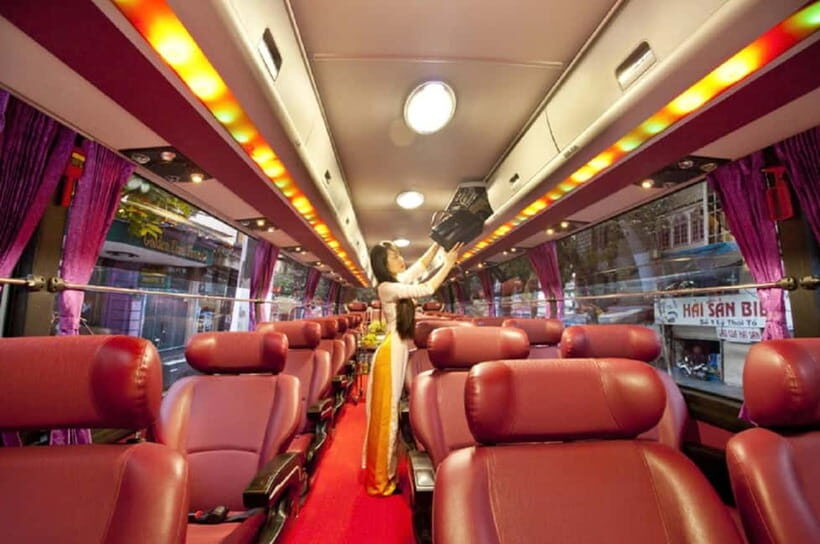
You meet at 8:30am at the Hanoi Old Quarter meeting point, then you head to Ha Giang on an overnight-style sleeper bus. The drive is listed as about 6 hours, so it’s not an all-day coaster—more like a fast launch into mountain travel.
This first day is mostly about orientation and logistics done for you. The upside is you’re not wasting your daylight in transit, and the ride sets up the next morning’s sightseeing. The tradeoff is you’ll likely arrive ready for early starts and you’ll want to keep your pack light.
Day 2: Quan Ba Heaven Gate, Thẩm Mã Pass, and Đồng Văn’s limestone heart
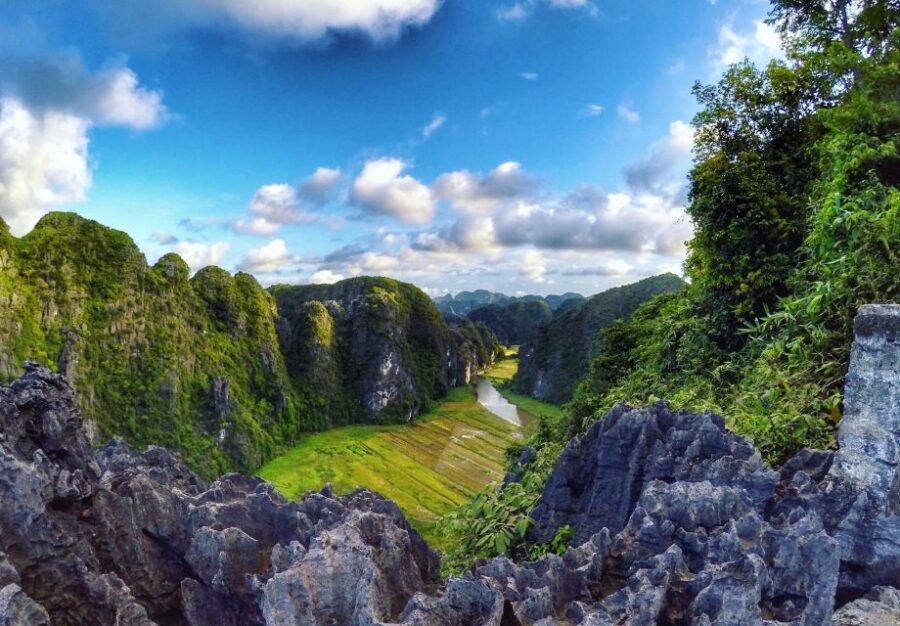
Day 2 is where the views begin to stack up. You start at Quan Ba Heaven Gate, spending about 45 minutes at the pass viewpoint. From the highest point, you look out over Tam Sơn valley with winding limestone mountains and terraced fields.
Next comes the Thẩm Mã Pass / Happiness Road stretch (listed as part of the route toward Dong Van). The timing is short—around 30 minutes—so treat it like a scenic pause for photos and perspective rather than a full stop. If you’re motion-sick, this is where you’ll be glad the day is broken into smaller segments.
Then you visit Dinh Vua Mèo (Vuong Palace) for about 1 hour. It’s the former residence of Vuong Chinh Duc, known as the Hmong King, and it’s tied to early Hmong authority. Even if you’re not a museum person, I find palace-style stops help anchor the region beyond scenery.
Finally, the day ends in Đồng Văn with about 10 hours marked there. That long block matters: it gives you time for the area vibe and potential wandering, but it also means you should expect a slower, more sedentary chunk between viewpoints. Comfortable shoes and a small snack plan help a lot.
Day 3: Ma Pi Leng Pass to Mèo Vạc, then Du Gia homestay night
Day 3 is the big “wow” day for many people. You hit Ma Pi Leng Pass (about 2 hours), one of the most famous stretches on Ha Giang’s Happiness Road connection between Đồng Văn and Mèo Vạc. The distance is long enough to feel epic, but the schedule keeps it manageable by using a short stop window.
After that you arrive at Mèo Vạc for about 2 hours. This is less about a landmark and more about getting that remote-highland sense—towering limestone peaks and steep valleys—without turning the day into a grind.
Then you roll into Du Gia village around 4pm and check into a community homestay. The day notes time for showering, relaxing, and dinner with the family. This is where the tour becomes more than sightseeing.
Day 4: Du Gia waterfall, Lung Tam weaving village, and your late move to Sapa
Day 4 starts close to Du Gia. You stop at Du Gia Waterfall (around 2 hours). It’s described as a multi-tiered waterfall about 6 meters high, pouring into the area below—small enough to enjoy without feeling rushed, but scenic enough to justify the detour.
Next is Lung Tam Village, about 1 hour. It’s known for Hmong weaving, especially linen and brocade craft, and it sits beside the Miên River with limestone peaks around it. A short stop can still be meaningful here because weaving is visual and hands-on, and it’s easy to ask questions even during a brief visit.
Then you continue to Ha Giang to wrap the Loop portion around mid-afternoon (the day notes finishing about 15–16pm). You take a bus onward to Sapa, and the transfer is listed as about 6 hours, arriving mid-night. The practical catch: you’ll want to save your energy for the next day’s trek, because sleep may be fragmented with that late arrival.
Day 5: Muong Hoa Valley villages—Y Linh Ho, Lao Chai, and Ta Van
Sapa days are built around Muong Hoa Valley villages, and Day 5 is the start of that walking-and-meeting rhythm. You begin at Y Linh Ho, about 3 hours. It’s a Hmong and Dao settlement about 5 km from Sapa, and it’s described as rustic—exactly the kind of place where the point is life on the ground, not just a viewpoint.
Then you continue to Lao Chai, about 2 hours. Lao Chai is known for terraced rice fields and ethnic culture, and it’s associated with around 100 Black Hmong people in the area description. I like this village because terracing isn’t just a background—it’s part of how people live and move.
After that is Ta Van Village for a long stretch (the day notes 18 hours). Because the schedule includes staying through the evening/arrival pacing, I’d treat this as your base village day where you settle in and prepare for more trekking on Day 6. The practical mindset helps: don’t plan to see everything; plan to enjoy a slower village evening.
Day 6: Giang Ta Chai Red Dao village trek, then back to Sapa and Hanoi
Your Day 6 trekking stop is Giang Ta Chai Village, about 3 hours. It’s a Red Dao village near Ta Van, set on terraced landscape with routes through bamboo groves and across the terrain.
The best part of this final trekking segment is the feel of continuity. You’ve already been through Lao Chai and Ta Van; Giang Ta Chai finishes the circuit with a slightly different ethnic village style. Also, a review snippet specifically mentions the hike is mainly downhill with steep moments at times, which matches how this kind of valley trekking usually feels. Bring shoes that can handle uneven ground and don’t rely on flip-flops.
After the trekking, the tour ends in Sapa around 14–15pm. You get picked up back to Saparis Station Hostel, and then you take a bus back to Hanoi. The Hanoi return is listed as about 6 hours, and you’re back around late afternoon.
Motorbike portion: easy rider style, plus the option to ride yourself
Ha Giang Loop is often what people picture when they think of this region—and the tour delivers that fast-paced road energy. Motorbike equipment is described as good, and guidance is described as ample with new instructions for each step.
There’s also a clear practical note from the experience: if you have an international driving license, you can ride yourself. That’s a big deal for independence, but it’s also worth reading as a safety mindset: only do it if you’re truly comfortable with traffic and mountain roads.
If you prefer not to drive, you still get the views and the route. The key is to match your comfort level to the plan early, so you don’t end up feeling stressed during the pass transitions.
Homestays and shared meals: living like locals, not watching from a distance
The homestay part is one of the tour’s core values. You sleep in a traditional setting—often described as a stilt house or a local ground house. You cook together, eat together, and you can also experience bathing with Red Dao herbal medicine.
This isn’t luxury travel. It’s more about getting a day-to-day rhythm: shared meals, village stories, and the feeling of being inside the community rather than outside taking photos and leaving. I think that’s why this works better for people who like slower exchanges, not people chasing comfort at all costs.
One consideration: homestay nights can come with basic conditions, and late buses can reduce recovery time. If you’re sensitive to sleep disruption, you’ll want to treat every “arrival day” as a chance to rest, even if you’re excited.
Value check: is $380 actually fair for what you get?
At $380 per person, the value depends on how much you’d otherwise spend piecing things together. Here, you’re getting transportation across Ha Giang and Sapa plus entrance fees for the listed sights, and you’re also getting a lot of meals included.
Food matters on this kind of route. The package lists 5 breakfasts, 5 lunches, and 3 dinners, which can remove a chunk of daily spending and keep you from hunting for meals on long travel days. Add in the entrance fees included for key stops, and you start to see why the price is positioned as a package value.
The main non-included costs are tips and personal expenses. That’s normal. Just don’t forget to budget for small extras like drinks, snacks, and anything you decide you must buy on the road.
Who should book this Ha Giang Loop + Sapa trekking plan
This tour fits best if you want two different mountain experiences in one trip. If you like road scenery with motorbikes and you also want to walk villages and terraced areas on foot, this is a strong match.
It’s also a good fit for people who enjoy clear support and organization. One review notes guidance and instructions step by step, plus good equipment for motorcycling, which signals that the operator isn’t leaving you alone to figure things out.
You might want to skip or adjust expectations if you know you’ll hate long travel days. Between sleeper bus segments and a mid-night Sapa arrival, the itinerary has a built-in pace that can feel tiring even when the views are worth it.
Practical tips to make the trek days easier
For the motorbike and trekking mix, the biggest practical win is planning around your legs and your footwear. You’ll be doing real walking (often downhill or steep at moments), so wear shoes you trust on uneven ground.
Pack for variable mountain weather. The schedule takes you through passes and valleys, and you’ll be out during viewpoint stops and on foot through villages. A light rain layer and a small daypack can help you stay comfortable when conditions change.
If you plan to drive the motorbike yourself, make sure your documentation is ready early. The tour guidance specifically notes international driving license use, and you’ll want to avoid last-minute stress.
Should you book Saparis Horizon Travel for this loop?
If your dream trip is Ha Giang’s pass scenery plus Sapa trekking in Muong Hoa Valley villages, this package is a solid choice. I like that it’s not just a drive-by route—it’s structured around actual walking days and homestays where you share meals and village time.
Book it if you’re okay with a schedule that includes long transfers and late arrivals. Consider a different option if you want a slower pace with lots of free time, because the trek days and road days keep moving.
If you’re the type who enjoys photos, sure. But you’ll get the most value if you show up for the homestay evenings, the walking sections, and the moments between passes.
FAQ
How much does the 6-Days Ha Giang Loop & Sapa Trekking Package cost?
It costs $380.00 per person.
How long is the tour?
The duration is 6 days (approx.).
Where does the tour start and what time do you meet?
You meet at the Hanoi Old Quarter meeting point, with a start time listed as 8:30am.
Does the tour include transportation between Hanoi, Ha Giang, and Sapa?
Yes. It includes a sleeper bus from Hanoi to Ha Giang and buses between Ha Giang and Sapa, and between Sapa and Hanoi.
Are meals included?
Yes. The package includes 5 breakfasts, 5 lunches, and 3 dinners.
Are entrance fees included?
Yes. Entrance fees are included for the stops listed in the package.
What is the maximum group size?
The maximum number of travelers is 12.
Can I drive the motorbike myself?
The information from a review says that if you have an international driving license, you can drive yourself.
What kind of homestay experience is included?
The tour includes a traditional homestay experience, with options like sleeping in a stilt house or local ground house, shared meals and cooking, and Red Dao herbal medicine bathing.
Is free cancellation available?
Yes, you can cancel for a full refund up to 24 hours in advance of the experience’s start time.