REVIEW · HANOI
Vespa Tour HANOI BACK STREETS: FOOD+LOCAL LIFE+CULTURE & FUN
Book on Viator →Bookable on Viator
Back streets in Hanoi change fast.
This tour is built for that feeling: a vintage Vespa ride that connects the big landmarks with the everyday lanes you usually skip, plus food stops that keep things practical. I like that it mixes classic sights with lived-in corners, from the flea market area to a tiny floating house and the famous railway houses.
What I like most is the variety in just four hours. You go from colonial-era St. Joseph’s Cathedral to the Long Bien Bridge and out toward Banana Island (a 1.5 km walk) and then cut back toward the city for the train street experience and a cozy lunch at a local restaurant near Hanoi Train Station. I also really appreciate the way the tour handles comfort and confidence: a short safety briefing, English-speaking guiding, hotel pickup/drop-off, and a small group size (up to 12).
One thing to consider: parts of the day involve walking and waiting in tight spaces around the railway area. If you’re sensitive to noise, traffic chaos, or historical war-site reminders at B-52 Lake, plan your mindset before you go.
In This Review
- Key highlights worth your time
- Why this Vespa tour fits Hanoi so well
- Price and what’s actually included
- Setting off: St. Joseph’s Cathedral and the first photo burst
- Flea market + Nguyen Cong Tru old apartments: the real Hanoi angle
- Long Bien Bridge to Banana Island: river views, walking, and a floating house
- Ngọc Hà zigzag lanes and B-52 Lake after lunch calories
- Duờng Tau (Train Street): timing, close quarters, and waiting for the train
- Hanoi Train Station lunch: a cozy reset at a local spot
- The guides, the comfort, and the fun factor
- Who should book this Vespa back-streets tour
- Should you book it?
- FAQ
- How long is the Hanoi back streets Vespa tour?
- What times does the tour run?
- Do you pick me up from my hotel?
- What’s included with the ticket price?
- Is Train Street always available?
- What group size should I expect?
Key highlights worth your time
- Vintage Vespa + city lanes: You get a fast pass through the back streets style, not just the postcard routes.
- Flea market meets old apartment life: A stop tied to Hanoi’s past supply days, not a generic market stop.
- Banana Island walk + floating home visit: Includes farming and a real interaction with an 86-year-old couple living in a floating house.
- B-52 Lake stop: A direct look at sites connected to the December 1972 bombing of Hanoi.
- Train Street timing that prioritizes safety: Some sections may be temporarily closed, but the operator knows when/where the train appears.
- Lunch included at a local restaurant: You eat after the day’s motion, not at some far-off tourist detour.
Why this Vespa tour fits Hanoi so well
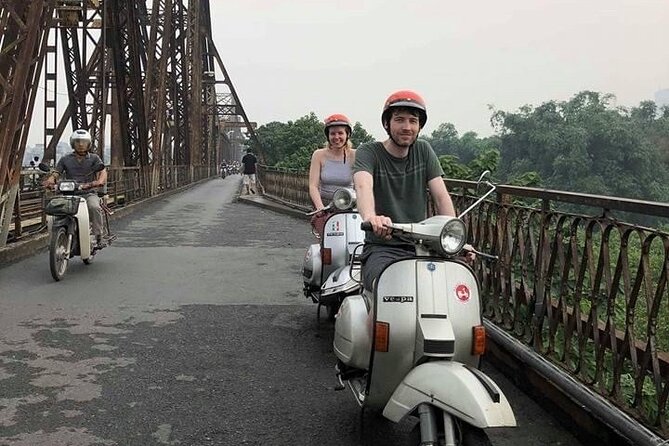
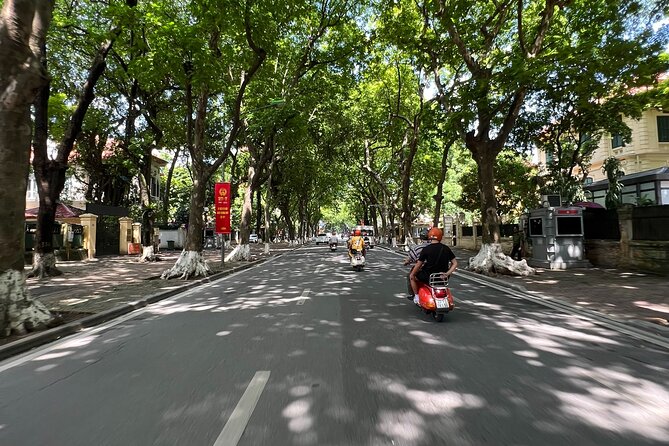
Hanoi can overwhelm you in the best way. One minute you’re near a major landmark; the next, you’re threading through narrow lanes where daily life is the main event. This tour is designed for that kind of movement—without making you plan, navigate, or guess where to go next.
The value here is not just that you ride a scooter. It’s that the route links very different Hanoi moments into one smooth block: colonial architecture, subsidy-era market life, river views and floating homes, war-site memorial context, and finally a food-focused reset with lunch.
And the time window matters. You get a half-day format: morning 8:30–12:30 or afternoon 13:00–17:00, each about four hours. That’s ideal if you’re also trying to see Old Quarter and French Quarter on foot, or if you don’t want to dedicate a whole day to one theme.
Price and what’s actually included
At $57.60 per person for about four hours, this is one of those deals where the “extras” are the real win. You’re not paying separately for most of the moving parts.
Included:
- Private transportation
- All fees and taxes
- English-speaking guide
- Pick up & drop off at your hotel
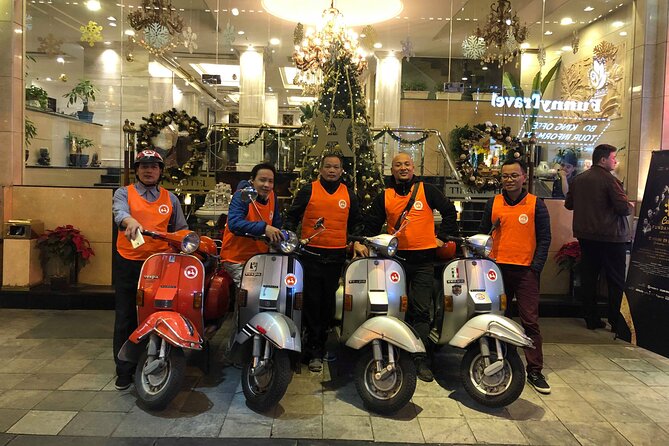
- Vintage vespa with safe riders
- Lunch
Not included:
- Tip
- Personal expenses
The smart part for your decision-making: because pickup/drop-off and lunch are included, you’re less likely to burn your time and money on last-minute fixes. You can also keep your afternoon or evening more open—especially if you’re juggling a packed itinerary.
Group size is also limited to max 12 travelers, which usually means you’re less stuck waiting for everyone to reassemble after a photo stop.
Setting off: St. Joseph’s Cathedral and the first photo burst
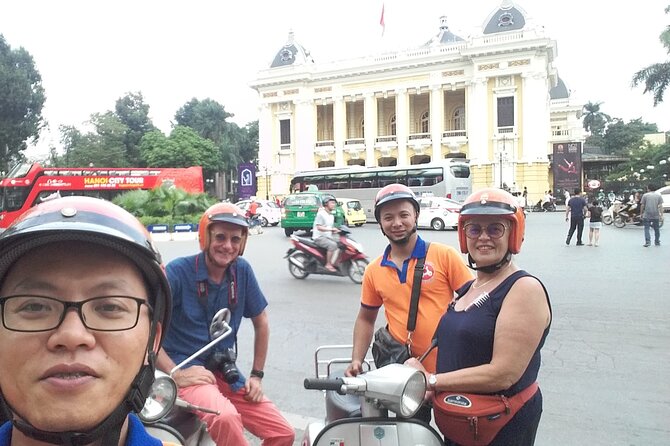
Your tour kicks off near St. Joseph’s Cathedral (P. Nhà Thờ, Hàng Trống, Hoàn Kiếm, Hà Nội 100000). Even though pickup is offered from your hotel, this is the anchor point for the experience and where it ends back again.
Stop 1 lasts about 20 minutes, and the admission ticket is included. This is the Neo-Gothic St. Joseph’s Cathedral—Hanoi’s oldest Roman Catholic church, with the Roman Catholic Archdiocese of Hanoi based there. It’s modeled after Notre Dame in Paris, which makes it a strong “big landmark” start, and the colonial-era connection is part of why it’s such a striking meeting spot.
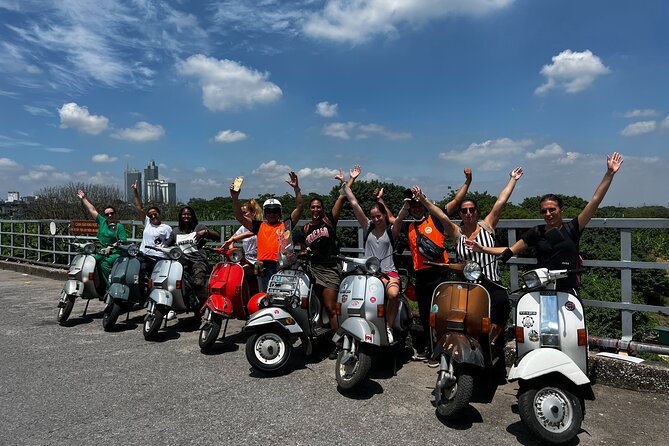
Why this works early in the tour: you get oriented before the route turns into more maze-like back lanes. It’s also a fun group photo moment before you switch gears into smaller street scenes.
Consideration: if you’re not into architecture or group photo stops, you might feel this is a quick “gateway” stop rather than the main event. The payoff is that after this, the day becomes much more lived-in.
Flea market + Nguyen Cong Tru old apartments: the real Hanoi angle

From the city centre, you head toward the area of Phố Chùa Vua—specifically the flea market and the Nguyen Cong Tru old apartment buildings area. This part is about 20 minutes and the flea market admission is free.
This stop is framed as a living museum of older Hanoi, linked to the subsidy period from roughly 40–50 years ago. The idea is pretty clear: when government distribution wasn’t enough, people created systems that filled the gaps. The flea market grew from that need, and it’s now the kind of place where you see hundreds of mechanic accessory shops.
For you, this is valuable because it’s not staged as a souvenir stop. You’re walking through a working-style economy—repair parts, practical supplies, and old building rhythms that make Hanoi feel like a place with continuity, not just a set of attractions.
Practical tip: wear comfortable shoes. Even if the time is short, you’ll likely move at a casual walking pace and squeeze past shop fronts.
Long Bien Bridge to Banana Island: river views, walking, and a floating house

Next comes the Long Bien Bridge (about 1 hour total at this stop), with admission included. The bridge itself was built by the French company Daydé & Pillé in 1898, and the stop includes an overlooking view of the Red River before you go to Banana Island.
Banana Island is explored via a 1.5 km walk. Once you’re there, the route includes:
- farming activities
- a floating village feel
- an outdoor gym
- a river beach area
- interaction with an 86-year-old elderly couple living in a tiny floating house
This is the portion of the tour with the most emotional contrast. The setting lets you see the difference between comfort and hardship in a way that doesn’t feel like a lecture. It’s also one of the few parts where the “back streets” theme turns into “back-water reality,” which is a big reason people love this route.
What to keep in mind: the day shifts from riding to walking here. If your mobility is limited, the route is still short on paper, but the conditions on riverside paths and island areas can feel uneven. If you’re comfortable with light walking, this stop is one of the best value moments on the itinerary.
Ngọc Hà zigzag lanes and B-52 Lake after lunch calories
After the river, the tour returns toward the city for Huu Tiep Lake and the Downed B-52 area. This part is about 30 minutes, with admissions included.
Along the way, you ride past a few sights tied to Hanoi’s layers:
- the world Guinness record mosaic wall
- the romantic West Lake
- the zigzag alleys of Ngọc Hà village
Then you stop for views related to the December 1972 bombing of Hanoi, including the B-52 Lake, where you can see the body of a US aircraft.
This is a sobering stop, so it’s not for everyone’s mood. But it adds something most “fun scooter loops” skip: a concrete, place-based reminder of what the city survived.
A helpful way to think about it: treat it like context, not shock tourism. If you’re a traveler who appreciates how places remember their past, you’ll probably find this stop meaningful. If you’d rather keep the day lighter, you might want to take a brief mental step back before arriving.
Duờng Tau (Train Street): timing, close quarters, and waiting for the train
Now you hit the famous Hanoi Train Street experience at Duờng Tau. This stop is about 30 minutes with admissions included.
Here’s the key detail that matters for your expectations: some parts of the train street can be temporarily closed by the local government for safety. The tour operator says they know exactly when and where the train appears to keep things safe enough for visitors to satisfy that curiosity.
Once you’re there, the experience is about walking along the railway and seeing how local life is built close to the track. The tour also includes a pause with a drink while waiting for the train to pass the alley.
What this stop really gives you: the sensation of how tightly the city’s daily rhythm is connected to infrastructure. It’s not just photos of a track; it’s people living and moving in a narrow space that forces the whole street to react to the schedule.
Consideration: even with safety planning, this is a place where you’re close to the track and other people. If crowds, noise, or enclosed alleys stress you out, arrive with patience. The upside is that this stop is short, and the timing skill helps keep it smoother than DIY attempts.
Hanoi Train Station lunch: a cozy reset at a local spot
The final major stop is Hanoi train station, with about 30 minutes at a local Vietnamese restaurant. Lunch is included, and the stop is described as a cozy meal where you can savour the quintessence of Vietnamese cuisine.
This is a smart close to the route. By the time you reach the restaurant, you’ve done a cathedral photo, market walking, a river-side island walk, and the intensity of the train street. Lunch here functions like a reset button—sit, eat, and let your legs unclench a bit.
What you can expect from this portion: a local restaurant setting near the station, with Vietnamese food as the main focus. No need to hunt for a place in the middle of your momentum.
The guides, the comfort, and the fun factor
The tour’s “fun” isn’t random. It comes from the format: small group pacing, vintage Vespa movement, and a guide who keeps the route understandable.
In the feedback I saw, guides named Tam, Chris, and Alex were specifically mentioned. The repeated theme is comfort—being guided clearly through the streets, and feeling relaxed sitting on the back of the Vespa with a team of riders.
That’s a big deal if Hanoi traffic makes you nervous. Even if you’ve handled scooters before, there’s something different about riding as part of a coordinated group. You get a safety briefing first, then the route keeps you from making costly wrong turns.
Group size also helps the vibe. With a cap of 12, you’re less likely to feel like a numbered passenger in a long line.
Who should book this Vespa back-streets tour
This is a strong fit if you:
- want to see more than Old Quarter without spending your whole day on a map
- like a mix of street life and iconic stops (cathedral, bridge, war-site context, train street)
- prefer a planned itinerary with hotel pickup rather than chasing transportation
- enjoy eating included meals where the tour sequence makes sense
It’s also a good choice for people who like stories and context, not just sights. The market stop’s subsidy-era explanation and the B-52 Lake stop’s bombing connection give the day layers, not just a photo route.
Consider skipping if you:
- don’t want to walk at all (Banana Island is a 1.5 km walk)
- are strongly uncomfortable with war memorial-style stops
- hate waiting for time-based moments like the train’s appearance
Should you book it?
I’d book this if you want a high-value half-day in Hanoi where the logistics are handled for you and the route covers the kind of places you’d struggle to stitch together solo. The combination of vintage Vespa riding, flea market + old apartment area, the Banana Island floating-house interaction, and the Train Street timing trick is a rare set of stops in one compact time.
If your top priority is only the most famous landmarks, you might find parts of the route too “local.” But if you want Hanoi as people live it—plus a few head-turning wow moments—this tour earns its spot.
FAQ
How long is the Hanoi back streets Vespa tour?
It’s about 4 hours total.
What times does the tour run?
There’s a morning option from 8:30 to 12:30 and an afternoon option from 13:00 to 17:00.
Do you pick me up from my hotel?
Yes. Pickup and drop-off at your hotel are included.
What’s included with the ticket price?
You get a vintage Vespa tour with an English-speaking guide, private transportation, all fees and taxes, lunch, and included admissions for the stops that list them.
Is Train Street always available?
Some parts of Train Street may be temporarily closed for safety, but the tour notes that the operator knows exactly when and where the train appears so you can experience it safely.
What group size should I expect?
The tour has a maximum of 12 travelers.